Written by a caring mom at infant Pamper
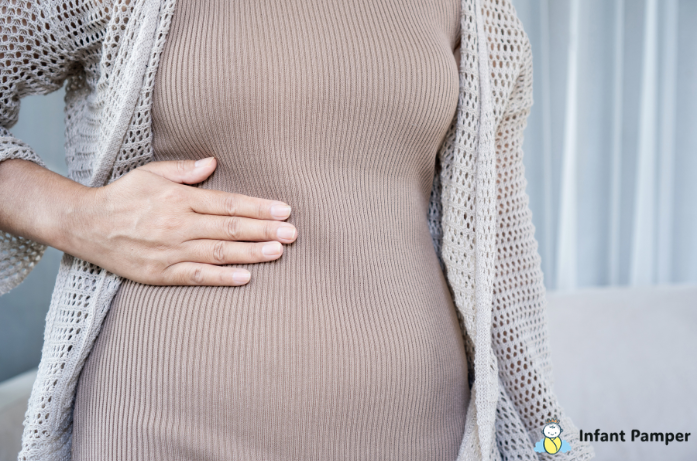
Pregnancy brings many changes, and while some are exciting, others can leave you wondering if everything is okay. You might suddenly feel a sharp pain when getting out of bed or notice a dull ache on the right side of your belly after a long day.
If you’re experiencing right side pain during pregnancy second trimester, it’s natural to wonder whether it’s a normal part of pregnancy or something that needs medical attention.
In many cases, mild right-sided pain happens because your round ligaments are stretching, your uterus is growing, or you’re dealing with gas or constipation. However, pain that is severe, persistent, or getting worse should always be checked by a healthcare professional.
At Infant Pamper, we understand how important it is to feel reassured during pregnancy. In this guide, we’ll explain the common causes of right-side pain, simple ways to ease mild discomfort, and the warning signs that mean it’s time to call your doctor.
Is Right Side Pain Normal During the Second Trimester?
Yes, feeling a mild ache or occasional sharp pain on the right side of your belly is quite common during the second trimester (weeks 14–27).
As your baby grows, your uterus gets bigger, and the muscles and ligaments supporting it begin to stretch. Pregnancy hormones can also slow down digestion, leading to gas, bloating, and abdominal discomfort.
You might notice a sudden pulling sensation when getting out of bed, rolling over at night, coughing, or even taking a long walk. These little aches can feel uncomfortable, but they are often part of your body’s natural changes during pregnancy.
According to the NHS, mild stomach pain that goes away after resting, changing positions, or passing gas is usually nothing to worry about.
However, if the pain is severe, keeps getting worse, or comes with symptoms like bleeding, fever, or unusual discharge, contact your healthcare provider right away.
Common Causes of Right Side Pain During Pregnancy Second Trimester
Feeling pain on the right side of your belly can be worrying, especially when you don’t know what’s causing it. Sometimes, it’s simply your body adjusting to your growing baby. Other times, it may be related to digestion or a health condition that needs attention.
Here are seven possible causes and how to manage them safely.
1. Round Ligament Pain
Round ligament pain is one of the most common reasons for right-sided belly pain during the second trimester.
As your uterus grows, the ligaments supporting it stretch, sometimes causing a sudden sharp or pulling sensation in your lower belly or groin.
You may notice:
- Sharp pain when standing up or rolling over
- A pulling feeling when coughing or sneezing
- Brief discomfort on one or both sides
According to the Cleveland Clinic, this pain is especially common during the second trimester and usually lasts a few seconds or minutes.
Moving slowly when changing positions, resting when needed, and gently supporting your belly during sudden movements may help ease the discomfort.
2. Gas and Bloating
Have you noticed your belly feeling unusually full or uncomfortable after eating? Pregnancy hormones slow digestion, allowing gas to build up in your intestines.
If you’re pregnant with pain on right side, trapped gas may be one possible reason, especially if the discomfort improves after passing gas.
You may also experience bloating, mild cramps, or pressure around your abdomen.
Eating smaller meals, drinking enough water, and taking a gentle walk after eating may help reduce bloating and gas-related discomfort.
3. Constipation
Constipation is another common reason for abdominal discomfort during pregnancy.
Hormonal changes slow bowel movements, while iron supplements can sometimes make stools harder to pass.
You might feel bloated, experience lower belly pressure, or notice discomfort that improves after using the bathroom.
Including fiber-rich foods like oats, pears, vegetables, and whole grains, along with drinking plenty of water, can help keep bowel movements regular. If constipation continues, ask your doctor about pregnancy-safe treatments.
4. Growing Uterus and Muscle Strain
Your body is working hard to make room for your growing baby. As your uterus expands, the surrounding muscles and tissues stretch, sometimes causing mild aching or tightness.
You may feel more uncomfortable after standing for a long time, walking, or doing household chores.
Taking regular breaks, avoiding heavy lifting, and resting in a comfortable position may ease mild muscle discomfort. Pain that becomes severe or continues to worsen needs medical evaluation.
5. Urinary Tract Infection (UTI)
A urinary tract infection can sometimes cause lower abdominal pain during pregnancy.
Besides discomfort, you may notice:
- Burning or pain while urinating
- Needing to pee more frequently or urgently
- Cloudy or bloody urine
- Pressure in your lower belly
Some UTIs cause very few symptoms, so they’re not always easy to recognize.
If you suspect a UTI, contact your healthcare provider promptly for testing and treatment. Fever, chills, vomiting, or pain in your side or back may indicate a kidney infection and require urgent medical care.
6. Gallbladder Problems
If you feel pain just below your right ribs, particularly after eating, your gallbladder could be involved.
Pregnancy hormones can slow gallbladder emptying, which may contribute to gallstone problems.
You might notice nausea, upper-right belly pain, or discomfort spreading toward your back or right shoulder.
Contact your healthcare provider if you develop these symptoms. Severe or persistent upper-right abdominal pain needs urgent assessment because it can also be a warning sign of preeclampsia.
7. Appendicitis
Appendicitis is less common during pregnancy, but it’s a serious condition that needs immediate treatment.
It happens when the appendix becomes inflamed, often causing pain that gradually becomes worse.
Other warning signs may include:
- Persistent or worsening abdominal pain
- Fever or loss of appetite
- Nausea or vomiting
- Pain that increases with movement
Although appendicitis often causes lower-right belly pain, the location can vary during pregnancy.
If you experience persistent or worsening abdominal pain, especially with fever or vomiting, seek emergency medical care rather than waiting for the pain to disappear.
Does the Location of Right Side Pain Matter?
Yes. The location of your discomfort can provide helpful clues, although it cannot confirm the cause.
| Pain location | Possible causes |
| Lower right abdomen | Round ligament pain, gas, constipation, appendicitis |
| Upper right abdomen | Gallbladder problems, preeclampsia |
| Right side of the back | Muscle strain, kidney infection, kidney stones |
| Right groin or hip | Round ligament stretching |
Lower Right Side Pain
If you’re experiencing side pain in pregnancy lower right side, stretching ligaments or digestive changes may be responsible.
Brief discomfort triggered by movement is often less concerning than pain that continues or becomes increasingly intense.
Upper Right Side Pain
Pain beneath your right ribs deserves special attention, particularly after 20 weeks.
It can sometimes be a warning sign of preeclampsia or HELLP syndrome.
The American College of Obstetricians and Gynecologists (ACOG) identifies upper abdominal pain, severe headaches, and vision changes as possible warning symptoms of preeclampsia.
Seek urgent medical care if you experience these symptoms.
When Should You Call a Doctor About Right Side Pain?
It’s understandable to feel unsure about which pregnancy symptoms require medical attention.
A useful approach is to consider how strong the pain feels, how long it lasts, and whether other symptoms are present.
Seek Immediate Medical Care If You Notice:
- Severe, sudden, or worsening abdominal pain
- Vaginal bleeding or leaking fluid
- Persistent pain beneath your right ribs
- Severe headaches or blurred vision
- Fever with significant abdominal or back pain
- Fainting or difficulty breathing
- Regular contractions before 37 weeks
- Severe pain with repeated vomiting
These symptoms may indicate a condition that needs urgent treatment.
Contact Your Doctor Promptly If:
- Mild pain keeps returning
- Discomfort doesn’t improve with rest
- You experience burning during urination
- You notice unusual vaginal discharge
- You feel persistent pelvic pressure
You don’t need to wait until the pain becomes unbearable before asking for help.
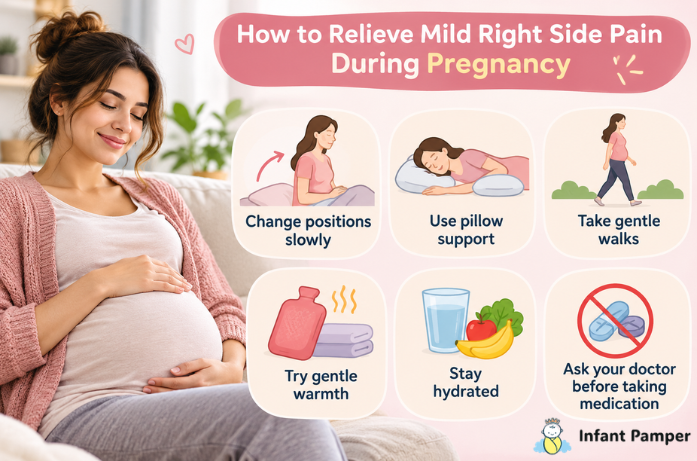
How to Relieve Mild Right Side Pain During Pregnancy
If your healthcare provider has ruled out concerning causes, a few gentle changes may help you feel more comfortable.
1. Change Positions Slowly
Sudden movements can trigger round ligament pain.
When getting out of bed, roll onto your side first and gently push yourself into a sitting position before standing.
2. Rest With Pillow Support
Try lying on your side with a pillow between your knees and another beneath your belly.
This may reduce pressure and help your muscles relax.
3. Try Gentle Walking
A short walk may ease gas, bloating, and mild stiffness.
Avoid pushing yourself when you’re uncomfortable, and stop if movement increases the pain.
4. Use Gentle Warmth
A comfortably warm, not hot, bath or compress may help relieve mild muscle discomfort.
Avoid overheating or applying excessive heat directly to your belly.
5. Stay Hydrated
Drink water regularly and include fiber-rich foods in your meals.
Smaller meals may also help if bloating makes your belly uncomfortable.
6. Ask Before Taking Medication
Not every pain reliever is safe during pregnancy.
The U.S. Food and Drug Administration (FDA) advises avoiding NSAIDs such as ibuprofen from 20 weeks onward unless specifically directed by a healthcare professional.
Always ask your healthcare provider before taking medication for pregnancy-related pain.
Can Right Side Pain Be a Sign of Preterm Labor?
Sometimes, although right-sided discomfort alone doesn’t mean labor has started.
Preterm labor occurs when labor begins before 37 weeks of pregnancy.
Possible warning signs include regular contractions, menstrual-like cramps, pelvic pressure, persistent lower backache, or fluid leaking from the vagina.
If you notice these symptoms, contact your maternity care team immediately.
Early medical assessment can help determine whether treatment or monitoring is needed.
What Should You Tell Your Doctor About the Pain?
If your discomfort keeps returning, noting a few details may help your doctor understand what’s happening.
Pay attention to:
- Location: Is the pain near your groin, lower belly, ribs, or back?
- Timing: When did it begin, and how long does it last?
- Sensation: Does it feel sharp, dull, crampy, or pulling?
- Triggers: Does it happen after meals or sudden movements?
- Other symptoms: Are you experiencing fever, bleeding, vomiting, or urinary discomfort?
These details may help your healthcare provider decide whether you need an examination or tests.
Don’t delay urgent care to collect this information.
Can Right Side Pain Affect Your Baby?
This is often the biggest worry for expecting moms.
Fortunately, mild discomfort caused by round ligament stretching, muscle changes, or uncomplicated digestive problems generally doesn’t harm your baby.
Your body is naturally adjusting to support your growing pregnancy.
However, conditions such as untreated infections, appendicitis, preeclampsia, or preterm labor can affect your health and pregnancy.
That’s why persistent or unusual pain should be evaluated rather than ignored.
Frequently Asked Questions
1. Why is my right side hurting during pregnancy?
Common causes include round ligament stretching, gas, constipation, or muscle strain. Severe or persistent pain needs medical evaluation.
2. Is right side pain during second trimester of pregnancy common?
Yes, occasional mild discomfort is common as your uterus grows. However, worsening or persistent pain shouldn’t be considered normal without medical assessment.
3. How long does round ligament pain last?
It usually lasts a few seconds to several minutes, especially after sudden movement. Ongoing or severe pain should be checked.
4. Can baby movements cause pain on the right side?
As pregnancy progresses, fetal movements may cause brief uncomfortable sensations. However, persistent or severe pain shouldn’t automatically be blamed on your baby’s movements.
5. Is right side pain at 20 weeks pregnant dangerous?
Not always. Mild ligament discomfort can occur around 20 weeks. However, severe or persistent upper-right abdominal pain requires urgent assessment because it may indicate preeclampsia.
Final Thoughts
Feeling an occasional ache or pulling sensation during pregnancy can be worrying, but it isn’t always a sign that something is wrong.
In many cases, right side pain during pregnancy second trimester happens as your uterus grows, your ligaments stretch, or your digestion changes. Rest, gentle movement, and staying hydrated may help ease mild discomfort.
However, if the pain is severe, keeps getting worse, or comes with symptoms like bleeding, fever, or dizziness, seek medical attention.
At Infant Pamper, we want every expecting mom to feel informed and supported throughout pregnancy. Listen to your body, take time to rest, and never hesitate to ask your doctor when something doesn’t feel right.
A healthy pregnancy starts with taking good care of yourself, too.
Medical Disclaimer
This article is for educational purposes only and does not replace professional medical advice, diagnosis, or treatment. Always consult your obstetrician, midwife, or maternity healthcare provider about concerning pregnancy symptoms. Seek immediate medical attention for severe abdominal pain or other warning signs.