
Written with love and care by a mom at Infant Pamper
Have you noticed your newborn making little smacking sounds with their lips, even when they’re not feeding? Sometimes it happens while they’re sleeping, and other times, just after a feed. As a mom, you might wonder if your baby is hungry again or if these mouth movements mean something else.
The good news is that infant lip smacking is usually normal. Babies often smack their lips when they’re hungry, using their natural sucking reflex, or trying to comfort themselves. You may also notice these movements during sleep. Most of the time, there’s nothing to worry about if your baby is feeding well and seems comfortable.
In this guide, we’ll explain why newborns smack their lips, how to tell if it’s a hunger sign, and what these movements mean at different ages. You’ll also learn what to do when your baby keeps smacking their lips and when it’s best to check with your pediatrician.
Is Infant Lip Smacking Normal?
Yes, lip smacking is common in healthy newborns and usually isn’t something to worry about.
Babies are born with natural feeding reflexes. These help them find the breast or bottle, latch, and suck milk before they have any real control over their movements.
You might notice your baby puckering their lips, moving their tongue, making sucking sounds, or opening and closing their mouth.
Sometimes these movements mean your baby wants milk. Other times, they’re simply practicing a reflex or settling themselves.
The important thing is to notice what happens alongside the lip smacking. A relaxed baby making gentle mouth movements is very different from a baby who appears uncomfortable or unusually unresponsive.
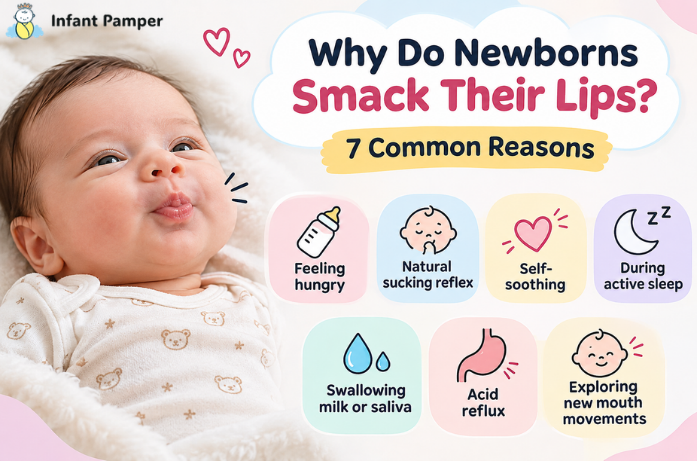
Why Do Newborns Smack Their Lips? 7 Common Reasons
There are several reasons behind newborn lip smacking, and most are completely normal. Your baby may be hungry, trying to feel comfortable, or simply using their natural sucking reflex. Here are seven common reasons to help you understand these little mouth movements.
1. Your Baby Is Hungry
Hunger is one of the most common reasons newborns smack their lips. Babies often show early hunger signs before they start crying.
You may notice your baby opening their mouth, turning their head toward your breast, sucking on their hands, or becoming restless.
According to the CDC, lip smacking is an early hunger cue in babies younger than five months. If you notice these signs together, offer the breast or bottle before your baby becomes upset. This can make feeding easier and more comfortable.
2. Their Natural Sucking Reflex Is Working
Newborns are born with a natural sucking reflex that helps them drink milk. This reflex develops before birth and continues during the early months.
Sometimes, your baby may move their lips or make sucking motions even after finishing a feeding. It doesn’t always mean they’re still hungry.
If your baby seems comfortable, feeds well, gains weight, and has enough wet diapers, these occasional movements are usually normal.
3. Your Baby Is Trying to Comfort Themselves
Sucking can help babies feel calm and relaxed, especially when they’re tired or getting ready to sleep.
You may notice infant smacking lips while your baby is resting against your chest, being rocked, or settling after a feeding. Some babies also suck their fingers or hands for comfort.
If your baby looks relaxed and isn’t showing other hunger signs, there’s usually no need to offer more milk. Gentle cuddling or rocking may help them settle.
4. Your Baby Is in Active Sleep
Newborns often make little sounds and movements while sleeping. They may smile, twitch, stretch, or move their lips without fully waking up.
These movements can happen during active sleep, a normal stage of newborn sleep. Your baby might even make sucking sounds while their eyes remain closed.
If your baby is breathing normally and sleeping comfortably, there’s usually no need to wake them because of lip smacking alone. However, continue scheduled feedings if your pediatrician has recommended them.
5. Your Baby Is Swallowing Milk or Saliva
Babies sometimes move their lips and tongues while swallowing small amounts of milk or saliva, especially after feeding.
You might notice a little gulping sound or repeated swallowing as your baby settles. These movements are generally normal when your baby feeds and breathes comfortably.
However, if your baby frequently coughs, chokes, or struggles to swallow during feeding, talk to your pediatrician. These signs may indicate a feeding difficulty.
6. Your Baby May Have Acid Reflux
Reflux is common in young babies because their digestive systems are still developing. Sometimes, milk flows back up from the stomach after feeding.
You may notice repeated swallowing, spit-up, or discomfort after feeds. However, lip smacking alone doesn’t mean your baby has reflux.
If your baby frequently refuses feeds, cries during feeding, or isn’t gaining weight well, speak with your pediatrician. Burping during feeding breaks and holding your baby upright while awake after feeds may help with spit-up. Always place your baby on their back on a firm, flat surface for sleep.
7. Your Baby Is Exploring New Mouth Movements
As babies grow, they start discovering different movements they can make with their lips, tongue, and mouth.
Around three to four months, you may notice your baby blowing bubbles, sucking their fingers, or making new sounds. Sometimes, they repeat these movements simply because they’re learning something new.
In older babies, increased drooling and chewing may also happen around teething, although lip smacking alone isn’t a reliable teething sign.
If your baby is happy, feeding well, and developing normally, these movements are usually harmless. Talking and smiling back can make these little moments a lovely part of bonding.
What Does Lip Smacking Mean at Different Ages?
Your baby’s age can offer another clue.
| Baby’s age | Possible explanation |
| 0–4 weeks | Hunger cues, sucking reflexes, and sleep-related mouth movements |
| 1–2 months | Feeding signals, reflexive sucking, and comfort |
| 3–4 months | Hunger, hand sucking, self-soothing, and growing mouth awareness |
| 5–6 months | Continued feeding cues, playful mouth movements, and possible teething-related discomfort |
These are general patterns, not strict developmental milestones. Every baby develops differently.
One important thing to remember: lip smacking isn’t a sign that a young baby needs solid food. Most babies are ready to begin solids at around six months when they also show the appropriate developmental readiness signs.
Baby Smacking Lips Before, After, or During Feeding: What It Means
One of the easiest ways to understand your baby’s mouth movements is to notice when they happen.
| When it happens | What it might mean | What parents can do |
| Before feeding | Early hunger cue | Look for rooting and offer milk |
| Immediately after feeding | Sucking reflex or continued hunger | Check for other hunger and fullness cues |
| During sleep | Active sleep or sucking reflex | Observe without disturbing peaceful sleep |
| While being cuddled | Comfort or self-soothing | Continue comforting your baby |
| With frequent spit-up | Possible feeding or reflux discomfort | Watch for additional symptoms |
| With staring or unresponsiveness | Possible abnormal neurological event | Seek urgent medical assessment |
This table isn’t a diagnosis, but it can help you connect the behavior with what your baby may be experiencing.
How to Tell If Lip Smacking Means Hunger or Comfort
This is something many new moms find confusing, especially when their baby has just finished a feeding.
A simple way to tell is to look for other signals.
Signs Your Baby May Still Be Hungry
Your baby may:
- Turn their head toward the breast or bottle.
- Open their mouth and search for the nipple.
- Bring their hands toward their mouth.
- Become more alert or restless.
- Continue actively looking for milk.
Signs Your Baby May Be Comfortable and Full
You might notice:
- Relaxed hands and body.
- Turning away from the breast or bottle.
- Releasing the nipple.
- Closing their mouth when milk is offered.
- Settling comfortably after feeding.
Remember, babies don’t always follow predictable feeding schedules. Growth spurts and cluster feeding can mean your little one wants milk more frequently on some days.
If you’re unsure whether your baby is getting enough milk, wet diapers and steady weight gain are more reliable clues than lip movements alone.
Why Is My Baby Smacking Their Lips Even After Feeding?
You may notice your baby smacking their lips even after a full feeding. This doesn’t always mean they’re hungry. Some newborns continue making sucking movements because of their natural sucking reflex or simply to comfort themselves.
However, if your baby is also turning their head toward the breast, sucking their hands, or becoming restless, they may still be hungry. Look for these signs before deciding whether to offer more milk.
If your baby feeds well, seems comfortable, and gains weight normally, there’s usually nothing to worry about. But if they often seem hungry after feeding, struggle to latch, or aren’t gaining enough weight, talk to your pediatrician or a lactation consultant.
What Should Parents Do When Their Baby Smacks Their Lips?
If your baby keeps smacking their lips, there’s usually no need to worry. A few simple things can help you understand what your little one needs.
1. Notice When It Happens
Pay attention to whether your baby smacks their lips before feeding, after feeding, or during sleep. This can help you understand whether they’re hungry, sleepy, or simply using their sucking reflex.
2. Look for Other Hunger Signs
If your baby is also opening their mouth, turning toward your breast, or sucking their hands, they may be hungry. Offer the breast or bottle before they become upset.
3. Don’t Force Extra Milk
Lip smacking doesn’t always mean your baby needs more milk. If they turn away from the bottle, close their mouth, or seem satisfied, let them stop feeding rather than encouraging them to drink more.
4. Keep Track of Feeding and Wet Diapers
Notice how often your baby feeds and how many wet diapers they have. After the first several days, most well-fed newborns have around six or more wet diapers daily. If your baby has fewer than expected or isn’t feeding well, contact your pediatrician.
5. Watch for Unusual Movements
If your baby’s lip smacking looks different from usual or happens with staring, stiffening, or unusual body movements, speak with your pediatrician promptly. A short video may help your doctor understand what’s happening, but don’t delay urgent care to record one.
When Should You Worry About Lip Smacking in Babies?
Most lip smacking is harmless, but certain accompanying symptoms need medical attention.
Contact your pediatrician if your baby has persistent feeding difficulties, poor weight gain, frequent choking during feeds, fewer wet diapers, or unusual changes in behavior.
Seek emergency care if your baby develops breathing difficulty, blue or gray coloring, severe weakness, or becomes unresponsive.
Occasionally, repetitive mouth movements can occur during seizures. This is uncommon, and lip smacking alone doesn’t mean a baby is having one.
However, repeated lip movements with unusual staring, eye deviation, stiffening, jerking, or reduced responsiveness require urgent evaluation.
A baby younger than three months with a temperature of 100.4°F (38°C) or higher also needs immediate medical assessment, whether or not lip smacking is present.
Frequently Asked Questions
1. Is lip smacking in infants a sign of hunger?
Yes, it can be an early hunger sign, especially if your baby is also rooting, opening their mouth, or sucking their hands.
2. Why is my newborn smacking lips while sleeping?
Newborn smacking lips during sleep is usually related to natural sucking reflexes or active sleep and is generally harmless.
3. Can lip smacking be a sign of teething?
Sometimes, older babies make more mouth movements during teething. However, lip smacking alone isn’t a reliable teething sign.
4. Why does my three-month-old suck her thumb and smack her lips?
This is often normal and may be related to hunger, self-soothing, or exploring new mouth movements.
5. Can lip smacking indicate a seizure?
Rarely, yes. If lip smacking happens with staring, stiffening, or unresponsiveness, seek urgent medical attention.
Final Thoughts
Those tiny lip-smacking sounds can make you smile one moment and wonder what’s happening the next. That’s a familiar part of caring for a newborn, especially when you are still learning all their little signals.
In most cases, infant lip smacking is simply connected to hunger, natural sucking reflexes, sleep, or comfort. As your baby grows, it may also become another way they explore what their mouth can do.
What matters most is not the lip movement alone, but how your baby seems overall. Are they feeding comfortably, having enough wet diapers, breathing normally, and growing well? Those everyday signs tell you much more.
And whenever something seems unusual, don’t hesitate to ask your pediatrician.
At Infant Pamper, we believe parenting becomes a little easier when you understand the small things your baby is trying to communicate. You don’t need to figure out every movement right away. With time, patience, and plenty of cuddles, you’ll become more familiar with your little one’s needs.
Disclaimer
This article is intended for general educational information and doesn’t replace advice from your baby’s pediatrician. Seek professional medical care for concerning symptoms or changes in your baby’s health.