Written with care by a mom at Infant Pamper
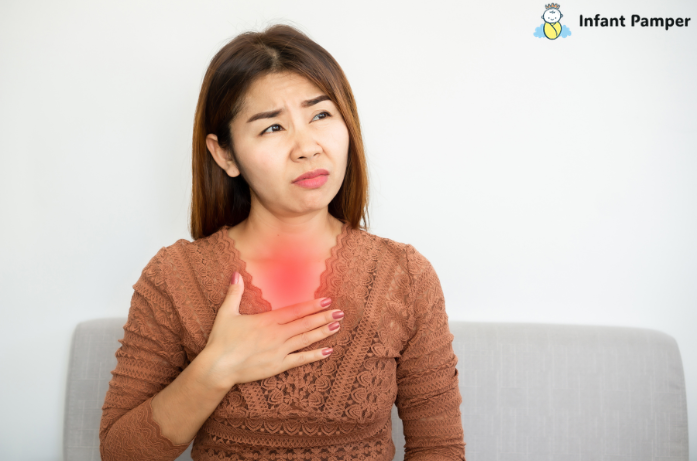
Pregnancy comes with plenty of changes, and heartburn is one of those uncomfortable symptoms that can catch you off guard. You might feel a burning sensation in your chest after eating, notice a sour taste in your mouth, or struggle to get comfortable at bedtime. If you’re wondering how to get rid of heartburn during pregnancy fast, you’re not alone.
Heartburn is common during pregnancy because hormonal changes and your growing baby can put extra pressure on your stomach. While it can be frustrating, a few simple changes to your eating habits and daily routine may help ease the discomfort.
In this guide, we’ll share safe, practical ways to relieve pregnancy heartburn, foods that may help, common triggers to avoid, and signs that mean it’s time to talk to your doctor.
How to Get Rid of Heartburn During Pregnancy Fast
When heartburn starts, you want relief without doing anything that could harm your baby.
Here are a few simple things you can try.
1. Sit Upright After Eating
If you feel burning in your chest, avoid lying down immediately.
Sitting upright helps gravity keep stomach contents from moving back toward your throat.
You can also take a slow walk around your home if you’re feeling comfortable. Avoid bending forward or putting extra pressure on your stomach.
2. Try a Small Amount of Milk or Yogurt
A little pasteurized milk or plain yogurt may temporarily soothe heartburn for some pregnant women.
According to Cleveland Clinic, milk and yogurt are among the home remedies some people try for pregnancy heartburn.
However, dairy doesn’t help everyone. Full-fat milk or large servings may worsen reflux.
Start with a small amount and notice how your body responds.
3. Loosen Tight Clothing
Tight pants or waistbands can increase pressure around your growing belly. Try changing into comfortable maternity clothes that don’t squeeze your stomach.
It’s a small adjustment, but it may help reduce discomfort.
4. Ask About Pregnancy-Safe Antacids
If simple changes aren’t helping, certain antacids may provide quicker relief by neutralizing stomach acid.
However, not every heartburn medicine is suitable during pregnancy.
Always check with your pharmacist, midwife, or OB-GYN before taking medication.
Why Does Heartburn Happen During Pregnancy?
You may wonder why foods that never bothered you before suddenly cause burning.
There are two main reasons.
Pregnancy hormones: Progesterone relaxes the muscle between your stomach and esophagus. This makes it easier for stomach acid to move upward.
Your growing uterus: As your baby grows, your uterus puts more pressure on your stomach, which can push acid upward.
Pregnancy hormones can also slow digestion, leaving you feeling full for longer.
That’s why heartburn may happen early in pregnancy but often becomes more noticeable during the second and third trimesters.
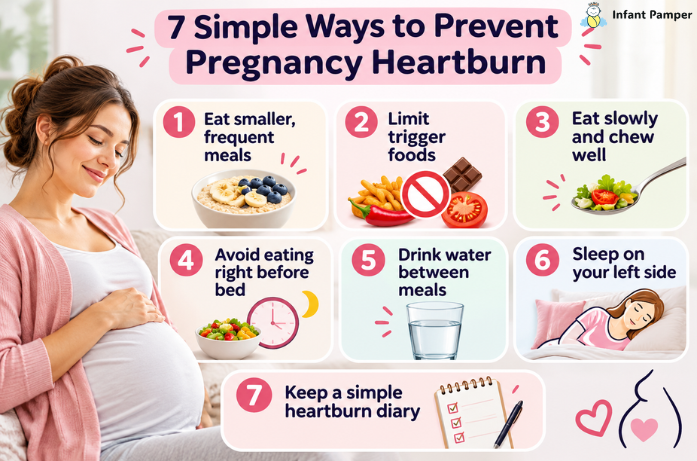
7 Simple Ways to Prevent Pregnancy Heartburn
While you can’t always prevent heartburn during pregnancy, a few simple changes to your eating habits and daily routine may help reduce discomfort.
1. Eat Smaller, More Frequent Meals
Large meals can put extra pressure on your stomach and make acid reflux worse.
Instead of three heavy meals, try eating five or six smaller meals or snacks throughout the day.
This helps prevent uncomfortable fullness while still providing the nutrients you and your baby need. Smaller portions may also feel easier if you’re experiencing loss of appetite during early pregnancy.
2. Identify Your Trigger Foods
Certain foods are more likely to cause heartburn, including:
- Spicy, oily, and fried foods
- Citrus fruits and tomatoes
- Chocolate and peppermint
- Coffee and caffeinated drinks
- Carbonated beverages
However, every pregnancy is different. Notice which foods cause burning or discomfort and try limiting those rather than avoiding everything unnecessarily. If you enjoy tea, our guide to pregnancy-safe hot tea can help you understand which ingredients and drinks deserve extra caution.
3. Eat Slowly and Chew Properly
Eating too quickly can lead to overeating, which may worsen heartburn.
Take smaller bites, chew your food thoroughly, and give yourself enough time to enjoy your meal. Eating slowly also helps you recognize when you’re comfortably full.
4. Avoid Eating Right Before Bed
Lying down soon after eating makes it easier for stomach acid to move upward.
The NHS recommends avoiding food within three hours of bedtime. Try eating dinner earlier and staying upright afterward to help reduce nighttime heartburn.
5. Drink Water Between Meals
Drinking large amounts of water with meals may make your stomach feel overly full.
Try sipping smaller amounts during meals and drinking more water between them. This helps you stay hydrated without adding too much fullness at once. You can also learn about the signs of dehydration during pregnancy and how to maintain healthy fluid intake.
6. Sleep on Your Left Side
If heartburn bothers you at night, sleeping on your left side may help reduce acid reflux.
You can also use a supportive wedge pillow to elevate your upper body slightly. Keeping your chest and shoulders raised may make sleeping more comfortable.
7. Keep a Simple Heartburn Diary
Tracking your symptoms can help you identify what makes heartburn worse.
For a few days, note what you ate, when symptoms started, and whether you were sitting or lying down. You may discover that certain foods, large meals, or late dinners trigger your discomfort.
Once you recognize these patterns, making small changes becomes much easier.
Best Foods to Eat When You Have Pregnancy Heartburn
There isn’t one magical food that instantly stops heartburn.
However, mild, lower-fat foods may be easier to tolerate than spicy or greasy meals.
| Food | Why it may help |
| Oatmeal | A filling, generally gentle breakfast |
| Bananas | A convenient, relatively low-acid snack |
| Plain yogurt | May temporarily soothe symptoms |
| Whole-grain toast | A simple, light food option |
| Steamed vegetables | Less greasy than fried vegetables |
| Lean chicken | Provides protein without excessive fat |
| Rice | A mild base for smaller meals |
These foods aren’t guaranteed treatments. Choose what agrees with your stomach while maintaining a balanced pregnancy diet.
A Simple Pregnancy-Friendly Meal Example
If you’re unsure what to eat, here’s an easy example.
Breakfast: Oatmeal with banana slices.
Morning snack: Plain pasteurized yogurt.
Lunch: Rice, cooked vegetables, and well-cooked chicken or lentils.
Afternoon snack: Whole-grain toast.
Dinner: A smaller serving of rice, vegetables, and a mild protein.
Adjust portions based on your appetite and nutritional needs. If you have gestational diabetes or another medical condition, follow your healthcare provider’s dietary advice.
Can You Take Heartburn Medicine During Pregnancy?
Sometimes changing your eating habits isn’t enough, and that’s okay.
Certain medicines may help manage pregnancy heartburn.
Antacids: These neutralize stomach acid and may provide relatively quick relief.
Alginates: These create a protective barrier that helps prevent acid from moving upward.
Acid-reducing medicines: If symptoms continue, your doctor may recommend an appropriate H2 blocker or proton pump inhibitor.
According to the NHS, some antacids and alginates can be used during pregnancy, but certain products aren’t suitable.
Also, antacids can interfere with iron and folic acid absorption. The NHS recommends separating them from these supplements by at least two hours.
Always check the specific medicine with your healthcare provider or pharmacist before using it.
Home Remedies You Should Avoid During Pregnancy
When heartburn becomes uncomfortable, online remedies can sound tempting.
But natural doesn’t always mean safe.
Baking soda: Avoid homemade baking soda drinks for pregnancy heartburn unless your healthcare provider specifically recommends them. Sodium bicarbonate can affect your body’s sodium balance.
Apple cider vinegar: There’s no good evidence that drinking vinegar treats heartburn, and its acidity may worsen symptoms.
Peppermint: Although peppermint is often associated with digestion, it can worsen reflux in some people.
Herbal remedies: Avoid concentrated herbs and supplements without medical advice because pregnancy safety information may be limited.
Stick with gentle lifestyle changes and treatments approved by your prenatal care team.
When Should You Call Your Doctor?
Heartburn is common during pregnancy, but persistent or severe symptoms shouldn’t be ignored.
Contact your healthcare provider if you experience:
- Frequent heartburn that affects eating or sleeping
- Difficulty swallowing
- Persistent vomiting
- Unexplained weight loss
- Symptoms that don’t improve with recommended treatments
Seek urgent medical attention for vomiting blood, black tarry stools, severe chest pain, or difficulty breathing.
There’s another important warning.
According to the American College of Obstetricians and Gynecologists (ACOG), severe upper abdominal pain, especially with a persistent headache, vision changes, unusual swelling, or breathing difficulties, may indicate preeclampsia.
These symptoms need prompt medical evaluation, particularly after 20 weeks of pregnancy.
Don’t assume every upper abdominal or chest discomfort is ordinary heartburn.
FAQs About Heartburn During Pregnancy
1. What helps with heartburn during pregnancy?
Eating smaller meals, staying upright after eating, avoiding trigger foods, and sleeping with your upper body elevated may help. If symptoms continue, ask your doctor about suitable medication.
2. How to calm heartburn during pregnancy at night?
Avoid eating within three hours of bedtime, try sleeping on your left side, and elevate your upper body. These changes may help reduce nighttime acid reflux.
3. Is pregnancy heartburn relief possible without medicine?
Yes. Mild heartburn may improve through meal timing, smaller portions, avoiding trigger foods, and adjusting your sleeping position. However, persistent symptoms may require medical treatment.
4. Does heartburn mean my baby will have lots of hair?
A small study found an association between heartburn severity and newborn hair, but heartburn isn’t a reliable way to predict your baby’s hair growth.
5. When does pregnancy heartburn go away?
For many women, heartburn improves after childbirth as pregnancy hormones change and pressure on the stomach decreases. If symptoms continue after delivery, speak with your healthcare provider.
Final Thoughts
Heartburn during pregnancy can be frustrating, especially when it affects your meals or keeps you awake at night. Thankfully, simple changes like eating smaller meals, avoiding trigger foods, staying upright after eating, and adjusting your sleeping position can help reduce discomfort.
If you need faster relief, certain pregnancy-appropriate antacids may help, but always check with your healthcare provider before taking medication.
For many moms, heartburn improves after childbirth as hormone levels change and pressure on the stomach decreases. Until then, listen to your body and seek medical advice if symptoms become frequent or severe.
At Infant Pamper, we believe caring for yourself is just as important as caring for your growing baby. Small changes can make your pregnancy journey more comfortable and enjoyable.
Medical Disclaimer: This article is for educational purposes only and doesn’t replace professional medical advice. Always consult your OB-GYN, midwife, or qualified healthcare provider before taking medicines, supplements, or trying new treatments during pregnancy.