Written with care by a loving mom at Infant Pamper
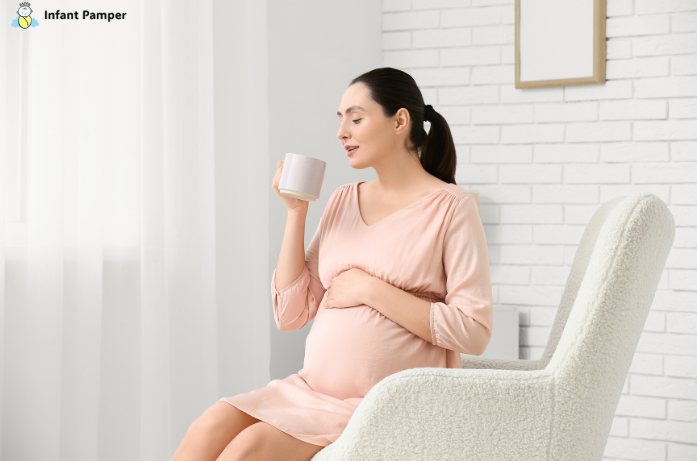
Pregnancy changes so many little routines in our daily life, and one of those for me was my simple habit of sipping tea. I remember standing in my kitchen, holding my favorite cup, wondering if it was still safe. That’s when I started learning about pregnancy safe hot tea, which ones gently comfort your body, and which ones are better left aside for a while. It made me pause and rethink even the smallest habits with more care.
The answer is yes, you absolutely can still enjoy your tea during pregnancy with the right choices. With a little awareness and gentle guidance, those warm, peaceful moments don’t have to go away. Instead, they can become even more comforting and meaningful as you care for yourself and your baby. Let’s walk through this together in a calm and reassuring way.
What Is a Pregnancy Safe Hot Tea?
A pregnancy safe hot tea is one that supports your body without causing stress to your baby’s development. During pregnancy, your metabolism, hormones, and sensitivity to certain substances change, which means even everyday drinks need a second look.
There are two main types of tea to understand:
1. True Teas (from tea leaves)
These include black, green, white, and oolong tea. They naturally contain caffeine.
2. Herbal Teas (from herbs, flowers, roots)
These are caffeine-free but can vary widely in safety depending on the herb used.
A safe tea during pregnancy usually means:
- Low or no caffeine
- Gentle herbal ingredients
- No strong medicinal effects
Think of it this way your tea should soothe, not stimulate.
Why Choosing the Right Tea Matters During Pregnancy
It might seem like a small everyday choice, but the type of tea you drink can gently influence your body during pregnancy. Some teas, especially those with caffeine or strong herbs, can increase heart rate, trigger mild uterine activity, or even affect how your body absorbs important nutrients like iron.
According to trusted health sources like the American Pregnancy Association, being mindful about herbal intake during pregnancy is important because certain herbs can have stronger effects than expected.
On the other hand, the right pregnancy tea can be truly comforting and supportive. It can help ease nausea, improve digestion, relax your mind, and keep you hydrated throughout the day. So it’s not about giving up tea, it’s about choosing it with care and love.
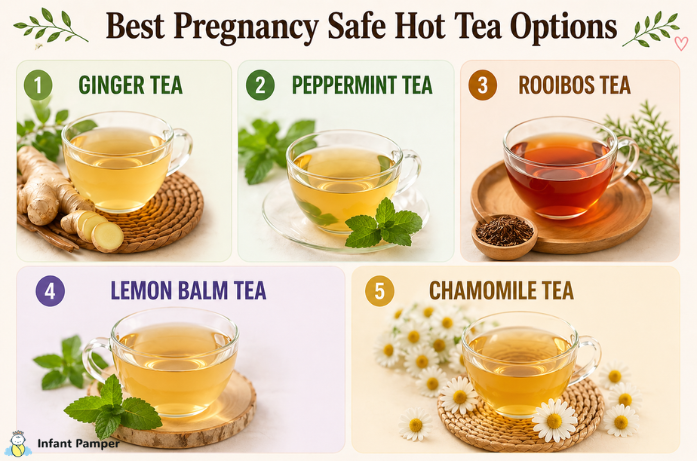
Best Pregnancy Safe Hot Tea Options
Let’s talk about the comforting choices you can actually enjoy without worry. These are widely considered herbal tea pregnancy safe options when consumed in moderation.
1. Ginger Tea: A Gentle Relief in Early Days
If morning sickness has been difficult, ginger tea can feel like a small relief. It works gently to reduce nausea, support digestion, and bring warmth to your body.
Even a light cup can make a noticeable difference. You don’t need it strong just a mild infusion is often enough to help you feel better during those early weeks.
2. Peppermint Tea: Light and Refreshing
Peppermint tea is a simple and refreshing choice, especially when your stomach feels heavy. It can help ease bloating, reduce gas, and soothe mild digestive discomfort.
It’s also a lovely option for a calm afternoon break. The light, cooling taste makes it easy to enjoy without feeling too strong on your system.
3. Rooibos Tea: Naturally Nourishing
Rooibos tea is one of the best tea for pregnancy because it’s naturally caffeine-free and rich in antioxidants. It’s gentle on your stomach and supports hydration.
It also contains small amounts of important minerals like calcium and magnesium. These can quietly support your body as it works harder during pregnancy.
4. Lemon Balm Tea: Soft Calm and Comfort
Lemon balm tea offers a gentle calming effect, which can be helpful when emotions feel overwhelming. It may help reduce mild anxiety and support better sleep.
A warm cup in the evening can feel very peaceful. It’s a simple way to slow down and give yourself a moment of quiet care.
5. Chamomile Tea: Relaxing in Moderation
Chamomile tea is well known for helping you relax and unwind. It can support better sleep and ease stress after a long day.
Just remember to keep it moderate. A small cup now and then is enough to enjoy its calming benefits without overdoing it.
Safe Tea During Pregnancy: How Much Is Okay?
Even when drinking safe tea during pregnancy, balance is important.
A simple guideline:
- 1–2 cups per day is generally safe
- Avoid drinking the same herbal tea excessively
- Always stay well-hydrated with water
Tea should support your routine, not replace essential hydration.
Herbal Tea Pregnancy Safe: What You Should Check
Herbal teas can be confusing because they sound natural but not all are safe.
Here’s how to choose wisely:
Check the Ingredient List
Avoid teas with too many mixed herbs or unfamiliar names.
Avoid Medicinal Blends
Teas marketed for detox, cleansing, or weight loss are not suitable during pregnancy.
Choose Trusted Brands
Look for reputable brands with clear labeling and minimal additives.
Start Slowly
Try small amounts first and notice how your body responds.
Health resources like Pregnancy Birth and Baby also recommend being cautious with herbal teas, as not all ingredients are well-studied during pregnancy.
Teas to Avoid During Pregnancy
Let’s gently go over the teas that are best avoided during pregnancy. This isn’t about fear, it’s simply about staying informed so you can make safe and comforting choices for yourself and your baby.
High-Caffeine Teas
Some teas naturally contain caffeine, such as black tea, green tea, matcha, and oolong tea. While an occasional light cup may be fine, too much caffeine can increase your heart rate, affect your baby’s growth, and even disturb sleep patterns.
If you still enjoy these teas, it’s best to keep them light and in moderation, and balance them with more caffeine-free options.
Herbal Teas That May Be Risky
Some herbs are known to have stronger effects on the body.
Teas to avoid during pregnancy include:
- Licorice root tea
- Sage tea
- Parsley tea
- Aloe vera tea
- Hibiscus (in large amounts)
These may:
- Stimulate the uterus
- Affect hormones
- Cause digestive upset
Research published on National Center for Biotechnology Information also highlights that certain herbal compounds may have biological effects during pregnancy, which is why moderation and caution are important.
Can Tea Affect Your Baby?
Yes, tea can affect your baby if it contains too much caffeine or certain unsafe herbs. But most pregnancy safe teas are completely fine when enjoyed in moderation.
Safe tea choices with low caffeine are generally considered okay during pregnancy. The main concern is excessive caffeine or herbal ingredients that may not be pregnancy-friendly.
The good news is that small, mindful choices are usually enough to keep both you and your baby safe. You do not need to feel afraid just informed and balanced.
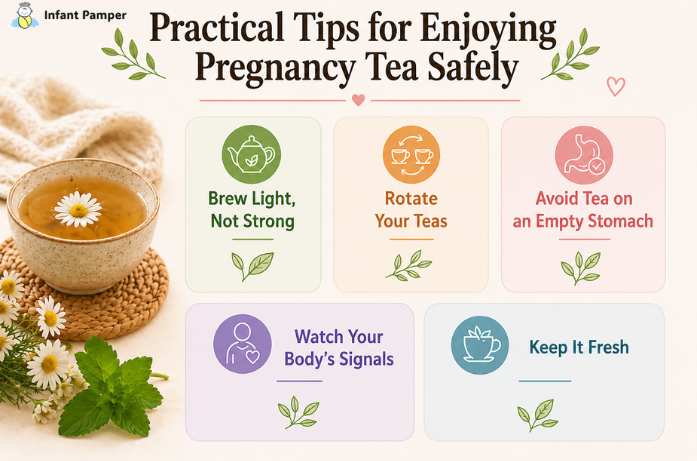
Practical Tips for Enjoying Pregnancy Tea Safely
Here are some simple habits that can make your tea time both safe and comforting:
Brew Light, Not Strong
A mild infusion is always better than a strong one.
Rotate Your Teas
Don’t rely on just one type every day.
Avoid Tea on an Empty Stomach
Especially herbal teas this helps prevent discomfort.
Watch Your Body’s Signals
If something feels off, trust your instinct and pause.
Keep It Fresh
Use freshly brewed tea instead of letting it sit for long hours.
Emotional Comfort: More Than Just a Drink
During pregnancy, tea becomes more than just something you drink it becomes a ritual.
I remember sitting quietly in the evening, feeling my baby move, holding my warm cup. Those moments felt peaceful, grounding, and deeply comforting.
Tea can:
- Help you slow down
- Give you a moment to breathe
- Create small pockets of calm in a busy day
And during pregnancy, those moments matter so much.
Best Tea for Pregnancy by Trimester
Your body’s needs gently change as your pregnancy grows, and your tea choices can adjust along with it. Choosing the right tea for each stage can help you feel more comfortable and supported.
First Trimester
This stage is often about managing nausea and early discomfort.
Ginger tea can help soothe morning sickness, while peppermint tea can ease bloating and support digestion.
Second Trimester
As your body settles, focus on balance and gentle nourishment.
Rooibos tea is a great caffeine-free option, and lemon balm tea can help you feel calm and relaxed.
Third Trimester
Now it’s all about rest and preparing your body.
Chamomile tea (in moderation) can support better sleep, and light herbal blends can bring comfort without being too strong.
When You Should Be Extra Careful
Some situations require a bit more caution:
- High-risk pregnancy
- History of miscarriage
- Taking medications
- Allergies to herbs
In these cases, it’s always best to check with your doctor before adding new teas.
Final Thoughts
Tea can still be a beautiful part of your pregnancy journey you don’t have to give it up, you just have to choose wisely. Stick to gentle, well-known options, keep your intake moderate, and always listen to your body. These small, mindful choices can help you enjoy your tea without worry.
Pregnancy isn’t just about being careful it’s also about feeling comforted, supported, and at peace. So take a deep breath, hold your cup close, and enjoy those quiet moments. Trust that you’re doing a wonderful job every single day.
Loved this guide? Share it with a mom-to-be and explore more helpful tips on Infant Pamper.
FAQs
1. Can I drink tea every day during pregnancy?
Yes, you can enjoy tea daily, but it’s best to keep it to 1–2 cups and choose pregnancy-safe options.
2. Which tea is safest during pregnancy?
Herbal teas like ginger, peppermint, and rooibos are generally considered safe when consumed in moderation.
3. Is caffeine-free tea better during pregnancy?
Yes, caffeine-free teas are usually a safer choice as too much caffeine can affect your baby’s development.
4. Are all herbal teas safe during pregnancy?
No, not all herbal teas are safe. Some herbs can be strong or harmful, so always check ingredients carefully.
5. Can tea help with pregnancy symptoms?
Yes, certain teas like ginger can help with nausea, while peppermint may support digestion and comfort.
Disclaimer: This article is for general information only and not a substitute for medical advice. Always consult your doctor before trying any new tea during pregnancy.