
Written by a caring mom at Infant Pamper
How to play with newborn is simple: talk softly, make eye contact, sing, offer short tummy-time sessions, show high-contrast pictures, and give gentle cuddles. Newborn play should be calm, brief, and guided by your baby’s mood. Your face, voice, touch, and loving response are the best learning tools during these early weeks.
When I brought my baby home, I wondered how to play with someone who mostly slept and fed. I soon learned that newborn play is not about constant entertainment. It is about connection. Every smile, song, and cuddle helps your baby feel safe while supporting early development.
What Does Playing with a Newborn Mean?
Playing with a newborn looks different from playing with an older baby. Your little one cannot hold toys, sit up, clap, or laugh at games yet.
At this stage, play means helping your baby safely experience sound, touch, movement, light, and loving interaction. Babies begin learning through play and interaction from their earliest weeks, so even a diaper change, cuddle, or walk around the room can become a small learning moment.
Your newborn’s brain is taking in so much information. Your voice, touch, and face are all new and interesting. Newborns also tire easily, so a few peaceful minutes of play are often enough.
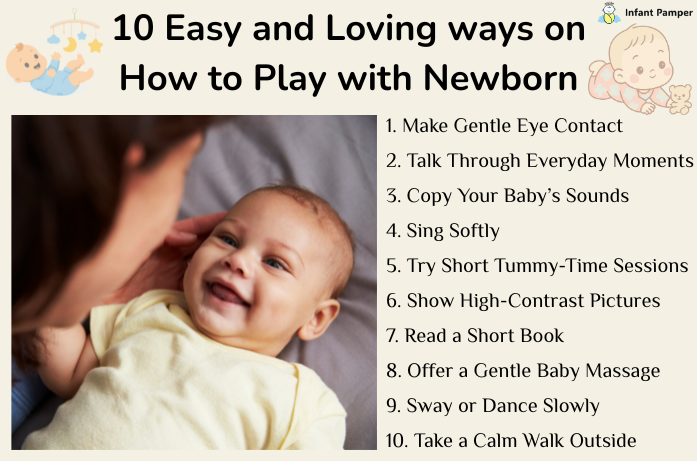
10 Easy and Loving Ways on How to Play with Newborn
Choose a time when your baby is awake, calm, fed, and comfortable.
Begin slowly and follow your baby’s signals. Some newborns enjoy several minutes of interaction, while others need a break after less than a minute. Both are normal.
1. Make Gentle Eye Contact
Your face is one of your baby’s favorite things to study. Because early newborn vision and development are still developing, hold your baby securely and keep your face about 8 to 12 inches away so they can see you more easily.
Smile, raise your eyebrows, or slowly move your head from side to side. Pause so your baby has time to focus.
Your baby may become still, widen their eyes, or try to follow your face. Looking away often means they need a short rest.
2. Talk Through Everyday Moments
You don’t need a special story or lesson; simply talk about what you are doing.
For instance, say things like, “Let’s put on your socks,” or “Mommy is opening the curtain.” Your baby may not understand the words yet, but they are certainly learning the sounds and rhythm of language. Talking during daily care routines helps your baby learn to associate your voice with comfort and safety.
Talking during daily care supports early language development and helps your baby connect your voice with comfort and safety.
These simple conversations are an important part of positive parenting for infants. Talking and responding during daily care can support early language development while helping your baby connect your voice with comfort, love, and safety.
3. Copy Your Baby’s Sounds
Newborns make little coos, squeaks, sighs, and grunts. When your baby makes a sound, gently copy it.
Wait for a few seconds and watch. Your baby may move their mouth, kick, or make another sound.
This simple back-and-forth activity is an early form of conversation. It teaches your baby that their sounds receive a loving response.
4. Sing Softly
Your voice does not need to be perfect. To your baby, it is already familiar and comforting.
Sing a nursery rhyme, hum, or make up a song using your baby’s name. You can sing during a diaper change, bath, or cuddle.
Repeating songs creates familiarity and may help your baby feel calm.
5. Try Short Tummy-Time Sessions
Tummy time helps strengthen the neck, shoulders, and upper body. These muscles will later support rolling skills, sitting, and crawling. These muscles will later support rolling, sitting, and crawling.
Place your awake baby on their tummy on a firm, flat surface. Stay beside them and supervise the entire time.
At first, tummy time may last only one or two minutes. Lie at your baby’s eye level, speak gently, or place a simple picture in front of them.
If your baby dislikes the floor, try tummy time on your chest while you are awake and slightly reclined. Stop when your baby becomes tired or upset.
Tummy time is only for awake, supervised play. Always place your baby on their back for sleep.
6. Show High-Contrast Pictures
Newborn vision is still developing. Bold black-and-white patterns are often easier to notice than detailed, colorful pictures.
Hold a high-contrast card or board book near your baby. Keep it still, then move it slowly from side to side.
You can make cards with white paper and a black marker. Draw thick stripes, circles, or a simple face.
7. Read a Short Book
Reading to a newborn is not about understanding the story. It is about hearing your voice and sharing a calm moment.
Choose a short board book or gentle rhyme and read slowly. One or two pages still give your baby language exposure and loving attention.
8. Offer a Gentle Baby Massage
A soft massage can help your newborn enjoy loving touch and become more aware of their body.
Choose a time when your baby is calm and awake, but not just after feeding. Warm your hands and gently stroke their arms, legs, feet, or back.
If your baby stiffens, turns away, cries, or seems uncomfortable, stop and cuddle them instead.
9. Sway or Dance Slowly
Hold your baby securely against your chest while supporting their head and neck. Sway from side to side or take slow steps around the room.
You can hum or play quiet music. Your warmth, heartbeat, and gentle movement can be comforting for both of you.
Keep every movement smooth. Never shake, spin, or bounce a newborn roughly.
10. Take a Calm Walk Outside
A short walk can introduce your newborn to gentle sounds, fresh air, and natural light. Your baby may notice birds, moving leaves, or the quiet rhythm of your steps.
Choose comfortable weather, keep your baby out of direct sunlight, and dress them appropriately. Use a secure stroller or baby carrier that supports their head and neck.
You do not need to go far. Even a few peaceful minutes outside can be calming for both you and your baby.
How to Play with Your Newborn During Daily Care
Play does not need a separate place in your schedule. Some of the best opportunities happen during the care you already provide.
During a diaper change, smile, sing, or touch your baby’s feet. While dressing them, name their clothes and body parts.
At bath time, describe the warm water and let your baby feel a soft washcloth. Always support your baby and never leave them alone near water.
During feeding, your baby may prefer quiet. You can hold their hand, look into their eyes, or speak softly during pauses.
When learning how to play with your newborn, remember that repetition is helpful. Familiar songs, expressions, and routines help babies feel safe.
When Is the Best Time to Play?
The best time is when your newborn is awake, calm, fed, and comfortable. Their eyes may be open, body relaxed, and attention focused on your face or voice.
Avoid starting play when your baby is crying from hunger, yawning, rubbing their face, or becoming restless. At those times, feeding, comfort, or sleep is more important.
Many newborns enjoy a little interaction after waking or during a calm diaper change. Your baby’s mood and wake windows can help you choose the right time. Your baby’s mood is a better guide than the clock.
How Long Should Newborn Playtime Last?
Start with one or two minutes and watch how your baby responds. If they stay relaxed and interested, continue for a little longer.
If your baby looks away, closes their eyes, or becomes fussy, stop and offer rest. Several short sessions are better than one long session.
Feeding, burping, cuddling, and simply looking around already use a lot of your baby’s energy.
How to Read Your Baby’s Signals
Your newborn may be enjoying play if they look toward your face, become quiet and alert, relax their hands, move their arms or legs, or make soft sounds.
They may also follow your face or a simple picture with their eyes. A quiet baby can still be interested, so do not expect a big reaction every time.
Your baby may need a break if they turn away, close their eyes, yawn, spread their fingers, arch their back, become restless, or cry.
Reduce noise and movement, hold your baby close, or try gentle soothing techniques. Stopping an activity shows that you are listening to your baby.
Important Safety Tips for Newborn Play
Always support your baby’s head and neck. Use a firm, flat surface for floor activities and stay nearby.
Keep small objects, cords, plastic bags, button batteries, sharp items, and pet toys away from your newborn.
Never leave your baby unattended on a bed, sofa, changing table, or raised surface. Even young babies can move suddenly.
Avoid rough bouncing, shaking, loud sounds, flashing toys, and strong massage pressure. Screens are not needed. Newborns learn best from real faces, voices, touch, and movement.
Speak with your pediatrician if your baby was born prematurely, has a medical condition, seems unusually stiff or floppy, does not respond to sounds, or if you have concerns about development.
FAQs About Playing with a Newborn
Final Thoughts
Learning how to play with newborn is not about buying lots of toys or planning special activities. Your voice, smile, gentle touch, and loving attention are often all your baby needs to feel safe and connected.
Keep playtime simple, follow your baby’s mood, and enjoy the small moments. Every song, cuddle, and quiet conversation supports your baby’s development while helping your bond grow stronger.
Looking for more gentle newborn care tips? Explore more helpful guides on Infant Pamper and feel more confident through every stage of your parenting journey.
Disclaimer: This article is for general informational purposes only and is not a substitute for professional medical advice. Always speak with your pediatrician if you have concerns about your baby’s health or development.