Written by a caring mom at Infant Pamper
Flu shot for babies is recommended for most babies starting at 6 months old. It helps protect them from influenza, a virus that can cause high fever, cough, poor feeding, dehydration, and breathing problems. Some babies need two flu shots in their first flu season, given at least 4 weeks apart, to build stronger protection. Side effects are usually mild, such as fussiness, sleepiness, soreness where the shot was given, or a low fever.
When your baby is tiny, even a routine vaccine can feel like a big decision. If you have been wondering whether your little one really needs a flu shot, when to get it, or what happens if the second dose is missed, you are not alone.
As a mom, I know how easy it is to overthink anything related to your baby’s health. So this guide breaks it all down in a simple, parent-friendly way with clear answers about the baby flu shot, when babies need it, common side effects, and how to get through flu season with a little more confidence.
- What Is a Flu Shot for Babies?
- When Can Babies Get a Flu Shot?
- Why the Flu Can Be Hard on Babies
- Benefits of the Baby Flu Shot
- When Should Babies Get the Flu Shot?
- Does My Baby Need One Flu Shot or Two?
- What Happens If Baby Misses the Second Flu Shot?
- Common Flu Shot Side Effects
- When to Call the Doctor
- How to Help Your Baby After the Flu Shot
- How to Protect Your Baby During Flu Season
- Final Thoughts
- FAQs
What Is a Flu Shot for Babies?
A flu shot for babies is a vaccine that helps protect your baby from influenza, commonly called the flu. The flu is more than just a bad cold. It is a virus that spreads easily, especially during fall and winter, and it can make babies much sicker than older kids or adults.
In babies, flu can cause fever, cough, congestion, poor feeding, trouble sleeping, vomiting, and dehydration. In some cases, it can also lead to ear infections, pneumonia, or hospital care. Because babies have small bodies and still-developing immune systems, they can get sick quickly.
The flu shot helps your baby’s immune system recognize the virus and fight it better. It does not promise your baby will never catch the flu, but it can lower the risk of severe illness and make symptoms milder if they do get sick. According to Kids Health, the flu vaccine is recommended for everyone 6 months and older and helps protect children from getting seriously sick during flu season.
When Can Babies Get a Flu Shot?
Babies can usually get their first flu shot at 6 months old. That is the standard starting age for flu vaccination.
If your baby is younger than 6 months, they are too young to get the flu vaccine themselves. In that case, the best protection comes from the people around them. Parents, siblings, grandparents, and caregivers getting vaccinated can help lower the chance of bringing flu home to the baby.
Once your baby turns 6 months, ask your pediatrician about getting the shot during flu season. In many places, flu vaccines are available starting in early fall. The American Academy of Pediatrics also recommends that children 6 months and older get a flu vaccine every year, ideally before flu starts spreading in the community.
Why the Flu Can Be Hard on Babies
Babies do not handle illness the same way older children do. They can become tired, dehydrated, and uncomfortable much faster, especially if they are not feeding well.
Flu can be harder on babies because:
- They may drink less when they have fever or congestion
- A stuffy nose can make feeding and sleeping harder
- High fever can make them very fussy and weak
- Their airways are smaller and can get irritated more easily
- They cannot tell you when they feel body aches, chills, or a sore throat
Sometimes the only signs are extra crying, poor feeding, wanting to be held all day, or seeming more sleepy than usual. That is one reason parents and doctors take flu season seriously in babies. The CDC explains that children under 5, especially younger children, are at higher risk of serious flu complications, which is why prevention matters so much.
Benefits of the Baby Flu Shot
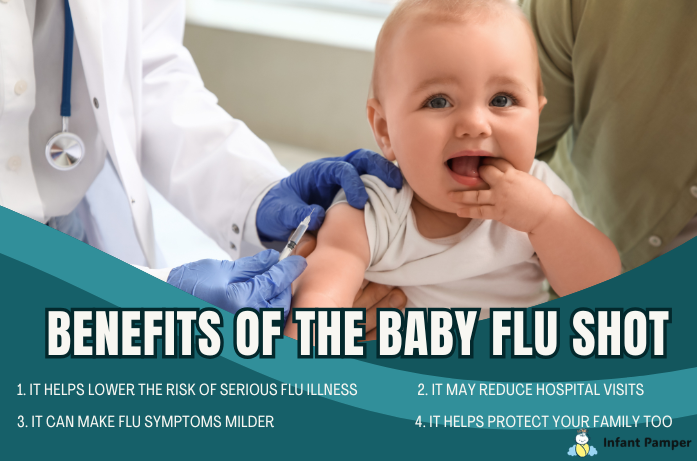
1. It helps lower the risk of serious flu illness
The biggest benefit of the baby flu shot is protection from severe flu symptoms. Even healthy babies can get very sick from the flu, and the vaccine helps lower the chance of complications.
2. It may reduce hospital visits
Babies with the flu sometimes need urgent care for dehydration, breathing trouble, or very high fever. Vaccination can help lower the risk of severe illness that leads to an ER visit or hospital stay.
3. It can make flu symptoms milder
If a vaccinated baby does catch the flu, the illness may be less severe than it would have been without the shot.
4. It helps protect your family too
Babies catch and spread germs easily. If your little one has some protection, it may also reduce the spread of flu to siblings, grandparents, or other family members at home.
When Should Babies Get the Flu Shot?
Flu shot for babies is best given before flu season is in full swing. That is why many doctors recommend getting it in September or October if possible.
If you miss the start of the season, it is still worth asking about it later. Flu often continues spreading through winter and sometimes into spring. So even a later flu shot can still be helpful.
If your baby turns 6 months during flu season, it is usually a good idea to ask about scheduling the vaccine soon rather than waiting until the season is almost over.
Does My Baby Need One Flu Shot or Two?
Some babies need two flu shots during their first flu vaccination season. This usually applies to children 6 months through 8 years old who are getting the flu vaccine for the first time or who have not received enough flu vaccine doses in the past.
Here is the simple version:
- First dose: introduces the immune system to the vaccine
- Second dose: strengthens that protection
The two doses are usually given at least 4 weeks apart.
So if your pediatrician says your baby needs a second shot, that is completely normal. It does not mean the first shot failed. It just means your baby’s body needs that second dose to build better protection.
What Happens If Baby Doesn’t Get Second Flu Shot?
If your baby is supposed to get two doses but only gets the first one, they may not be as well protected during that flu season.
The first shot starts the immune response, but the second shot helps the body build stronger protection. Without it, your baby may still have some benefit from the first dose, but it may not be the fullest protection they could have had.
If you miss the second appointment, do not panic. Call your pediatrician and ask what to do next. In many cases, the second dose can still be given if it is not too late in the season.
How the Flu Shot Is Given
The flu shot baby gets is given as an injection. For younger babies, it is often given in the thigh because that muscle is usually the best spot for vaccines. Older babies and toddlers may get it in the arm depending on their age and size.
The appointment itself is quick, but I know it can still feel emotional. Watching your baby cry after a shot is never easy, even when you know it is meant to protect them. Most babies calm down within a few minutes with cuddles, feeding, rocking, or just being held close.
Common Side Effects of a Flu Shot Baby May Have
Most side effects after a flu shot baby receives are mild and short-lived. Some babies do not seem bothered at all, while others may have a fussy evening or want extra naps.
Common side effects include:
Soreness where the shot was given
Your baby’s thigh or arm may be a little red, tender, or slightly swollen.
Mild fever
A low fever can happen as the immune system responds to the vaccine.
Fussiness or clinginess
Some babies want more comfort than usual after a shot.
Sleepiness
Your baby may nap longer or seem less active for the rest of the day.
Eating a little less
Some babies are not as interested in feeds for a short time, especially if they feel tired or uncomfortable.
These side effects usually improve within a day or two.
When to Call the Doctor After a Flu Shot
Most babies do just fine after the flu shot, but call your doctor if your baby:
- Has trouble breathing
- Develops hives or swelling of the face
- Has a high fever or seems unusually unwell
- Is very hard to wake up
- Refuses feeds and seems dehydrated
- Cries for a long time and cannot be comforted
- Has symptoms that worry you or feel unusual
You know your baby best. If something feels off, it is always okay to call and ask.
Can the Flu Shot Give My Baby the Flu?
No, the flu shot cannot give your baby the flu. This is one of the biggest worries parents have, especially the first time their baby gets it.
The flu shot does not contain a live flu virus that can cause flu illness. After the shot, some babies may feel sleepy, fussy, or get a mild fever, but that is usually just a sign that the body is responding to the vaccine.
Sometimes babies also catch a cold or another virus around the same time, which can make it seem like the flu shot caused the illness when it really did not.
What If My Baby Has a Cold on Vaccine Day?
If your baby has a mild cold, a stuffy nose, or a little cough without a high fever, the doctor may still say it is okay to get the flu shot. A small cold does not always mean the vaccine needs to be delayed.
But if your baby has a high fever, is feeding poorly, or seems quite unwell, your pediatrician may want to wait until they are feeling better.
If you are not sure, call the office before the appointment. A quick check can help you know whether to come in or reschedule.
How to Help Your Baby Feel Better After the Flu Shot
Most babies just need a little extra comfort after vaccines. Here are a few simple ways to help:
Hold and cuddle your baby
Rocking, cuddling, or babywearing can help your baby settle if they feel sore or upset.
Offer feeds as usual
Breast milk, formula, or regular fluids for older babies can help keep them comfortable and hydrated.
Let your baby rest
If they seem extra sleepy, a quiet day with extra naps is perfectly fine.
Dress them in soft, comfortable clothes
Loose clothing can help if the injection site feels sore.
Ask before giving medicine
If your baby has fever or seems uncomfortable, ask your pediatrician what is safe based on your baby’s age and weight.
Flu Shot for Babies and Daycare
If your baby goes to daycare or spends time around other children, the flu shot can be even more helpful. Group settings make it easier for viruses to spread because babies touch shared toys, surfaces, and each other all day.
That does not mean daycare is a bad thing, of course. It just means babies in daycare often come into contact with more germs. A flu shot adds another layer of protection during a season when sniffles, coughs, and fevers seem to be everywhere.
Simple Ways to Protect Your Baby During Flu Season
The flu shot is a big step, but everyday habits matter too. Here are a few simple ways to help protect your baby during flu season:
Wash hands often
Ask family members and visitors to wash their hands before touching your baby.
Keep sick visitors away
If someone has a cough, fever, or flu symptoms, it is okay to postpone the visit.
Clean high-touch surfaces
Toys, feeding chairs, doorknobs, and changing areas can collect germs quickly.
Avoid sharing cups and utensils with sick siblings
This small step can help reduce the spread of illness at home.
Encourage caregivers to get vaccinated
This is especially helpful if your baby is under 6 months and cannot get the flu shot yet.
Final Thoughts on Flu Shot for Babies
Flu shot for babies is one of the ways parents can help protect their little ones during a season when illness tends to hit babies harder. Once your baby turns 6 months old, the flu vaccine can help lower the risk of serious flu complications and give their growing immune system extra support.
If your baby is getting the flu vaccine for the first time, remember to ask whether they need two doses and when the second one should be given. And if you are wondering about side effects or what happens if baby doesn’t get second flu shot, know that those are smart questions to ask.
Parenting comes with a lot of second-guessing, but taking the time to learn, ask, and protect your baby is already a beautiful part of caring for them.
FAQs About Flu Shot for Babies
If this article gave you peace of mind, keep exploring Infant Pamper for more trusted baby care tips, feeding help, sleep support, and simple parenting advice written with real moms in mind.
Disclaimer: This article is for informational purposes only and is not a substitute for medical advice, diagnosis, or treatment. Always speak with your pediatrician about your baby’s health, vaccines, or any concerns about flu symptoms and side effects.