Written by a caring mom at Infant Pamper
If you are dealing with travel sickness during pregnancy, you are not alone. Pregnancy can make car rides, road trips, and even short journeys feel much harder than usual. Nausea, dizziness, overheating, and smell sensitivity can all hit more strongly, especially in early pregnancy. The good news is that a few simple changes like eating a light snack, sipping water, getting fresh air, and taking breaks can often make travel much easier.
A drive that once felt completely normal may suddenly leave you feeling miserable, and that can be frustrating when you’re already tired and queasy. But in most cases, travel sickness during pregnancy is common rather than dangerous.
Table of Contents
- Travel Sickness During Pregnancy: Why It Happens
- Travel During Pregnancy First Trimester: Why It Often Feels Hardest
- Common Symptoms of Travel Sickness During Pregnancy
- Travel Sickness During Pregnancy Relief Tips That Really Help
- Road Travelling During Pregnancy: Tips for Safer, Easier Car Rides
- Travel During Pregnancy First Trimester: Extra Gentle Advice
- Can You Take Motion Sickness Medicine During Pregnancy?
- When to Call Your Doctor
- FAQs About Travel Sickness During Pregnancy
- Final Thoughts on Travel Sickness During Pregnancy
Travel Sickness During Pregnancy: Why It Happens
Travel sickness during pregnancy happens when the movement your body feels doesn’t match what your eyes and inner ear expect. That mismatch can trigger motion sickness in anyone, but pregnancy often makes it worse.
Hormones can leave your stomach more sensitive than usual. Your sense of smell may become stronger, fatigue may hit harder, and you may be more likely to feel dizzy or dehydrated. Put all of that together in a moving car, bus, or plane, and even a simple trip can suddenly feel miserable.
For some moms, it feels like normal motion sickness but stronger. For others, it feels like pregnancy nausea that gets much worse as soon as the ride begins.
Travel During Pregnancy First Trimester: Why It Often Feels Hardest
Travel during pregnancy first trimester can be especially rough because this is when nausea, vomiting, smell sensitivity, and exhaustion are often at their peak. Even if you never had motion sickness before, early pregnancy can make you much more vulnerable to it.
This is also the stage when you may be trying to go about life normally while quietly dealing with a body that feels completely different. A warm car, a strong smell, a bumpy road, or even looking at your phone during the ride can be enough to push mild nausea into full-blown travel sickness.
For many women, symptoms improve in the second trimester. Not always, but often enough that travel feels easier later on.
Common Symptoms of Travel Sickness During Pregnancy
Travel sickness doesn’t look exactly the same for every mom, but these are some of the most common signs:
- nausea during car, bus, train, or plane travel
- dizziness or lightheadedness
- vomiting or feeling close to vomiting
- sweating or feeling suddenly hot
- headache during or after travel
- bloating, burping, or a sour stomach
- weakness or shakiness
- strong aversion to smells inside the vehicle
Sometimes it’s not dramatic vomiting at all. Sometimes it’s just that awful “please stop the car right now” feeling that creeps up out of nowhere. That still counts, and it still deserves care.
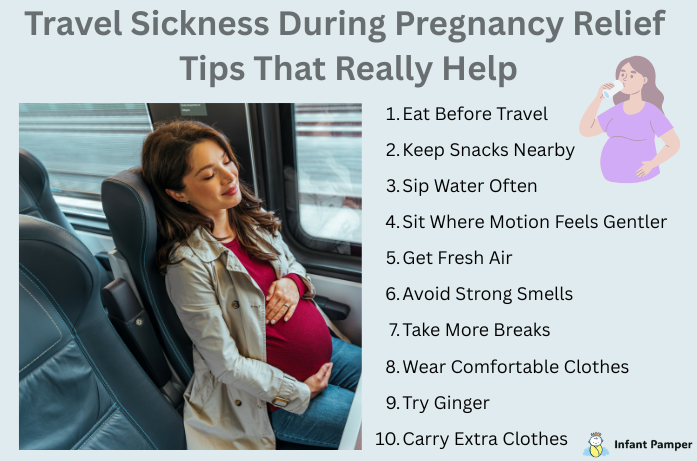
Travel Sickness During Pregnancy Relief Tips That Really Help
The best relief usually comes from a mix of small things rather than one perfect fix. You may need to try a few to see what works best for your body, but these gentle strategies help many moms.
1. Eat a Light Snack Before You Travel
Traveling on an empty stomach can make nausea much worse. At the same time, a heavy greasy meal can also upset your stomach. Try eating something light 30 to 60 minutes before you leave.
Plain toast, crackers, a banana, dry cereal, or a small sandwich are often good options. If morning sickness is already making food difficult, even a few bites can help settle your stomach before the trip starts.
2. Keep Snacks Nearby
Pregnancy hunger can come on fast, and once you feel too hungry, nausea often follows. Keep easy snacks within reach so you can nibble when needed instead of waiting until you feel sick.
Dry crackers, breadsticks, banana slices, roasted makhana, or plain biscuits are all simple choices. Small bites through the trip are often easier than one big meal.
3. Sip Water Often
Dehydration can make nausea, dizziness, and headaches feel much worse. Keep a water bottle nearby and take small sips regularly instead of waiting until you’re very thirsty.
If plain water doesn’t appeal to you, try lemon water, coconut water, or chilled water. The goal is simply to keep your body hydrated in a way that feels manageable.
4. Sit Where Motion Feels Gentler
Where you sit really can make a difference.
For road travelling during pregnancy, sitting in the front passenger seat often feels easier than sitting in the back because you can look ahead at the road. On a plane, sitting near the wing may reduce the feeling of movement. On a train, facing forward is often more comfortable than sitting backward.
Try to look out at the road or horizon instead of staring down at your phone for too long. That simple shift can sometimes reduce the “spinning” feeling.
5. Get Fresh Air Whenever You Can
Fresh air can be one of the quickest ways to calm travel nausea. Open the window a little, aim cool air from the vent toward you, or step outside during breaks if you’re on a long drive.
Heat and stuffy air can make nausea much worse, so keeping the car cool is often worth it.
6. Avoid Strong Smells
Pregnancy can make smells feel almost aggressive. A scent that never bothered you before may suddenly turn your stomach.
If possible, avoid strong perfume, oily foods in the car, heavy air fresheners, or any smell you already know makes you queasy. Some moms like to carry a lemon or a clean tissue with a gentle scent they find comforting.
7. Take More Breaks on Long Drives
If you’re doing a longer trip, stopping every 1 to 2 hours can make a huge difference. Use the washroom, stretch your legs, get some fresh air, and let your stomach settle before continuing.
Pregnancy travel usually goes better when you stop before you feel desperate, not after.
8. Wear Comfortable Clothes
Tight waistbands, tight bras, or clothes pressing on your stomach can make discomfort worse. Soft, loose clothes are usually best, especially if you already feel bloated or sensitive.
Pregnancy is one of those times when comfort really should come first.
9. Try Ginger If It Helps You
Ginger is a classic nausea remedy, and it helps many pregnant women. Ginger tea, ginger biscuits, ginger candy, or a little fresh ginger in warm water may settle your stomach.
It doesn’t work for everyone, but if your body responds well to it, ginger can be a helpful travel companion.
10. Carry an Extra Set of Clothes
If you’re dealing with vomiting or strong nausea, having a clean top or scarf in your bag can be a small but comforting backup during longer journeys.
Road Travelling During Pregnancy: Tips for Safer, Easier Car Rides
Road travelling during pregnancy can be especially uncomfortable because of traffic, bumpy roads, heat, and limited chances to stretch. If you’re traveling by car, a little extra planning goes a long way.
Travel at the Time of Day You Feel Best
If mornings are your worst time for nausea, try to leave later if possible. If evenings are harder for you, plan the drive earlier. It helps to work with your body instead of against it.
Keep the Car Cool
A cool car often feels much better than a warm one. Use the AC, crack the window, and avoid carrying strong-smelling food in the car if you can.
Pack a Small “I Feel Sick” Kit
It doesn’t have to be fancy. Just keep a few basics close by:
- water bottle
- crackers or dry snacks
- tissues or wipes
- a plastic bag just in case
- lip balm
- a clean extra top if you’re prone to vomiting
Having these things nearby can make you feel more prepared and less anxious.
Recline Slightly if That Feels Better
Some moms feel worse sitting bolt upright for long periods. A slight recline with good back support may feel more comfortable, especially later in pregnancy.
Travel During Pregnancy First Trimester: Extra Gentle Advice
Travel during pregnancy first trimester often needs a little more patience because your body is already doing so much behind the scenes. Even if you don’t look pregnant yet, you may feel deeply tired, nauseous, and emotionally stretched.
A few gentle tips for early pregnancy travel:
- eat a little before leaving home, even if it’s just crackers
- avoid planning too many activities around the trip
- rest before travel instead of trying to do everything first
- keep water and snacks with you at all times
- say no to unnecessary travel if your body is struggling
The first trimester can feel like survival mode. If travel feels harder than expected, that doesn’t mean you’re weak. It means pregnancy is asking a lot from your body right now.
Can You Take Motion Sickness Medicine During Pregnancy?
Sometimes snacks, water, fresh air, and breaks are enough. Sometimes they’re not. If your symptoms are severe, frequent, or making it hard to function, talk to your doctor before taking any medication.
Some anti-nausea or motion sickness medicines may be considered safe in pregnancy depending on your situation, but the right choice depends on your trimester, symptoms, and medical history. It’s always best to check rather than guessing.
When to Call Your Doctor
Travel sickness is usually uncomfortable rather than dangerous, but you should contact your doctor if you have:
- vomiting so severe you can’t keep fluids down
- signs of dehydration like dark urine, weakness, or dizziness
- fainting
- severe headache or blurred vision
- abdominal pain or cramping
- bleeding
- swelling, chest pain, or trouble breathing
- ongoing vomiting even when you’re not traveling
These symptoms don’t always mean something serious is wrong, but they do deserve medical attention.
Final Thoughts on Travel Sickness During Pregnancy
Travel sickness during pregnancy can make even a simple trip feel much harder than usual, especially when you’re already dealing with nausea, tiredness, and all the changes that come with pregnancy. But a little extra planning can make a real difference. Small things like eating a light snack, sipping water, getting fresh air, and taking breaks when needed can help you feel more comfortable on the journey.
If you’re struggling with travel sickness during pregnancy, please be gentle with yourself. Your body is doing a lot right now, and it’s okay to slow down, rest more, and make travel plans around what feels manageable for you. This phase won’t last forever, and with a little care and support, travel can feel much easier again.
FAQs About Travel Sickness During Pregnancy
Disclaimer
This article is for general educational purposes only and is not a substitute for medical advice. Always speak with your doctor or midwife if you have severe nausea, vomiting, dizziness, or any concerns about traveling during pregnancy.
Looking for more gentle pregnancy tips and mom-friendly guidance? Explore more helpful articles on Infant Pamper for support through every stage of pregnancy and early motherhood.
About the Author
Geeta Yogi is a parenting writer who shares practical, reassuring guidance about pregnancy wellness, travel, nausea, hydration, and everyday maternal care. Her writing focuses on helping expecting moms manage common pregnancy discomforts with simple, realistic tips while knowing when professional medical guidance may be needed.