Written with care by a caring mom at Infant Pamper
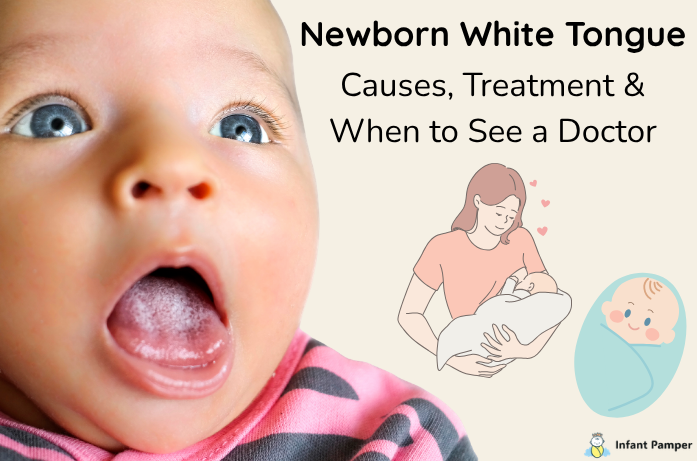
A newborn white tongue is something many parents notice during the first few weeks after birth, and it’s natural to wonder whether it’s completely normal or a sign that something is wrong. In many cases, the white coating is simply leftover breast milk or formula that collects on your baby’s tongue after feeding. However, if the coating doesn’t go away, spreads to other areas inside the mouth, or makes feeding uncomfortable, it could be a sign of oral thrush, a common yeast infection in newborns.
As a mom, I know how easy it is to worry about every little change you see in your baby’s tiny body. The good news is that most causes of a white tongue are harmless and can be managed with simple care. In this guide, we’ll explain what causes a white tongue in newborns, how to tell the difference between milk residue and thrush, the best treatment options, and when it’s time to see your pediatrician so you can feel confident caring for your little one.
What Is a Newborn White Tongue?
A newborn white tongue refers to a white coating or small white patches that appear on your baby’s tongue. For many newborns, this is completely normal and is often noticed after breastfeeding or bottle-feeding. Since babies feed frequently and their mouths produce less saliva than older children, milk can easily leave a thin white layer on the tongue.
In most cases, this coating is simply milk residue and disappears on its own without causing any discomfort. However, if the white patches stay in place, spread to the inside of your baby’s cheeks, gums, or lips, or seem to make feeding painful, they may be a sign of oral thrush. Paying attention to how the coating looks and how your baby behaves during feedings can help you understand whether it’s a harmless change or something that should be checked by your pediatrician.
What Causes a Newborn White Tongue?
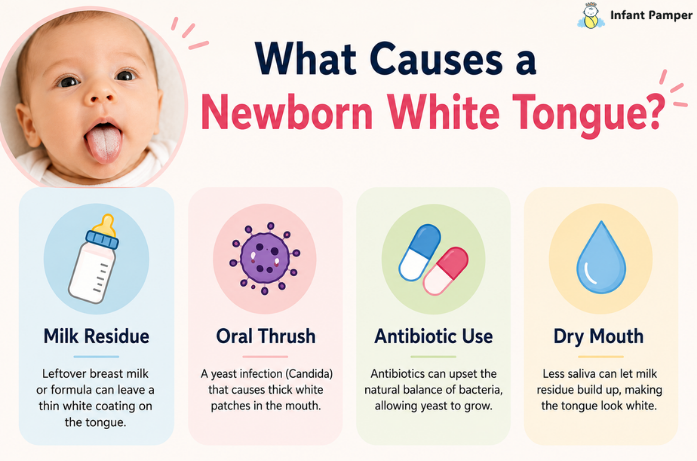
A newborn white tongue can happen for several reasons, and most of them are harmless. In many babies, the white coating is simply caused by leftover milk after feeding. However, in some cases, it may be linked to oral thrush or other temporary conditions. Here are the most common causes:
Milk Residue
Milk residue is the most common reason for a white tongue in newborns. Since babies feed often and produce less saliva, milk can easily leave a thin white coating on the tongue. This is normal, doesn’t cause discomfort, and usually clears on its own as your baby grows.
Oral Thrush
Oral thrush is a common yeast infection caused by an overgrowth of Candida. It creates thick white patches that don’t wipe away easily and may spread to the cheeks, gums, or roof of the mouth. Some babies may also become fussy or uncomfortable while feeding.
If you think your baby has oral thrush, it’s a good idea to speak with your pediatrician. You can also learn more about its symptoms and treatment from Kids Health.
Antibiotic Use
If you or your baby recently took antibiotics, the natural balance of bacteria in the mouth can change. This allows yeast to grow more easily, increasing the risk of oral thrush.
Dry Mouth
A dry mouth can also make your baby’s tongue appear white. When there’s less saliva to clean the mouth, milk residue can build up on the tongue. This usually improves once your baby is feeding well and staying hydrated.
Newborn White Tongue: Milk Residue or Oral Thrush?
One of the biggest concerns parents have is figuring out whether the white coating is harmless milk residue or oral thrush.
Although they may look similar at first, there are a few simple differences that can help.
Signs It’s Probably Milk Residue
If your baby’s tongue is white because of milk, you’ll usually notice:
- A thin, creamy coating only on the tongue.
- The white layer fades between feedings.
- Your baby feeds comfortably.
- No white patches appear inside the cheeks or on the gums.
- Your baby seems happy and content.
Milk residue is very common during the newborn stage and usually doesn’t require any treatment.
Signs It Could Be Oral Thrush
Oral thrush often looks different.
You may notice:
- Thick white patches that don’t wipe away.
- White spots on newborn tongue that also appear on the inside of the cheeks or gums.
- Your baby crying or pulling away during feeding.
- Increased fussiness.
- White patches that remain for several days.
If these symptoms sound familiar, it’s a good idea to schedule an appointment with your pediatrician.
Can Breastfed and Formula-Fed Babies Both Get a White Tongue?
Yes, they can.
Some parents believe that only formula-fed babies develop a white tongue, while others think it’s only seen in breastfed babies. In reality, both breastfed and formula-fed babies can experience this.
Breast milk and formula can both leave a temporary white coating after feeding. Likewise, either baby can develop oral thrush because it’s caused by yeast, not by the type of milk they drink.
Instead of focusing on how your baby is fed, pay attention to whether the coating disappears naturally or continues to spread.
How Is a White Tongue Diagnosed?
In most cases, diagnosing the cause of a white tongue is simple.
Your pediatrician will examine your baby’s mouth and ask about feeding habits, recent illnesses, and how long you’ve noticed the white coating.
If the patches wipe away easily and stay only on the tongue, milk residue is usually the cause.
If the white patches stick firmly and spread throughout the mouth, your doctor may diagnose oral thrush based on its appearance. Most babies don’t need any special tests.
The examination is quick, gentle, and painless, giving parents peace of mind and helping determine the best treatment if needed.
How Is Newborn White Tongue Treated?
Treatment depends on what’s causing the white coating. The good news is that most cases are easy to manage, and many babies recover quickly with simple care.
If It’s Milk Residue
If the white coating is simply leftover milk, no medication is needed.
As your baby grows, they produce more saliva, which naturally helps clean the mouth. The white coating usually becomes less noticeable over the first few months.
Some parents like to gently clean their baby’s mouth with a soft, damp piece of gauze, but this isn’t always necessary if your baby is feeding well and seems comfortable.
If It’s Oral Thrush
If your pediatrician confirms oral thrush, they may prescribe an antifungal medicine that’s safe for newborns.
The medication is usually applied inside your baby’s mouth for several days. Even if the white patches disappear quickly, it’s important to complete the full treatment to prevent the infection from returning.
If you’re breastfeeding and have sore, itchy, or cracked nipples, your doctor may recommend treatment for you as well. This helps stop the yeast from passing back and forth between you and your baby.
How to Clean Your Baby’s Tongue Safely
Many parents wonder whether they should clean their baby’s tongue every day.
The answer depends on what’s causing the white coating.
If it’s milk residue, you can gently wipe your baby’s tongue occasionally using a clean, damp piece of gauze or a soft cloth wrapped around your finger. Always be gentle and never force your baby’s mouth open.
If your baby has oral thrush, avoid trying to scrub the white patches away. They stick tightly to the delicate tissues inside the mouth, and rubbing them can cause pain or bleeding.
When in doubt, let your pediatrician guide you on the safest way to care for your baby’s mouth.
If you’re unsure about cleaning your baby’s tongue, follow gentle methods and avoid scrubbing the white patches. The Cleveland Clinic also provides a helpful guide on safely cleaning a newborn’s tongue
Simple Tips to Keep Your Baby’s Mouth Healthy
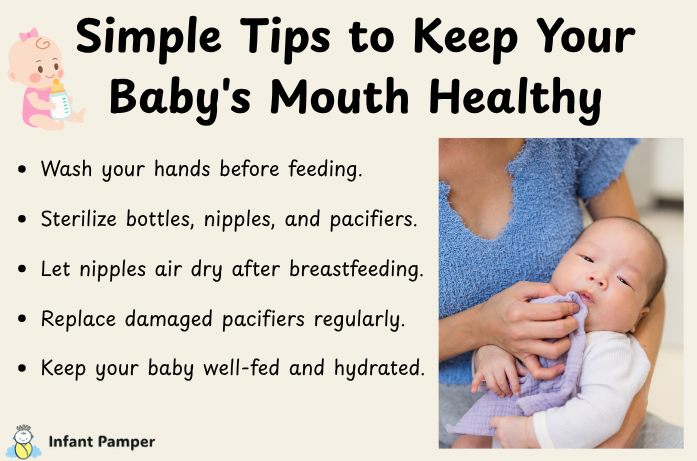
A few everyday habits can help support good oral health and reduce the chance of infections.
- Wash your hands before feeding or cleaning your baby’s mouth.
- Sterilize bottles, nipples, pacifiers, and breast pump parts regularly.
- Allow breastfeeding nipples to air dry after feeds if possible.
- Replace pacifiers that are cracked or difficult to clean.
- Feed your baby regularly to keep them hydrated and encourage healthy saliva production.
These simple steps won’t prevent every case of thrush, but they can help lower the risk.
When Should You See a Doctor?
Although a white tongue newborn is often harmless, there are times when it’s best to seek medical advice.
Contact your pediatrician if:
- The white coating doesn’t wipe away or lasts for several days.
- White spots on tongue newborn spread to the cheeks, gums, lips, or roof of the mouth.
- Your newborn has white tongue and refuses to feed.
- Your baby seems unusually fussy or cries during feeding.
- The patches bleed when touched.
- Your baby develops a fever or seems unwell.
- You notice fewer wet diapers or signs of dehydration.
It’s always okay to ask your baby’s doctor if you’re unsure. A quick check-up can give you reassurance and ensure your little one gets the right care.
If you’d like to read more about oral thrush in babies, the U.S. National Library of Medicine (MedlinePlus) offers reliable information on its causes, symptoms, and treatment:
Can a White Tongue Be Prevented?
Not every case can be prevented, especially when it’s caused by normal milk residue. However, you can reduce the risk of oral thrush by keeping feeding equipment clean and maintaining good hygiene.
If you’re breastfeeding, treating nipple pain or suspected yeast infections early can also help prevent the infection from passing between you and your baby.
Remember that even with excellent hygiene, some newborns still develop thrush because their immune systems are still maturing. It isn’t a reflection of your parenting or cleanliness.
A Little Reassurance for New Parents
Becoming a parent means noticing every tiny detail about your baby, and that’s a wonderful thing. Whether you’re a new parent or planning to adopt a newborn baby, every caregiving journey comes with questions and learning opportunities. It also means it’s easy to worry about changes that are actually quite common.
Most babies with a white tongue are perfectly healthy and simply have milk residue that clears on its own. Even when oral thrush is the cause, it’s a common condition that responds well to treatment.
Instead of focusing only on how your baby’s tongue looks, pay attention to how they’re feeding, sleeping, and behaving overall. Those signs often tell you much more about their health.
Trust your instincts, but also give yourself grace. Every parenting journey begins somewhere, and understanding the first 72 hours of pregnancy symptoms can help expecting parents feel more prepared from the very beginning.
Conclusion
Noticing a newborn white tongue can be surprising, but in most cases, it’s nothing to panic about. A thin white coating is often just leftover milk, especially during the first few months when babies feed frequently and produce less saliva.
If the coating becomes thick, doesn’t wipe away, spreads inside the mouth, or makes feeding uncomfortable, it may be oral thrush. The good news is that this common infection is treatable, and most babies recover quickly with the right care.
Keep an eye on your baby’s feeding habits and overall well-being, and don’t hesitate to contact your pediatrician if something doesn’t seem right. With a little patience, gentle care, and plenty of love, your baby’s healthy smile will soon be back to normal.
Frequently Asked Questions
1. Why is my newborn’s tongue white after feeding?
It’s usually caused by leftover breast milk or formula and is often harmless.
2. How do I know if it’s milk residue or oral thrush?
Milk residue wipes away easily, while thrush forms thick white patches that don’t.
3. Can I clean my baby’s white tongue?
Yes, gently wipe it with a clean, damp gauze if it’s milk residue. Don’t scrub stubborn patches.
4. Is oral thrush dangerous for newborns?
No, but it should be treated to prevent feeding discomfort and further spread.
5. When should I see a doctor?
See your pediatrician if the white patches don’t go away, spread inside the mouth, or affect feeding.
At Infant Pamper, we’re here to support you through every stage of your parenting journey. Explore our Newborn Care section for trusted advice, practical tips, and helpful guides to care for your little one with confidence.
Disclaimer: This article is for informational purposes only and is not a substitute for professional medical advice. If your baby has persistent symptoms or you’re concerned about their health, please consult your pediatrician.