Written with love by a caring mom at Infant Pamper
A pregnancy skin care routine is a daily skincare approach that is designed for expecting mothers. This routine focuses on ingredients and simple steps that help your skin deal with hormonal changes while keeping both mom and baby safe.
When I was pregnant, I found out something. My skincare routine could not stay the same as it was before. The products I had used for years felt too strong. My skin became more sensitive. I realized that a pregnancy skin care routine is not about using a lot of products but about choosing softer care.
This guide will help you understand how your skin changes during pregnancy. You will learn what to use what to avoid and how to build a routine that keeps your skin healthy and calm.
Why Pregnancy Changes Your Skin So Much
Pregnancy brings powerful hormonal changes, especially shifts in estrogen and progesterone. These hormones influence oil production, skin sensitivity, blood flow, and pigmentation.
According to medical research published on PubMed Central, hormonal fluctuations during pregnancy are directly linked to acne, dryness, and pigmentation changes.
Because of this, every woman experiences pregnancy skin differently. Some notice more glow, while others deal with acne, dryness, or uneven tone.
You may notice:
- Sudden breakouts
- Dry or itchy skin (especially on the belly and face)
- Dark patches like melasma
- Mixed oily and dry skin at the same time
- Increased sensitivity to fragrances or skincare products
The most comforting truth is this: your skin is not behaving “badly.” If you’re in the early stages, learning about early pregnancy symptoms can help you better understand your body’s changes. It is simply adjusting to a new and temporary phase.
Pregnancy Skin Care Routine: Simple Daily Steps That Actually Work
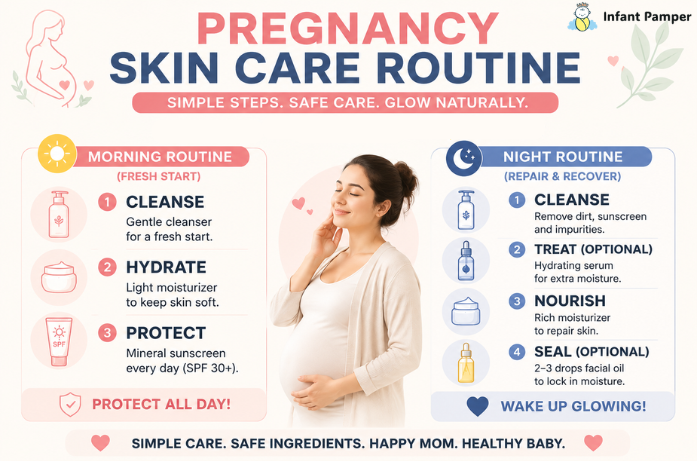
A good pregnancy skin care routine does not need to be complicated. Dermatologists also recommend keeping skincare simple and gentle during pregnancy, as shared by the American Academy of Dermatology (AAD).
The focus should always be on three core steps, cleansing, hydrating, and protecting.
Morning Routine (Protection and Fresh Start)
Your morning skincare is all about preparing your skin for the day ahead.
Start with a gentle, sulfate-free cleanser that removes overnight oil and sweat without making your skin feel tight. The goal is freshness, not deep cleansing.
Then apply a lightweight moisturizer to maintain hydration throughout the day. Ingredients like hyaluronic acid, glycerin, ceramides, and aloe vera are especially helpful because they support the skin barrier without causing irritation.
After that, sunscreen becomes the most important step. Pregnancy increases the risk of pigmentation and melasma, so daily sun protection is essential. A mineral sunscreen with zinc oxide or titanium dioxide is often considered safest. Even if you stay indoors, sunscreen near windows is still important.
Night Routine (Repair and Recovery)
At night, your skin naturally repairs itself, so your routine should support healing and hydration.
Start again with a gentle cleanser to remove sunscreen, dirt, and pollution. If you wear makeup or heavy sunscreen, double cleansing can be done occasionally, but always keep it gentle.
If your skin feels dry or dull, you can add a hydrating serum. Ingredients like hyaluronic acid, panthenol (vitamin B5), and aloe vera help restore moisture and calm the skin.
After this, apply a nourishing moisturizer. Night creams can be slightly richer than daytime ones to support deeper skin repair while you sleep.
For extra dryness, a few drops of jojoba oil or almond oil can be added to lock in moisture and improve skin softness.
Safe Skin Care During Pregnancy: What You Should Avoid
Understanding safe skincare is one of the most important parts of pregnancy beauty care.
During pregnancy, certain ingredients should be avoided because they may affect hormones or irritate sensitive skin. These include:
- Retinoids like retinol and tretinoin
- Hydroquinone
- High-strength chemical peels (strong AHAs/BHAs)
- Harsh physical scrubs
- High-dose essential oils
Instead, focus on simple, fragrance-free, and dermatologist-tested products. Pregnancy is not the time for aggressive treatments. Gentle care always works better.
Pregnancy Face Care Tips for Natural Glow
Healthy skin during pregnancy depends more on habits than products.
Drinking enough water daily helps maintain hydration from within. A healthy breakfast also supports skin health and provides essential nutrients during pregnancy. A consistent sleep routine also supports natural skin glow and repair.
Avoid over-cleansing your face because washing more than twice a day can strip natural oils and increase dryness. Sunscreen should never be skipped, even on cloudy days or when indoors near windows.
Sunscreen is the most important step in the morning. According to ACOG (American College of Obstetricians and Gynecologists), pregnancy increases the risk of pigmentation and melasma, making daily sun protection essential.
It also helps to change pillow covers regularly to reduce acne-causing bacteria. Most importantly, avoid trying too many new skincare products at once. Pregnancy skin prefers stability and simplicity.
Common Pregnancy Skin Problems and How to Manage Them
Acne during pregnancy is very common due to hormonal fluctuations. The best way to manage it is with gentle cleansing and non-comedogenic moisturizers. Avoid harsh scrubs or strong acne medications unless approved by a doctor.
Dry or itchy skin is also frequent, especially as the skin stretches. Moisturizer should always be applied immediately after bathing to lock in hydration. Fragrance-free creams are usually more comfortable for sensitive skin.
Pigmentation or melasma can appear due to hormones and sun exposure. Daily sunscreen is the most effective protection, along with avoiding direct sunlight during peak hours.
Sometimes skin becomes suddenly sensitive. In such cases, stop all new products and return to a basic routine of cleanser, moisturizer, and sunscreen until the skin settles again.
Safe Ingredients for Pregnancy Skin Care Routine
Several ingredients are considered safe and effective during pregnancy. These include:
- Hyaluronic acid for hydration
- Glycerin for moisture retention
- Aloe vera for soothing irritation
- Vitamin C (low concentration) for gentle brightening
- Ceramides for strengthening the skin barrier
- Shea butter for deep nourishment
- Jojoba oil for lightweight hydration
These ingredients help maintain healthy skin without harming pregnancy safety.
Natural vs Chemical Skincare: What Really Matters
Many expecting moms believe natural skincare is always safer, but that is not always true.
Some natural ingredients, especially essential oils, can be too strong for pregnancy-sensitive skin. What matters most is ingredient safety, product formulation, and your skin’s individual response.
A well-formulated gentle product is often safer and more effective than DIY mixtures or strong natural extracts that are not tested for pregnancy use.
When You Should See a Doctor
It is important to consult a dermatologist if you experience:
- Severe or painful acne
- Persistent itching or rashes
- Skin irritation that does not improve
- Sudden or unusual skin changes
Professional advice ensures both your comfort and your baby’s safety.
Emotional Reminder for Every Expecting Mom
Pregnancy is a journey of deep transformation. Your body is working every second to create life, and your skin is part of that beautiful process.
Some days you may feel glowing, and other days you may feel tired or sensitive. Both are completely normal.
Your skin is not something to fix, it is something to gently support while your body does something extraordinary.
Be patient with yourself. Be kind to yourself. You are already doing enough. Maintaining an iron-rich diet can also support your overall energy and wellness during pregnancy.
Final Words
A pregnancy skin care routine is not about perfect skin, but about gentle, safe, and consistent care during a time when your body is changing in powerful ways. Simple habits like cleansing softly, keeping skin hydrated, and using sun protection can make a big difference in how your skin feels every day.
Your skin may change throughout pregnancy, and that is completely normal. Instead of trying to control every change, focus on supporting your skin with patience and safe choices.
Be kind to yourself, keep your routine simple, and remember your real glow comes from the life you are growing.
FAQs Pregnancy Skin Care Routine
1. What is a pregnancy skin care routine?
It is a simple and safe skincare routine designed to support skin changes during pregnancy using gentle ingredients.
2. Can I continue skincare during pregnancy?
Yes, but avoid harmful ingredients like retinol, hydroquinone, and strong exfoliants.
3. What is the safest skincare routine during pregnancy?
A basic routine of cleanser, moisturizer, and sunscreen is the safest and most effective.
4. Is vitamin C safe during pregnancy?
Yes, low-concentration vitamin C is generally safe and helps brighten skin gently.
5. Why is sunscreen important during pregnancy?
It helps prevent pigmentation, melasma, and sun damage, which are more common during pregnancy.
If you found this guide helpful, explore more gentle pregnancy and baby care tips at Infant Pamper and stay connected for more mom-friendly advice and safe skincare routines.
Disclaimer: This article is for general informational purposes only and is not a substitute for medical advice. Always consult your doctor or dermatologist before using any skincare products during pregnancy.