Written with care by a caring mom at Infant Pamper
Hearing your child say their first word is a special moment one you will always remember. It might be “Mama” or “Dada,” or perhaps something entirely unexpected. That tiny word feels like the beginning of something new.
If you are wondering when do babies say their first word, you are not alone. Every parent longs to hear those words and often compares their child’s progress with that of other children.
The good news is that children learn to speak at their own pace. Some start early, while others take a little longer; both are perfectly normal.
Understanding what to look for regarding your child’s language development helps you know what to expect. You will learn how to naturally support your child in speaking and when it might be appropriate to consult a doctor. Let’s take a look at your child’s journey of learning to speak.
When Do Babies Say Their First Word?
Babies often say their first meaningful word around their first birthday, although the timing varies. By 1 year, the CDC lists calling a parent “mama,” “dada,” or another special name as a language milestone, and by 15 months most children try one or two additional words.
The important part isn’t just making sounds. A baby’s first word should be used consistently to refer to a specific person, object, or action. For example, saying “mama” every time they want mom is considered a true first word.
Remember, every child develops differently. Some babies spend more time learning to understand language before they begin speaking, and that’s completely normal.
For more information about speech milestones around your baby’s first birthday, read this helpful guide from Healthy Children.
Understanding Your Baby’s Language Development
Children begin learning language long before they actually start speaking.
From birth, children listen attentively to sounds, recognize familiar voices, and begin connecting words to everyday experiences. Whether you welcome your baby by birth or adopt a newborn baby, gentle talking and bonding help build early communication. Loving hugs, conversation, lullabies, and smiles all these things help lay the foundation for their future speech.
Even if your child isn’t speaking yet, they are constantly learning by listening and observing.’
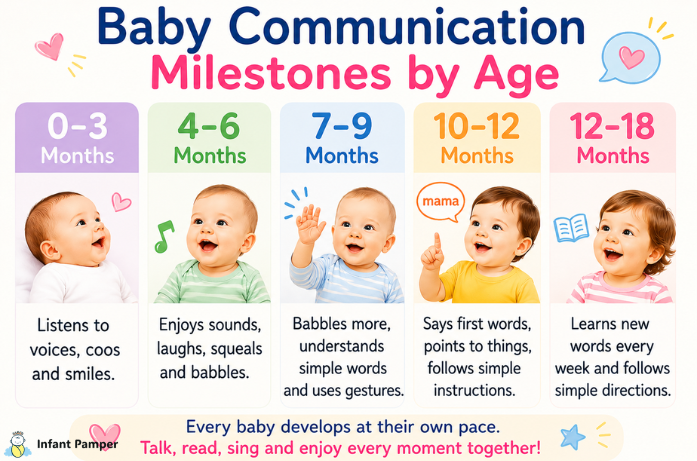
Baby Communication Milestones by Age
Understanding speech milestones can help parents know what to expect as their baby learns to communicate.
Birth to 3 Months
During the first few months, your baby mainly communicates through crying, cooing, and facial expressions. They may turn toward familiar voices, enjoy listening to you talk, and even smile during conversations. These early interactions are the first building blocks of language.
4 to 6 Months
At this stage, babies begin experimenting with different sounds. You may hear lots of laughing, squealing, and babbling like “ba,” “da,” or “ma.” They also become more excited when they hear your voice, helping strengthen the skills they’ll later use for speaking.
7 to 9 Months
Babbling becomes more expressive between 7 and 9 months. Your baby may repeat sounds such as “mamama” or “dadada,” respond to their name, understand simple words like “no,” and use gestures like waving or reaching to communicate.
10 to 12 Months
This is the stage when many babies say their first meaningful word. They may point to familiar objects, follow simple instructions, and try to imitate words they hear every day. Although this is the typical baby’s first word age, every child develops at their own pace.
12 to 18 Months
After the first birthday, language often develops quickly. If your toddler struggles to express big feelings, you may also find our guide on how to stop toddler biting helpful. Many toddlers begin learning new words every week, naming family members, asking for favorite toys or foods, and following simple directions. Their vocabulary grows rapidly as they explore the world around them.
What Counts as a Baby’s First Word?
Parents sometimes wonder whether repeated sounds count as real words.
A true first word should:
- Be used consistently
- Refer to a specific person or object
- Have clear meaning
- Be repeated intentionally
For example:
- Mama
- Dada
- Milk
- Ball
- Dog
- Bye-bye
Random babbling without meaning usually isn’t considered a first word.
What Influences Baby First Word Age?
Many different factors affect baby first word age, and most are completely normal.
Personality
Some babies love observing before speaking, while others eagerly try to copy every sound they hear.
Family Interaction
Babies who hear frequent conversations, songs, and stories often receive more opportunities to practice language.
Hearing Ability
Good hearing is essential for speech development. Babies need to hear sounds clearly before they can imitate them.
Premature Birth
Babies born early may reach speech milestones slightly later based on their adjusted age rather than their birth date.
Overall Development
Speech develops alongside social, emotional, and cognitive growth.
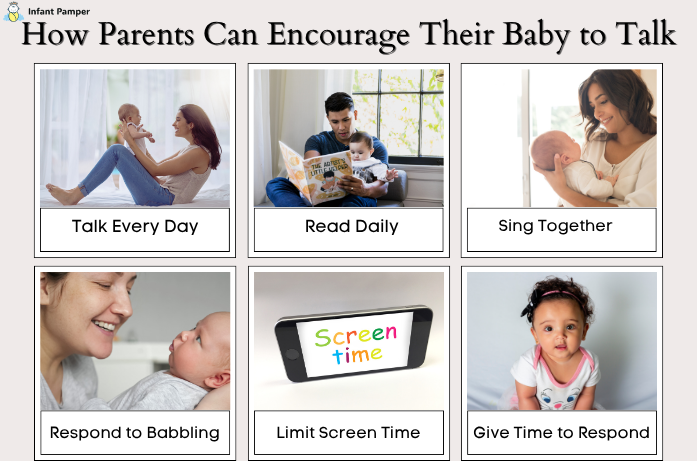
How Parents Can Encourage Their Baby to Talk
One of the things about being a parent is seeing your baby learn and grow every day.
You can help your babys language grow by talking to them all the time.
1. Talk to Your Baby Every Day
When you’re feeding, changing diapers, cooking or taking walks tell your baby what you’re doing.
Having conversations with your baby helps them hear lots of new words.
2. Read Books to Your Baby Every Day
Reading books helps your baby learn words and it also teaches them about rhythm and storytelling.
When you’re reading, point to pictures. Say the names of things you see.
3. Sing Songs and Nursery Rhymes to Your Baby
Music helps babies learn about repetition, sound patterns and memory.
Babies like songs and might even try to copy some sounds.
4. Respond to Your Babys Babbling
When your baby babbles, talk back to them like you’re having a conversation.
This helps your baby learn that talking is a two-way thing.
5. Limit Your Babys Screen Time
It’s more helpful for your baby to have conversations, with you than to watch screens all day.
Your baby learns a lot from seeing your face hearing your voice and watching your expressions.
6. Give Your Baby Time to Respond
When you ask your baby a question or point out something wait a seconds before saying anything else.
This gives your baby a chance to try to communicate with you.
You can also find more practical language development tips for babies and toddlers on Kids Health.
When Do Babies Say First Words if They’re Bilingual?
Parents raising children in bilingual homes often wonder whether speaking two languages delays speech.
Research shows that bilingual babies generally reach language milestones within the normal range. Research published by the National Library of Medicine also shows that growing up with two languages does not usually cause speech delays
They may divide their vocabulary between two languages, but their total word count is often similar to monolingual children.
Speaking multiple languages is a wonderful gift and does not usually cause speech delays.
Signs Your Baby Understands More Than They Can Say
Many babies understand language long before they begin speaking.
Signs include:
- Looking at familiar people when named
- Following simple requests
- Pointing to favorite toys
- Waving goodbye
- Clapping during songs
- Responding to “come here”
These are encouraging signs that language skills are developing well.
When Should Parents Be Concerned?
It’s completely natural to compare your baby with others, but remember that every child develops differently.
However, it’s a good idea to speak with your pediatrician if your baby:
- Doesn’t babble by around 9 months
- Doesn’t respond to their name by 12 months
- Shows little interest in communication
- Doesn’t use gestures like pointing or waving by 12 months
- Has no meaningful words by 16 months
- Loses previously learned words at any age
Early evaluation doesn’t always mean something is wrong, but it can provide reassurance or early support if needed.
Common Myths About Baby Speech
Myth: Boys Always Talk Later
While some boys may begin speaking slightly later on average, many develop language right on schedule.
Myth: Late Talkers Always Have Problems
Many perfectly healthy children simply take a little longer before speaking.
Myth: Babies Learn Best From Educational Videos
Real conversations with parents remain the most effective way for babies to develop language.
Myth: Saying “Mama” Randomly Counts as a First Word
Only words used intentionally with meaning count as true first words.
Final Thoughts
Waiting to hear your baby’s first word is an exciting milestone, but remember that every child develops at their own pace. If you’re wondering when do babies say their first word, know that a small difference in timing is usually completely normal.
Keep talking, reading, singing, and spending quality time with your little one every day. Your love and encouragement play a big role in building their language skills. And if you ever have concerns about your baby’s speech development, don’t hesitate to reach out to your pediatrician for guidance and reassurance.
Frequently Asked Questions
Looking for more helpful parenting advice? Explore our newborn baby and toddler guides at Infant Pamper for trusted tips on speech, milestones, sleep, feeding, and everyday parenting. We’d also love to hear your baby’s first word in the comments!
Disclaimer
This article is for informational purposes only and should not replace professional medical advice. If you have concerns about your baby’s speech or overall development, please consult your pediatrician or a qualified healthcare provider.