A child’s first soft toy often arrives unexpectedly. It might be a baby-shower gift or something a grandparent brings over, and before long it has a name, a favourite place in the pram and a way of appearing wherever the child goes.
The toys my children became attached to were not necessarily the ones I would have chosen myself. What mattered more was that they were easy to hold, simple to clean and sturdy enough for everyday use.
I still look for those practical details first. Before thinking about the colour or character, I check that the toy is right for the child’s age, easy to clean and free from small parts that could come loose.
The First Things to Check
Start with the age label, then look at the toy in your hands. A plush meant for a one year old and a plush meant for a four year old are built differently, and the label is usually a fair guide to which one you are holding.
- Check how the details are attached. Eyes, ribbons, hats and small clothing pieces should be stitched or fixed firmly. If a piece twists or lifts when you tug it gently, put it back on the shelf.
- Feel the filling through the fabric. An even fill with no hard lumps is the sign of a toy that will stay comfortable in a cot, a car seat or a pram.
- Look at the seams at the arms and the base. Those are the places that open first.
- Match the size to the child rather than to the shelf. A toy too big to carry is a decoration. A toy too small for the grip tends to end up in the mouth.
What do the age labels actually tell me?
One of the first things I check is the age label. The plush toys I come across are often marked Ages 1+, Ages 3+ or All Ages, while some collector pieces are labelled Ages 14+. That difference can tell you quite a lot about how the toy is meant to be used.
A 3+ label, for example, may point to small accessories, removable clothing or a display stand rather than a simple cuddly toy. With collector bears, I have also seen labels recommending adult supervision for younger children. I tend to take that wording at face value. These pieces are often made with more decorative or hand-finished details, so they may be better suited to gentle handling than everyday play on the floor.
Does size matter more than softness?
Size makes more difference than I used to think. A small plush is easy for little hands to carry around and simple to tuck into a nappy bag. Once you get into the larger teddy sizes, they tend to stay put a bit more — on a bed, in a reading corner or tucked under an arm at home rather than taken everywhere.
The feel of the fabric matters too, especially if the toy is likely to become part of a bedtime routine. Some children love running their fingers over soft fur as they settle down. In that case, I usually prefer a shorter pile fabric. It still feels cuddly, but it is a little easier to keep clean and tends to pick up less fluff, crumbs and everything else that somehow finds its way onto a much-loved toy.
Why do some small plush feel heavier at the bottom?
Some palm sized plush have bean pellets inside the base. The pellets add weight and stability so the character sits upright instead of flopping forward, which is why a row of them on a shelf looks tidy rather than collapsed. Weighted toys are pleasant to hold, and they are heavier than they look, so they are not the ones I would leave in a cot with a baby.
Is a cuddly toy different from a collector toy?
Yes, and it changes how you care for it. Collector pieces are often made from mohair and alpaca blends, and some are handcrafted in limited runs with the number written on the certificate. Those toys are made to be kept and looked at, and they usually carry a higher age recommendation. A cuddly toy for a toddler is made for the washing basket and the kitchen floor.
How do I keep a favourite plush clean?
Most soft toys that are used every day only need a quick surface clean. I usually use a damp cloth with a little mild soap, work gently over the fabric and then blot away the moisture with a dry towel. After that, I leave the toy somewhere airy until it is completely dry.
The main thing is not to rush that last part. A toy can feel dry on the outside while the filling is still damp, and putting it straight back into bed is rarely a good idea. Collector pieces also need a little more care, especially if they have decorative details or finishes that are not meant to be soaked.
If the care label says the toy can be washed, I follow those instructions rather than treating every plush the same way. Washing it inside a pillowcase can help protect the fabric, and I always make sure it is fully dry before it goes back into use.
For a much-loved favourite, having a spare can make life easier. It is much less dramatic when one rabbit is in the wash if another one is ready to take over for the night.
When Soft Toys Become Part of the Bedtime Routine?
For the first year, I keep soft toys out of the cot and save them for cuddles during the day. At this stage, the sleep space is best kept simple and clear, so a favourite bear or rabbit can still be part of the routine without staying in the cot overnight.
As children get older, that relationship often changes naturally. A small soft toy may become part of bedtime — something to hold during a story or keep nearby as they settle down. And despite all the thought that can go into choosing one, children usually have their own ideas about which toy becomes the favourite.
A short checklist for buying online
- The age label matches your child, not your child in two years.
- The size is listed in both centimetres and inches, which makes it easier to picture.
- The material is stated. Polyester bodies and fillings are common, hard wearing and easy to clean.
- Removable clothing is described as removable, so you know what you are buying.
- A second one is available in the same design, in case the first becomes the only acceptable one.
Once a toy passes those checks, the rest is up to your child. The one they choose is rarely the one you would have chosen, and that is fine. Ours have been through teething, chickenpox and one memorable trip through a hot wash, and the plain bear that came third in the original lineup is now the one that gets packed for every trip away.
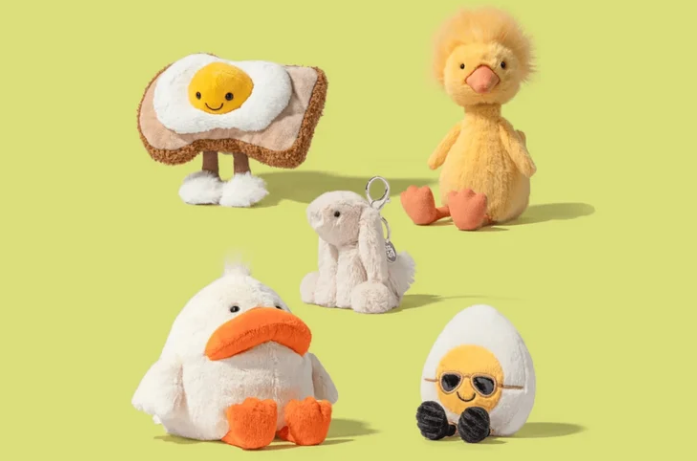
If you are starting from scratch, the soft toys and first plush range is a sensible place to look, and it is easier to compare sizes when they are listed side by side.
Should I buy a spare?
If a soft toy has clearly become the favourite, I would usually buy a second one sooner rather than later. Designs change, shops stop carrying certain styles, and finding an exact replacement months or years later can be surprisingly difficult.
A spare also makes everyday life much easier. One can be washed, dried or temporarily misplaced without turning bedtime upside down. Children often know exactly which toy they expect to see, so having an identical backup can be a small thing that saves a lot of fuss.
What about outings and daycare?
Clip-on versions can be surprisingly useful once a child has a favourite toy. Instead of carrying the original everywhere, a smaller character can stay attached to a bag, pram or daycare backpack and is much less likely to disappear along the way.
I like them most as a backup for outings. The much-loved toy can stay safely at home, while the clip-on still gives your child something familiar to take with them. It is a simple compromise, especially for children who are very attached to one particular character.