Written by a caring mom at Infant Pamper
Pregnancy makes you notice every little change in your body. One day you may feel fine, and the next you might have a dry mouth, a headache, or a wave of dizziness that leaves you wondering what is wrong. Dehydration during pregnancy is fairly common, especially when nausea, vomiting, hot weather, or a busy day makes drinking difficult. The reassuring news is that mild dehydration often improves when you begin replacing fluids early and gently.
Your body is doing extraordinary work. It needs fluid to support your changing blood volume, carry nutrients, remove waste, and produce the amniotic fluid surrounding your baby. This does not mean you need to panic over one forgotten glass of water. It simply means hydration deserves a little extra attention during these months.
What Is Dehydration During Pregnancy?
Dehydration happens when your body loses more fluid than it takes in. During pregnancy, your fluid needs are higher than usual, so it may be easier to fall behind without realizing it. The American College of Obstetricians and Gynecologists recommends about 8 to 12 cups, or 64 to 96 ounces, of water each day during pregnancy, although individual needs can vary.
You may need more on hot days, after exercise, while traveling, or when you have a fever, vomiting, or diarrhea. Foods and other drinks contribute to hydration too, but plain water is usually the easiest everyday choice.
A missed drink here and there is not usually an emergency. The concern is when fluid loss continues, you cannot replace what you are losing, or your symptoms become stronger.
Why Hydration Matters During Pregnancy
Water helps your body carry nutrients, support digestion, remove waste, and form amniotic fluid. It may also help with common discomforts such as constipation or headaches when low fluid intake is contributing to them.
Hydration is not about chasing a perfect number. Some mornings you may drink plenty, while nausea makes the next day harder. Think of it as a steady habit rather than another pregnancy rule you must follow perfectly.
Thirst, urine color, and how often you urinate can offer useful clues. However, thirst is not always the earliest warning, so it helps to notice several signs together.
Common Signs of Dehydration During Pregnancy
The most familiar dehydration during pregnancy signs can be easy to confuse with normal pregnancy symptoms. Tiredness, headaches, and dizziness may have several causes, so look at the whole picture rather than one symptom alone.
1. Dark Yellow or Strong-Smelling Urine
Urine color is one of the simplest clues. Pale yellow urine generally suggests that you are taking in enough fluid. Dark yellow, strong-smelling urine may mean your body needs more.
Prenatal vitamins can sometimes make urine look brighter, so color is not a perfect test. Still, darker urine together with thirst, dry mouth, or fewer bathroom trips may point to dehydration. The NHS lists dark, strong-smelling urine and urinating less often among common dehydration symptoms.
2. Urinating Less Often
Pregnancy often sends you to the bathroom frequently, so a noticeable drop can stand out. If several hours pass and you have barely urinated, especially while vomiting or feeling unwell, contact your maternity provider.
3. Dry Mouth, Lips, or Tongue
A sticky mouth, cracked lips, or a tongue that feels unusually dry can be another sign of dehydration during pregnancy. You may also notice strong thirst or that your mouth stays dry soon after drinking.
4. Headache, Dizziness, or Light-Headedness
Feeling dizzy when you stand, developing a headache, or feeling shaky can happen when you have not had enough fluid. These symptoms can also come from anemia, low blood pressure, low blood sugar, infection, or other pregnancy concerns.
Sit or lie down safely, take slow sips, and notice whether you improve. Seek medical advice if dizziness continues or comes with fainting, chest pain, trouble breathing, severe headache, vision changes, or unusual weakness.
5. Unusual Tiredness
Pregnancy can be exhausting, but dehydration may add a heavy, drained feeling. If rest does not help and you also notice thirst, dark urine, or dizziness, focus on fluids and call your provider if symptoms persist.
6. Fast Heartbeat or Rapid Breathing
A fast heart rate or quick breathing can be a sign of more serious dehydration, particularly with dizziness, very little urine, or unusual sleepiness. The NHS recommends urgent assessment for persistent dizziness on standing, reduced urination, rapid breathing, or a fast heart rate.
Can Dehydration Affect the Baby?
It is completely understandable to worry about your baby when you feel dehydrated. Mild dehydration that is noticed and treated early is unlikely to cause harm. Drinking small amounts regularly and resting in a cool place can often help you feel better.
However, severe or long-lasting dehydration needs medical attention. Your body relies on fluids to maintain healthy blood flow, carry nutrients to your baby, and support the amniotic fluid around them. Dehydration may also make you feel weak or dizzy and can sometimes cause uterine tightening.
Contact your doctor or midwife if you cannot keep fluids down, are urinating very little, have regular or painful contractions, or notice a change in your baby’s usual movements.
How to Know You Are Dehydrated During Pregnancy
You may be feeling dehydrated during pregnancy when two or more signs appear together, such as dark urine, dry mouth, strong thirst, headache, tiredness, or urinating less often. Think about your day too. Have you been vomiting? Were you in the heat? Did you forget to refill your bottle?
Try drinking small amounts regularly and resting somewhere cool. Mild symptoms should begin to ease as you replace fluid. If they do not improve, or you cannot drink enough to catch up, call your doctor, midwife, or maternity unit.
What Causes Dehydration During Pregnancy?
Often, several small things happen at once.
1. Morning Sickness and Vomiting
Nausea can make even the thought of water unpleasant. Frequent vomiting causes fluid loss and may stop you from drinking or eating enough.
Severe, persistent pregnancy sickness may be hyperemesis gravidarum. Warning signs include repeated vomiting, weight loss, dark urine, very little urination, dizziness, and being unable to keep food or drinks down. It often needs medical treatment and sometimes intravenous fluids.
Please do not tell yourself that you simply need to be tougher. Severe pregnancy sickness is a medical problem, not a failure to cope.
2. Hot Weather and Sweating
Pregnancy can make warm weather feel even more uncomfortable. Hot or humid conditions, exercise, and heavy sweating increase fluid loss. Dehydration can develop more quickly when those losses are not replaced.
3. Diarrhea, Fever, or Illness
A stomach bug can drain fluids quickly, especially when vomiting and diarrhea happen together. Fever also increases fluid needs. You can learn more about the causes and warning signs of diarrhea during pregnancy. Contact your provider if you cannot keep fluids down, have ongoing diarrhea, feel very weak, or develop dehydration signs during pregnancy.
4. Simply Forgetting to Drink
Sometimes the reason is ordinary. You may be managing work, older children, appointments, and household tasks, then suddenly realize you have had only one glass all day.
You may also drink less because frequent bathroom trips are frustrating, water tastes strange, heartburn worsens after large drinks, or nausea is triggered by a full stomach. These are real obstacles. Small changes can make hydration much easier.
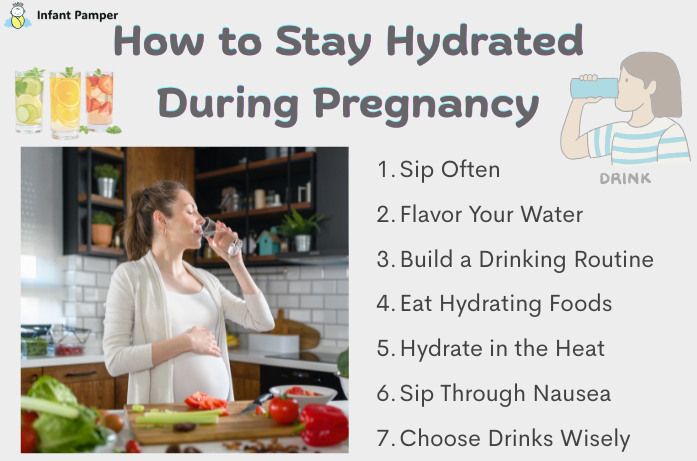
How to Stay Hydrated During Pregnancy
Staying hydrated may also support normal muscle function, although pregnancy cramps can have several causes. If painful tightening affects your calves, feet, or thighs, learn more about leg cramps.
1. Sip Throughout the Day
Large glasses can feel overwhelming, especially with morning sickness. Keep a bottle nearby and take a few sips regularly. Drinking steadily is often easier than trying to make up for the whole day at night.
Start with a glass after waking so you have a gentle head start before the day becomes busy.
2. Make Water More Appealing
Try cold water, room-temperature water, ice chips, or water flavored with lemon, lime, cucumber, berries, mint, or a small splash of juice.
Avoid unapproved herbs or concentrated herbal products just to flavor water. “Natural” does not always mean pregnancy-safe.
3. Pair Drinking With Daily Habits
Take several sips after brushing your teeth, with meals and snacks, after bathroom visits, and whenever you sit down to rest. A marked bottle or phone reminder may help, but do not let tracking become stressful.
4. Eat Water-Rich Foods
Soups, yogurt, milk, watermelon, oranges, strawberries, cucumber, and tomatoes can add fluid as well as nutrients. These healthy pregnancy breakfast ideas also include simple, nourishing options that may help you begin the day well. Choose foods that suit your stomach and any dietary advice from your pregnancy care team.
5. Adjust for Heat and Activity
Carry water while walking, exercising, shopping, or traveling. Choose cooler times for outdoor activity, take breaks, and avoid overheating. If you enjoy gentle movement, pregnancy yoga can help you stay active more comfortably. Remember to drink water before, during, and after physical activity.
6. Take Small Sips When You Feel Sick
When nausea is strong, tiny sips may stay down better than a full glass. Ice chips, a straw, or cold fluids may also help. Some women find drinking between meals easier than drinking with food.
If vomiting or diarrhea is causing fluid and salt loss, ask your doctor or pharmacist whether an oral rehydration solution is suitable. Do not use homemade electrolyte remedies or high-dose products without guidance. The NHS recommends small sips and notes that a pharmacist can advise on oral rehydration solutions.
7. Drinks to Choose Carefully
Water is a reliable foundation, but milk, soups, and other beverages also count. Sugary drinks may worsen nausea or add a lot of sugar, while highly caffeinated drinks are not the best way to replace lost fluid.
Follow your maternity provider’s advice about caffeine. Avoid alcohol during pregnancy, and check before using herbal teas, powders, supplements, or electrolyte products with unfamiliar ingredients.
More is not always better. Do not force excessive water quickly. Spread fluids across the day and ask your provider for a personalized target if you have kidney, heart, blood pressure, or fluid-balance concerns.
When to Call Your Healthcare Provider
Call your doctor, midwife, or maternity unit promptly if:
- You cannot keep fluids down.
- Vomiting is frequent or severe.
- You are urinating very little or not at all.
- Your urine remains very dark despite drinking.
- Dizziness does not improve, especially when standing.
- You faint, feel confused, or are difficult to wake.
- Your heart is racing or you are breathing unusually fast.
- You have fever, severe diarrhea, blood in vomit or stool, or significant abdominal pain.
- You notice reduced baby movement once movements are normally felt.
Severe dehydration may need urgent treatment rather than home care. Confusion, marked sleepiness, trouble breathing, cold or blotchy skin, or collapse are emergency warning signs.
Trust your instincts. You do not need to wait until every sign appears, and you are never wasting anyone’s time by asking for help during pregnancy.
A Gentle Daily Hydration Routine
Begin the morning with water beside your bed. Have another drink with breakfast and carry a bottle into your day. Sip between meals, add a water-rich snack in the afternoon, and drink with dinner. Keep a small glass nearby in the evening, but avoid forcing large amounts before bed if bathroom trips disturb your sleep.
On days with vomiting, diarrhea, exercise, travel, or heat, pay closer attention and seek advice sooner if you are struggling to replace fluids.
Frequently Asked Questions
Final Reassurance
Dehydration during pregnancy can feel worrying, especially when dizziness, headaches, or dark urine appear suddenly. Most mild cases improve with rest and steady fluids, but ongoing vomiting, reduced urination, faintness, confusion, or an inability to drink deserves prompt medical attention.
Be gentle with yourself. Hydration does not have to look perfect, and one difficult day does not mean you have harmed your baby. Keep water within reach, take small sips, notice your body’s signals, and ask for support when something feels wrong. Caring for yourself in these small, steady ways is already a beautiful part of caring for your baby.
Looking for more gentle pregnancy guidance? Explore Infant Pamper for practical tips to help you feel informed, supported, and confident throughout your journey.
Medical note: This article is for general education and is not a substitute for advice from your obstetrician, midwife, or another qualified healthcare professional. Seek urgent care for severe or rapidly worsening symptoms.