Written with care by a caring mom at Infant Pamper
Pregnancy is a beautiful journey, but it can also bring backaches, leg cramps, and tight or sore muscles. These discomforts often lead expecting moms to search for answers about muscle relaxer pregnancy safety and whether muscle relaxants can be used without harming the baby.
Some muscle relaxants may be prescribed during pregnancy in certain situations, but their safety depends on the specific medication, dose, stage of pregnancy, and your individual health needs. You should never take a muscle relaxant during pregnancy without speaking with your doctor first.
If muscle pain is making daily activities or sleep difficult, you are not alone. In this guide, we’ll explain what is known about muscle relaxants during pregnancy, common medications doctors may consider, possible risks, and gentle ways to ease muscle pain safely.
Table of Contents
- Understanding Muscle Pain During Pregnancy
- Muscle Relaxer Pregnancy: Are They Safe?
- Why Muscle Relaxants Are Used Carefully in Pregnancy
- Common Muscle Relaxants and Pregnancy Safety
- What Is the Safest Muscle Relaxant in Pregnancy?
- Natural Ways to Relieve Muscle Pain During Pregnancy
- When to Talk to Your Doctor About Muscle Pain
- Gentle Tips to Prevent Muscle Tension During Pregnancy
- Final Thoughts for Expecting Moms
- FAQs About Muscle Relaxer Pregnancy
Understanding Muscle Pain During Pregnancy
Pregnancy brings enormous changes to the body. Your muscles, joints, and ligaments are constantly adjusting to support your growing baby.
Some common reasons for muscle pain include:
- Hormonal changes that loosen ligaments
- Extra body weight and posture changes
- Pressure on nerves and muscles
- Sleeping in uncomfortable positions
- Mineral deficiencies like magnesium
Many moms notice muscle tension in the lower back, hips, neck, or legs. According to the American Pregnancy Association, these cramps often occur in the second and third trimester due to circulation changes and extra pressure on muscles.
But before taking anything during pregnancy, it’s important to understand how these medications work.
Muscle Relaxer Pregnancy: Are They Safe?
One of the most common questions expecting mothers ask is whether muscle relaxers safe in pregnancy actually exist.
Muscle relaxants are medications designed to reduce muscle spasms, tightness, and pain. Doctors sometimes prescribe them for injuries, back pain, or severe muscle tension.
However, during pregnancy, medications are always approached with extra caution.
Some muscle relaxants may cross the placenta and potentially affect the developing baby. Because of this, many doctors prefer to avoid prescribing them unless the pain is severe and other treatments haven’t helped.
In most cases, doctors recommend trying safer alternatives first before considering any muscle relaxant in pregnancy.
That doesn’t mean every muscle relaxant is automatically dangerous. It simply means that careful medical guidance is essential.
Why Muscle Relaxants Are Used Carefully in Pregnancy
Your baby’s organs and nervous system are developing throughout pregnancy. Certain medications can interfere with this delicate process.
Doctors evaluate medications based on:
- Safety research and available studies
- The stage of pregnancy
- The severity of the mother’s symptoms
- Possible risks vs. benefits
Because research on muscle relaxers and pregnancy is somewhat limited, many healthcare providers prefer conservative treatment options.
If muscle pain becomes severe, a doctor may discuss whether a muscle relaxant safe in pregnancy could be appropriate for your specific situation.
But this decision should always be made with your healthcare provider.
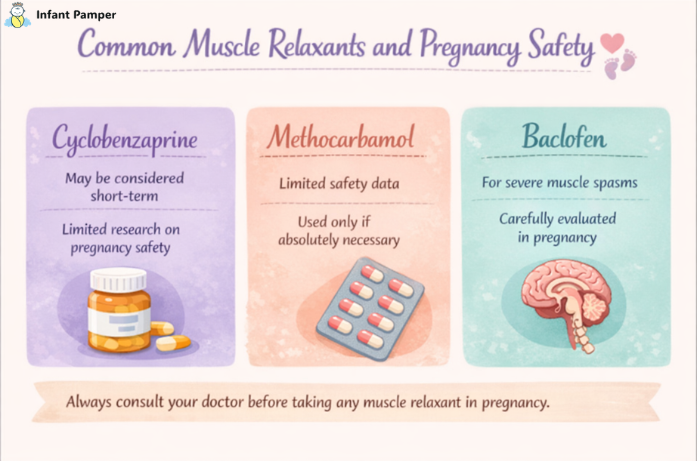
Common Muscle Relaxants and Pregnancy Safety
Different muscle relaxants affect the body in different ways. Some are considered lower risk than others, but none should be taken without medical supervision.
Here are a few examples doctors sometimes evaluate:
Cyclobenzaprine
Cyclobenzaprine is commonly prescribed for muscle spasms. Some studies suggest it may be relatively low risk when used short-term during pregnancy, but research is still limited.
Doctors may occasionally consider it if the benefits outweigh the risks.
Methocarbamol
Methocarbamol is another muscle relaxant used to treat muscle pain. However, there is limited pregnancy safety data, so many doctors avoid prescribing it unless absolutely necessary.
Baclofen
Baclofen is used for severe muscle spasms related to neurological conditions. Because it can affect the nervous system, doctors carefully evaluate its use during pregnancy.
What Is the Safest Muscle Relaxant in Pregnancy?
Many moms ask about the safest muscle relaxant in pregnancy, hoping for a clear answer.
Unfortunately, there is no single medication that is universally considered the safest option.
The safest approach is always:
- Consulting your doctor first
- Avoiding self-medication
- Trying natural relief methods before medication
Every pregnancy is unique, and your healthcare provider will consider your specific symptoms, health history, and pregnancy stage before recommending anything.
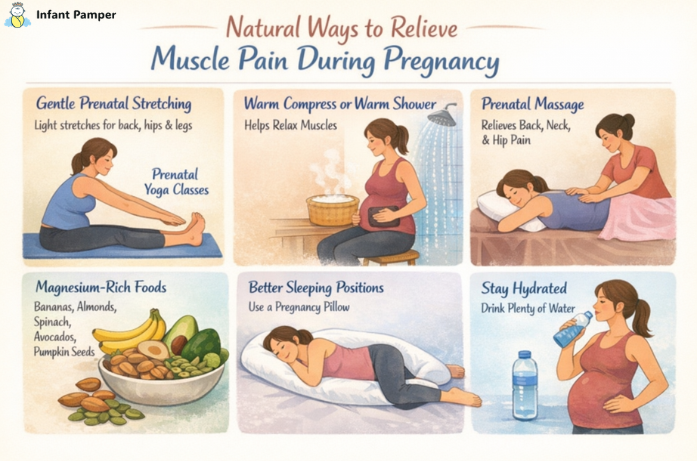
Natural Ways to Relieve Muscle Pain During Pregnancy
The good news is that many muscle aches during pregnancy can be relieved naturally. These gentle methods are often the first line of treatment doctors suggest.
As a mom, I found these approaches incredibly helpful.
1. Gentle Prenatal Stretching
Light stretching can relax tight muscles and improve circulation.
Simple stretches for the back, hips, and legs can reduce muscle tension and prevent cramps. Prenatal yoga classes are also wonderful for relaxing the body.
Always move slowly and avoid overstretching.
2. Warm Compress or Warm Shower
Warmth helps relax muscles and increase blood flow.
Try placing a warm (not hot) compress on sore areas for about 15 minutes. A warm shower before bed can also ease muscle tightness and help you sleep better.
3. Prenatal Massage
Prenatal massage performed by a trained therapist can safely relieve muscle tension.
Massage can help with:
- Lower back pain
- Neck stiffness
- Hip discomfort
- Leg cramps
Many moms say this becomes one of their favorite pregnancy self-care routines.
4. Magnesium-Rich Foods
Magnesium plays an important role in muscle relaxation. Eating a healthy breakfast with nutrient-rich foods each morning can also help support your overall pregnancy health. Low magnesium levels can sometimes contribute to muscle cramps.
Try adding magnesium-rich foods such as:
- Bananas
- Almonds
- Spinach
- Avocados
- Pumpkin seeds
Your doctor may also suggest magnesium supplements if needed.
5. Better Sleeping Positions
Sleeping position matters more than many moms realize. Our guide on back sleeping during pregnancy explains how proper sleep positions can improve comfort and support your growing baby.
Side sleeping with supportive pillows can relieve pressure on muscles and joints. Many pregnant women find relief using a pregnancy pillow to support their belly, hips, and back.
Good sleep posture can significantly reduce nighttime muscle pain.
6. Stay Hydrated
Dehydration can worsen muscle cramps.
Drinking enough water throughout the day helps maintain proper muscle function and circulation. Keeping a water bottle nearby can make it easier to stay hydrated.
When to Talk to Your Doctor About Muscle Pain
While mild muscle aches are common in pregnancy, some symptoms should always be discussed with your doctor.
Contact your healthcare provider if you experience:
- Severe or persistent muscle pain
- Pain that interferes with walking or daily activities
- Sudden swelling with muscle pain
- Numbness or tingling in muscles
- Pain that spreads down the legs
Your doctor may recommend physical therapy, supportive braces, or carefully supervised treatment options.
Never take muscle relaxers pregnancy medications without medical advice.
Emotional Side of Pregnancy Pain
Physical discomfort during pregnancy can sometimes feel frustrating or discouraging. When your body aches, it can make everyday tasks feel harder.
But it’s important to remember something comforting:
Your body is working incredibly hard to grow and protect your baby.
Those muscle aches are often a sign of the amazing changes happening inside you.
Give yourself grace, rest when needed, and ask for support from loved ones. Even small self-care moments can make a big difference.
Gentle Tips to Prevent Muscle Tension During Pregnancy
Prevention can also help reduce muscle discomfort. These small daily habits support your body throughout pregnancy.
Helpful tips include following an iron-rich diet.
- Maintain good posture when sitting and standing
- Avoid standing for long periods
- Take short walking breaks to improve circulation
- Wear supportive shoes
- Use pregnancy support belts if recommended
- Stretch before bed to prevent nighttime cramps
Little adjustments in daily routines can significantly reduce muscle stress.
A review published in medical research literature explains that many medications require careful risk-benefit evaluation when used during pregnancy because fetal development can be sensitive to certain drugs.
Final Thoughts for Expecting Moms
Pregnancy can bring many unexpected body changes, and muscle discomfort is one of the most common experiences. It’s completely natural to wonder about muscle relaxer pregnancy safety when pain becomes difficult to manage.
While muscle relaxants during pregnancy may sometimes be prescribed in specific situations, most doctors recommend natural relief methods first. Gentle stretching, warm compresses, hydration, proper rest, and supportive sleep positions often help ease muscle tension safely.
If your pain becomes severe or persistent, always speak with your healthcare provider before taking any medication. Together, you can find the safest and most comfortable solution for both you and your baby.
Most importantly, be kind to yourself during this journey. Your body is doing something extraordinary, and every small step you take toward caring for yourself also supports your growing little one.
Pregnancy may bring a few aches along the way, but it also brings the beautiful promise of new life.
FAQs About Muscle Relaxer Pregnancy
At Infant Pamper, we’re here to support moms with gentle guidance, helpful tips, and trusted information for every stage of pregnancy and parenting.
Disclaimer
This article is for informational purposes only and should not replace professional medical advice. Always consult your doctor or healthcare provider before taking any medication or making health decisions during pregnancy.
About the Author
Geeta Yogi is a parenting writer who shares caring, practical guidance for expecting moms on pregnancy comfort, everyday wellness, and common concerns during this important stage of motherhood. Her writing focuses on helping parents understand their options and feel more confident when discussing pregnancy-related concerns with healthcare professionals.