Written by a caring mom at Infant Pamper
I still remember those nights when I felt completely exhausted, yet sleep seemed impossible. I would lie awake, changing positions and wondering why my body was tired but my mind would not slow down. If you are experiencing pregnancy insomnia first trimester, know that you are not alone many expecting moms face restless nights, frequent waking, or difficulty falling asleep during pregnancy.
Pregnancy brings incredible changes, but it also comes with hormonal shifts, physical discomfort, and many new thoughts about your growing baby. These changes can affect your sleep in unexpected ways.
In this guide, we’ll explore the causes of pregnancy insomnia, gentle remedies, and practical tips to help you feel more comfortable and rested during this special journey.
What Is Pregnancy Insomnia?
Pregnancy insomnia means having trouble falling asleep, staying asleep, or feeling rested after sleeping. Some moms may lie awake for a long time before falling asleep, while others may wake up several times during the night and struggle to go back to sleep.
Sleep problems can happen at any stage of pregnancy. Some women experience insomnia in early pregnancy, while others notice it later when physical discomfort becomes more noticeable.
Unlike regular sleeplessness, pregnancy-related sleep changes often happen because your body is going through major physical and emotional adjustments. Hormones, growing baby changes, frequent bathroom visits, and pregnancy thoughts can all play a role.
Experiencing poor sleep does not mean you are doing anything wrong. Your body is adapting to one of the biggest changes of your life.
Research has shown that sleep problems are common during pregnancy and can be influenced by physical changes, hormonal shifts, and emotional factors. A study published in the National Library of Medicine also highlights the importance of understanding sleep patterns during pregnancy and their impact on maternal well-being.
When Does Insomnia Start in Pregnancy?
Insomnia can start as early as the first trimester of pregnancy, and some women notice sleep changes even before they know they are pregnant. The timing is different for every mom, but early hormonal changes can affect your natural sleep pattern and make it harder to fall asleep or stay asleep.
During the first trimester, rising pregnancy hormones may leave you feeling exhausted during the day while still keeping you awake at night. This is why pregnancy insomnia first trimester is a common concern among expecting moms.
Early pregnancy symptoms like nausea, breast tenderness, frequent urination, and emotional changes can also interrupt your usual sleep routine. Some women find that their sleep improves during the second trimester when early symptoms settle, while others experience insomnia again later as the growing belly makes comfortable sleeping positions more difficult.
Is Insomnia a Sign of Pregnancy?
Insomnia can happen during early pregnancy, but it is not a definite sign of pregnancy by itself. Some women notice changes in their sleep patterns because of the hormonal shifts happening in their bodies, while others may experience sleepless nights due to stress, anxiety, lifestyle changes, or other factors.
If difficulty sleeping happens along with other early pregnancy symptoms, such as a missed period, nausea, breast tenderness, frequent urination, or unusual tiredness, it may be one of the changes your body is going through. However, the only way to confirm pregnancy is through a pregnancy test.
For some moms, insomnia early pregnancy sign symptoms may appear before they know they are expecting. While sleep changes can be part of the early pregnancy experience, every woman’s body responds differently, and not everyone will experience the same symptoms.
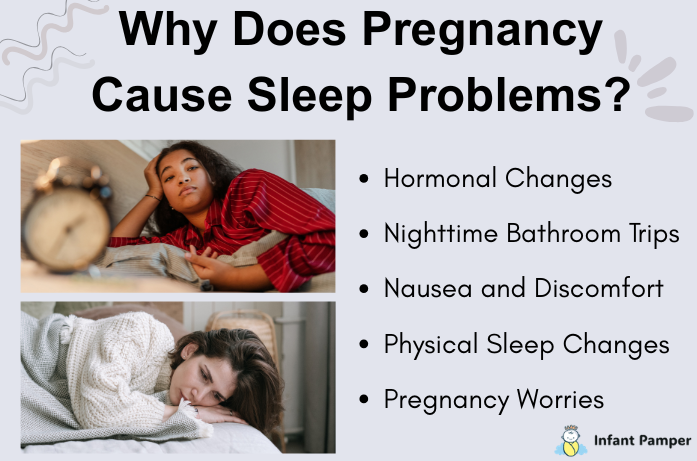
Why Does Pregnancy Cause Sleep Problems?
According to the Cleveland Clinic, pregnancy insomnia can happen because of hormonal changes, physical discomfort, frequent urination, and emotional stress. Understanding these triggers can help expecting moms find practical ways to improve their sleep.
1. Hormonal Changes
Pregnancy hormones are one of the biggest reasons sleep patterns change.
During early pregnancy, progesterone levels increase to support your pregnancy. These hormonal shifts can make you feel sleepy during the day while also affecting your ability to sleep comfortably at night.
This is one reason why many moms experience insomnia early pregnancy. Your body is adjusting to a completely new hormonal environment.
2. Frequent Bathroom Trips
One of the most common reasons pregnant women wake up at night is needing to urinate.
During pregnancy, increased blood flow and hormonal changes make your kidneys work harder. As your uterus grows, it can also place extra pressure on your bladder.
Although waking up several times can be frustrating, try not to reduce your water intake too much. Staying hydrated is important for both you and your baby.
A helpful tip is to drink enough fluids throughout the day and reduce large amounts of liquid right before bedtime.
3. Nausea and Other Pregnancy Symptoms
Many people think morning sickness only affects mornings, but nausea can happen at any time.
Feeling sick, having heartburn, bloating, food aversions, or an uncomfortable stomach can make it difficult to relax at night.
Some moms find that going to bed with an empty stomach makes nausea worse. Keeping a small snack nearby, such as crackers or a simple pregnancy-safe option, may help if hunger wakes you up.
4. Physical Discomfort
As pregnancy progresses, your changing body can make sleep more challenging.
You may experience:
- Back discomfort
- Hip pressure
- Leg cramps
- Difficulty finding a comfortable position
- Feeling uncomfortable while turning in bed
Many moms find that pregnancy pillows or extra support cushions make a big difference. A pillow between your knees or behind your back can help your body feel more supported.
5. A Busy Mind and Pregnancy Worries
Pregnancy is an emotional journey. Even when you are excited, your mind may be filled with questions.
You may find yourself thinking about:
- Your baby’s health
- Doctor appointments
- Birth plans
- Preparing your home
- Becoming a parent
These thoughts are completely normal. However, when your mind becomes active at bedtime, falling asleep can become much harder.
Creating a calming evening routine can help your brain understand that it is time to slow down. It is completely normal to have worries during pregnancy. If your thoughts feel overwhelming, learning about pregnancy anxiety and ways to cope may help you feel more supported.
Difference Between Pregnancy Fatigue and Pregnancy Insomnia
One of the most confusing parts of early pregnancy is feeling completely exhausted but still being unable to sleep.
You may feel like you could fall asleep during the day, but when nighttime arrives, your mind becomes active and sleep feels difficult. This combination of tiredness and sleeplessness can feel frustrating, but it is actually something many moms experience.
Pregnancy fatigue usually makes you feel the need to rest more often. Your body may feel heavy, your energy levels may drop, and normal daily tasks may require more effort.
Pregnancy insomnia, on the other hand, affects your ability to get enough restful sleep. You may struggle to fall asleep, wake frequently, or wake up earlier than you want.
Experiencing both at the same time can be challenging, but it does not mean anything is wrong with your pregnancy. It simply means your body is going through a major transition.
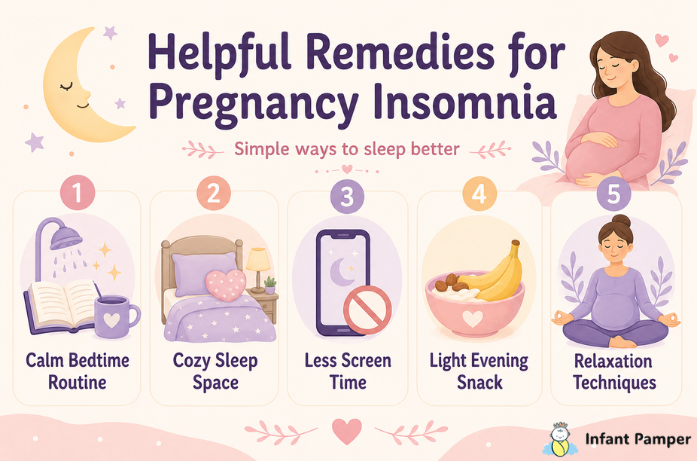
Helpful Remedies for Pregnancy Insomnia
While you cannot control every pregnancy change, small daily habits can make your nights more comfortable. These gentle remedies may help improve your sleep quality.
The American Pregnancy Association also recommends creating healthy sleep habits during pregnancy, such as maintaining a relaxing bedtime routine, making your sleep environment comfortable, and finding ways to reduce stress before bed.
1. Create a Calm Bedtime Routine
Your body responds well to routines. Creating a relaxing pattern before bed can help signal that it is time to slow down.
You can try:
- Taking a warm shower
- Reading a few pages of a relaxing book
- Listening to soft music
- Doing gentle pregnancy stretches
- Practicing slow breathing exercises
Even a simple 15-minute routine can help your mind move away from daily worries and prepare for rest.
2. Make Your Sleeping Space More Comfortable
Your bedroom environment can have a big impact on your sleep.
Try keeping your room:
- Cool and comfortable
- Dark or softly lit
- Quiet and relaxing
Comfortable bedding and supportive pillows can also make a difference. Many moms find that placing a pillow between their knees or supporting their belly helps reduce pressure and discomfort.
You do not need an expensive setup. Sometimes small changes create the biggest comfort.
3. Reduce Screen Time Before Bed
Checking your phone late at night can make it harder for your brain to relax.
Scrolling through pregnancy information, reading worrying stories, or checking messages may keep your mind active when it should be resting.
Try putting your phone aside at least 30 minutes before bedtime. Replace that habit with something calming, such as journaling, reading, or simply enjoying a quiet moment.
4. Pay Attention to Evening Meals
Going to bed extremely hungry or overly full can make sleep more difficult.
If hunger wakes you during the night, a small snack before bedtime may help. Some moms prefer simple options like:
- A banana
- Yogurt
- Whole-grain crackers
- A small handful of nuts
- Toast with a healthy topping
If nausea is affecting your sleep, keeping a small snack nearby can also be helpful.
5. Practice Relaxation Techniques
When your mind is racing, forcing yourself to sleep often makes the problem worse.
Instead, focus on relaxing your body.
Try:
- Slow deep breathing
- Gentle meditation
- Listening to calming sounds
- Relaxing each muscle from head to toe
The goal is not to “force” sleep but to create a peaceful state where sleep can come naturally.
Gentle relaxation methods like deep breathing, meditation, and pregnancy yoga may help calm your mind and release physical tension during pregnancy.
My Simple Nighttime Habits That Helped Me Sleep Better
During pregnancy, I learned that perfect sleep was not always possible. Some nights were good, and some nights were difficult. Instead of feeling frustrated, I focused on making bedtime more peaceful.
A few small habits helped me:
Preparing for tomorrow before bed
Having things ready for the next morning helped reduce the thoughts running through my mind at night.
Keeping my room comfortable
A cool room, comfortable clothes, and supportive pillows helped my body relax.
Stopping pregnancy searches late at night
It is tempting to search every little symptom when you are worried, but late-night searching often creates more anxiety instead of reassurance.
Allowing myself to rest
Even when I could not sleep immediately, I reminded myself that lying down and relaxing was still giving my body a break.
Sometimes changing your mindset around sleep can make the nights feel less stressful.
Tips to Sleep Better During Pregnancy
Along with creating a relaxing routine, these simple habits may support better sleep during pregnancy:
Maintain a Regular Sleep Schedule
Try going to bed and waking up around the same time each day. A consistent routine helps your body recognize when it is time to rest.
Get Gentle Movement During the Day
Light activities like walking can help reduce stress and support better sleep at night.
Always choose pregnancy-safe activities and follow your healthcare provider’s advice.
Avoid Caffeine Later in the Day
Caffeine can stay in your system for several hours and may make falling asleep harder.
If you drink caffeinated beverages during pregnancy, it is best to discuss safe amounts with your healthcare provider.
Find a Comfortable Sleeping Position
As pregnancy progresses, many moms find side sleeping more comfortable. Supporting your body with pillows can reduce pressure on your hips and back.
Your healthcare provider can guide you about the best sleeping positions for your individual pregnancy.
Do Not Stress About One Bad Night
Almost every mom has difficult nights during pregnancy.
One restless night does not mean your body is failing or that something is wrong. Try to focus on your overall health rather than one night of poor sleep.
Does Pregnancy Insomnia Mean Something Is Wrong?
Many moms worry that struggling with sleep means something is wrong with their pregnancy.
The truth is that occasional insomnia is a common experience during pregnancy. Hormones, emotions, physical changes, and daily stress can all affect sleep.
Having trouble sleeping does not mean you are harming your baby or doing something wrong.
However, if sleeplessness becomes constant, leaves you exhausted every day, or starts affecting your emotional health, it is important to talk with your healthcare provider.
Getting support is part of taking care of yourself.
Can Pregnancy Insomnia Affect the Baby?
It is completely understandable to worry when you are not sleeping well. Many moms wonder if their restless nights could affect their baby.
Occasional poor sleep is usually not something to panic about. Your body is designed to protect and support your pregnancy even when you have uncomfortable nights.
However, ongoing severe sleep problems can affect your own health, mood, and ability to manage daily activities.
Taking care of your rest, asking for help, and discussing concerns with your doctor are all positive steps for both you and your baby.
When Should You Talk to Your Doctor About Sleep Problems?
Not every sleepless night requires medical attention, but you should speak with your healthcare provider if your sleep problems are becoming difficult to manage.
Reach out if you:
- Feel exhausted most days despite trying to rest
- Have ongoing anxiety or racing thoughts
- Feel persistently sad or overwhelmed
- Cannot sleep for long periods regularly
- Are thinking about using sleep medication or supplements
Never take sleep medicines, herbal products, or supplements during pregnancy without first discussing them with your healthcare provider.
Your doctor can help you find safe options based on your health, pregnancy stage, and individual needs.
Final Thoughts
Pregnancy insomnia can be one of those unexpected parts of pregnancy that leaves you feeling tired, frustrated, and unsure. But if you are lying awake at night wondering why sleep feels so difficult, remember that many moms experience the same thing.
Your body is changing, your hormones are shifting, and your mind is preparing for a new chapter. Rest may look different during pregnancy, and that is okay.
Be gentle with yourself. Create comforting routines, listen to your body, and ask for support when you need it.
You do not need perfect sleep to be a good mom. Every moment you spend caring for yourself is also a way of caring for your little one.
Frequently Asked Questions
Every pregnancy journey is different. Explore more helpful pregnancy tips and gentle guidance from Infant Pamper to support you every step of the way.
Medical Disclaimer
This article is for general educational purposes only and does not replace medical advice, diagnosis, or treatment. Always consult your healthcare provider for concerns related to your pregnancy, symptoms, or sleep problems.