
By the Infant Pamper Editorial Team
While being a new parents is an extremely rewarding experience, sleepless nights, caring for children, and keeping the household running smoothly can be daunting sometimes. Even when family and friends are willing to help you out, you may not feel comfortable asking them for help.
The best way to ask for help is to share what you are going through, specify what you need help with, and connect with people you feel safe with. Don’t hesitate to ask for help.
Here are 12 tips for building a solid support system throughout your experience of being a parent.
Why Do New Parents Struggle to Ask for Help?
Becoming a parent involves many changes in the way of life. Activities such as preparing food, sleeping enough, and performing everyday chores can turn from being easy into difficult overnight.
A lot of parents avoid looking for assistance because they think they should not make people help them and assume they ought to cope with everything by themselves. Some of them may live far away from family members or close friends.
But it should be noted that the point in getting support is not in relying on other people for everything; it means to have people willing to share the responsibilities and to motivate whenever needed.
Just a few kindhearted and dependable people can help parents in their daily routine.
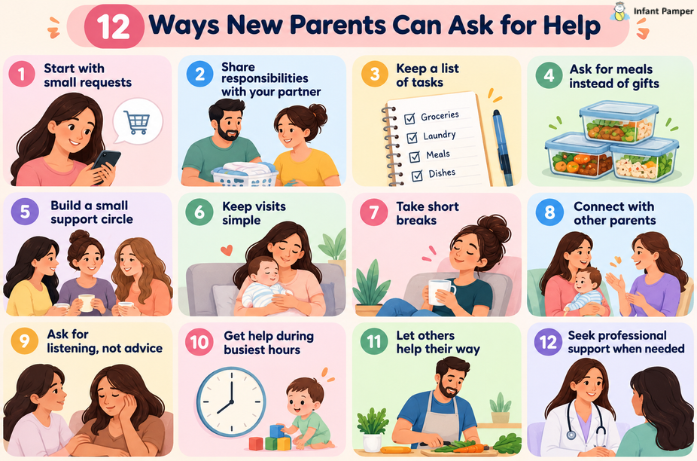
12 Ways New Parents Can Ask for Help
1. Start With Small Requests
If asking for help feels uncomfortable, begin with something simple. You don’t need to ask someone to manage your entire day.
For example, you could ask a friend to pick up diapers, bring groceries, or collect medicine while they’re out.
Try saying, “Could you grab a few things from the store for me?”
Small requests are easier to manage and can help you feel more comfortable reaching out when you need extra support.
2. Share Daily Responsibilities With Your Partner
Caring for a newborn involves much more than feeding and changing diapers. There’s laundry, cleaning, shopping, and plenty of little things to remember.
Talk with your partner about dividing these responsibilities fairly. For example, one person can handle grocery shopping while the other manages laundry.
A quick conversation each evening about the next day’s tasks can also help you both stay organized and avoid unnecessary stress.
3. Make a List of Tasks Others Can Help With
When someone asks, “Do you need anything?” you might not know what to say, especially when you’re tired.
Keep a short list of everyday tasks that family or friends could handle, such as:
- Picking up groceries or diapers
- Folding laundry
- Preparing a simple meal
- Washing dishes
- Walking the dog
These practical first time parent tips can make accepting help easier without having to explain everything each time.
4. Ask for Meals Instead of Baby Gifts
New parents often receive plenty of baby clothes and toys, but a homemade meal can be just as valuable.
Cooking may feel exhausting when you’re recovering from childbirth or caring for a baby who needs frequent attention.
If someone asks what you need, consider requesting a prepared dinner, healthy snacks, or freezer-friendly meals.
You can even ask friends to drop food at your doorstep so you don’t have to worry about hosting visitors.
5. Build a Small Circle of Trusted People
You don’t need a large group of people to feel supported. A few caring and dependable people can make a real difference.
Think about who you can comfortably contact for different needs. Your mother might help with meals, a close friend may listen when you’re stressed, and a neighbor could assist with errands.
Choose people who respect your parenting choices and understand your boundaries.
Knowing whom to contact can make difficult days feel more manageable.
6. Don’t Feel Pressured to Entertain Visitors
After your baby arrives, friends and relatives may be excited to visit. But preparing the house and entertaining guests can add to your exhaustion.
It’s perfectly fine to keep visits short, postpone them, or ask close family members to help with small chores while they’re there.
Remember, support for new moms should make daily life easier, not create extra work.
Your recovery, comfort, and baby’s routine deserve priority over having a perfectly tidy home.
7. Ask Someone to Give You a Short Break
Between feeding, soothing, and changing your baby, finding a moment to yourself can be difficult. Ask your partner or another trusted adult to care for your baby while you shower, eat, or rest for a little while.
If you’re breastfeeding, you might plan your break after a feeding. Even a short period of uninterrupted rest can help you feel more refreshed. And don’t feel guilty about leaving the household chores unfinished.
8. Connect With Other New Parents
Sometimes, talking to another parent who understands newborn life can be comforting. You can meet other moms and dads through parenting classes, community groups, local baby activities, or trusted online communities.
Sharing everyday experiences, asking questions, and hearing how other families manage similar challenges can help you feel less isolated. You don’t need to make close friends immediately. Start with simple conversations and allow connections to develop naturally.
9. Tell Someone When You Just Need to Talk
Not every difficult parenting moment needs advice or a solution. Sometimes, you simply want someone to listen.
If you’re feeling tired, emotional, or frustrated, reach out to someone you trust.
You could say, “I’ve had a difficult day. Can we talk for a few minutes?”
Sharing your feelings can provide comfort and remind you that you have people who care.
If sadness or anxiety continues or affects your daily life, consider speaking with a healthcare professional.
10. Ask for Help During Your Busiest Hours
Every family has certain times of day that feel more stressful than others.
Maybe mornings are difficult because you’re managing breakfast and baby care. Or evenings become busy with feeding, cooking, and bedtime routines.
Notice when you struggle most and arrange assistance during those hours.
For example, your partner could prepare dinner while you feed the baby, or a relative might help with an older child’s bedtime.
Planning support around your busiest moments can make everyday routines easier.
11. Let Others Help in Their Own Way
When someone helps with household tasks, they may not do everything exactly as you would.
Your partner might organize baby clothes differently, or a relative may prepare a simpler meal than you usually make.
As long as the task is completed safely, try not to worry about small differences.
However, always explain important instructions related to your baby’s feeding, hygiene, medical needs, and safe sleep.
Accepting help becomes easier when you don’t feel responsible for supervising every little detail.
12. Seek Professional Support When Needed
Sometimes family and friends cannot provide the guidance you need, especially with health or emotional concerns.
If you’re struggling with breastfeeding, postpartum recovery, or worries about your baby’s development, speak with your doctor, pediatrician, or another qualified healthcare professional.
Persistent sadness, anxiety, or hopelessness also deserve medical attention.
Seeking professional care early can help you understand what’s happening and find appropriate support.
If you have thoughts of harming yourself or your baby, seek emergency medical help immediately.
A Simple 15-Minute Plan to Build Your Support System
You don’t need to organize an entire group of helpers in one afternoon.
Try this quick exercise when you have a quiet moment.
Minutes 1–5: Write down what feels difficult.
Choose three challenges from your daily routine. They might include preparing meals, getting enough rest, or managing an older child’s activities.
Minutes 6–10: Think about possible helpers.
Consider your partner, relatives, friends, neighbors, or community services. Match each challenge with someone who may realistically be available.
Minutes 11–15: Make one request.
Send a message or have a conversation about one specific need.
If that person isn’t available, try another option. Building dependable relationships takes time.
What If You Don’t Have Family Living Nearby?
Bringing up a child away from family can make you feel cut off. However, you can establish your own support network. For example, you can participate in parenting clubs in your area, go to baby education classes, or connect with other parents living nearby. Making inquiries with your doctor may also help in finding necessary assistance and support services you may require.
You may opt to share duty with a well-trusted fellow parent or rely on buddy meal service and part-time babysitters.
Parents able to get help will be able to rejoice as various community organizations may provide relief in terms of child care.
What Can You Say When Asking Feels Uncomfortable?
Sometimes, you know you need help but aren’t sure how to ask. The best approach is to keep your requests simple, polite, and specific.
For household help: Ask a friend or family member to pick up groceries, prepare a meal, or help with laundry when they have some free time.
For a short break: Let your partner or someone you trust know that you need a little time to rest, shower, or relax while they care for your baby.
For emotional support: Reach out to a close friend when you’re feeling overwhelmed and need someone to listen without offering advice.
For setting boundaries: Politely explain to visitors that you’re keeping visits short or need some quiet time while adjusting to your baby’s routine.
Remember, asking for help doesn’t have to feel complicated. Be honest about your needs and understand that others may not always be available right away.
What If Someone Can’t Help?
It’s natural to feel disappointed when someone you trust isn’t available to help. But remember, everyone has their own responsibilities, and saying no doesn’t mean they don’t care about you.
Instead of feeling discouraged, try reaching out to another friend, family member, or someone in your support circle.
Having a few reliable people to turn to can make things easier when one person is busy.
And when someone does offer help, a simple thank-you is enough. You don’t need to feel pressured to return the favor immediately, especially while adjusting to life with your baby.
Frequently Asked Questions
1. How can I start asking for help as a new mom?
Choose one manageable task and ask someone you trust directly. For example, request help with grocery shopping, preparing a meal, or caring for your baby during a short break.
2. Where can I find new mom support without family nearby?
Explore local parent groups, community centers, baby classes, healthcare services, and moderated online communities. Start with a setting where you feel comfortable.
3. Is it normal to feel guilty about receiving help?
Yes, many parents feel uncomfortable depending on others. Try remembering that sharing responsibilities is a practical way to manage the demands of caring for a newborn.
4. How can my partner provide better support?
Talk openly about daily responsibilities and divide regular tasks. Sharing planning, household work, and baby care can help prevent one parent from managing everything.
5. When should I seek professional emotional support?
Contact a healthcare professional if sadness, anxiety, hopelessness, or difficulty functioning continues, worsens, or worries you. You don’t need to wait until symptoms become severe.
Final Thoughts
Being a parent has its moments of joy and tough days. It isn’t uncommon to feel tired or overwhelmed while juggling the things you’d like to do a little better; such as caring for your baby, maintaining your household, and coping with the new routine.
It is important to remember that you don’t have to do everything by yourself. You should learn how to ask for help and delegate tasks to your husband and other supportive friends.
At Infant Pamper, we create solutions that can help you squarely bear the burden of child care and take care of yourself.
Disclaimer
This article is for general informational purposes only and is not a substitute for professional medical or mental health advice. If you’re struggling with postpartum recovery, emotional well-being, or parenting concerns, consult a qualified healthcare professional.