Written by a caring mom at Infant Pamper
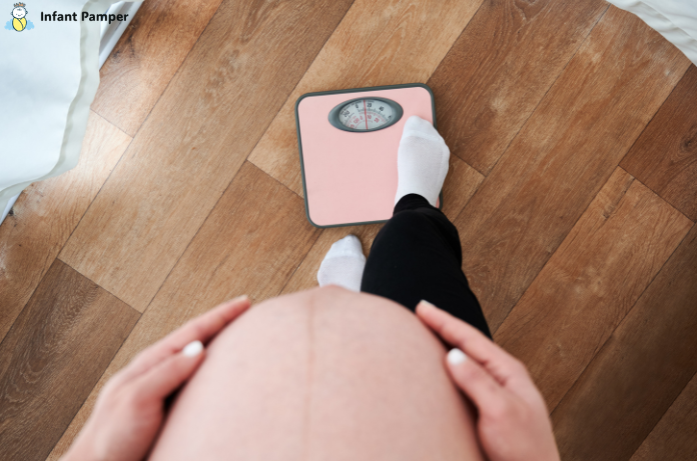
If you have entered the final months of pregnancy and noticed the number on the scale moving a little faster, you may be wondering, how much weight do you gain in third trimester and what is actually considered normal? For many moms, weight continues to increase steadily during these last weeks as the baby grows, blood volume increases, and your body prepares for birth and breastfeeding.
But pregnancy weight gain is not a competition, and there is no single number that every mom needs to reach. Your healthy range depends largely on your pre-pregnancy body mass index (BMI), whether you are carrying one baby or twins, and how your pregnancy is progressing.
So rather than worrying about every pound, let’s look at what average third-trimester weight gain really means, why the scale can suddenly change, and when it is worth checking in with your healthcare provider.
How Much Weight Do You Gain in Third Trimester?
For someone who started pregnancy at a healthy BMI, ACOG says weight gain during the second and third trimesters is generally around ½ to 1 pound per week. Over the roughly 12–13 weeks of the third trimester, that may work out to around 6–13 pounds, although your own pattern may not follow that exact calculation.
Some weeks you may gain a little more. Other weeks the scale may barely change.
That does not automatically mean anything is wrong.
Pregnancy weight gain usually happens as a trend over time, rather than in a perfectly straight line from one week to the next.
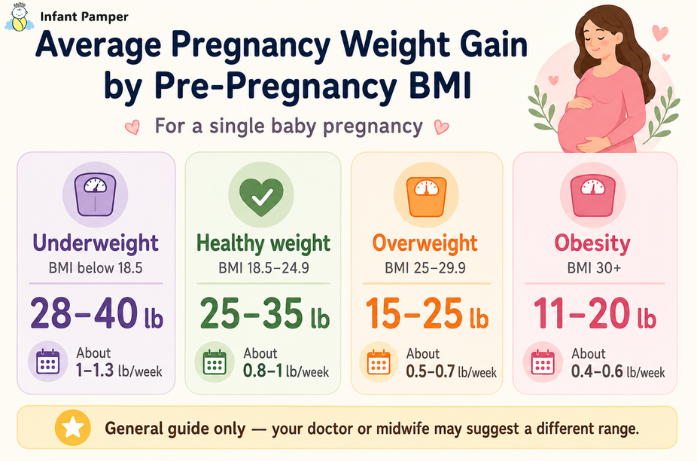
Average Pregnancy Weight Gain by Pre-Pregnancy BMI
The recommended amount of pregnancy weight gain depends largely on your BMI before pregnancy. The Mayo Clinic also notes that your overall health and your baby’s health can influence what amount is right for you.
| Pre-Pregnancy BMI | Recommended Total Pregnancy Gain | Average Weekly Gain in 2nd & 3rd Trimester |
| Underweight: below 18.5 | 28–40 lb | About 1–1.3 lb/week |
| Healthy weight: 18.5–24.9 | 25–35 lb | About 0.8–1 lb/week |
| Overweight: 25–29.9 | 15–25 lb | About 0.5–0.7 lb/week |
| Obesity: 30 or higher | 11–20 lb | About 0.4–0.6 lb/week |
These ranges come from Institute of Medicine recommendations used by organizations such as the CDC and ACOG. They are guides rather than a scorecard, and individual care still matters.
Your doctor or midwife may recommend something slightly different based on your health, baby’s growth, or other pregnancy factors.
How Much Weight Is Gained in Third Trimester on Average?
If you began pregnancy in the healthy BMI range, gaining somewhere around ½ to 1 pound per week during the later months is commonly used as a general guide.
That means a mom who gains 8 pounds during her third trimester and another who gains 12 pounds may both be following healthy pregnancy patterns.
The number also needs to be considered alongside what happened earlier in pregnancy.
For example, one mom may have gained very little during the first trimester because of morning sickness and then gain more steadily later. Another may have gained more during the second trimester and less toward the end.
This is why your prenatal team usually looks at your overall growth pattern, not one isolated weigh-in.
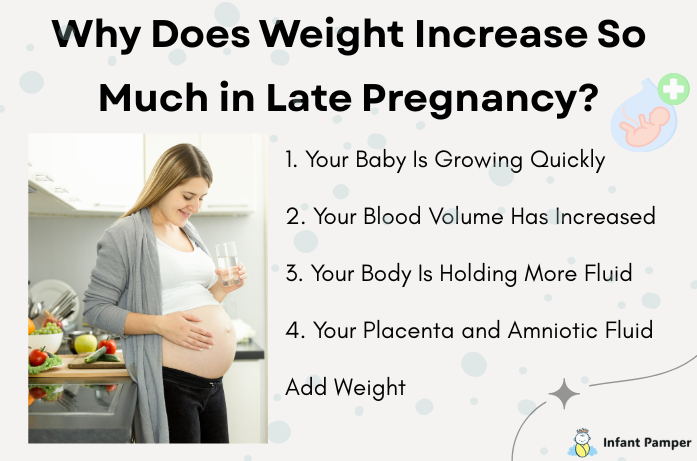
Why Does Weight Increase So Much in Late Pregnancy?
When you see the scale going up, remember that pregnancy weight is not simply body fat. The American Pregnancy Association explains that pregnancy weight also includes your growing baby, placenta, amniotic fluid, increased blood and fluid volume, a larger uterus, breast tissue, and stored nutrients.
Thankfully, pregnancy weight is much more complicated than that.
Your weight includes your growing baby, placenta, amniotic fluid, increased blood volume, a larger uterus, breast tissue, body fluids, and some stored fat that helps support pregnancy and breastfeeding.
So when the scale changes during the third trimester, remember that your body is building an entire support system for your baby.
1. Your Baby Is Growing Quickly
A large part of your baby’s growth happens during the final months.
That growing baby alone contributes to the changing number you see on the scale.
2. Your Blood Volume Has Increased
Your body needs additional blood to support both you and your developing baby.
That extra blood has weight too it is another reason pregnancy weight cannot simply be compared with ordinary weight gain.
3. Your Body Is Holding More Fluid
Pregnancy naturally changes how your body handles fluids.
You may notice your shoes feeling tighter at the end of the day or your ankles looking a little puffier, especially during the later weeks.
Gradual swelling can be common in pregnancy, particularly in the legs, ankles, feet, and fingers.
4. Your Placenta and Amniotic Fluid Add Weight
The placenta and amniotic fluid are also part of healthy pregnancy weight gain.
According to research summarized by the National Academies, the baby, placenta, and amniotic fluid together make up a meaningful portion of total pregnancy weight gain.
So the number on the scale tells only a tiny part of the story.
Does Third-Trimester Weight Gain Stay the Same Every Week?
No and this is something I wish more moms were told.
Your body does not know that Tuesday is “weigh-in day,” so it is not going to gain exactly the same amount every seven days.
Your weight can change slightly depending on:
- how much fluid you are holding
- what time of day you weigh yourself
- what you recently ate or drank
- constipation
- clothing
- normal pregnancy swelling
This is why one higher number does not automatically mean you are gaining too much.
What matters more is the pattern over several weeks and what your healthcare provider sees when they consider your baby’s growth and your overall health.
How Weight Gain May Look From Weeks 28 to 40
There is no exact week-by-week schedule every pregnant woman follows, but knowing what is happening during these months can make the changes feel less mysterious.
Weeks 28–31: Steady Changes Begin
As you enter the third trimester, your belly may start feeling noticeably heavier.
Your baby’s growth continues, and you may also notice stronger hunger on some days.
Try to focus on balanced meals rather than worrying about achieving an exact weekly number.
Weeks 32–35: Your Bump May Change Quickly
These are often the weeks when family members suddenly start commenting on how much your belly has grown.
Remember that belly size and scale weight are not the same thing.
How you carry your baby, your height, baby’s position, fluid levels, and many other factors influence how large your bump looks.
Weeks 36–40: Weight Gain May Feel Less Predictable
Toward the end of pregnancy, some moms continue gaining steadily while others notice their weight changing more slowly. You may also experience more fluid retention as your body prepares for birth.
By this stage, many moms are also watching closely for labor signs. If you reach 40 weeks pregnant with no signs of labor, it can still be normal for your body to need a little more time.
Rather than changing your eating because of one scale reading, discuss any unexpected weight changes with your maternity team.
Do You Need 450 Extra Calories in the Third Trimester?
One thing pregnancy definitely does not require is literally eating for two adults.
According to the CDC, people generally do not need extra calories during the first trimester. Typical guidance is around 340 extra calories per day during the second trimester and about 450 extra calories per day during the third trimester.
Those 450 calories can be much smaller than you might imagine.
It might look like an extra balanced snack plus a slightly larger meal not an entire second day’s worth of food.
Instead of focusing only on calories, try to think about what your body is getting from your food.
Protein, fruits, vegetables, whole grains, dairy or suitable alternatives, healthy fats, iron-rich foods, and plenty of fluids can help support both you and your growing baby.
What If I Am Gaining More Weight Than Expected?
First, do not panic over a single weigh-in.
A temporary jump can sometimes come from fluid retention, a large meal, constipation, or simply weighing yourself at a different time.
If you are gaining more than expected, avoid trying to lose weight on your own. The NHS advises that pregnancy is not the time to go on a diet. Instead, focus on healthy eating and speak with your doctor or midwife if you are concerned about your weight.
Most importantly, pregnancy is not the time to begin a restrictive weight-loss diet without medical guidance. MedlinePlus advises focusing on nutritious foods and appropriate activity rather than trying to lose weight during pregnancy.
What If I Am Not Gaining Enough?
The opposite concern happens too.
Some moms struggle to gain weight because of nausea, reflux, poor appetite, feeling full quickly, or other pregnancy issues.
If your weight is staying the same for a long period or you are losing weight unexpectedly, mention it to your healthcare provider.
They may look at your diet, symptoms, pre-pregnancy BMI, baby’s growth, and other factors before deciding whether anything needs to change.
Sometimes adding small, nutrient-rich foods more frequently is easier than trying to eat large meals when your stomach already feels crowded.
When Can Sudden Weight Gain Be a Warning Sign?
This is one situation where the speed of the change matters.
A sudden increase in weight can sometimes be related to fluid retention rather than ordinary pregnancy growth. ACOG lists sudden weight gain, swelling of the face or hands, headache that does not go away, vision changes, upper abdominal or shoulder pain, nausea or vomiting later in pregnancy, and difficulty breathing among symptoms associated with pre-eclampsia.
Contact your doctor or maternity team promptly if sudden weight gain happens along with symptoms such as:
- sudden swelling of your face or hands
- a severe or persistent headache
- blurry vision or seeing flashing lights
- pain beneath your ribs
- difficulty breathing
- feeling suddenly very unwell
Do not wait for your next routine appointment if these symptoms appear suddenly.
Simple Ways to Support Healthy Third-Trimester Weight Gain
You do not need to count every bite or weigh yourself every morning.
A few simple habits are usually much kinder and more useful.
1. Eat Regularly
Long gaps without food can leave you exhausted and overly hungry later.
Try regular meals with small snacks when needed.
2. Build Balanced Meals
Instead of focusing on eating less or more, ask yourself whether your meal includes something nourishing.
A simple plate might include protein, vegetables or fruit, a whole-grain carbohydrate, and a healthy source of fat.
3. Keep Moving If Your Pregnancy Allows It
For healthy pregnant women without medical restrictions, the CDC recommends at least 150 minutes of moderate-intensity aerobic activity per week, which can be broken into smaller sessions.
That does not mean you have to spend hours at the gym.
Walking, swimming, pregnancy yoga or another pregnancy-safe activity you enjoy may be enough. Always follow any activity restrictions your healthcare provider has given you.
4. Look at Trends, Not Daily Numbers
If weighing yourself causes anxiety, you do not necessarily need to do it every day.
Your prenatal appointments already provide opportunities to track your progress.
If you do monitor at home, weighing under similar conditions can make comparisons more meaningful.
What About Weight Gain With Twins?
If you are carrying twins, the recommendations are different because your body is supporting two babies.
For twin pregnancies, the CDC lists total pregnancy ranges of 37–54 pounds for women who started pregnancy at a healthy BMI, 31–50 pounds for those who were overweight, and 25–42 pounds for those with obesity.
Twin pregnancies deserve individualized advice, so use your obstetrician’s recommendations rather than comparing your weight gain with someone carrying one baby.
Frequently Asked Questions
A Gentle Final Thought for Moms Watching the Scale
It is so easy during pregnancy to look at a number on the scale and immediately wonder whether you are gaining too much or too little. But your pregnant body is doing much more than simply “putting on weight.” It is growing your baby, carrying extra blood and fluid, supporting a placenta, and preparing you for the months ahead.
So when you wonder how much weight is gained in third trimester, use the recommended ranges as helpful guides not grades you have to pass. Keep nourishing yourself, stay gently active if your healthcare provider says it is safe, and bring any concerns to your prenatal appointments.
Every pregnancy grows a little differently. What matters most is that you and your baby are being followed, supported, and cared for along the way.
For more simple and supportive pregnancy tips, explore more helpful guides on Infant Pamper and feel informed through every stage of your pregnancy.
Medical Disclaimer
This article is for general information only and is not a substitute for medical advice, diagnosis, or treatment. Always speak with your doctor, midwife, or healthcare provider about pregnancy weight gain or any concerns about your health or your baby.