Written by a caring mom, Infant Pamper
Perhaps, you have observed your child pretending to cook dinner, talking on a mobile phone, feeding his/her beloved teddy bear? This activity may appear innocent entertainment but actually it is the development of your child’s imagination and ability to communicate.
So, what are pretend play toys? Such toys allow kids to imitate real life situations, come up with various stories, and assume different roles. Whether it is a toy kitchen or a doctor kit, a dollhouse or building blocks, all these things contribute to learning through play.
The good news is that there is no need to invest in expensive toys to start using pretend play toys. Simple things from your home will serve as toys too. In this guide, we will discuss benefits of pretend play, types of toys that are suitable for various age groups, as well as various activities for your kids.
What Are Pretend Play Toys?
Pretend play toys are toys or everyday objects that encourage children to use their imagination, copy real-life activities, and create their own stories. Common examples include toy kitchens, dolls, doctor kits, dress-up clothes, and toy vehicles.
For example, your toddler might pretend to cook dinner, feed a baby doll, or use a wooden block as a phone. These simple activities help children explore everyday experiences while practicing creativity, communication, and problem-solving skills.
Pretend Play vs. Regular Play
Regular play involves activities like stacking blocks or solving puzzles, while pretend play adds imagination and storytelling. For example, stacking blocks builds coordination, but pretending those blocks are a birthday cake encourages imaginative thinking. Both types of play support your child’s development.
When Do Children Start Pretend Play?
Pretend play develops gradually. Babies first learn by watching and copying familiar actions. As toddlers grow, they begin creating imaginary situations and more detailed stories.
| Age | Common pretend play activities |
| 12–18 months | Copying actions like drinking from a cup |
| 18–24 months | Pretending a block is a phone |
| 2–3 years | Feeding dolls and cooking imaginary meals |
| 3–4 years | Playing doctor, teacher, or shopkeeper |
| 4–5 years | Creating longer stories and group adventures |
These are general age ranges, not strict developmental deadlines. Every child learns at their own pace.
Early signs to notice: Your toddler may offer you an empty cup, pretend to feed a doll, or repeat phrases like “Baby is sleeping!” These small actions show growing imagination.
7 Benefits of Pretend Play Toys for Child Development
Pretend play is more than just fun. It helps toddlers and preschoolers practice important skills through everyday activities. Here are seven ways pretend play toys support child development.
According to Healthy Children, pretend play encourages imagination while helping children develop language, social skills, and everyday life skills.
1. Encourages Creativity and Imagination
A simple cardboard box can become a car, house, or spaceship in your child’s imagination. Pretend play encourages children to create stories, explore new ideas, and think creatively.
2. Supports Language and Communication
When children talk to dolls, order pretend food, or play shopkeeper, they practice new words and conversations. These playful interactions can support vocabulary and communication skills.
Join their game and ask simple questions like, “What are you cooking?” to encourage conversation.
3. Helps Children Understand Emotions
Pretend play gives children a way to explore feelings they may not know how to explain. For example, a toddler might comfort a sick teddy bear after visiting the doctor.
The Child Mind Institute also explains how imaginative play gives children opportunities to explore emotions, practice social interactions, and understand different perspectives.
Parent tip: Ask gentle questions like, “Is Teddy feeling better?” to help your child talk about emotions.
4. Builds Social Skills
Playing pretend with siblings or friends gives children opportunities to practice sharing, taking turns, listening, and working together.
For example, running a pretend grocery store encourages children to choose roles and cooperate.
5. Develops Problem-Solving Skills
When children plan a pretend picnic or build a house for their dolls, they make decisions about what they need and how to arrange everything.
These small challenges encourage independent thinking and problem-solving. A research review indexed in PubMed also explores how pretend play relates to symbolic thinking, understanding others’ perspectives, and reasoning about imaginary situations.
6. Improves Fine Motor Skills
Activities like stirring pretend food, dressing dolls, and arranging toy groceries help children practice hand movements, coordination, and finger control.
These skills are useful for everyday tasks such as holding crayons, using utensils, and getting dressed.
7. Helps Children Learn Daily Routines
Toddlers love copying what they see their parents doing. They might pretend to cook breakfast, sweep the floor, feed a doll, or put Teddy to bed.
These activities help children become familiar with everyday routines and explore independence.
Encourage your child to recreate simple family activities using safe toys and household objects.
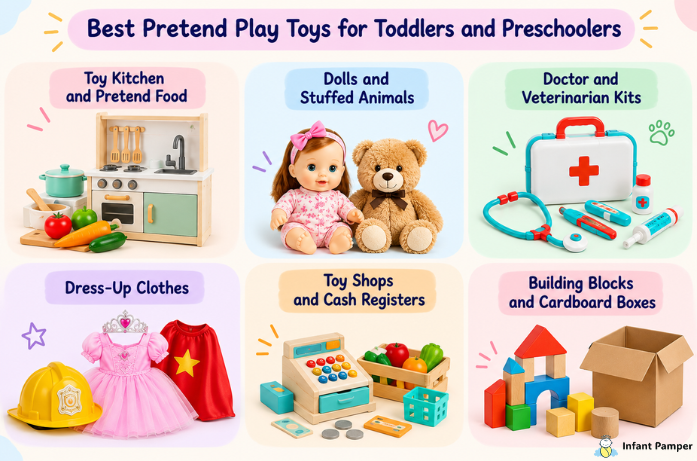
Best Pretend Play Toys for Toddlers and Preschoolers
You don’t need an expensive collection of toys. A few open-ended options can inspire hours of creativity.
1. Toy Kitchen and Pretend Food
Toy kitchens let children imitate cooking, washing vegetables, and serving meals.
Even a few plastic bowls, spoons, and pretend food items can create a lovely little kitchen.
2. Dolls and Stuffed Animals
Dolls and stuffed animals can become babies, friends, students, or patients.
Children can feed them, dress them, comfort them, and create bedtime routines.
3. Doctor and Veterinarian Kits
A child-safe doctor kit allows children to pretend to care for their toys.
They can check Teddy’s heartbeat, examine dolls, or open an imaginary animal hospital.
4. Dress-Up Clothes
Hats, aprons, and child-safe costumes encourage children to explore different roles.
Your little one might become a firefighter, chef, or superhero.
5. Toy Shops and Cash Registers
A pretend grocery store helps children recreate familiar shopping experiences.
Use clean food containers, reusable bags, and a small basket. Older preschoolers can also practice counting.
6. Building Blocks and Cardboard Boxes
Blocks can become houses, roads, and shops, while cardboard boxes can transform into cars or spaceships.
These simple materials allow children to create their own adventures.
How to Choose Pretend Play Toys for 3–4-Year-Olds
When choosing pretend play toys for 3 4 year olds, look for items that encourage storytelling, creativity, and role-playing.
At this age, many preschoolers enjoy pretending to be doctors, teachers, parents, or shopkeepers.
Before buying, consider three things:
- Versatility: Can your child use the toy in different ways?
- Interest: Does it match something your child enjoys?
- Safety: Is it durable and appropriate for their age?
Remember, a few well-loved toys are often better than a room full of toys your child rarely uses.
6 Easy Pretend Play Ideas to Try at Home
You don’t need complicated supplies to encourage imagination. Here are six simple pretend play examples using everyday materials.
1. Open a Mini Restaurant
What you need: Bowls, spoons, plates, and toy food.
Let your child become the chef while you pretend to order lunch. Ask what’s on the menu and enjoy their imaginary cooking.
2. Create a Teddy Bear Hospital
What you need: Stuffed animals, a blanket, and a toy medical kit.
Your child can examine their patients, offer pretend treatment, and help everyone feel better.
3. Set Up a Grocery Store
What you need: Clean empty food containers, shopping bags, and a basket.
Arrange everything on a low table and take turns being the shopper and cashier.
4. Go on a Living Room Adventure
What you need: Cushions and blankets.
Turn the sofa into a mountain or create a pretend campsite. Let your child decide where the adventure takes you.
5. Organize a Doll’s Birthday Party
What you need: Dolls, paper decorations, and toy plates.
Invite stuffed animals, sing a birthday song, and serve an imaginary cake.
6. Play School With Stuffed Animals
What you need: Books, crayons, and stuffed animals.
Let your child become the teacher. They can read stories, sing songs, or teach their toys something new.
Pretend Play Without Buying New Toys
One thing I love about imaginative play is how easily ordinary household items become something exciting.
You can try these simple ideas:
| Household item | Pretend play idea |
| Cardboard box | Car, house, or spaceship |
| Plastic bowls | Pretend cooking |
| Clean socks | Laundry or doll care |
| Shopping bag | Grocery shopping |
| Blanket | Tent or doll bed |
| Paper and crayons | Restaurant menus or letters |
Try offering just two or three objects at once. Sometimes fewer materials encourage children to invent more creative stories.
How Parents Can Encourage Pretend Play
You don’t need special toys or complicated activities to encourage pretend play. A little support and freedom to imagine can make playtime more enjoyable.
1. Follow Your Child’s Lead
Let your child decide what happens during play. If Teddy is driving a bus, join the fun and ask, “Where is Teddy going?”
2. Show Simple Actions
If your toddler doesn’t know how to start, pretend to feed a doll or drink from an empty cup. Then encourage them to try.
3. Use Everyday Activities
Turn familiar routines like cooking, shopping, or visiting the doctor into fun pretend games. Children love copying what they see at home.
4. Encourage Independent Play
Let your child explore toys and create their own stories. You don’t need to join every activity, but stay nearby when supervision is needed.
What If Your Child Doesn’t Enjoy Pretend Play?
Not every child enjoys pretend play right away, and that’s completely normal. Some toddlers prefer puzzles, building blocks, or outdoor games.
Start with something your child already loves. If they enjoy cars, create a pretend garage. If they love animals, try playing veterinarian with stuffed toys. Let them explore at their own pace without pressure.
Repeating the same pretend game is also okay. Familiar activities can help children feel comfortable and confident. However, if your child rarely copies everyday actions, struggles with communication, or loses skills they previously had, talk to their pediatrician.
Pretend Play Safety Tips for Parents
Always choose toys and materials suitable for your child’s age and abilities.
- Avoid small detachable parts that could cause choking, especially for children under three.
- Keep button batteries, loose magnets, plastic bags, and sharp objects out of reach.
- Check toys regularly for broken pieces.
- Choose comfortable dress-up clothes without long cords.
- Supervise young children when using household objects.
Even simple homemade activities should be safe and age-appropriate.
Frequently Asked Questions
1. What age is best to introduce pretend play toys?
Simple imitation often begins during the second year, while more imaginative activities usually develop throughout toddlerhood and preschool.
2. Is pretend play good for brain development?
Pretend play involves imagination, memory, language, and problem-solving. It provides opportunities to practice these skills through enjoyable activities.
3. Can pretend play help shy children?
It may help children explore conversations and social situations comfortably. Start with familiar toys and avoid forcing participation.
4. Are Montessori toys good for pretend play?
Some open-ended materials can support imaginative activities. However, traditional Montessori approaches often emphasize realistic, hands-on experiences rather than fantasy-based play.
5. How much pretend play does a toddler need daily?
There’s no fixed daily requirement specifically for pretend play. Offer regular opportunities and follow your child’s interest, energy, and attention span.
Final Thoughts
As parents, we all want to give our children the best opportunities to learn and grow. But remember, you don’t need expensive toys or perfectly planned activities to support your little one’s development.
Pretend play toys encourage children to use their imagination, practice communication, explore emotions, and learn everyday skills while having fun. Even simple things like a cardboard box, a toy kitchen, or a favorite teddy bear can inspire meaningful play.
So, let your child create their own little stories, follow their imagination, and enjoy these precious moments together. Every child learns at their own pace, and sometimes the simplest activities bring the biggest smiles.
Explore more parenting tips and fun learning activities at Infant Pamper to support your child’s growth and development.
Disclaimer
This article is for general educational purposes and does not replace professional medical or developmental advice. Every child develops differently. Consult a pediatrician if you have concerns about your child’s development.