Written by a Caring Mom at Infant Pamper
At the end of a long day at school, it is totally natural for children to come through the door hungry. Their lunchtime was a few hours ago, and after all of their learning and playtime activities and physical education, children get quite hungry! Having a few after school snack ideas handy can help satisfy their hunger, keep them occupied until dinner, and ease your already hectic schedule.
Thankfully, snack time doesn’t necessarily mean that you have to prepare anything too complicated or even arrange everything on the plate just right. A quick combination of fruit with yogurt, cheese with crackers, or toast with delicious toppings might just be perfect.
In this guide, you will discover 25 snack ideas for after school, together with helpful tips on dealing with picky eaters, active days, snack portions, and easy ways of making snack time easier for your family.
Table of Contents
Why Kids Get So Hungry After School
Many children eat lunch several hours before the school day ends, so it is natural for them to come home hungry. Learning, recess, PE, walking, sports, and normal growth all use energy, and appetite can vary a lot from one day to the next.
A simple snack can help them refuel and stay comfortable until dinner without feeling overly full. It can also give kids a quiet moment to relax after a busy day before moving on to homework, activities, or family time.
How to Build Better After School Snack Ideas
You do not need a complicated nutrition formula.
One easy approach is to combine two foods whenever possible.
For example:
Fruit + yogurt
Toast + egg
Crackers + cheese
Banana + nut or seed butter
Vegetables + hummus
This can make healthy after school snacks more filling without turning snack time into another meal you have to cook.
But do not worry about following a formula every day. Sometimes your child may only want fruit. Other times, they may need half a sandwich because they hardly touched lunch.
Let their hunger guide you too.
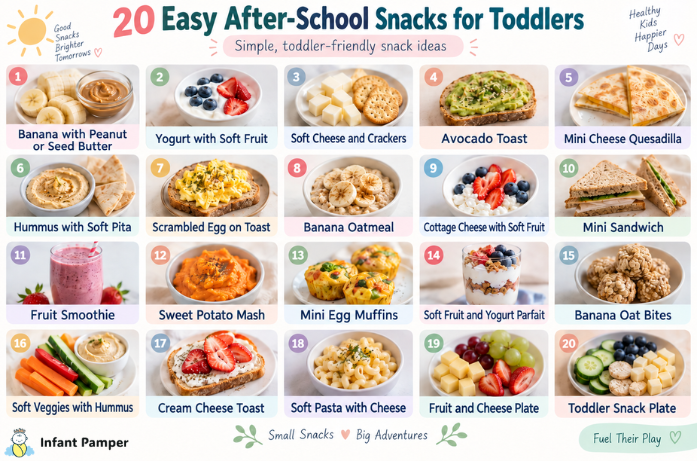
20 Easy After-School Snacks for Toddlers
These easy after school snacks use simple ingredients and can be adjusted for your toddler’s age and eating skills. Keep portions small, cut foods into safe shapes, and choose soft textures whenever possible.
1. Banana with Peanut or Seed Butter
Slice a ripe banana and spread a thin layer of peanut or seed butter on top.
It is quick, filling, and naturally sweet. If your child has allergies, choose a suitable alternative.
2. Yogurt with Soft Fruit
Serve plain or lightly sweetened yogurt with mashed banana, soft berries, peach, or pear.
For younger toddlers, chop or mash the fruit into small, easy-to-eat pieces.
3. Soft Cheese and Crackers
Pair small pieces of soft cheese with toddler-friendly crackers.
You can add soft fruit on the side for a little extra variety.
4. Avocado Toast
Mash ripe avocado onto soft toast and cut it into small strips or bite-sized pieces.
This is easy to hold and works well for toddlers who enjoy finger foods.
5. Mini Cheese Quesadilla
Add grated cheese to a tortilla, fold it, and warm it until the cheese melts.
Let it cool before cutting it into small soft triangles.
6. Hummus with Soft Pita
Serve a small spoonful of hummus with soft pita strips.
You can also add very soft cooked vegetables if your toddler enjoys them.
7. Scrambled Egg on Toast
Make soft scrambled eggs and serve them with small pieces of toast.
This can be especially useful when your toddler is extra hungry after a busy day.
8. Banana Oatmeal
Prepare a small bowl of oatmeal and stir in mashed banana.
You can add a little cinnamon for extra flavor.
9. Cottage Cheese with Soft Fruit
Serve cottage cheese with soft pieces of banana, peach, pear, or berries.
If your toddler is unsure about the texture, start with a very small portion.
10. Mini Sandwich
Make a small sandwich with soft bread and a simple filling such as cheese, avocado, egg, hummus, or thinly spread nut or seed butter.
Cut it into small squares or strips.
11. Fruit Smoothie
Blend banana, berries, yogurt, and milk until smooth.
Keep the portion small so your toddler still has an appetite for dinner.
12. Sweet Potato Mash
Cook sweet potato until very soft and mash it with a fork.
You can serve it plain or mix in a little yogurt for a creamier texture.
13. Mini Egg Muffins
Whisk eggs with grated cheese and finely chopped soft vegetables, then bake in a mini muffin tray.
These after school snack recipes are handy because you can prepare them ahead of time.
14. Soft Fruit and Yogurt Parfait
Layer yogurt with mashed or finely chopped soft fruit.
Skip hard granola for younger toddlers and use softened oats instead if you want extra texture.
15. Banana Oat Bites
Mash banana with oats and bake small spoonfuls until soft and set.
They are easy for little hands to hold and can be made ahead.
16. Soft Veggies with Hummus
Serve well-cooked carrot, sweet potato, broccoli, or zucchini pieces with a little hummus.
Make sure the vegetables are soft enough to squash easily between your fingers.
17. Cream Cheese Toast
Spread a thin layer of cream cheese on soft toast and cut it into strips.
Add mashed fruit on top if your toddler likes sweeter flavors.
18. Soft Pasta with Cheese
A small bowl of leftover soft pasta mixed with grated cheese can make a quick snack.
Keep the portion small, especially if dinner is not far away.
19. Fruit and Cheese Plate
Pair small pieces of soft cheese with banana, ripe pear, peach, melon, or appropriately prepared berries.
This is one of the easiest after school snacks for kids when you do not have time to cook.
20. “Use What We Have” Toddler Snack Plate
Combine two or three simple foods already in your kitchen.
You might serve soft fruit, yogurt, cheese, toast strips, avocado, or a small piece of egg muffin.
It does not need to look fancy. A simple plate with familiar foods is often exactly what a hungry toddler needs.
Match the Snack to Your Child’s Hunger
Not every afternoon appetite is the same. If dinner is only 45 minutes away, fruit and yogurt may be enough. But if your child barely ate lunch and dinner is still a few hours away, offer something more filling such as a small sandwich, egg with toast, a quesadilla, or yogurt with oats.
On sports or activity days, portable options like bananas, sandwiches, crackers, applesauce, or fruit can be especially useful. Keep foods such as yogurt, cheese, eggs, meat, and cut fruit properly chilled until your child is ready to eat.
Nemours Kids Health also recommends considering your child’s lunch and dinner schedule when deciding how much to offer at snack time.
Make Snack Time Easier
You do not need to prepare a different snack every day. Children often enjoy familiar foods, so rotating five or six reliable options can make afternoons much easier.
A small snack basket, drawer, or fridge shelf can also help. Keep simple choices such as fruit, yogurt, crackers, cheese, or applesauce within easy reach. For younger children, offer two choices yourself, while older kids can gradually choose and prepare simple snacks independently.
If your child enjoys helping in the kitchen, Nutrition also shares kid-friendly recipes and resources that can make cooking together fun and educational.
A little preparation can help too. Washing fruit, boiling eggs, keeping yogurt stocked, or freezing muffins may save time during busy afternoons.
Helping Picky Eaters at Snack Time
Snack time can be a relaxed opportunity to introduce different foods without pressure. Try pairing one food your child already enjoys with something less familiar, such as crackers with hummus, banana with yogurt, or cheese with cucumber.
When choosing healthy after school snacks for picky eaters, keep portions small and realistic. Children may need to see or taste a food several times before becoming comfortable with it, so there is no need to force them to finish everything.
Treat foods can also fit into family snack time occasionally. A cookie or small piece of cake can be served alongside fruit, yogurt, or milk without making food feel divided into strictly “good” and “bad” choices.
The CDC also notes that young children may need to try a food many times before they begin to like it, so gentle, repeated exposure can be more helpful than pressure.
A Quick Safety Reminder
For younger children, always prepare snacks in a size and texture that matches their eating skills. Whole nuts, popcorn, whole grapes, cherry tomatoes, hard raw vegetables, and thick spoonfuls of nut butter can be choking hazards.
Cut or soften foods when needed, and supervise young children while they are eating.
FAQs About After-School Snacks
Final Thoughts
After-school snacks can do more than simply stop hunger. They can help children refuel after a long day, give them steady energy until dinner, and make the transition from school to home feel a little calmer.
The best approach is to keep things simple and flexible. Offer familiar foods, adjust portions based on how hungry your child is, and try to include a mix of foods when you can. You do not need a perfect snack every day for it to be helpful.
Over time, these small routines can also support independence, expose children to different foods, and create a relaxed moment to reconnect. Even a simple snack at the kitchen table can become a comforting part of your child’s afternoon.
Looking for more simple parenting tips, toddler food ideas, and everyday routines that make family life easier? Explore more helpful guides on Infant Pamper.
Disclaimer
This article is for general informational purposes only and is not a substitute for professional medical or nutrition advice. Always consider your child’s age, allergies, eating skills, and individual needs, and speak with a pediatrician or qualified healthcare professional if you have concerns.
About the Author
Geeta Yogi is a parenting writer who shares practical ideas about children’s nutrition, toddler meals, healthy snacks, picky eating, and everyday family routines. Her writing focuses on helping parents make mealtimes simpler, flexible, and more manageable for busy family life.