By a Caring Mom at Infant Pamper
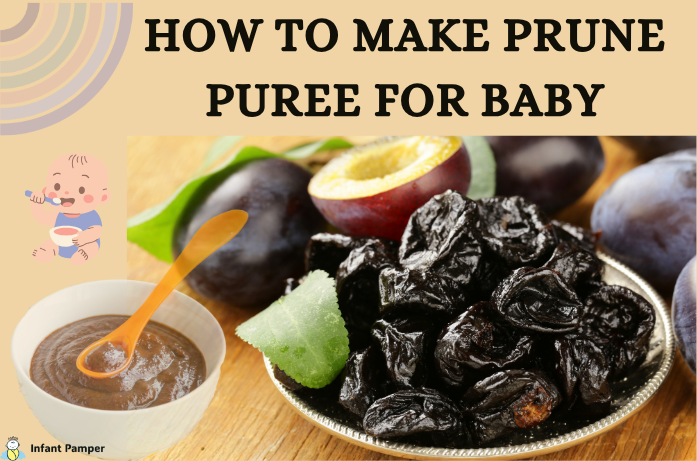
Making homemade prune puree does not require a long ingredient list or complicated cooking. Start by softening a few pitted dried prunes, then blend them with enough liquid to create a consistency your baby can comfortably manage. The result can be spoon-fed by itself or added in small amounts to foods such as oatmeal, pear puree, or plain yogurt.
Parents often reach for prunes when stools become firm after solids are introduced because prunes naturally provide fibre and sorbitol. This recipe focuses on the practical details: preparing the prunes, getting the texture right, choosing an appropriate portion, storing leftovers safely, and knowing when bowel changes should be discussed with your baby’s pediatrician.
Baby Prunes: When Can Babies Eat Them?
According to the American Academy of Pediatrics (AAP) , most babies can begin solid foods at around 6 months of age, once they can sit with support, hold their head steady, and show signs of readiness.
Prunes can be a useful early fruit for babies because they are naturally sweet, easy to blend, and pair well with nutrient-rich foods like broccoli puree for baby , adding more variety to your baby’s meals.
- Baby prunes are naturally sweet and contain dietary fibre.
- They may help soften stools and support regular bowel movements.
- They blend easily into smooth purees, oatmeal, and baby cereals.
Note: Whole dried prunes are sticky and can be difficult for younger babies to manage, so soften and blend them into a smooth, age-appropriate prune puree.
How to Make Prune Puree for Baby
This simple prune puree recipe uses dried prunes and water to make a naturally sweet, smooth baby food. You can adjust the consistency with a little extra liquid to match your baby’s feeding stage.
Ingredients You Will Need
- 6–8 pitted dried prunes, preferably unsweetened
- 1 cup of water for soaking or simmering
- Extra water, breast milk, or prepared formula to thin the puree, if needed
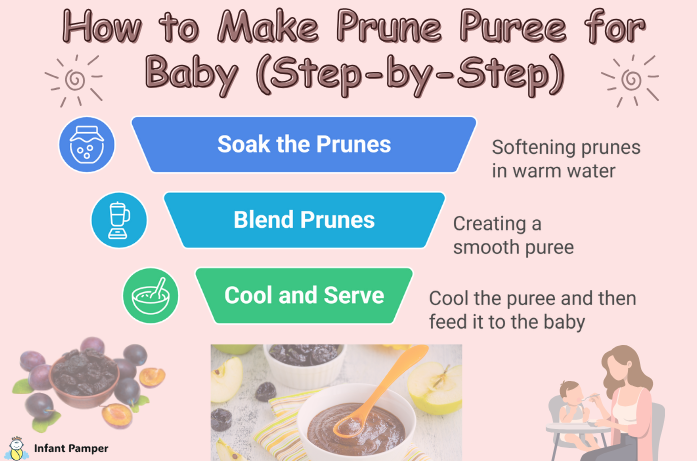
Step 1: Soften the Prunes
Place the dried prunes in a bowl, cover them with warm water, and soak for 15–30 minutes or until they become soft.
For a quicker method, place the prunes and water in a small saucepan and simmer gently for about 10 minutes. Allow them to cool slightly before blending.
Step 2: Blend Into a Smooth Puree
Transfer the softened prunes to a blender or food processor. Add a small amount of the soaking or cooking liquid and blend until the mixture becomes smooth and creamy.
Step 3: Adjust the Texture
Add more water gradually until the prune puree reaches a texture suitable for your baby. Make it thinner and completely smooth for beginners, or leave it slightly thicker for babies who are comfortable with more texture.
Step 4: Cool and Serve
Make sure the puree has cooled before serving it to your baby. Offer a small amount at first and follow your baby’s hunger and fullness cues.
How to Store and Freeze Pureed Prunes
- Refrigerator: Store in an airtight container for up to 3 days.
- Freezer: Freeze in ice cube trays or silicone baby food molds for up to 3 months.
Tip: Label with the date and thaw in the refrigerator overnight or warm gently before serving.
Benefits of Prunes for Babies
Prunes aren’t just commonly used for constipation; they also contain useful nutrients and naturally occurring plant compounds:
- Dietary Fibre – Supports normal digestion and may help keep stools soft.
- Sorbitol – A naturally occurring sugar alcohol that may help draw water into the bowel and support softer stools.
- Potassium – Supports normal muscle and nerve function.
- Vitamin K and Plant Compounds – Add to the overall nutritional value of prunes as part of a varied diet.
A systematic review indexed in PubMed found that prunes may help improve stool frequency and consistency in people experiencing constipation. However, most of the available research involved adults, so prune puree should be offered to babies as part of an age-appropriate diet rather than treated as a guaranteed constipation remedy.
How to Serve Prunes as Baby Food
You can serve prune puree:
- On its own with a spoon
- Mixed into oatmeal or rice cereal (baby puree combinations work great here)
- Combined with apple, pear, or banana puree
- Stirred into full-fat plain yogurt (for babies 8+ months)
Start slow, especially for constipation relief, too much can cause loose stools.
Are Pureed Prunes Good for Baby Constipation?
Pureed prunes may help some babies pass softer stools because they contain dietary fibre and naturally occurring compounds that support digestion. However, a baby is not necessarily constipated simply because they do not poop every day. Hard, dry, or painful stools are more important signs to watch for.
Offer prune puree as part of an age-appropriate, varied diet rather than treating it as a guaranteed remedy. If constipation continues for more than a few days, becomes painful, or is accompanied by vomiting or blood in the stool, speak with your pediatrician before increasing the amount.
How Much Prune Puree Can a Baby Have?
For babies new to solids: Start with approximately 1–2 tablespoons as part of a meal.
For experienced eaters: Follow appetite and fullness cues rather than trying to reach a fixed serving.
When using it because of constipation: Avoid repeatedly increasing the amount if symptoms continue.
The CDC feeding guidance recommends starting with small amounts of food and gradually adjusting the serving as your baby becomes more comfortable with solids.
There is no need to give prune puree every day. It can be offered occasionally on its own or mixed with other baby foods. If you are using pureed prunes for constipation, avoid repeatedly increasing the serving without speaking with your pediatrician.
Prune Puree vs Baby Prune Juice
Prune puree contains the blended fruit and is generally the more suitable option for babies who have started solid foods. Its texture can be adjusted according to your baby’s feeding stage, and it can be served alone or mixed with other familiar foods.
For routine feeding, the CDC recommends avoiding fruit and vegetable juice before 12 months. Pureed or mashed fruit is preferred for infants. However, a pediatrician may sometimes give different instructions when treating constipation, so always follow your baby’s doctor rather than offering baby prune juice on your own.
Safety Tips for Giving Prunes to Infants
- Choose pitted, unsweetened dried prunes without added sugar.
- Soften and blend the prunes into a smooth texture suitable for your baby’s feeding stage.
- Introduce prunes in a small amount, especially when your baby is trying them for the first time.
- Watch for possible reactions such as a rash, vomiting, or diarrhoea, and contact your pediatrician if these occur.
- Do not serve whole or large pieces of dried prunes to young babies because they are sticky and difficult to chew.
- Always keep your baby seated upright and closely supervised while eating.
Pureed prunes are considered a relatively low-allergy-risk first food, but every new food should still be introduced carefully.
FAQs About Prune Puree for Babies
Final Thoughts
Homemade prune puree is one of the simplest fruit purees to prepare because dried prunes only need to be softened and blended with enough liquid to create the right texture. You can serve it by itself or add a small spoonful to foods your baby already enjoys.
If you are offering prunes because your baby has hard or painful stools, start with a small amount and watch how your baby responds. Persistent constipation, blood in the stool, vomiting, significant discomfort, or feeding problems should be discussed with your pediatrician rather than managed by continually increasing the amount of prune puree
Medical Disclaimer
This article is for informational purposes only and not a substitute for medical advice. Always consult your pediatrician before introducing new foods or treating constipation in infants.
From first bites to happy tummies, join Infant Pamper for trusted recipes, natural remedies, and feeding advice every parent can use.
For more helpful baby food tips and recipes, check out these articles: