Written by a caring mom at Infant Pamper
Constipating foods for babies can sometimes make it harder for little tummies to stay comfortable, especially when your baby is starting solid foods. While not every baby reacts the same way, certain foods may slow bowel movements and make stools harder to pass. The good news is that simple changes, like offering more fluids and choosing high fiber baby foods for constipation, can often help your baby feel better naturally.
If you’ve ever watched your baby strain, cry, or seem uncomfortable while trying to poop, you know how heartbreaking it can be. As parents, we want to fix it right away, but constipation is actually quite common as babies begin exploring new foods. The good news is that most cases improve with small diet changes, patience, and plenty of love. Let’s look at which foods may contribute to constipation, what to offer instead, and when it’s time to call your pediatrician.
What Is Constipation in Babies?
Constipation doesn’t simply mean your baby skips a day without pooping. Some babies naturally poop several times a day, while others may go every couple of days and still be perfectly healthy.
Constipation usually means your baby has stools that are hard, dry, painful to pass, or they strain without much success. You may also notice your little one becoming fussy during bowel movements, refusing food, or having a swollen tummy. According to the National Institute of Diabetes and Digestive and Kidney Diseases, diet, fiber, and healthy eating habits can play an important role in supporting regular bowel movements.
Starting solids is one of the most common times constipation appears because your baby’s digestive system is learning to process completely new foods.
Signs Your Baby May Be Constipated
Before changing your baby’s diet, it helps to know the common signs of constipation.
Your baby may be constipated if they:
- Pass hard, dry, or pebble-like stools
- Cry or strain while pooping
- Go several days without a bowel movement along with discomfort
- Have a firm or bloated tummy
- Eat less than usual
- Seem unusually fussy before passing stool
Occasional constipation is common, but ongoing symptoms should always be discussed with your pediatrician. Signs like hard stools, painful bowel movements, and changes in stool patterns can help parents recognize constipation early, as explained by MedlinePlus.
Why Some Foods Cause Constipation
As babies begin eating solids, their digestive systems are still developing. Some foods are naturally lower in fiber or are more binding, meaning they can slow digestion in some babies.
This doesn’t mean these foods are unhealthy or should never be served. Many of them contain valuable nutrients and can absolutely be part of a healthy diet. The key is offering them in moderation while balancing them with fruits, vegetables, water, and high fiber baby foods for constipation.
Foods That May Contribute to Constipation in Babies
Some foods are healthy but may slow digestion or make stools firmer in some babies, especially when eaten often or without enough fiber-rich foods. Every baby reacts differently, so these foods do not need to be completely avoided. The key is balance and adding foods that support healthy digestion.
White Rice
White rice is gentle on the stomach, but it contains less fiber compared with whole grains. Eating a lot of white rice regularly may make stools harder for some babies.
Bananas (Especially Unripe Ones)
Bananas are a nutritious baby food, but slightly green or unripe bananas may make stools firmer in some babies. Ripe bananas are usually easier to digest.
Applesauce
Apples are a good source of nutrients, but applesauce usually contains less fiber because much of the natural fiber is removed during processing.
Cheese
Cheese provides calcium and protein, but eating too much cheese without enough fruits, vegetables, and fluids may contribute to constipation in some babies.
White Bread and Refined Grains
White bread, crackers, and refined pasta are lower in fiber compared with whole-grain options. Too many refined foods may make bowel movements less regular.
Processed Baby Snacks
Baby crackers, puffs, and packaged snacks can be convenient, but many are low in fiber. They are okay occasionally but should not replace fresh fruits, vegetables, and whole grains.
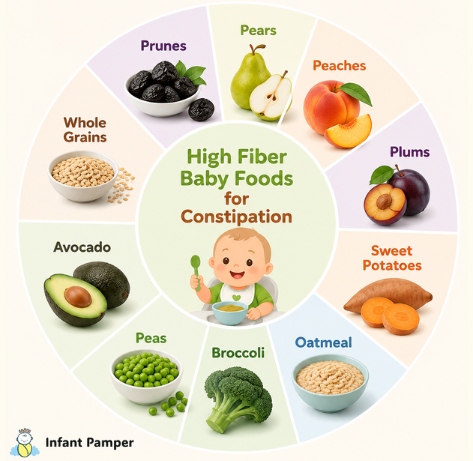
High-Fiber Baby Foods for Constipation
Adding more fiber-rich foods to your baby’s meals can help support smoother digestion and healthier bowel movements. These foods are gentle, nutritious, and easy to include in your baby’s daily meals.
Prunes
Prunes are one of the most popular foods for helping babies with constipation. They contain fiber and natural sugars that can help soften stools.
Serving idea: Offer prune puree or mashed prunes once your baby is ready for solids.
Pears
Pears are gentle on little tummies and naturally rich in fiber. They are often a great choice when babies have harder stools.
Serving idea: Try soft cooked pears or smooth pear puree.
Peaches
Peaches provide fiber and natural fluids that may support digestion.
Serving idea: Serve soft mashed peaches or peach puree depending on your baby’s age.
Plums
Plums contain fiber and can help support regular bowel movements.
Serving idea: Offer mashed fresh plums or a smooth puree.
Sweet Potatoes
Sweet potatoes are packed with nutrients and fiber while being easy for many babies to digest.
Serving idea: Mash cooked sweet potatoes into a smooth texture for younger babies.
Oatmeal
Oatmeal is often a better choice than low-fiber cereals when constipation is a concern because it contains more fiber.
Serving idea: Prepare baby oatmeal and mix it with fruit puree like pears or prunes.
Broccoli
Soft cooked broccoli provides fiber and important nutrients that support healthy digestion.
Serving idea: Steam until soft and mash or offer small pieces when your baby is ready for finger foods.
Peas
Peas are another fiber-rich vegetable that can be easily added to baby meals.
Serving idea: Mash cooked peas or mix them with other vegetables.
Avocado
Avocado is a soft, nutrient-rich food that contains healthy fats and fiber to support your baby’s digestion. Its smooth texture also makes it easy to mash and serve.
Serving idea: Mash ripe avocado and serve it alone or mix it with other baby-friendly foods.
Whole Grains
Whole grains contain more fiber than refined grains and can help support regular bowel movements when included as part of a balanced diet.
Serving idea: Try whole-grain cereals, soft whole-grain pasta, or other age-appropriate whole-grain foods.
Offering a variety of fiber-rich foods throughout the week helps your baby get important nutrients while supporting healthy digestion and comfortable bowel movements.
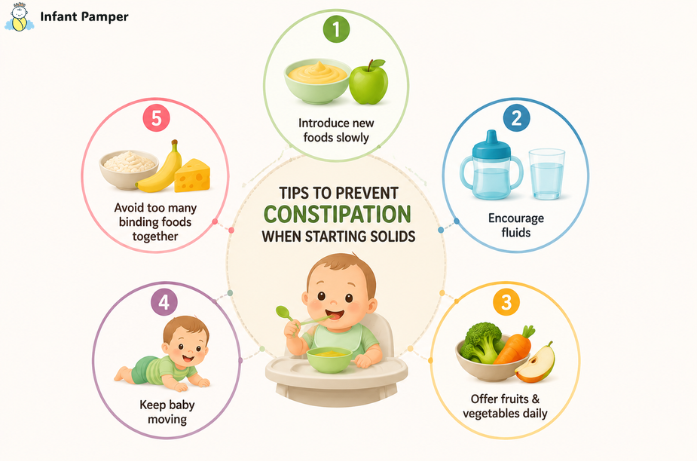
Tips to Prevent Constipation When Starting Solids
1. Introduce New Foods Slowly
Offer one new food at a time so you can notice how your baby’s tummy responds.
2. Encourage Fluids
Once your pediatrician says it’s appropriate, Once your pediatrician says it is appropriate, babies around 6 months and older may have small amounts of water with meals to support digestion.
3. Offer Fruits and Vegetables Every Day
A colorful plate often naturally provides more fiber than relying heavily on grains.
4. Keep Baby Moving
Tummy time, crawling, rolling, and gentle bicycle leg exercises can sometimes encourage bowel movements.
5. Avoid Too Many Binding Foods Together
A meal with rice cereal, bananas, and cheese may be more constipating than a balanced meal with fruit and vegetables included.
Sample Meal Ideas for Babies With Constipation
Here are a few simple combinations parents often find helpful:
Breakfast: Oatmeal with mashed pears
Lunch: Sweet potato and peas
Snack: Soft ripe peach slices or puree
Dinner: Brown rice with mashed vegetables
These meals include several high fiber baby foods for constipation while still providing balanced nutrition.
Can Breastfed or Formula-Fed Babies Get Constipated?
Yes. Although breastfed babies are less likely to become constipated, it can still happen. Formula-fed babies may experience constipation a little more often, but many do not have any problems at all.
Once solid foods are introduced, diet usually becomes a bigger factor than whether your baby drinks breast milk or formula.
When Should You Call the Doctor?
Most constipation improves with simple feeding changes, but some situations need medical advice.
Call your pediatrician if your baby:
- Has blood in the stool
- Has severe pain while passing stool
- Refuses several feeds
- Has vomiting
- Has constipation lasting more than a few days despite diet changes
- Has poor weight gain
- Develops a swollen, firm belly
Never give laxatives, enemas, or constipation medicines unless your baby’s doctor recommends them.
Common Myths About Constipation in Babies
Myth: Bananas always cause constipation.
Not always. Many babies eat ripe bananas without any problems. Some babies are simply more sensitive than others.
Myth: Every baby should poop every day.
Normal bowel habits vary widely. Some healthy babies skip a day or two without being constipated.
Myth: Rice cereal must be avoided forever.
Rice cereal is not harmful for most babies. If constipation develops, balancing it with fiber-rich foods is often enough.
Gentle Reassurance for Parents
Watching your baby struggle to poop can leave you feeling helpless. You may wonder if you introduced solids too early or chose the wrong foods.
Please know that constipation is incredibly common during this stage. It doesn’t mean you’ve done anything wrong. Every baby’s digestive system develops at its own pace, and small changes often make a big difference.
Resources like UNICEF’s baby health guidance also highlight that gentle care, healthy feeding habits, and understanding your baby’s needs can help parents manage common digestive concerns.
With patience, plenty of fluids, balanced meals, and more high fiber baby foods for constipation, most little tummies become much happier again.
Final Thoughts on Constipating Foods for Babies
Learning about constipating foods for babies isn’t about avoiding certain foods forever. It’s about understanding how different foods affect your baby’s digestion and creating balanced meals that support healthy bowel movements.
If your baby seems constipated, try adding more fruits, vegetables, whole grains, and other fiber-rich foods while offering plenty of fluids if age-appropriate. And if constipation continues or your baby seems very uncomfortable, don’t hesitate to reach out to your pediatrician.
Parenting is full of little worries, but you don’t have to solve every tummy trouble alone. With a little patience, gentle care, and the right foods, most babies are back to smiling, eating, and feeling comfortable again.
Frequently Asked Questions
At Infant Pamper, we are here to support you through every feeding milestone and every little parenting challenge. Explore more baby nutrition and health guides to help your little one grow happy, healthy, and comfortable.
Disclaimer: This article is for informational purposes only and should not replace medical advice. Always consult your pediatrician if your baby has ongoing constipation, severe symptoms, or feeding concerns.