Written by a Caring Mom at Infant Pamper
When do babies start to coo? For many babies, those first little “ooo” and “ahh” sounds begin around 6 to 8 weeks old. Some babies find their voice a little sooner, while others take a bit more time, and both can be perfectly normal.
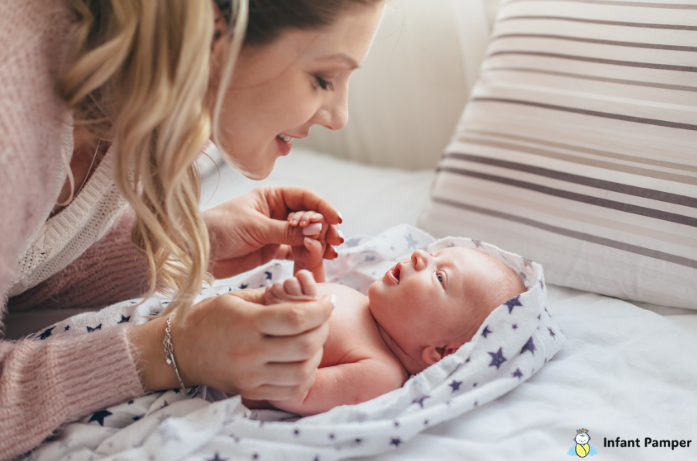
The first coo often catches you by surprise. Your baby may be looking at your face, you say something to them, and suddenly you hear a tiny sound back. It almost feels like your first real little conversation together.
These sweet noises are more than just adorable. Your baby is starting to experiment with their voice, listen to the way you speak, and learn that when they make a sound, someone they love responds.
Table of Contents
- When Do Babies Start to Coo?
- What Does a Baby Coo Sound Like?
- Why Is Cooing an Important Milestone?
- Baby Cooing Timeline: What You May Notice
- How to Encourage Your Baby to Coo Naturally
- What About Babies Born Prematurely?
- Cooing vs Babbling: What’s the Difference?
- What If My Baby Isn’t Cooing Much?
- When Should You Talk to Your Pediatrician?
- FAQs About Baby Cooing
When Do Babies Start to Coo?
Most babies start cooing somewhere around 6 to 8 weeks, although it can happen a little earlier or later. In the beginning, the sounds are usually soft and simple, like a tiny “ooo” or “ahh,” and you may only hear them once in a while.
You might notice your baby cooing after a feed, during cuddle time, or while looking at your face. These calm, happy moments are often when babies feel most interested in making sounds.
As the weeks go by, those little noises can become more frequent. By around 2 to 3 months, your baby may start changing their pitch, smiling while making sounds, or pausing after a coo as if they are waiting for you to answer.
There is no need to worry if your baby does not follow the exact same timeline as another baby. Some are naturally more vocal, while others are quieter. What matters most is that your baby is gradually becoming more aware of voices, faces, and the people around them.
What Does a Baby Coo Sound Like?
True cooing usually sounds soft, drawn-out, and vowel-like.
You might hear:
- “Oooo”
- “Ahhh”
- “Eeee”
- “Ohhh”
There may also be gentle gurgles, little squeals, humming sounds, or happy noises mixed in.
Cooing sounds quite different from crying. Crying usually tells you your baby needs something, such as food, sleep, comfort, or a diaper change.
Cooing is more likely to happen when your baby is awake, calm, comfortable, and interested in you.
That is why you may notice the best little conversations during face-to-face play rather than when your baby is hungry or tired.
Why Is Cooing an Important Milestone?
Cooing may sound simple, but it shows that your baby is beginning to use their voice in a more purposeful way. They are practicing how to control their breath and use their mouth, tongue, and throat to create different sounds.
It also supports early communication skills. When your baby coos and you smile, answer, or copy the sound, they begin to learn that communication goes both ways.
These little back-and-forth moments help build the foundation for later babbling, listening, turn-taking, and eventually spoken words.
The American Academy of Pediatrics also explains that these early “conversations” help babies practice taking turns, copying sounds, and responding to the rhythm and tone of speech.
What Is the Baby Cooing Meaning?
A coo usually means your baby is calm, comfortable, and starting to play with their voice. These soft “ooo” and “ahh” sounds are not words yet, but they are an early form of communication.
When you smile, talk back, or copy the sound, your baby begins to notice that their voice gets a response. This simple back-and-forth helps them learn how communication works.
So those little coos are more than cute noises. They are part of your baby’s early social and language development.
What Happens Before the First Coo?
Newborns certainly aren’t quiet before cooing begins.
During the first few weeks, you may hear grunts, snorts, squeaks, sighs, hiccups, cries, and all sorts of noises that make new parents wonder, “Is that normal?”
Most early sounds are reflexive or connected with breathing, feeding, digestion, sleep, or discomfort.
Cooing feels slightly different because it becomes more intentional and social.
Your baby may look toward your face, hear your voice, and then make a soft sound while appearing calm and interested.
That tiny social response is what makes the cooing stage feel so different from normal newborn noises.
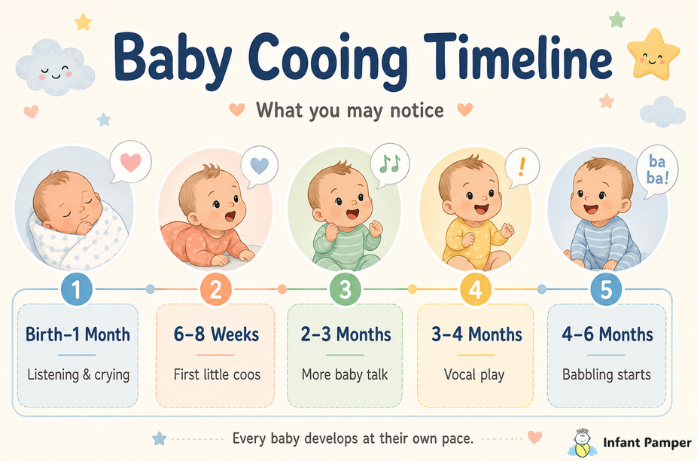
Baby Cooing Timeline: What You May Notice
Every baby develops differently, but this simple timeline can help you know what may come next.
Birth to 1 Month: Listening and Crying
During the newborn stage, crying is your baby’s main vocal communication.
They are also spending a lot of time listening.
Your voice is already becoming familiar. Talking during diaper changes, cuddles, feeding, and bath time gives your baby repeated exposure to the rhythm of language.
You do not need to “teach” anything yet.
Simply talking to your baby is enough.
Around 6 to 8 Weeks: First Little Coos
This is when many parents first notice a soft “ahh” or “ooo.”
At first, the sound might be so quick that you wonder if it was really a coo.
Then it happens again.
These early coos are often easiest to hear when your baby is rested, fed, and looking at you.
Around 2 to 3 Months: More Baby Conversations
Your baby’s sounds may now become more frequent and varied.
They may coo when they see your face and sometimes seem to answer after you speak.
Smiling can also make these little conversations feel much more social.
You may notice yourself answering every sound without even thinking about it.
Around 3 to 4 Months: More Vocal Play
Your baby may begin experimenting with different pitches and louder sounds.
Along with coos, you might hear squeals, chuckles, growls, or other funny little noises.
This is usually less about saying anything specific and more about discovering everything their voice can do.
Around 4 to 6 Months: Moving Toward Babbling
Eventually, vowel-heavy coos begin changing.
You may start hearing consonant sounds such as “b,” “m,” “g,” or “d.”
Sounds like “ba,” “ga,” and later repeated combinations such as “ba-ba” are signs that your baby is moving toward babbling.
It is another step closer to speech.
How to Encourage Your Baby to Coo Naturally
You do not need special toys or exercises to encourage cooing. Simple everyday interaction is often enough to help your baby feel interested in using their voice.
Talk Through Your Day
Talk to your baby while changing clothes, feeding, or walking around the house. Simple lines like “Here are your socks” or “Let’s change your diaper” help your baby hear the rhythm, pauses, and tone of normal speech.
Copy Your Baby’s Sounds
When your baby makes an “ooo” or “ahh” sound, try copying it back. Smile and pause for a moment. Your baby may respond again, turning it into a sweet little back-and-forth conversation.
According to Nemours Kids Health, talking, singing, reading, and responding to your baby’s sounds can support early communication and help them learn the natural back-and-forth of conversation.
Give Your Baby Time to Respond
Try not to fill every quiet moment with talking. Say something, then wait a few seconds. Your baby may answer with a coo, smile, kick, or excited movement, and all of these are part of early communication.
Sing and Read Together
Singing simple songs and reading short books can expose your baby to different sounds and rhythms. You can also point to pictures and describe what you see, even if your baby is too young to understand the words.
Follow Your Baby’s Mood
Choose times when your baby is awake, calm, and comfortable. If they turn away, fuss, yawn, or seem tired, give them a break. Cooing should develop through relaxed, happy interaction rather than pressure.
What About Babies Born Prematurely?
This is an important detail parents sometimes miss when comparing milestones.
For babies born prematurely, healthcare providers may consider corrected or adjusted age when looking at early development.
For example, a baby who arrived several weeks early may reach some milestones later according to their birth-date age but right on time according to their corrected age.
So if your baby was premature, avoid comparing their timeline directly with a full-term baby of the same birth age.
Your pediatrician can explain which age to use when following development.
Cooing vs Babbling: What’s the Difference?
Cooing usually comes first.
It mostly uses soft vowel sounds such as:
“Ooo.”
“Ahh.”
“Eee.”
Babbling develops later and adds consonants.
You may begin hearing:
“Ba.”
“Ga.”
“Da.”
And eventually:
“Ba-ba-ba.”
“Da-da-da.”
A baby saying “mama” during early babbling doesn’t necessarily know they are talking about Mom yet, even though we moms are absolutely allowed to pretend they do.
They are first practicing the sounds that will eventually become meaningful words.
What If My Baby Isn’t Cooing Much?
Some babies are little chatterboxes from the start, while others are much quieter. That can be completely normal. Babies do not all reach milestones in the same way or at the same time.
You may notice lots of sounds one week, then fewer the next while your baby seems more interested in kicking, watching faces, or discovering their hands. Development often comes in little bursts.
Instead of worrying about one specific sound, look at the bigger picture. Is your baby noticing your voice, watching your face, smiling, making some noises, or reacting when you talk? Those signs can tell you more about their overall communication than cooing alone.
When Should You Talk to Your Pediatrician?
It is always okay to ask about a milestone that worries you.
You don’t need to wait until you’re certain something is wrong.
Talk with your baby’s pediatrician if your baby seems not to respond to sounds or familiar voices, isn’t making expected vocal sounds as the months pass, loses sounds or other abilities they previously had, or if you have concerns about their hearing or overall development.
Hearing is especially important for speech and language development because babies learn sounds partly by hearing them.
Your pediatrician can look at the whole developmental picture and decide whether your baby simply needs more time or whether further evaluation would be useful.
Milestones are guides, not exams.
FAQs About Baby Cooing
Final Thoughts
So, when do babies start to coo? For many babies, those first sweet sounds arrive around 6 to 8 weeks, then become more frequent and varied over the next few months.
You don’t need to rush this milestone. Talk to your baby while you fold laundry, copy their silly sounds, sing during bath time, and pause long enough to let them “answer.” These everyday moments give babies plenty of gentle opportunities to listen and communicate.
And if your little one is quieter than another baby you know, try not to turn development into a race. Watch their progress as a whole and share any concerns with your pediatrician.
One day it’s a tiny “ooo” from the crib. Before long, you’ll have a little person calling your name from the other room and you may find yourself missing those quiet first conversations.
Every little sound, smile, and milestone is part of your baby’s unique journey. Explore more baby development, newborn care, and parenting guides on Infant Pamper for simple, supportive information at every stage.
Disclaimer
This article is for general informational purposes only and is not a substitute for professional medical advice. If you have concerns about your baby’s hearing, communication, or development, speak with your pediatrician.
About the Author
Geeta Yogi is a parenting writer who shares practical and easy-to-understand guidance about baby communication, early development, newborn milestones, language skills, and everyday parenting. Her writing focuses on helping parents understand their baby’s early sounds and interactions while remembering that every baby develops at their own pace.