Written by a Caring Mom at Infant Pamper
Seeing your baby blowing raspberries for the first time can make you smile and wonder what they are trying to do. These adorable lip movements, the noises, and the bubbled drool might look just like baby fun, but there is more going on than you could imagine.
As babies grow, they become interested in exploring everything, including the ability to explore themselves and use their voice. The act of blowing raspberries provides your baby with an entertaining way to experiment with the movements of their lips, tongue, and breathing, as well as various sounds. They might even soon learn that they are capable of making you smile and laugh with this new trick.
It is an absolutely normal stage of baby’s development and growth. While you will have to find another bib immediately, these funny sounds and movements might be a sign that your baby finds communication entertaining.
What Does Baby Blowing Raspberries Mean?
When babies blow raspberries, they push air through their lips, sometimes with their tongue slightly out, creating that funny little “brrr” sound. It may seem like simple play, but your baby is actually experimenting with how their mouth, tongue, and breath work together.
Babies often repeat the sound because they enjoy the feeling, like hearing the noise, or notice that it gets a reaction from you. It can also become part of those early back-and-forth interactions that help babies learn how communication works.
The CDC includes blowing raspberries among the language and communication milestones many babies reach by around 6 months. At this age, babies may also squeal and take turns making sounds with caregivers, so those bubbly little noises can be one small sign of growing communication skills.
When Do Babies Start Blowing Raspberries?
Many babies start blowing raspberries around 4 to 6 months, although some may begin a little earlier or later. Every baby develops at their own pace, so there is no exact age when this must happen.
Around this stage, babies are learning to control their lips, tongue, and breath while experimenting with new sounds. Raspberry blowing can also appear alongside cooing, squealing, and early babbling.
So if your baby suddenly starts making little “brrr” sounds, it is usually a normal part of early communication and mouth development rather than something to worry about.
Can a 3-Month-Old Blow Raspberries?
Yes, some babies may start experimenting with their lips, tongue, and saliva as early as 3 months. You might notice little bubbles, mouth movements, or early raspberry-like sounds during this stage.
This can still fall within normal development because babies do not all learn new skills at the same time. Some may focus more on cooing and smiling, while others become interested in making different mouth sounds.
The Mayo Clinic explains that during the early months, babies gradually respond more to voices and begin making a wider range of sounds as communication develops.
Why Do Babies Blow Raspberries?
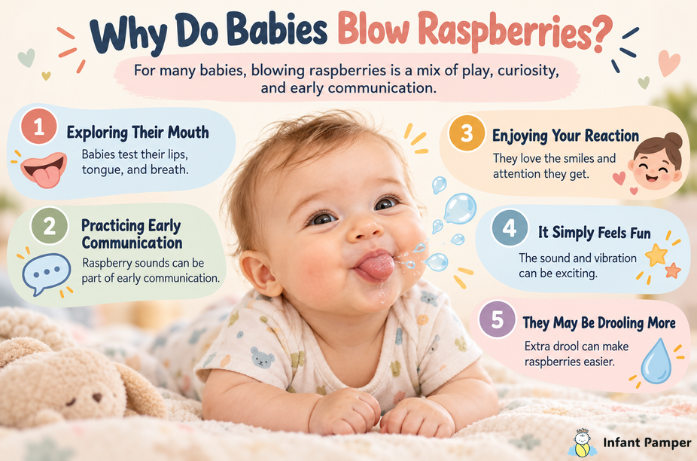
There can be several reasons behind this funny little habit. For many babies, blowing raspberries is simply a mix of play, curiosity, and early communication.
1. They Are Exploring Their Mouth
Babies learn a lot by repeating movements and testing what their bodies can do. Just like kicking, grabbing, and reaching, making raspberry sounds gives them a chance to explore their lips, tongue, and breath.
You may even notice your baby looking very focused while doing it. They are figuring out how a small movement can create a brand-new sound.
2. They Are Practicing Early Communication
Before babies can use words, they communicate through smiles, cries, coos, squeals, and different sounds. Raspberry noises can become another part of this early communication.
When your baby makes a sound and you respond, they slowly begin to understand that communication can go back and forth.
3. They Enjoy Your Reaction
Babies pay close attention to your face and voice. If you laugh, smile, or talk back when they blow a raspberry, they may quickly realize that this new trick gets your attention.
That is often why they repeat it again and again. For your baby, your reaction is part of the fun.
4. It Simply Feels Fun
Sometimes the reason is very simple blowing raspberries feels funny.
The vibration of the lips, the sound, and the bubbles can all be exciting for a baby who is discovering new sensations. Once they learn how to do it, they may practice many times throughout the day.
5. They May Be Drooling More
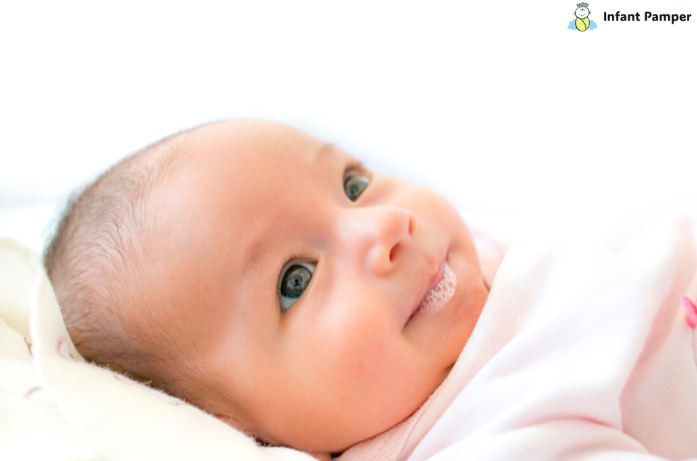
Many babies also become more drooly around this stage, which can make raspberry sounds easier to create.
You may notice wet bibs, saliva bubbles, and a damp chin. Gently pat the area dry when needed and change wet bibs so moisture does not sit against your baby’s skin for too long.
Does Blowing Raspberries Mean My Baby Is Teething?
Not necessarily. Blowing raspberries and teething often happen around the same stage, which is why many parents assume the two are connected.
Raspberry blowing on its own does not mean a tooth is about to appear. If your baby is teething, you may also notice more chewing, sore-looking gums, or a strong desire to bite on safe teething toys.
If your baby seems comfortable and is simply making bubbly sounds, they are probably just enjoying a new mouth movement and exploring what they can do.
Is Blowing Raspberries Related to Speech Development?
Yes, blowing raspberries can be part of the early communication skills babies develop before they begin saying real words. It gives your baby a chance to experiment with their lips, tongue, breath, and the different sounds their mouth can make.
The Mayo Clinic explains that babies around this stage often begin making a wider variety of sounds and responding to people with noises of their own. Simple back-and-forth sound play can also help babies practice listening, responding, and taking turns during early communication.
When your baby blows a raspberry, try smiling and making the sound back. Then pause for a moment and give them a chance to respond. These little “conversations” are a fun and natural way to encourage interaction without turning playtime into a lesson.
Try a Simple “My Turn, Your Turn” Game
You do not need any special toys for this little game. Sit close enough for your baby to see your face and wait for them to make a sound.
Copy the sound gently, then pause and give your baby a moment to respond. If they blow a raspberry, you can make one back. They may smile, squeal, kick their legs, or try the sound again.
There is no right or wrong way to do it. The goal is simply to enjoy a little back-and-forth connection with your baby while encouraging early communication in a natural way.
Why Is My Baby Blowing Raspberries While Feeding?
It can be surprising when your baby suddenly starts blowing raspberries in the middle of a feed. Often, this happens because they are distracted, playful, or curious about the new movements they can make with their mouth.
If your baby has started solids, they are also learning how to move food around, close their lips, swallow different textures, and show you when they have had enough. A few silly raspberry sounds during meals can simply be part of that learning process.
If your baby is feeding comfortably, growing well, and seems happy, occasional raspberries are usually nothing to worry about. But if you notice frequent coughing, choking, breathing trouble, distress during feeds, or repeated refusal to eat, it is a good idea to speak with your pediatrician.
What If My Baby Suddenly Stops Blowing Raspberries?
Babies often practice one skill for a while and then shift their attention to something new. Your baby may stop blowing raspberries and become more interested in babbling, squealing, rolling, or reaching.
This is usually normal if your baby is still responding to sounds, making eye contact, interacting with you, and learning new skills. Babies do not always use every skill consistently once they discover something new.
It is a good idea to speak with your pediatrician if your baby loses several previously learned skills, becomes less responsive, or stops making sounds and interacting in ways they used to.
A Simple Tip for Raspberry Drool
All those little bubbles can leave your baby’s chin wet for much of the day. Gently pat the area dry with a soft cloth and change damp bibs so moisture is not sitting against the skin for too long.
Try not to rub the skin repeatedly, as this can make irritation worse. If the area becomes very red, cracked, sore, or does not improve, it is best to check with your baby’s healthcare provider.
When Should You Talk to a Pediatrician?
If your baby is not blowing raspberries, that alone is usually not a reason to worry. Babies develop at different speeds, and one missing behavior does not always mean there is a problem.
It is a good idea to speak with your pediatrician if your baby rarely responds to sounds or voices, does not seem interested in interacting, is not making sounds expected for their age, has ongoing feeding difficulties, or loses skills they had already learned.
You do not need to wait until a concern feels serious. If something about your baby’s development is worrying you, bringing it up with your pediatrician can give you helpful guidance and peace of mind.
FAQs About Baby Blowing Raspberries
1. Is baby blowing raspberries at 4 months normal?
Yes. Many babies begin experimenting with raspberry sounds around this stage, although some start earlier or later.
2. Why does my baby blow raspberries at me?
Your baby may enjoy the sound, the sensation, and especially your reaction. Smiling and responding can make the game even more fun for them.
3. Does blowing raspberries mean my baby will talk soon?
Not necessarily. It is one form of early sound play rather than a sign that first words are about to appear.
4. Is it normal for my baby to blow raspberries all day?
Yes, it can be. Babies often repeat new skills many times when they find them interesting.
5. Should I blow raspberries back at my baby?
You can. Copying your baby’s sounds and waiting for a response is a fun way to encourage back-and-forth communication.
Final Thoughts
Watching your baby blowing raspberries may seem like a small and silly moment, but it is often part of a much bigger stage of learning and discovery. Those bubbly sounds can show that your little one is becoming more curious about their mouth, voice, and how you respond to them.
There is no need to make it a learning activity. Simply smile, talk back, copy their sounds, and enjoy these playful little exchanges together.
Soon, the raspberries may turn into babbling, gestures, and eventually first words. Until then, enjoy the drooly smiles and funny “brrr” sounds they are one of those sweet baby stages that pass surprisingly quickly.
Want more simple, trusted baby-care tips? Explore more helpful parenting guides on Infant Pamper and make every stage of your baby’s growth feel a little easier.
Disclaimer
This article is for general informational purposes only and is not a substitute for professional medical advice. If you have concerns about your baby’s development, feeding, or health, please speak with your pediatrician or healthcare provider.