Written by a Caring Mom at Infant Pamper
If you wonder what I will need for my newborn, it is very easy to get lost among the shopping lists and long lists of different baby products. In fact, during the first few weeks after birth, the primary goal of the parents is to satisfy the needs of their baby and make everything as easy as possible for themselves.
All you need is to provide your baby with safety, feeding, sleeping, changing and washing, so the main things you will need are a crib, feeding stuff, diapers, clothes, bathing and healthcare supplies and an appropriate car seat. There is no need to purchase everything that might be useful for the baby in the future before birth.
The best way is to buy the essential things and then gradually add other things according to the baby’s growth and preferences.
Table of Contents
What Will I Need for a Newborn?
When thinking about what will I need for a newborn, start with the things your baby will use every day.
A simple newborn setup includes:
- Safe sleep space
- Diapers and wipes
- Comfortable clothes
- Feeding supplies
- Burp cloths
- Bath and grooming items
- Digital thermometer
- Infant car seat
- A few essentials for Mom
You do not need to prepare for your baby’s entire first year before birth.
1. Newborn Clothing Essentials
Tiny baby clothes are hard to resist, but your newborn will not need a full wardrobe in the smallest size. Babies can grow out of newborn outfits much faster than expected.
Start with a small mix of everyday pieces such as bodysuits, sleepers, socks, and a couple of warmer layers. It is also useful to have a few 0–3 month outfits ready.
Look for clothes that feel soft, wash easily, and are simple to open when you need to change a diaper. In the early weeks, practical clothes usually get used far more than fancy outfits.
2. Diapering Essentials
Diaper changes will quickly become part of your daily routine, so it helps to keep the basics together in one easy spot.
Have diapers, wipes, a changing mat, and diaper cream ready before your baby comes home. A small basket beside the bed or sofa can make quick changes much easier.
Try not to buy too many packs in newborn size. Your baby may need the next size sooner than you think.
3. Safe Sleep Essentials
A newborn does not need a complicated sleep setup. A simple, safe space is far more important than extra nursery accessories.
Prepare a crib or bassinet with a firm mattress and fitted sheet. Keeping one or two spare sheets nearby can also be useful for leaks or spit-up during the night.
Keep the sleep area clear rather than filling it with soft decorations. Pillows, loose blankets, crib bumpers, and stuffed toys should not be placed around a sleeping newborn.
Stanford Medicine Children’s Health also recommends using a firm, flat sleep surface and keeping pillows, soft bedding, crib bumpers, and stuffed toys out of a newborn’s sleep space.
4. Feeding Essentials
The things you need for feeding will depend on what works for you after your baby arrives. Your plan may also change, and that is completely fine.
If you breastfeed, you may find nursing bras, breast pads, burp cloths, and a pump useful. If you bottle feed, begin with a few bottles, suitable nipples, a bottle brush, and formula if required.
There is no need to buy a huge feeding collection before birth. It is often better to start with a few basics and add more once you know what suits your baby.
The Centers for Disease Control and Prevention (CDC) also provides practical guidance for breastfeeding, pumping, and formula-feeding families, including useful feeding supplies to keep ready for unexpected situations.
5. Burp Cloths
Burp cloths are one of those simple baby items that can become surprisingly useful.
Keep them close during feeds for milk dribbles, spit-up, or quick cleanups. Having several means you are less likely to run out when laundry starts piling up.
Place a few where you feed most often and keep one or two in your diaper bag for outings.
6. Bath and Grooming Essentials
Baby bath time can stay very simple at the beginning. You do not need lots of special skincare products.
A soft towel, a few washcloths, gentle baby wash, and simple nail-care tools are enough for most everyday needs. A thermometer and nasal aspirator are also handy to keep at home.
Buy only a small amount of skincare products at first. You can always add something later if your baby’s skin needs it.
7. Newborn Health Basics
It helps to keep a few health and grooming items in one place so you can find them quickly when needed.
A thermometer, nasal aspirator, nail clippers, and your pediatrician’s phone number can all go in the same basket or drawer.
If your newborn seems unwell, has a fever, or is not feeding normally, speak with a healthcare professional. Avoid giving medicine unless you have been told it is suitable for your baby.
The World Health Organization (WHO) also recommends paying attention to feeding, warmth, hygiene, skin-to-skin contact, and warning signs such as poor feeding or breathing problems during the newborn stage.
8. Car Seat and Travel Essentials
If you will bring your baby home by car, have the car seat ready before your due date.
Take time to learn how the straps and installation work so you are not figuring everything out while leaving the hospital.
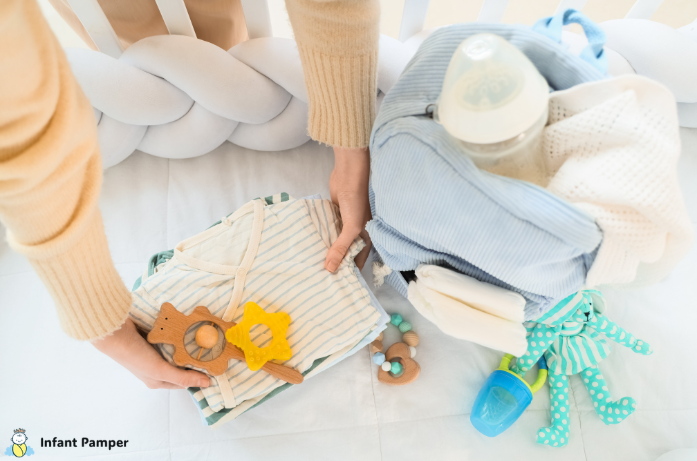
For short trips, pack only the basics: a few diapers, wipes, a clean outfit, a changing mat, burp cloth, and whatever you need for feeding.
9. Nursery Items That Are Helpful but Optional
A beautifully decorated nursery can be lovely, but your baby does not need every nursery product from the start.
A feeding chair, night-light, monitor, dresser, storage basket, or white noise machine may make your routine more comfortable. Still, these are extras rather than first-day necessities.
If you are trying to control your budget, focus first on sleep, feeding, diapers, health items, and safe travel.
10. Things You Can Buy Later
There is no reason to shop for every stage of your baby’s first year before they are born.
High chairs, toddler cups, feeding plates, baby shoes, activity toys, and larger play items will not be needed during the newborn weeks.
Waiting gives you time to see what your baby actually enjoys and what fits your home. It can also stop you from spending money on things that end up unused.
11. Make a Small Baby Corner
You do not have to keep every baby item in the nursery. A small basket in the room where you spend most of your day can be very useful.
Add a few diapers, wipes, a clean bodysuit, and a burp cloth. Keep it beside your bed, sofa, or feeding chair.
When you are tired and holding a newborn, having these little things close by can save you a lot of unnecessary walking around.
12. Remember to Prepare for Yourself Too
While you are getting ready for your baby, keep a few things ready for yourself as well. Those first days can feel long, especially when you are recovering and adjusting to a new routine.
Choose clothes that feel comfortable, keep water and quick snacks nearby, and prepare food that can be served without much effort. If you plan to breastfeed, keep the items you use often near your feeding spot.
And if someone offers to help, give them a simple job. They can bring dinner, pick up groceries, wash a load of clothes, or handle a small chore while you spend time with your baby.
Must-Have vs Nice-to-Have
It is advisable to distinguish between necessities and conveniences when shopping for babies. The first are things that you absolutely require for the safety, comfort, and health of the baby during sleep, feeding, diapering, dressing, travelling, etc. The latter are not essential, but their purchase would make your life easier.
For instance, a sleeping place for your baby is a necessity, while a costly nursery chair is a luxury. Diapers are essential for your baby, while a wipe warmer is an option for comfort. An infant car seat is essential for the travels by car of your baby, while a costly travel organizer can be purchased later.
Thus, before purchasing any product, think whether you need it within the first month after the birth of your child.
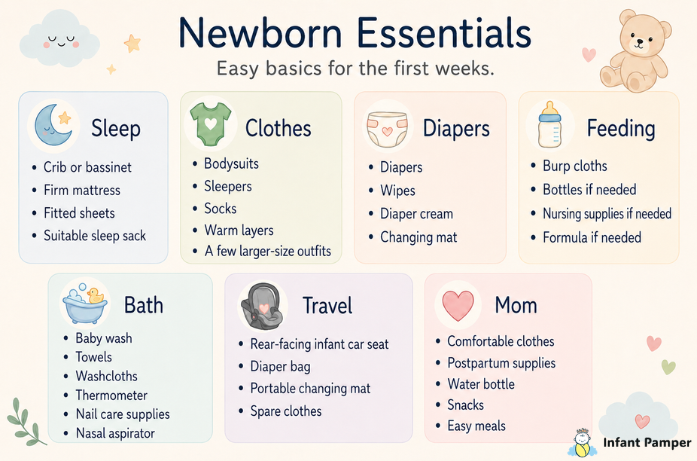
Simple Newborn Essentials Checklist
Medline Plus also provides helpful guidance on baby supplies parents may want to prepare before bringing a newborn home, including clothing, diapering, feeding, and everyday care items.
Sleep
- Crib or bassinet
- Firm mattress
- Fitted sheets
- Suitable sleep sack
Clothing
- Bodysuits
- Sleepers
- Socks
- Warm layers
- A few larger-size outfits
Diapering
- Diapers
- Wipes
- Diaper cream
- Changing mat
Feeding
- Burp cloths
- Bottles if needed
- Nursing supplies if needed
- Formula if needed
Bath and Care
- Baby wash
- Towels
- Washcloths
- Thermometer
- Nail care supplies
- Nasal aspirator
Travel
- Rear-facing infant car seat
- Diaper bag
- Portable changing mat
- Spare clothes
For Mom
- Comfortable clothes
- Postpartum supplies
- Water bottle
- Snacks
- Easy meals
FAQs
Final Thoughts
If you are still asking what will I need for a newborn, remember that you do not need every baby product you see online. Start with safe sleep, diapers, feeding supplies, simple clothes, basic care items, and an appropriate car seat.
Buy only what you need for the first few weeks and add more as you get to know your baby. A simple setup can save money, reduce stress, and make preparing for your little one feel much easier.
Getting ready for a newborn does not have to feel overwhelming. Start with the basics, keep things simple, and explore more practical newborn and parenting tips on Infant Pamper.
Disclaimer
This article is for general informational purposes only and is not a substitute for medical or professional advice. For questions about your newborn’s health, feeding, sleep, or safety, always speak with your pediatrician or qualified healthcare provider.
About the Author
Geeta Yogi is a parenting writer who shares practical and easy-to-understand guidance about newborn preparation, baby essentials, feeding, sleep, everyday care, and early motherhood. Her writing focuses on helping parents prepare for their baby with simple, useful choices without feeling pressured to buy everything at once.