
Written with love by a caring mom at Infant Pamper
There comes a moment in almost every parent’s journey when you pause and wonder, “Is there a calmer way to handle this?” Maybe it’s during a loud tantrum in the middle of the day, or a bedtime struggle when everyone is exhausted. In those moments, it’s easy to feel torn between being firm and being kind.
That’s where gentle parenting discipline begins to make sense. It’s not about giving in or avoiding discipline. It’s about guiding your child with calm, respect, and understanding, even when things feel messy.
I didn’t always parent this way. Like many moms, I tried to control behavior first. But over time, I learned something powerful: when children feel safe and understood, they naturally begin to cooperate more. And that shift changes everything, not just for them, but for you too.
Let’s explore how gentle discipline really works and how you can use it in your everyday parenting, even on the hard days.
What Is Gentle Parenting Discipline?
At its core, gentle parenting discipline is about teaching rather than punishing. It focuses on understanding the “why” behind a child’s behavior instead of simply reacting to it.
Children don’t act out to make your life harder. Most of the time, they’re overwhelmed, tired, frustrated, physically uncomfortable from issues like baby constipation, or simply don’t yet have the skills to express what they feel. Gentle parenting helps you respond to those moments with empathy while still maintaining clear boundaries.
It’s a balance, not too strict, not too permissive.
You’re still the parent. You still guide. But you do it in a way that protects your child’s emotional well-being while teaching them how to handle their feelings and actions over time.
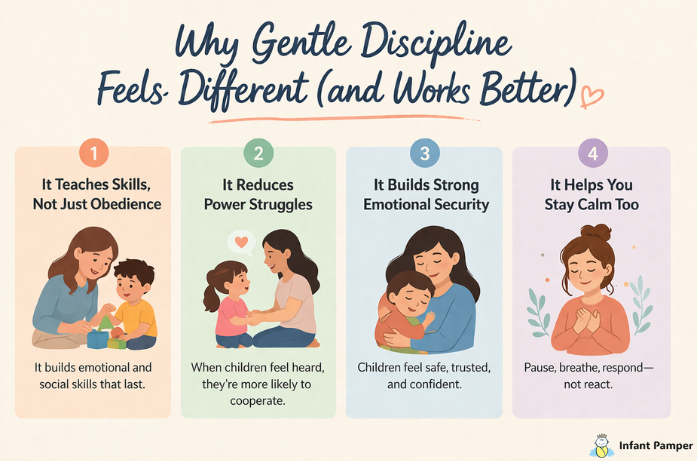
Why Gentle Discipline Feels Different (and Works Better)
If you grew up in a household where discipline meant punishment or fear, this approach may feel unfamiliar at first. But there’s a reason so many parents are slowly moving toward gentler, more connected ways of guiding their children.
Many child development experts, including those at UNICEF, also encourage positive discipline methods that focus on teaching rather than punishing, helping children grow in a healthy and supportive environment.
1. It Teaches Skills, Not Just Obedience
Traditional discipline often stops behavior in the moment, but it doesn’t teach children what to do instead. Gentle discipline focuses on building emotional and social skills that last a lifetime.
2. It Reduces Power Struggles
When children feel heard, they are less likely to resist. You’re no longer stuck in constant arguments or repeating yourself again and again.
You begin working together instead of against each other, which brings a surprising sense of calm into daily parenting.
3. It Builds Strong Emotional Security
Children who feel safe and understood develop stronger confidence and trust. They know you’re on their side, even when you set limits.
4. It Helps You Stay Calm Too
Instead of reacting with frustration, you learn to pause and respond thoughtfully. Over time, parenting feels less overwhelming and more connected.
Gentle Parenting Discipline in Real-Life Situations
Understanding gentle parenting is one thing… but practicing it in the middle of noise, tears, and overwhelm is where it truly matters. These are the moments that test your patience and your approach. Let’s look at how gentle parenting discipline can feel in real, everyday situations.
According to parenting experts at Cleveland Clinic, gentle parenting helps nurture emotional development by focusing on connection, respect, and understanding a child’s feelings.
When Your Child Is Having a Tantrum
When your child is crying loudly or completely melting down, your first instinct might be to stop the behavior as quickly as possible. It’s overwhelming, especially when you’re already tired.
But instead of reacting with, “Stop crying right now,”
You can gently say, “I can see you’re really upset. I’m right here with you.”
This simple shift doesn’t encourage the tantrum, it creates a sense of safety. When children feel understood, their emotions often settle more quickly. You’re not ignoring the behavior, you’re helping them move through it in a supported way.
When Your Child Doesn’t Listen
It’s frustrating when you repeat yourself again and again, only to feel like your child is completely ignoring you. In those moments, it’s easy to raise your voice out of exhaustion.
Instead, pause and reconnect first. Try something like,
“Come here for a moment, I need your help.”
This brings your child closer emotionally before expecting cooperation. Many times, what looks like defiance is actually a need for attention, connection, or simply a moment of guidance.
When Your Child Hits or Throws
Situations like hitting or throwing can feel especially challenging. It may make you question whether being gentle is enough. But gentle parenting does not mean allowing hurtful behavior.
You can stay calm while still being firm:
“I won’t let you hit. I know you’re feeling angry, but hitting hurts.”
Then guide them toward a better way to express those big feelings:
“You can use your words, or stomp your feet if you’re upset.”
This approach sets a clear boundary while also teaching your child what to do instead, which is where real learning happens.
The Heart of Gentle Discipline: Core Principles
When you understand these guiding principles, responding becomes more natural, even in stressful moments.
1. Connection Comes First
Before correcting behavior, focus on connection. A child who feels close to you is much more open to guidance.
2. Feelings Are Always Valid
Even if the behavior isn’t acceptable, the feeling behind it is real.
“You are upset because you wanted that toy. I understand.”
Validation doesn’t mean giving in, it means acknowledging.
3. Boundaries Are Calm and Clear
Gentle parenting includes limits. The difference is how those limits are communicated.
Calm, steady, and respectful.
4. Teaching Over Punishing
Instead of punishment, guide your child toward better choices.
“What can we do differently next time?”
5. Repair Matters More Than Perfection
You will have moments when you lose patience. Every parent does.
What matters is coming back, reconnecting, and showing your child how to repair relationships.
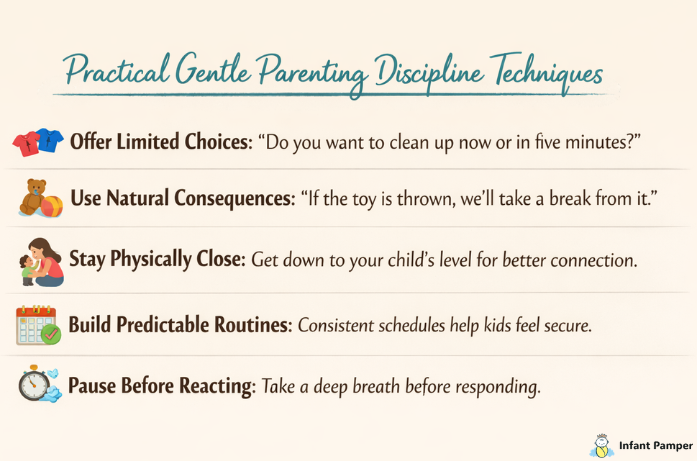
Practical Gentle Parenting Discipline Techniques
These simple tools can make a big difference in your daily routine. Organizations like the American Academy of Pediatrics also emphasize that calm, consistent discipline helps children feel secure and better understand expectations.
1. Offer Limited Choices
Children feel more cooperative when they have some control.
“Do you want to clean up now or in five minutes?”
2. Use Natural Consequences
Let real-life outcomes teach lessons gently.
“If the toy is thrown, we’ll take a break from it.”
3. Stay Physically Close
Getting down to your child’s level helps them feel safe and understood.
Eye contact, a gentle tone, and closeness can calm big emotions.
4. Build Predictable Routines
Children thrive on consistency.
When they know what to expect, there are fewer surprises and fewer meltdowns.
5. Pause Before Reacting
Take a breath before responding.
Even a short pause can help you respond with intention instead of frustration.
Gentle Discipline by Age: What to Expect
Every stage of childhood requires a slightly different approach, from first foods like broccoli puree for baby to toddler boundaries and emotional guidance.
Toddlers (1–3 Years)
This stage is full of big emotions and very little self-control.
- Use simple language
- Redirect instead of reasoning
- Stay physically close and supportive
Preschoolers (3–5 Years)
Children begin to understand more but still need guidance.
- Teach problem-solving
- Encourage expressing feelings
- Use simple explanations
School-Age Children
Now you can begin deeper conversations.
- Involve them in solutions
- Teach responsibility
- Encourage empathy and reflection
Common Challenges (And How to Handle Them)
Let’s be honest, gentle parenting isn’t always easy.
“My Child Keeps Testing Limits”
This is normal. Children learn through repetition. Stay consistent and calm.
“I Feel Like It’s Not Working”
It takes time. You’re building long-term habits, not quick fixes.
“I Lose My Patience”
You are human. What matters is how you repair afterward.
When You Feel Overwhelmed as a Parent
There will be days when everything feels like too much.
The noise, the mess, the constant needs, it can be exhausting.
In those moments, pause and remind yourself:
You are learning too.
It’s okay to take a breath. It’s okay to step away for a moment (as long as your child is safe). And it’s always okay to come back and try again.
Gentle parenting doesn’t ask for perfection. It asks for awareness and intention.
Small Changes That Create Big Impact
You don’t need to change everything overnight.
Start with small shifts:
- Speak more softly
- Listen a little longer
- Slow down your reactions
- Focus on connection first
Over time, these small changes create a calmer, more loving environment in your home.
Final Thoughts
Gentle parenting discipline is a journey, not a destination. Some days will feel peaceful and connected, while others may feel messy and overwhelming. And that’s completely okay. What matters most is that you keep showing up with love, patience, and the willingness to grow alongside your child.
With time, you’ll start to notice something beautiful. Fewer power struggles, more cooperation, and a deeper bond between you and your child. And in those quiet moments, when your child feels safe enough to come to you with their big feelings, you’ll realize that all those gentle choices truly mattered.
If this article spoke to your heart, follow Infant Pamper for more gentle, practical parenting tips, real-life guidance, and heartfelt support made just for moms like you.
FAQs
1. What is gentle parenting discipline?
Gentle parenting discipline is a way of guiding children with empathy, respect, and calm boundaries instead of punishment or fear. It focuses on teaching and understanding behavior.
2. Does gentle discipline mean no rules?
No, gentle discipline still includes clear rules and boundaries. The difference is that they are enforced calmly and respectfully, not harshly.
3. Will gentle parenting spoil my child?
No, children raised with gentle discipline often become more emotionally secure, cooperative, and confident because they feel understood and supported.
4. How do I stay calm during tantrums?
Take a deep breath, pause before reacting, and remind yourself that your child is struggling, not trying to misbehave. Staying calm helps your child calm down faster.
5. Is gentle parenting effective for all ages?
Yes, gentle parenting can be adapted for toddlers, preschoolers, and older children by adjusting communication and expectations based on their age.
Disclaimer: This article is for general parenting guidance only and is not a substitute for professional advice. Always consult a pediatrician for specific concerns.