Written with love by a caring mom at Infant Pamper
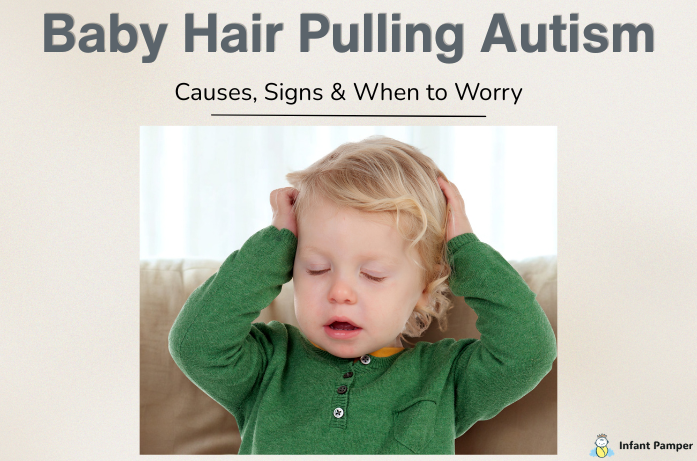
Baby hair pulling autism is a common concern for parents, but hair pulling by itself usually does not mean a baby has autism. Many babies pull, twist, or play with their own hair because they are tired, self-soothing, exploring textures, frustrated, or simply developing a repetitive comfort habit.
If you’re wondering why babies pull their hair, pay attention to when it happens. Hair pulling around sleep may be a soothing behavior, while frequent pulling that causes bald spots or occurs alongside developmental differences may be worth discussing with your pediatrician.
Table of Contents
- Baby Hair Pulling Autism: Is Hair Pulling a Sign of Autism?
- Why Do Babies Pull Hair? Common Reasons
- Why Is My Newborn Pulling Their Own Hair?
- When Is Hair Pulling Considered Normal?
- When Should You Worry About Baby Hair Pulling?
- Practical Ways to Gently Reduce Hair Pulling
- Can Hair Pulling Become a Habit?
- Understanding Autism Without Panic
- FAQs
- Final Thoughts
Baby Hair Pulling Autism: Is Hair Pulling a Sign of Autism?
When parents search for baby hair pulling autism, it usually comes from a place of worry. The reassuring answer is that hair pulling alone is not considered a reliable sign of autism. Babies may pull, twist, or play with their own hair for many normal reasons, including self-soothing, sensory exploration, tiredness, frustration, or simple curiosity.
Autism is identified through a broader pattern of differences in social communication, behavior, interests, and development rather than one isolated habit. Hair pulling may be worth discussing with your pediatrician if it happens alongside other developmental differences, such as:
- Limited eye contact
- Not responding to their name
- Delayed babbling or speech
- Limited interest in social interaction
- Repetitive behaviors along with other developmental concerns
Even when these signs appear together, they do not automatically mean a baby has autism. They simply give parents and healthcare professionals more information to consider when looking at a child’s overall development.
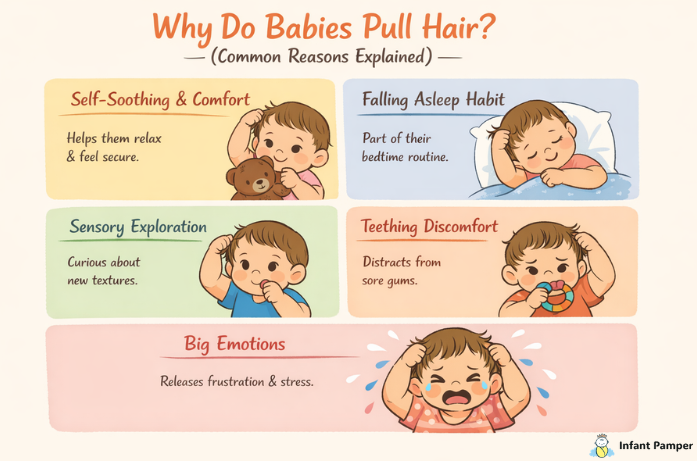
Why Do Babies Pull Hair (Common Reasons Explained)
Understanding the why behind your baby’s behavior can instantly reduce anxiety. Most of the time, hair-pulling has simple, harmless reasons.
1. Self-Soothing and Comfort
One of the most common reasons for baby pulling hair is self-soothing. Just like some babies suck their thumb, rub a blanket, or gently rock themselves, others find comfort in touching or pulling their hair. It becomes a small habit that helps them feel secure.
You may notice this more when your baby is tired, overwhelmed, or needs calming. It’s their natural way of relaxing, even if it looks a little unusual to us.
2. Baby Pulls Hair When Falling Asleep
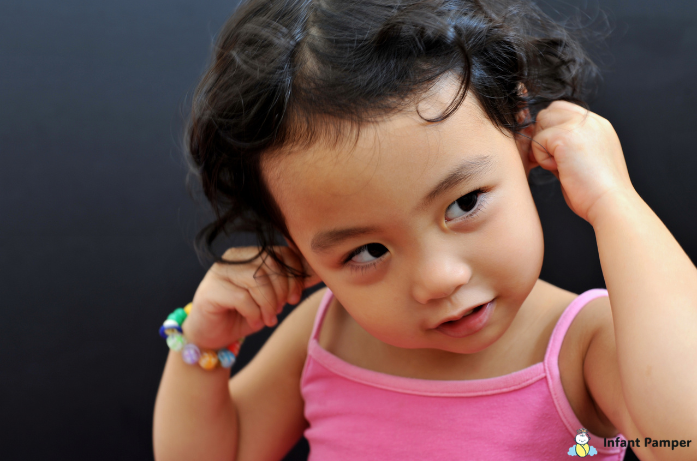
A baby pulling their hair when falling asleep may be using the repetitive movement as a self-soothing habit. Some babies rub their face, touch their ears, stroke their hair, suck their fingers, or make repetitive movements as they become sleepy.
This is simply your baby’s way of winding down. While it may seem uncomfortable to you, it actually helps them feel relaxed and ready for sleep.
3. Sensory Exploration
Babies learn about the world through touch, and hair offers a new and interesting texture. It feels soft, stretchy, and different from skin, which makes it fascinating for little hands.
So when your baby pulls hair, they may just be exploring what it feels like, what happens when they pull, and how their body responds. It’s pure curiosity and part of healthy development.
4. Teething and Physical Discomfort
Teething can bring all kinds of unexpected behaviors. Some babies pull their hair because it distracts them from the discomfort in their gums.
If your baby is also drooling more, chewing on objects, or feeling extra fussy, teething could be the reason behind this habit.
5. Big Emotions Without Words
Babies feel frustration, tiredness, and overstimulation, but they can’t express it yet.
Hair pulling can be their way of releasing those feelings. It’s not misbehavior; it’s communication.
Why Is My Newborn Pulling Their Own Hair?
Newborn pulling their own hair can surprise parents, but occasional grabbing or tugging may happen as babies become more aware of their hands and body. A newborn may also touch or pull their hair when sleepy, overstimulated, or trying to soothe themselves.
If you’re wondering why does my newborn pull his hair or why your newborn repeatedly grabs the same area of the scalp, watch for redness, scratches, rash, swelling, ear discomfort, or hair loss. These additional symptoms are more useful than hair pulling alone when deciding whether to speak with your baby’s doctor.
When Is Hair Pulling Considered Normal?
In most cases, hair pulling is completely normal if it:
- Happens occasionally
- Appears during sleep or tiredness
- Doesn’t cause injury
- Is not paired with developmental concerns
Many babies outgrow this habit naturally as they develop other ways to soothe themselves.
When Should You Worry About Baby Hair Pulling?
Then explain that parents should seek professional guidance when hair pulling:
- repeatedly causes bald spots or broken hairs
- damages or irritates the scalp
- seems painful or impossible to redirect
- is accompanied by unusual scalp symptoms
- happens alongside developmental concerns
- suddenly becomes much more frequent
- appears alongside significant distress or other symptoms
This targets the “when to worry” intent from your title much more effectively.
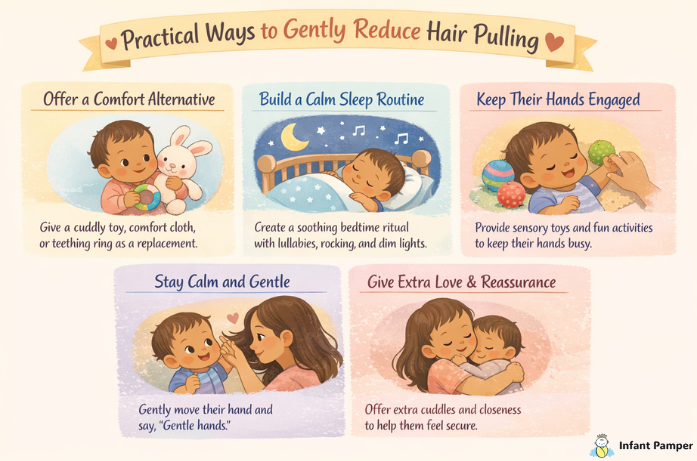
Practical Ways to Gently Reduce Hair Pulling
You don’t need to stop this behavior harshly or feel stressed about it. With a little patience and gentle guidance, your baby will slowly learn other ways to feel comforted and secure.
1. Offer a Comfort Alternative
If your baby pulls hair to relax, try giving them something soft and safe to hold. A cuddly toy, a comfort cloth, or a teething ring can work beautifully as a replacement.
Over time, your baby may naturally switch to these soothing items instead of pulling hair.
2. Build a Calm Sleep Routine
For babies who pull their hair when falling asleep, focus on a predictable bedtime routine such as feeding, changing, dimming the lights, singing, or gentle cuddling before placing them in their safe sleep space. A calm, consistent routine can help your baby relax and may gradually reduce the need for self-soothing habits like hair pulling.
When your baby feels calm before sleep, they are less likely to depend on habits like hair pulling.
3. Keep Their Hands Engaged
During the day, keep your baby’s hands busy with fun and stimulating activities. Offer sensory toys, textured objects, or simple playtime that encourages exploration.
This helps reduce boredom and keeps their focus away from pulling hair.
4. Stay Calm and Gentle in Your Response
If your baby grabs your hair, try to stay calm. Gently move their hand away and softly guide them by saying something like gentle hands.
Avoid strong reactions, as babies learn best through calm repetition and consistency.
5. Give Extra Love and Reassurance
Sometimes, hair pulling is simply your baby’s way of asking for comfort. Extra cuddles, holding, and closeness can help them feel secure.
When their emotional needs are met, these self-soothing habits often fade naturally.
Can Hair Pulling Become a Habit?
Yes, it can, but not always in a negative way.
Some babies develop temporary habits that:
- Last a few weeks or months
- Fade as they grow
- Are replaced by new behaviors
The key is gentle guidance, not forceful stopping.
Understanding Autism Without Panic
It’s completely normal for the word autism to feel overwhelming.
But here’s something every parent needs to hear:
No single behavior defines autism.
Autism is diagnosed based on a pattern of developmental differences over time, not one habit like hair pulling.
So if you are worrying about baby hair pulling autism, remind yourself:
- You are aware
- You are observant
- You are doing everything right
A Little Reminder About Mom Intuition
Sometimes, you just feel when something isn’t right.
And sometimes, your baby is simply going through a phase.
Both can be true.
Trust your instincts, but don’t let fear take over your joy.
Final Thoughts
Parenting is filled with little moments that make you pause, think, and sometimes worry. Habits like baby pulling hair can feel confusing at first, but most of the time, they are simply part of your baby learning how to comfort themselves, explore new sensations, and grow in their own unique way.
There’s no need to jump to conclusions or fear the worst. Stay close, observe gently, and respond with patience and love. Your baby doesn’t need perfection, they need your presence, your warmth, and your reassurance. And the truth is, you’re already giving them exactly what they need every single day
If this article helped you feel a little more at ease, share it with another mama who might need reassurance today. And don’t forget to explore more gentle, real-life parenting tips on Infant Pamper.
FAQs
Disclaimer
This article is for informational purposes only and is not a substitute for professional medical advice. If you have concerns about your baby’s behavior or development, please consult your pediatrician for personalized guidance.
About the Author
Geeta Yogi is a parenting writer who shares practical and easy-to-understand guidance about baby behavior, early development, sleep habits, sensory exploration, and everyday parenting concerns. Her writing focuses on helping parents understand common baby behaviors while knowing when it may be helpful to seek professional guidance.