
Written with love by a caring mom at Infant Pamper
If you’ve been wondering why do parents argue with teens, you’re not alone. This phase of parenting can feel emotionally intense and sometimes difficult to understand. One moment everything feels calm, and the next, a simple conversation turns into a disagreement. Many parents experience this shift and are left questioning whether they are handling things the right way.
The reality is that arguments during the teenage years are quite common and often a natural part of development. They don’t mean your relationship is failing. In many cases, they reflect your teen’s growing independence, identity formation, and need to express themselves.
What truly matters is how these moments are approached, with patience, understanding, and open communication, they can lead to stronger connection and trust.
Why Do Parents Argue With Teens?
Understanding the root causes behind these conflicts can help you respond with more patience instead of frustration. When we know why parents argue with teens, we begin to see that it’s not just about behavior, it’s about deeper emotional and developmental changes.
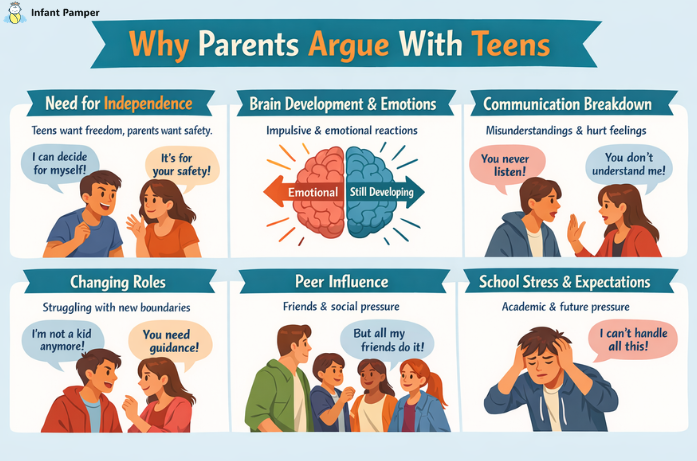
1. The Growing Need for Independence
One of the biggest shifts during the teenage years is your child’s desire for independence. They are no longer little children who rely on you for every decision. They want to think for themselves, choose for themselves, and sometimes even make mistakes on their own.
As parents, this can feel uncomfortable. We want to guide them, protect them, and keep them safe. But teens often see this guidance as restriction.
For example, when you set rules about screen time, friends, or going out, your intention is safety. But your teen may feel controlled. This mismatch in intention and perception often leads to arguments.
2. Brain Development and Emotional Changes
Teenagers are not just growing physically, they are also going through major brain development.
The part of the brain responsible for decision-making, impulse control, and understanding consequences (the prefrontal cortex) is still developing. At the same time, the emotional center of the brain is very active.
This means teens may:
- React quickly without thinking
- Feel emotions more intensely
- Struggle to regulate anger or frustration
So when your teen raises their voice or reacts strongly, it’s not always intentional disrespect, it’s often a reflection of what’s happening inside their brain.
3. Communication Breakdown
Many arguments are not about big issues, they’re about misunderstandings.
You might say something out of concern, but your teen hears criticism.
They might respond defensively, and you feel disrespected.
This creates a cycle where both sides feel hurt and unheard.
For example:
- You say: “You should focus more on your studies.”
- They hear: “You’re not good enough.”
This gap in communication is one of the most common reasons for conflict. In fact, misunderstandings and emotional reactions are often the main reasons small disagreements turn into bigger fights, as explained by KidsHealth.
4. Changing Parent-Child Roles
As your child grows, your role as a parent also needs to shift.
When they were younger, you made most decisions for them. But now, they expect more involvement and autonomy.
If this shift doesn’t happen gradually, it can lead to tension.
Teens don’t want to be treated like small children, but they still need guidance. Finding that balance is not always easy, and that’s where disagreements often begin.
5. Peer Influence and Social Pressure
Teenagers are deeply influenced by their friends and social environment.
They may want to fit in, follow trends, or do things that you may not agree with. This can lead to disagreements about:
- Clothing choices
- Social media use
- Friend groups
- Lifestyle habits
As a parent, you worry about their well-being. As a teen, they worry about belonging.
Both concerns are valid, but they can clash.
6. Stress From School and Expectations
Today’s teens face a lot of pressure, from academics, competition, and future expectations.
Sometimes, arguments at home are not really about the issue being discussed. They are a result of stress your teen is already carrying.
If they feel overwhelmed, even a small reminder from you can trigger a strong reaction. Experts also highlight that teen aggression and frequent arguments are often linked to emotional stress and pressure, as discussed by NHS.
How Arguments Impact Your Relationship
It’s natural to worry that frequent arguments might damage your bond with your teen. And while constant conflict can create distance, occasional disagreements are actually a normal part of growing up.
However, if not handled carefully, repeated arguments can lead to:
- Reduced trust
- Emotional withdrawal
- Less open communication
- Increased frustration on both sides
That’s why it’s important to focus not just on avoiding arguments, but on handling them in a healthy way.
Practical Ways to Handle and Reduce Arguments
Let’s talk about what you can do, not perfectly, but gently and consistently.
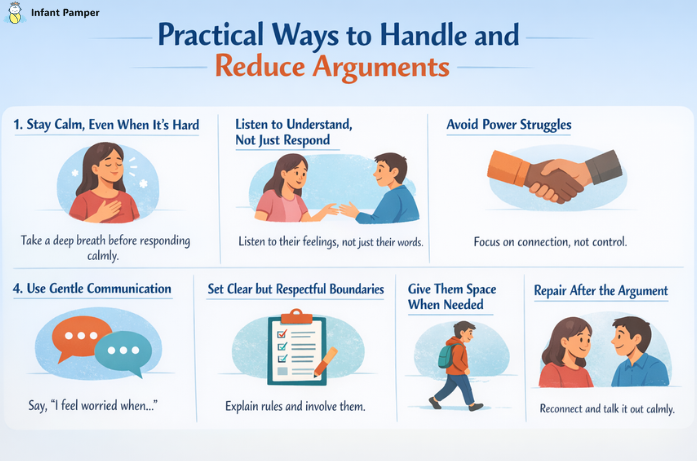
1. Stay Calm, Even When It’s Hard
Your reaction matters more than the situation itself.
When emotions rise, try to keep your voice calm. If needed, take a short pause before responding.
A calm parent creates a safe space, even during disagreements.
2. Listen to Understand, Not Just Respond
This is something many of us struggle with.
Instead of preparing your reply while your teen is speaking, truly listen. Try to understand their feelings, not just their words.
Sometimes, your teen doesn’t need a solution, they just need to feel heard.
3. Avoid Power Struggles
Not every disagreement needs to be “won.”
If the conversation turns into a battle of control, both sides lose. Instead, focus on connection over control.
4. Use Gentle Communication
The way you say something can completely change how it is received.
Instead of: “You never listen.”
Try: “I feel worried when I think you are not hearing me.”
This small shift reduces defensiveness and opens the door for better communication.
5. Set Clear but Respectful Boundaries
Teens need boundaries, but they also need to feel respected.
Explain the reason behind rules. Involve them in discussions when possible. This makes them more likely to cooperate.
For example: “Let’s decide together what a healthy screen time limit looks like.”
6. Give Them Space When Needed
Sometimes, the best thing you can do is step back.
If emotions are too high, continuing the conversation may only make things worse. Allow time for both of you to cool down before revisiting the issue.
7. Repair After the Argument
This is something many parents overlook.
After a disagreement, take a moment to reconnect. You can say:
“I didn’t like how we argued earlier. Can we talk again calmly?”
This teaches your teen that relationships can recover after conflict.
What Your Teen Is Really Trying to Say
Behind every argument, there is usually an unmet need.
Your teen might be trying to say:
- “I want to be trusted.”
- “I need more freedom.”
- “I feel misunderstood.”
- “I’m overwhelmed.”
When you look beyond the words and focus on the feelings, everything changes.
When You Feel Overwhelmed as a Parent
It’s important to acknowledge that parenting a teenager can be emotionally demanding. There will be moments when you feel exhausted, uncertain, or even question your approach. These feelings are completely normal during this stage.
Remember that parenting is a continuous learning process. You are not expected to respond perfectly in every situation. What truly matters is your effort to stay patient, adapt, and remain emotionally available for your child. Consistent care, understanding, and presence have a lasting impact over time.
Simple Ways to Strengthen Your Bond Daily
Even small efforts can make a big difference over time.
- Spend Quality Time Together: It doesn’t have to be long, just meaningful. A short walk, a shared meal, or a simple chat can help rebuild connection.
- Appreciate More Than You Correct: Notice the good things your teen does. Appreciation builds confidence and reduces resistance.
- Keep Communication Open: Let your teen know they can talk to you without fear of judgment.
- Laugh Together: Humor can ease tension and bring warmth back into your relationship.
A Gentle Perspective Shift
Instead of seeing arguments as something negative, try to see them as opportunities.
Opportunities to:
- Understand your child better
- Teach healthy communication
- Strengthen your relationship
Your teen is not trying to push you away, they are trying to find themselves.
Final Thoughts
Understanding why parents argue with teens allows parents to approach this stage with greater awareness and emotional balance. Disagreements during adolescence are a normal part of development, often reflecting a teen’s growing need for independence and identity. When handled with patience, respectful communication, and consistency, these moments can support stronger trust and long-term relationship growth.
It is important to focus on steady guidance rather than perfection. Practicing calm responses, active listening, and mutual respect can gradually improve communication. Over time, your consistent presence, support, and understanding will play a key role in shaping your teen’s confidence, emotional well-being, and decision-making abilities.
FAQs
1. Why do parents argue more with teenagers?
Parents and teens often argue more because teenagers are seeking independence while parents are trying to guide and protect them. This difference in needs can lead to misunderstandings and conflict.
2. Is it normal to argue with your teen often?
Yes, occasional arguments are a normal part of the teenage years. It reflects growth, emotional changes, and the development of independence.
3. How can I reduce arguments with my teen?
You can reduce arguments by staying calm, listening actively, setting clear boundaries, and choosing your battles wisely. Open and respectful communication makes a big difference.
4. Do arguments harm the parent-teen relationship?
Frequent and unresolved arguments can create distance, but healthy disagreements handled with respect can actually strengthen the relationship over time.
5. What should I do after an argument with my teen?
Take time to calm down, then reconnect. Talk openly, acknowledge feelings, and try to resolve the issue without blame.
If you found this helpful, don’t forget to subscribe to Infant Pamper for more gentle parenting tips, expert-backed guidance, and real-life support for every stage of your journey.