
Written with love by a caring mom at Infant Pamper
Those first few weeks with your baby are filled with a wide range of emotions, love, joy, exhaustion, and at times, uncertainty. You carefully prepare, follow trusted advice, and try methods that are known to work for many families. However, when your newborn hates being swaddled and becomes upset each time you try, it’s natural to question whether something is wrong.
This situation is more common than many parents realize. If your newborn hates swaddle or struggles to stay wrapped, it doesn’t mean you are doing anything incorrectly. In most cases, it simply reflects your baby’s individual comfort and preferences. Understanding the reasons behind this behavior can help you respond with confidence and find solutions that work best for your baby.
Why Your Newborn Hates Being Swaddled
If your newborn hates to be swaddled, there is always a reason behind it. Babies do not cry randomly they communicate through their reactions and body language.
When your baby resists swaddling, it usually means something does not feel right to them. It could be physical discomfort, a need for more movement, or simply that they are still adjusting to life outside the womb.
Sometimes it is about comfort, sometimes it is about timing, and sometimes it is just about your baby’s unique personality. You may also find our baby sleep guide helpful for understanding healthy sleep habits. The good news is that once you understand the reason, it becomes much easier to find a gentle solution.
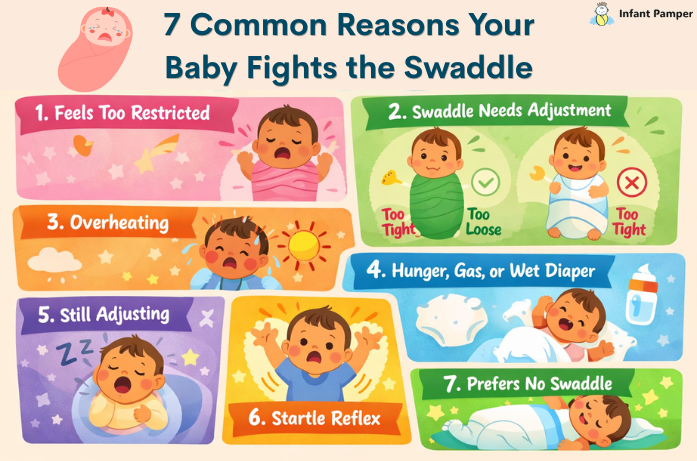
7 Common Reasons Your Baby Fights the Swaddle
Understanding the cause is the first step to helping your baby feel comfortable.
1. Your Baby Feels Too Restricted
Some babies don’t enjoy having their arms tightly wrapped. They may prefer more freedom to move and feel calmer when their arms are out.
2. The Swaddle Technique Needs Adjustment
A swaddle that is too tight can feel uncomfortable, while a loose one may not feel secure. The ideal swaddle is snug around the chest but allows free movement of the hips and legs.
3. Your Baby Might Be Overheating
If your baby feels too warm, they are more likely to become fussy. Signs like sweating, flushed skin, or irritability can indicate overheating.
4. Hunger, Gas, or a Wet Diaper
Sometimes the issue isn’t the swaddle at all. It could be related to hunger or feeding comfort, so checking basic needs or reviewing baby feeding tips can help.
5. Your Baby Is Still Adjusting
Life outside the womb is a big change. Some babies need time before they feel comfortable being swaddled.
6. The Startle Reflex Is Active
The Moro reflex can cause sudden arm movements, making babies appear uncomfortable in a swaddle. This is completely normal and improves with time.
7. Your Baby Simply Prefers Not to Be Swaddled
Not all babies like swaddling and that’s okay. Some sleep better with more freedom.
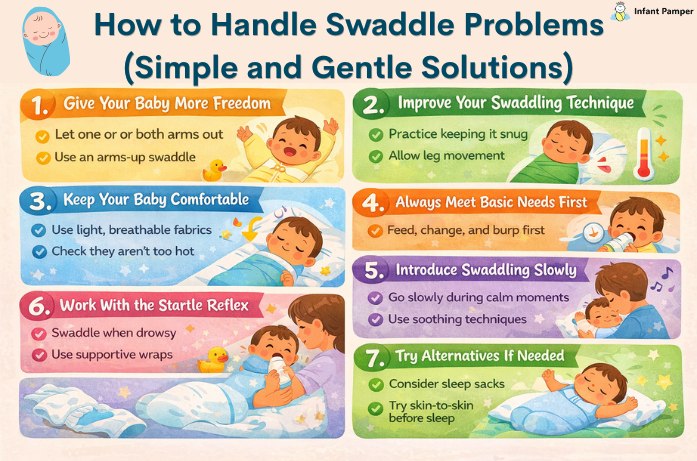
How to Handle Swaddle Problems (Simple and Gentle Solutions)
Now that you understand the reasons, let’s focus on what actually helps. These solutions are simple, practical, and gentle for both you and your baby. The goal is not to force swaddling, but to make your baby feel safe and comfortable in a way that works for them.
1. Give Your Baby More Freedom
If your baby feels restricted, the first step is to adjust the swaddle instead of forcing it. Some babies naturally prefer having a little more movement, especially with their arms.
You can try:
- Using an arms-up swaddle
- Leaving one or both arms out
- Wrapping slightly looser while still keeping it secure
Even small changes can make your baby feel more relaxed and less resistant.
2. Improve Your Swaddling Technique
Swaddling is a skill that improves with practice, and it’s completely normal if it doesn’t feel perfect right away. The way you wrap your baby can greatly affect how they respond.
Focus on keeping the swaddle snug around the chest while allowing free movement of the hips and legs. It’s also helpful to swaddle your baby when they are calm or sleepy, rather than when they are already crying. Practicing during peaceful moments can make the process much smoother.
3. Keep Your Baby Comfortable (Not Too Hot)
Temperature plays a very important role in your baby’s comfort. If your baby feels too warm, they are much more likely to fuss and resist the swaddle.
Try using lightweight, breathable fabrics like cotton and avoid layering too much clothing underneath. Keeping the room at a comfortable temperature can also help. Instead of checking your baby’s hands, gently feel their neck or chest to understand if they are too warm.
4. Always Meet Basic Needs First
Before swaddling, it’s important to make sure your baby’s basic needs are met. Sometimes, the resistance has nothing to do with the swaddle at all.
Take a moment to check if your baby is hungry, needs burping, or has a wet diaper. Once your baby feels comfortable and content, they are far more likely to accept being wrapped without fuss.
5. Introduce Swaddling Slowly
If your baby is still getting used to swaddling, take a gentle and gradual approach. There’s no need to rush or force it.
Try swaddling during calm, sleepy moments and pair it with soothing actions like rocking or soft humming. Consistency helps, but patience is key. Over time, your baby may begin to associate swaddling with comfort and relaxation.
6. Work With the Startle Reflex
The startle reflex can make swaddling feel challenging, but it’s a completely normal part of your baby’s development. Instead of trying to stop it, it’s better to work around it.
Swaddling your baby when they are already drowsy can help reduce sudden movements. A slightly snug wrap can also provide a sense of security. You may also consider using swaddles designed specifically to support this reflex. As your baby grows, this phase will naturally fade.
7. Try Alternatives If Needed
If your baby continues to resist swaddling despite trying different approaches, it’s absolutely okay to explore other options. Not every baby needs to be swaddled to sleep well.
You can consider alternatives like sleep sacks, wearable blankets, or even allowing arms-out sleep in a safe environment. Skin-to-skin contact before sleep can also provide comfort and help your baby relax.
There is no single “right way” what matters most is finding what works best for your baby.
Tips to Help Your Baby Sleep Better (With or Without Swaddling)
Swaddling is just one part of your baby’s sleep routine. The environment and routine matter just as much.
Here are some gentle tips:
- Create a simple, calming bedtime routine
- Use dim lighting before sleep
- Add soft white noise or lullabies
- Avoid overstimulation
Sometimes, improving sleep conditions reduces fussiness, even without swaddling. For more detailed guidance on safe swaddling practices, you can read this helpful resource from Kids Health.
When Should You Stop Swaddling?
Even if your baby starts liking it, swaddling is only for a short stage.
You should stop when:
- Your baby begins rolling over
- They consistently break free
- They seem more comfortable with arms out
According to American Academy of Pediatrics experts, swaddling should always be done safely and discontinued at the right time.
FAQs About Newborns and Swaddling
1. Is it normal if my newborn hates being swaddled?
Yes, completely normal. Every baby is different, and some simply prefer not to be swaddled.
2. Why does my newborn cry when swaddled?
It could be due to discomfort, overheating, hunger, or simply preference.
3. What if my newborn won’t stay swaddled at all?
Try different techniques or switch to alternatives like sleep sacks.
4. Can babies sleep safely without swaddling?
Yes, as long as safe sleep guidelines are followed.
5. How long should I try swaddling?
Give it some time, but don’t force it. Follow your baby’s comfort.
Conclusion: Trust Your Baby and Yourself
Those early days may not always go as planned, but that doesn’t mean anything is wrong. Every baby is different, and if your little one resists swaddling, it simply means they are finding their own way to feel safe and secure. Stay patient, stay flexible, and trust yourself as you learn what works best for your baby.
You don’t need to be perfect you just need to be present. Your love, care, and gentle attention are more than enough. Even on the difficult days, you are doing an incredible job, and your baby feels that every moment.
If this guide helped you feel a little more confident and supported, don’t forget to subscribe to Infant Pamper for more gentle parenting tips, baby care guides, and real mom experiences.
Disclaimer: This article is for informational purposes only and is based on personal experience and general parenting knowledge. Every baby is unique, so what works for one may not work for another. Always consult your pediatrician or a qualified healthcare professional if you have concerns about your baby’s health, sleep, or development.