Written by a Caring Mom at Infant Pamper
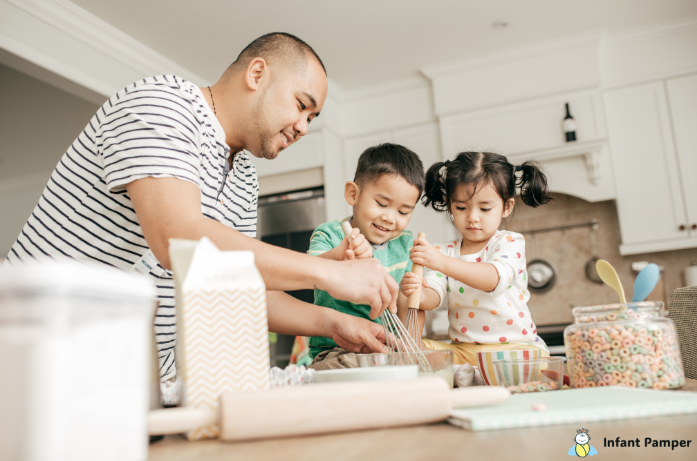
Some of the nicest moments with children happen in the kitchen. Baking with kids gives them a chance to mix, pour, count, taste, and see how simple ingredients turn into something they helped make. Even small jobs can make children feel included and proud of themselves.
It does not need to be complicated either. A bowl of muffin batter, a few cookie cutters, or some toppings for mini pizzas can be enough. While they are helping, children are also practising useful skills like following simple instructions, using their hands carefully, and waiting for their food to bake.
Of course, the kitchen may get a little messy. There might be flour on the counter, sticky fingers, or cookies that are not all the same shape. That is completely normal. The aim is not perfection, but giving your child time to learn, help, and enjoy being beside you.
Table of Contents
- Why Baking With Kids Is So Good for Children
- Prepare Before Your Little Helper Arrives
- Choose Baking Jobs by Ability, Not Just Age
- Easy Baking Recipes for Kids to Make Together
- Keep Kitchen Safety Simple
- Baking May Help Children Explore New Foods
- Make Cleanup Part of the Activity
- FAQs
- Final Thoughts
- Disclaimer
Why Baking With Kids Is So Good for Children
Baking is full of little learning opportunities that happen naturally.
When children count spoonfuls, compare measuring cups, or divide dough into pieces, they are practising early maths.
Following a recipe also teaches sequencing. First we mix, then we shape, then we bake. Children begin to understand that some tasks need to happen in a certain order.
There is science in baking too. Butter melts, dough rises, chocolate changes texture, and wet batter becomes a soft cake.
You do not need to turn every step into a lesson. Simply asking, “What do you think will happen next?” can make children curious.
Baking also teaches patience. Children have to wait for dough to bake and treats to cool before tasting them.
Nemours Kids Health explains that cooking with children can help them practise skills such as measuring, following directions, and learning basic cooking tasks while also giving families time together.
Prepare Before Your Little Helper Arrives
A few minutes of preparation can make baking much calmer.
Read through the recipe first and place the bowls, spoons, measuring cups, ingredients, and baking tray nearby.
For toddlers, you may want to pre-measure some ingredients so they can focus on pouring and stirring.
It also helps to:
- Wash hands together
- Tie back long hair
- Put on an apron or old T-shirt
- Move sharp tools out of reach
- Keep hot appliances away from little hands
- Use a stable step stool if needed
- Keep a damp cloth nearby for spills
Then decide which parts your child can safely do.
That small step makes the whole activity feel more relaxed.
Choose Baking Jobs by Ability, Not Just Age
Children develop at their own pace, so age is only a rough guide when choosing baking jobs. Nutrition also shares age-appropriate kitchen activities, food-safety guidance, and helpful resources for getting children involved in cooking. One child may enjoy measuring ingredients, while another feels more confident decorating cookies or mixing batter.
The best approach is to think about what your child can safely manage and what will keep them interested. Simple success builds confidence, while jobs that feel too difficult can quickly become frustrating.
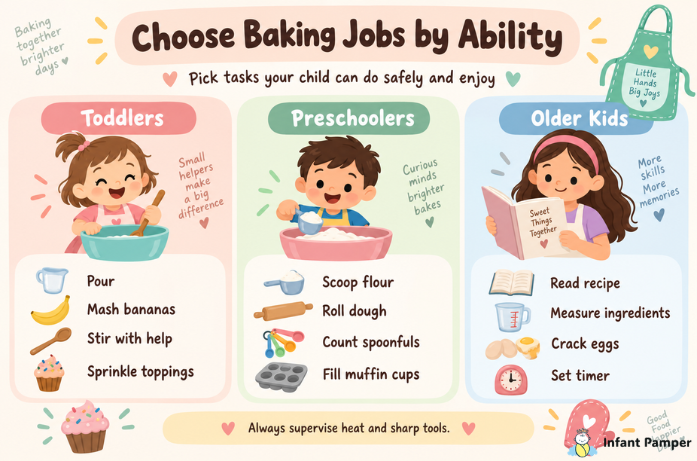
Jobs for Toddlers
Toddlers usually enjoy quick, hands-on tasks where they can see an immediate result. Keep their jobs simple and stay close by to guide them.
They can help with:
- Pouring pre-measured ingredients into a bowl
- Mashing soft bananas with a fork
- Stirring thick mixtures with help
- Adding berries, raisins, or chocolate chips
- Placing muffin liners into a tray
- Pressing cookie cutters into soft dough
- Sprinkling cheese or other toppings
At this age, attention spans can be short, so there is no need to expect them to stay for the whole recipe. Even a few minutes of helping can make them feel included.
Jobs for Preschoolers
Preschoolers are often ready to do a little more on their own. They may enjoy scooping flour, rolling dough, shaping cookies, counting spoonfuls, spreading toppings, or helping fill muffin cases.
This is also a good time to introduce simple baking words such as whisk, knead, measure, pour, and sprinkle. Using these words during the activity helps children understand what they are doing without turning baking into a lesson.
Try to give one instruction at a time. Short directions are usually much easier for young children to follow than several steps at once.
Jobs for Older Children
Older children can gradually take on more responsibility as their confidence grows. Depending on their experience, they may be able to read a recipe, weigh ingredients, crack eggs, knead dough, grease baking tins, decorate cakes, and set a timer.
You can also begin teaching them how to keep their work area tidy. Putting ingredients away, wiping small spills, and carrying used utensils to the sink helps them understand that cleanup is part of cooking too.
The aim is to give children enough responsibility to feel capable, while still stepping in whenever a task involves heat, sharp tools, or something they are not ready to handle alone.
Easy Baking Recipes for Kids to Make Together
When children are helping, forgiving recipes are usually best.
You want something that still turns out well even if the flour is not perfectly level or the muffins are different sizes.
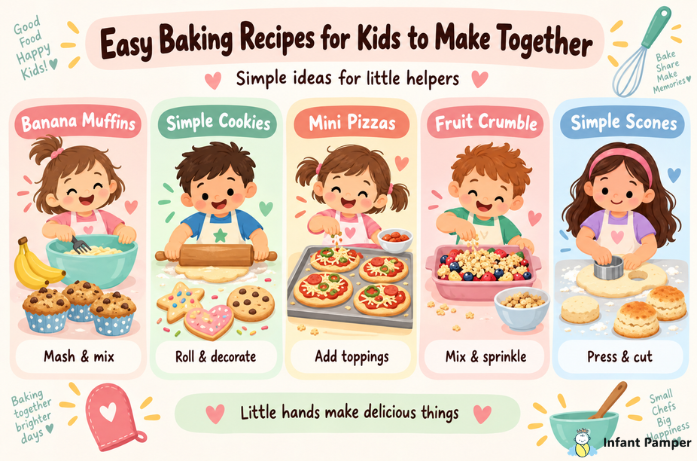
Banana Muffins
Banana muffins are a lovely beginner recipe because children can peel and mash the bananas themselves.
They can also pour ingredients, stir the mixture, and help fill muffin cases.
Uneven muffin tops are completely fine.
Simple Cookies
Cookies give children several jobs.
They can mix, roll, cut shapes, and decorate the finished cookies.
If rolling dough feels difficult, try simple drop cookies where children scoop the mixture onto a tray.
Mini Pizzas
Baking does not always have to be sweet.
Mini pizzas are fun because children can choose their own toppings.
Use small pizza bases, pita bread, or flatbread and offer a few simple options such as cheese, tomatoes, sweetcorn, or peppers.
Fruit Crumble
Fruit crumble is another easy choice.
An adult can prepare the fruit, while children help place it in the dish and mix the topping.
There is no need for perfect shapes or decorations.
Simple Scones
Scone dough is great for hands-on play.
Children can help bring the dough together, press it gently, and cut out simple shapes.
They may not all look the same, but that is part of homemade baking.
Try the “One Grown-Up Job, One Kid Job” Method
A simple way to make baking with kids feel less stressful is to share each step. You handle the parts that need more care, while your child takes on a safe job they can do confidently.
For example, you can crack the egg and let your child whisk it, measure the flour and let them pour it into the bowl, or take the hot tray from the oven while they help arrange the cooled treats on a plate.
This way, your child is still properly involved without being given tasks that are too difficult or unsafe. As they become more comfortable in the kitchen, you can slowly let them take on more of the recipe themselves.
Let Children Explore the Ingredients
Let children smell, touch, and notice different ingredients as you bake. They can compare flour and oats, smell cinnamon, or watch butter melt.
Ask simple questions about what they see, feel, or think will happen next. These small sensory moments make baking more fun and interesting.
Skip Raw Dough and Batter Tasting
Raw dough and cake batter can be tempting, but they may contain uncooked flour or eggs that are not safe to eat. A simple rule like, “We taste it when it is ready,” can help children learn to wait safely.
While the treats are baking, they can stay involved by helping with simple cleanup or choosing plates for serving.
Keep Kitchen Safety Simple
Young children remember short rules better than long explanations.
Try keeping your kitchen rules simple:
- Hot things are grown-up jobs
- Ask before tasting
- Wash hands before baking
- Walk in the kitchen
- Sharp tools need adult help
Repeat the same rules every time.
Always supervise children closely around ovens, hot trays, electrical appliances, and sharp tools.
Baking May Help Children Explore New Foods
Children can sometimes become more comfortable with unfamiliar foods when they help prepare them.
A child who refuses blueberries on a plate may still enjoy washing them, counting them, or pressing them into muffin batter.
That does not mean they have to eat them.
Try to keep the experience pressure-free.
You can simply ask, “Would you like to try one?”
Even touching, smelling, and preparing new foods can help them feel more familiar over time.
What If Your Child Makes a Mistake?
Mistakes are completely normal when children are learning to bake. A little too much milk may go into the bowl, an eggshell might fall into the mixture, or the cookies may not come out exactly as planned.
When it is safe, try not to rush in and fix everything right away. Give your child a chance to notice what happened and think about what you could do next together.
You might say, “The dough feels a bit sticky. What do you think we could add?” or “These cookies spread more than we expected. Maybe we can make them smaller next time.”
Small moments like these help children build confidence and learn that mistakes are simply part of learning something new.
Make Cleanup Part of the Activity
Baking with children can get messy very quickly, but a little planning makes cleanup much easier. Use one large bowl, keep a small bowl nearby for peels and wrappers, and let your child work over a tray or washable mat.
Once you are finished, involve them in the cleanup too. Simple jobs like wiping the table, putting spoons in the sink, or returning safe items to the cupboard can help them feel responsible.
Try to make cleaning feel like a normal part of baking, not a chore or punishment. It helps children understand that making food also means taking care of the space afterward.
Create a Little Family Baking Tradition
Baking can feel even more special when it becomes a small family tradition. If you have more than one child, let them take turns being the “Baker of the Day” so each one gets a chance to choose the recipe, wear a favorite apron, or add the final topping.
You could also keep a simple baking notebook. Write down what you made, the date, and what everyone liked about it. Younger children can draw a picture, while older kids can add little notes like “add more cinnamon next time” or “try strawberries.”
Over time, that notebook can become a lovely collection of recipes, funny moments, and family memories from the kitchen.
FAQs
Final Thoughts
Baking with children does not have to be neat, quick, or perfect to be worthwhile. What matters most is giving them a chance to help, learn something new, and enjoy time with you.
There may be uneven cookies, spilled flour, and a few little mistakes along the way, but those moments are often what make the experience feel special. Your child may not remember how the recipe turned out, but they may remember how proud they felt when they helped make it.
Start with something simple, give your little baker one or two real jobs, and enjoy the process without putting too much pressure on the result. In the end, the best part of baking together is not always what comes out of the oven, but the time you spent making it together.
For more simple parenting tips, fun activities, and helpful ideas for little ones, explore more guides on Infant Pamper.
Disclaimer
Always supervise children closely while baking, especially around hot ovens, sharp tools, and electrical appliances. Choose tasks that are safe and suitable for your child’s age and ability.
About the Author
Geeta Yogi is a parenting writer who shares practical ideas about children’s activities, family routines, learning through play, and everyday parenting. Her writing focuses on helping families create simple, enjoyable experiences that build confidence, independence, and meaningful time together.