
Written by a Caring Mom at Infant Pamper
If your toddler says no to everything, even to meals, bath time, getting dressed, or things they usually enjoy, it can quickly become tiring. One simple task can suddenly turn into a long back-and-forth, leaving you wondering why your little one is refusing so much.
For many toddlers, this is part of learning independence. They are beginning to understand that they can make choices, have preferences, and do things on their own. At the same time, they are still learning how to manage big feelings and explain what they want.
Sometimes no may actually mean your toddler is tired, hungry, overwhelmed, not ready to stop playing, or simply wants to try something without help. Understanding the reason behind the refusal can make it easier to respond calmly and avoid unnecessary power struggles.
Table of Contents
Why Your Toddler Says No to Everything
When your toddler says no to everything, it often comes from a growing need to feel independent.
Toddlers naturally become more interested in doing everyday things by themselves. They may want to choose their clothes, hold their own spoon, carry their cup, or decide which toy they want to play with.
Their language and emotional skills are still growing too. Your toddler may know exactly what they want but not yet have the words to explain it clearly, so no becomes an easy way to express themselves.
Your Toddler Wants More Independence
As toddlers grow, they begin to understand that they can have their own ideas and make small decisions.
You may notice your child trying to put on their own shoes, feed themselves, climb onto a chair, or finish a task without your help. If you step in too quickly, they may refuse because they want the chance to try.
Whenever it is safe, give them a little space to do things on their own. Let them carry their plate, choose between two shirts, put toys away, or wash their hands with a little help.
These small everyday tasks can help your toddler feel more confident, capable, and involved.
Saying No Gives Them Some Control
Think about how many decisions adults make for toddlers every day.
We decide when they wake up, when they eat, when they get dressed, when they leave the house, and when they go to bed.
Of course, parents need to make these decisions. But your toddler may still want some control over their day.
Saying no is one way they can express that. Giving small choices can help.
Instead of asking your child what they want to wear from the whole cupboard, simply ask whether they want the blue shirt or the yellow shirt.
You stay in control of the important decision while your child still gets a choice.
Why Do Toddlers Say No Even When They Want Something?
If your toddler says no to everything, even to food, bath time, getting dressed, or activities they normally enjoy, it can feel confusing and exhausting. You may wonder why such a simple request suddenly turns into a struggle.
For many toddlers, saying no is a normal part of growing independence. They are starting to understand that they can make choices and have their own opinions, but their language and emotional skills are still developing. Sometimes no really means they are tired, hungry, overwhelmed, not ready to stop playing, or simply want to do something by themselves.
Knowing what may be behind the refusal can help you respond more calmly. Simple choices, clear routines, and gentle but firm boundaries can reduce many everyday power struggles.
What Your Toddlers No May Really Mean
Not every refusal has the same meaning.
Sometimes no really means your toddler does not want something. Other times, there may be another reason behind it.
Your toddler might be trying to say:
- I want to do it myself.
- I am tired.
- I am hungry.
- I am not finished playing.
- I do not understand.
- I want another choice.
- I feel overwhelmed.
- I need more time.
- I do not know how to explain what I want.
Before reacting, look at what happened just before the refusal.
A toddler who refuses everything before lunch may simply be hungry. A child fighting bedtime may be overtired. A toddler refusing to leave the playground may need more warning before the activity ends.
Understanding the reason can help you choose a calmer response.
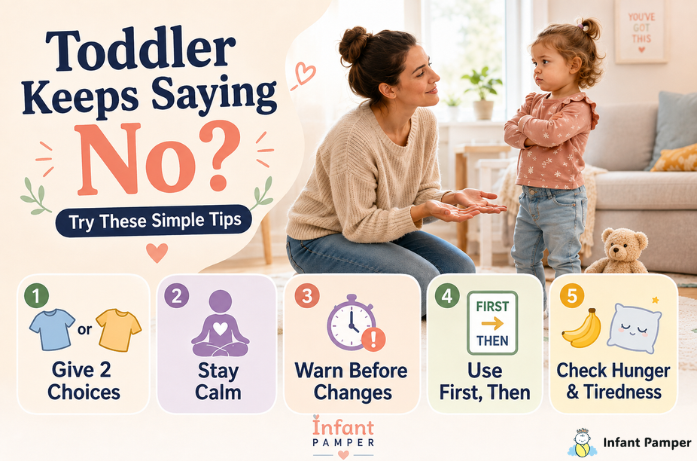
What to Do When Your Toddler Keeps Saying No
You may not be able to stop every no, and that is okay. The main goal is to make daily routines smoother, avoid unnecessary arguments, and help your toddler feel understood while still keeping clear boundaries.
1. Offer Two Easy Choices
Toddlers often cooperate better when they feel involved in a decision. Giving two simple options can give them a small sense of control.
For example, let them choose between the red cup and the blue cup, or between two shirts. Both choices should be things you are happy with.
Try not to give too many options at once. A couple of clear choices are usually easier for a toddler to handle.
2. Avoid Questions When the Answer Cannot Be No
Sometimes we ask toddlers a question even though the task still has to happen.
If you ask whether they want to get into the car seat, they may naturally say no. Instead, calmly tell them it is time to get in.
You can still offer a small choice, such as whether they want to climb in by themselves or have you help them.
3. Prepare Them Before an Activity Ends
Stopping something fun can be hard for a toddler, especially when they are deeply involved in play.
If you need to leave the park, give them a little warning first. Let them know there are a few minutes left, then remind them again before it is time to go.
This small warning can make the change feel less sudden and may reduce some of the resistance.
4. Keep First and Then Simple
First and then language can help toddlers understand what will happen next without giving them a long explanation.
You might say first shoes, then outside, or first bath, then story.
Keep the words simple and use the same style regularly. Over time, your toddler may begin to understand the routine more easily.
5. Keep Your Response Calm and Short
Hearing no again and again can test your patience, especially when you are already tired or running late.
Try not to get into a long argument. Use a calm voice, explain what needs to happen in a few words, and offer a simple choice if there is one.
Your toddler may still be upset, but a calm response can keep the situation from becoming even bigger.
6. Save Firm Rules for Things That Matter
Not every disagreement needs the same level of attention.
Safety rules should stay firm. Sitting properly in the car seat, holding hands near traffic, and staying away from dangerous objects are important boundaries.
Small preferences can be more flexible. If your toddler wants different socks or another spoon, letting them choose may prevent an unnecessary struggle.
7. Tell Your Toddler What You Want Them to Do
Toddlers hear the word no many times during the day, so it can help to give a clear direction instead.
Rather than saying no running, you can say walk inside. Instead of saying no throwing blocks, explain that blocks stay on the floor and offer a soft ball for throwing.
This gives your child a clear idea of what they can do instead.
8. Think About Their Basic Needs
Sometimes a toddler who refuses everything is simply tired, hungry, uncomfortable, or overwhelmed.
Notice when the behavior happens most often. It may be worse before meals, after a missed nap, or following a very busy day.
A snack, cuddle, quiet time, or a little rest can sometimes make cooperation much easier.
9. Follow Familiar Daily Routines
Toddlers often feel more settled when their day has a familiar pattern.
For example, bedtime may follow the same simple steps each evening, such as bath, pajamas, brushing teeth, story, and bed.
The routine does not have to be perfect. Even a basic pattern can help your toddler know what is coming next.
10. Let Them Help and Notice the Good Moments
Giving toddlers small jobs can help them feel useful and independent.
They can put toys away, carry napkins, bring their shoes, or choose the bedtime book. It does not matter if the job is not done perfectly.
Also notice when they cooperate. A simple thank you or you helped me put the toys away shows them that positive behavior gets attention too.
What to Do During a Toddler Meltdown
Sometimes no turns into crying, screaming, or a full tantrum.
During a big emotional moment, avoid long explanations.
Your toddler is already overwhelmed and may not be able to listen to a long conversation.
Stay close and keep them safe.
Use simple words to name the feeling and hold the boundary.
You can acknowledge that they are upset because they wanted to stay at the park while still making it clear that it is time to leave.
Once they calm down, move forward.
You do not need to keep discussing the problem for the rest of the day.
When Should You Talk to a Pediatrician?
Frequent refusal is usually a normal part of toddler development.
Every child also develops differently.
However, consider speaking with your child’s pediatrician if you have additional concerns about their language, communication, behavior, development, eating, sleeping, or ability to express their needs.
It is also worth asking for guidance if your child loses skills they previously had or everyday behavior becomes extremely difficult for your family to manage.
You do not need to figure everything out yourself. Your pediatrician can look at your child’s overall development and give you more personal guidance.
FAQs
Final Thoughts
When your toddler says no to everything, it can make simple daily moments feel harder than they should. But this stage is often part of learning independence, making choices, and expressing big feelings with limited words.
Try to stay calm, offer small choices, keep important boundaries clear, and give your toddler time to learn. With patience and a simple routine, this phase usually becomes easier as your child finds better ways to tell you what they need.
Every toddler has their own little personality. Keep trying what works best for your child, and explore more simple toddler parenting tips on Infant Pamper.
Disclaimer
This article is for general parenting information only and is not a substitute for professional medical or developmental advice. If you have concerns about your toddler’s behavior or development, speak with your pediatrician.
About the Author
Geeta Yogi is a parenting writer who shares practical and easy-to-understand guidance about toddler behavior, emotional development, communication, routines, and everyday parenting challenges. Her writing focuses on helping parents understand the reasons behind common toddler behaviors and respond with calm, consistent, and age-appropriate support.