Written by a caring mom at Infant Pamper
Seeing your toddler suddenly throw a toy, spoon, cup, or handful of food can be frustrating. One moment everything feels calm, and the next you are cleaning the floor and wondering how to stop toddler from throwing things without shouting or turning it into a daily battle.
As a mom, I know how tiring it can feel when your toddler keeps throwing things. You may wonder whether they are being naughty or simply testing limits, but this behavior is often a normal part of toddler development.
With calm boundaries and simple redirection, your child can learn safer ways to express frustration and handle objects. Understanding what triggers the behavior can also make it much easier to manage.
Why Do Toddlers Throw Things?
Toddlers throw objects for many different reasons. Sometimes they are simply exploring what happens when something falls, bounces, breaks, or makes a sound.
Throwing is also a new physical skill. Your child may feel proud when they discover they can move an object across the room.
At other times, throwing may mean your toddler is:
- Angry or frustrated
- Tired or hungry
- Looking for attention
- Finished with a meal
- Bored with an activity
- Testing a boundary
- Unable to explain what they want
Understanding the reason behind the behavior makes it easier to respond calmly.
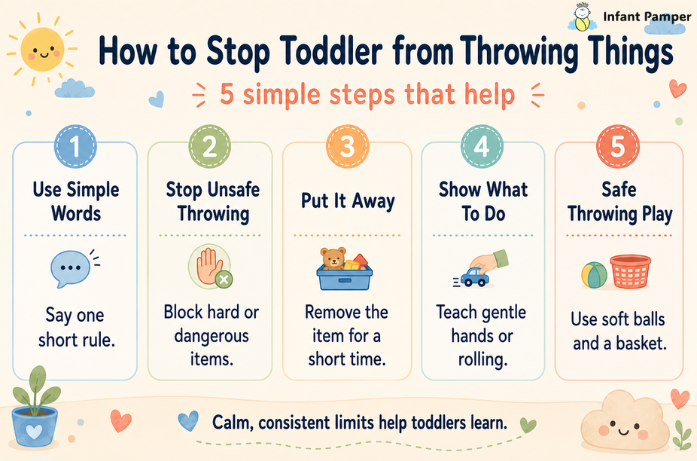
How to Stop Toddler from Throwing Things
Learning how to stop toddler from throwing things takes patience and repetition. Toddlers usually need to hear and practise the same rule many times before they remember it.
1. Use Short and Clear Words
Long explanations can be difficult for toddlers to understand, especially when they are upset.
Use one short sentence, such as:
- Toys stay on the floor.
- Food stays on the table.
- Cups are for drinking.
- Balls are for throwing.
- I will not let you throw that.
Speak calmly but firmly. Your tone should show that the rule is serious without making your child feel afraid.
2. Stop Unsafe Throwing Immediately
If your toddler is about to throw something heavy, sharp, or breakable, move close and gently block the action.
Take the item away and explain briefly that it could hurt someone.
Avoid shouting or grabbing roughly. Parenting goal is to keep everyone safe while teaching the boundary.
3. Remove the Object Calmly
If your toddler continues throwing after a reminder, remove the item for a short time.
For example, if a toy truck is repeatedly thrown, place it out of reach and explain that it needs to be put away because it was not being used safely.
This is a natural consequence. It teaches your child that unsafe play means losing access to the object for a while.
4. Show What to Do Instead
Toddlers need to learn the correct action, not only what they should stop doing.
Show your child how to:
- Place toys in a basket
- Hand a cup to you
- Put unwanted food in a bowl
- Roll a ball on the floor
- Say or sign all done
- Ask for help
- Put objects down gently
Guide their hands if needed. Repeating the correct action helps it become familiar.
5. Give Safe Throwing Activities
Trying to stop every type of throwing may make the behavior more tempting.
Instead, give your toddler safe ways to practise the skill. Use soft balls, rolled socks, beanbags, or lightweight toys.
You can create a simple game by letting your child throw soft items into a basket or cardboard box.
This helps them understand that some things can be thrown in the right place, while other objects cannot.
What to Do When Your Toddler Throws Things
Toddlers may throw objects when they feel angry, tired, overwhelmed, or unable to explain what they need. Instead of reacting strongly, focus on safety and help your child learn a better response.
Keep Everyone Safe
Move hard, sharp, or breakable objects out of reach. Stay nearby and use a steady voice.
Let your toddler know that feeling angry is okay, but throwing objects can hurt someone. Keeping the message brief makes it easier for them to understand.
Name the Feeling
Help your toddler understand what may be happening inside them.
You might explain that they feel angry because playtime ended, a toy did not work, or they could not have something they wanted. Naming the emotion helps your child feel understood without changing the boundary.
Teach a Safer Response
Once your toddler begins to settle, show them another way to release frustration. They can:
- Take slow breaths
- Stomp their feet
- Squeeze play dough
- Ask for a hug
- Jump in place
- Say mad, help, or all done
- Sit with you in a quiet space
Practise these skills during peaceful moments so they are easier to remember when strong emotions return.
How to Get Toddler to Stop Throwing Food
Food throwing is common when toddlers are full, bored, tired, or curious. When learning how to get toddler to stop throwing food, keep your response simple and make mealtimes easy to manage.
Serve Small Portions
Offer only a few pieces of food at a time. A smaller amount feels less overwhelming and leaves less food available for throwing.
You can offer more when your toddler finishes.
Teach an All Done Signal
Encourage your toddler to say or sign all done when they have finished eating. You can also place a small bowl beside their plate for food they do not want.
This gives your child a clear alternative to dropping food on the floor.
Give One Reminder
When food is thrown, remind your toddler that food stays on the table. If it happens again, calmly remove the plate and finish the meal.
Avoid forcing your child to continue eating, as this can turn mealtime into a power struggle.
Keep Meals Short
Toddlers often begin throwing when they have been sitting too long. Keep meals relaxed, free from screens, and suitable for your child’s attention span.
Eating together can also help because toddlers learn by watching how adults handle food and utensils.
Prevent Throwing Before It Starts
Some throwing can be reduced by noticing patterns and keeping expectations predictable.
Watch for Common Triggers
Throwing may happen more often when your toddler is:
- Hungry
- Overtired
- Overstimulated
- Frustrated
- Bored
- Rushed
- Moving between activities
- Looking for connection
A snack before an outing, a warning before playtime ends, or a quieter environment may prevent the behavior from becoming worse.
Keep Rules Consistent
Choose one simple rule, such as balls can be thrown, but toys stay on the floor.
Everyone caring for your child should use the same response. Predictable limits help toddlers understand what is expected and feel more secure.
Consistent limits help toddlers understand which behaviors are acceptable. You can find more helpful guidance in the Kids Health guide to managing and disciplining toddler behavior.
Avoid Shouting or Shaming
It is normal to feel frustrated when the behavior keeps happening. However, shouting, calling your child naughty, or smacking their hand does not teach them what to do instead.
When you respond firmly without aggression, you model the self-control you want your toddler to develop.
Help Your Toddler Learn After Throwing
Once your child is calm, keep the lesson short and practical.
Show the Correct Action
Demonstrate how the object should be used. You might show your toddler how to place a toy gently, hand you a cup, or roll a ball safely.
Avoid giving a long lecture, as toddlers learn better through simple actions and repetition.
Let Them Help Clean Up
If throwing caused a spill or mess, invite your toddler to help clean it.
Keep this neutral rather than treating it as punishment. Helping with the mess teaches responsibility and connects their action with what happened next.
Praise Small Improvements
Notice when your toddler handles an object gently, keeps food on the tray, uses a word, or pauses before throwing.
Simple and specific praise helps your child understand which behavior you want them to repeat.
Simple and specific praise helps your child understand which behavior you want them to repeat. The CDC also recommends giving toddlers attention and praise for positive behavior while teaching acceptable ways to express frustration.
When to Ask for Professional Help
Throwing is usually a normal toddler behavior, especially during play, frustration, or meals.
Speak with your pediatrician if:
- Your toddler frequently hurts themselves or others
- The throwing is intense and happens throughout the day
- Aggressive behavior is becoming worse
- Your child struggles to calm even with support
- You are concerned about speech or communication
- The behavior affects childcare or family life
- You feel unable to manage it safely
Asking for support does not mean you have failed. A pediatrician can help identify triggers and offer guidance based on your child’s development.
Frequently Asked Questions
Final Thoughts
Teaching a toddler not to throw things will not happen overnight. Some days your child may remember the rule, and other days the toy, spoon, or food may still end up across the room.
Try to focus on progress instead of perfection. With calm limits, simple guidance, and plenty of patience, your toddler will slowly learn safer ways to handle frustration and communicate what they need.
You are not failing when the behavior repeats. You are helping your child build self-control one small moment at a time.
Need more gentle parenting support? Explore Infant Pamper for practical toddler tips that make everyday parenting feel a little easier.
Disclaimer
This article is for general informational purposes only and is not a substitute for professional medical, developmental, or behavioral advice. Every child is different, so speak with your pediatrician or a qualified child-development professional if you have concerns about your toddler’s behavior, safety, communication, or development.