Written by a caring mom at Infant Pamper
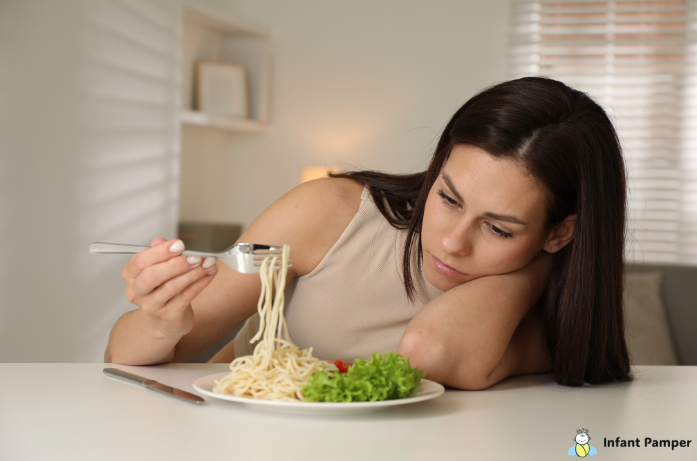
The early weeks of pregnancy can be wonderful, emotional, and honestly, a bit confusing. As your body adjusts to support your growing baby, you might experience some strange and unexpected changes, such as nausea and early pregnancy and Loss of Appetite. Foods you once loved might suddenly seem unappealing or bland; strong smell might trigger nausea, or you might find that you simply don’t feel hungry not even a little bit.
If these changes in appetite are worrying you, know that you are not alone. Many expectant mothers experience this during the first trimester, primarily due to pregnancy hormones, nausea, food aversions, and digestive changes. In this guide, I will explain why appetite decreases, which foods are easier to eat, simple ways to ensure proper nutrition, and when you should consult your healthcare provider.
Why Does Appetite Change During Early Pregnancy?
During the early weeks of pregnancy, your body undergoes significant hormonal changes to support your baby’s development. Naturally, these changes can affect digestion, your sense of taste and smell, and even the hunger cues you usually experience.
Rising pregnancy hormones particularly hCG and progesterone can lead to issues like nausea, slowed digestion, bloating, and changes in food preferences. Consequently, some expectant mothers may eat less than usual or feel full quickly, even if that wasn’t the case before. Research published in the National Library of Medicine (PMC) has also explored how pregnancy-related hormonal and physical changes can influence appetite, food preferences, and eating patterns.
It is also important to remember that every pregnancy is unique. While some women feel the need to eat more, others struggle to eat at all. A reduced appetite does not mean you are doing anything wrong.
The truth is that your body is adapting to a brand-new phase of life, and it may take some time to establish an eating routine that feels comfortable for you.
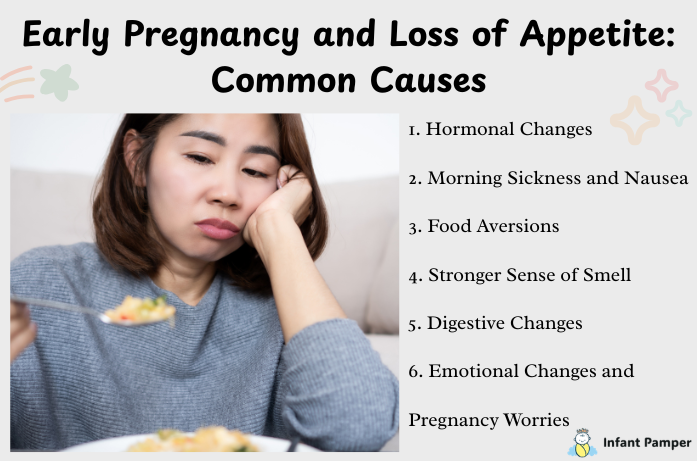
Early Pregnancy and Loss of Appetite: Common Causes
There are many reasons why food may suddenly become less enjoyable during pregnancy. Often, several changes happen together.
1. Pregnancy Hormonal Changes
Hormones are one of the biggest reasons for early pregnancy symptoms. As hormone levels rise, they can affect how your body reacts to food, smells, and tastes.
You may notice that foods you loved before pregnancy suddenly do not sound good anymore. You may also feel full after only a few bites.
Try not to worry if your eating habits have changed. Your body is going through a major transformation.
2. Morning Sickness and Nausea
Nausea is one of the most common reasons moms struggle with eating during early pregnancy. Even though it is called morning sickness, it can happen at any time of the day.
You may feel sick when your stomach is empty, after smelling certain foods, or while preparing meals.
Some moms experience mild nausea, while others find it harder to eat because they feel sick most of the day. Eating small amounts more often can be easier than trying to eat a large meal.
3. Food Aversions
Pregnancy can completely change your relationship with food. A smell or taste that never bothered you before may suddenly make you feel uncomfortable. According to Pregnancy Birth and Baby, appetite changes and food aversions are common during pregnancy and may happen because of hormonal changes that affect taste, smell, and food preferences.
Many moms experience loss of appetite in early pregnancy because certain foods become difficult to tolerate. Strong-smelling foods like coffee, fried foods, spicy dishes, or some meats may suddenly become unappealing.
It is okay to avoid foods that make you feel sick. Focus on finding simple foods that your body accepts.
4. Stronger Sense of Smell
Many pregnant women notice that their sense of smell becomes much stronger. Everyday smells like cooking food, perfume, coffee, or cleaning products may suddenly feel overwhelming.
These strong smells can trigger nausea and make eating more difficult.
Try opening windows while cooking, choosing foods with mild smells, or asking someone else to prepare meals if cooking smells bother you.
5. Digestive Changes
Pregnancy hormones can slow down digestion, which may lead to bloating, gas, constipation, or a heavy feeling after eating.
When your stomach feels uncomfortable, it is natural to have less interest in food.
Eating slowly, choosing smaller meals, and taking gentle walks can help your digestion feel more comfortable.
6. Emotional Changes and Pregnancy Worries
Early pregnancy can bring many emotions. You may feel excited, nervous, happy, or worried all in the same day.
Waiting for your first ultrasound or wondering if everything is okay can sometimes affect your appetite too.
Taking time to rest, sharing your feelings with someone you trust, and caring for your emotional health are important parts of pregnancy care.
First Trimester Appetite Changes: What Moms Should Know
First trimester loss of appetite is common and usually happens because of nausea, hormonal changes, food aversions, and digestive discomfort.
During this stage, your baby is still very small, and you do not need to force yourself to eat large portions. The goal is not perfection it is gentle nourishment.
Instead of focusing on how much you eat at one time, try to focus on what you can manage throughout the day. A few bites of nutritious food are still helpful.
Many moms find that their appetite improves as pregnancy progresses, especially when nausea begins to settle.
Why Am I Not Hungry in Early Pregnancy?
The answer is often connected to the normal changes happening inside your body.
You may not feel hungry because:
- Pregnancy hormones are affecting your appetite
- Nausea makes food less appealing
- Smells feel stronger than before
- Digestion has slowed down
- Certain foods suddenly cause discomfort
Remember, pregnancy does not always look like the stories we hear from others. Some women experience strong cravings, while others struggle to find foods they enjoy.
Listen to your body and choose foods that feel manageable rather than forcing yourself to eat something that makes you feel worse.
What to Eat When You Have No Appetite During Early Pregnancy
When you have no appetite during early pregnancy, large meals may feel overwhelming. Small, healthy simple foods are often easier to handle.
Try Small Meals Throughout the Day
Instead of three large meals, try eating small portions every few hours.
Some gentle options include:
- Crackers
- Toast
- Bananas
- Yogurt
- Rice
- Oatmeal
- Soup
- Boiled potatoes
- Fresh fruit
- Smoothies
- Cheese and crackers
Even a small snack can provide energy when a full meal feels impossible.
Choose Foods With Less Smell
If strong smells trigger nausea, cold or room-temperature foods may feel easier because they usually have less aroma.
You might enjoy:
- Cold fruit
- Yogurt
- Sandwiches
- Smoothies
- Mild salads
Choose whatever feels comfortable for your body.
Add Protein When Possible
Protein can help support your energy levels during pregnancy. If heavy meals feel difficult, try smaller protein sources such as yogurt, eggs, lentils, beans, tofu, nuts, or pasteurized cheese.
You do not need to create perfect meals every day. Small choices throughout the day can add up.
How to Stay Hydrated When Eating Feels Difficult
When your appetite is low, staying hydrated becomes even more important.
Take small sips of water regularly instead of drinking a large amount at once. Some moms find cold water, lemon water, ice chips, soup, or fruit easier to tolerate.
Staying hydrated is especially important when appetite is low. You can also read our guide on dehydration during pregnancy to understand warning signs and ways to maintain fluid levels.
- Dark urine
- Feeling dizzy
- Dry mouth
- Extreme tiredness
- Urinating less often
If keeping fluids down becomes difficult, contact your healthcare provider.
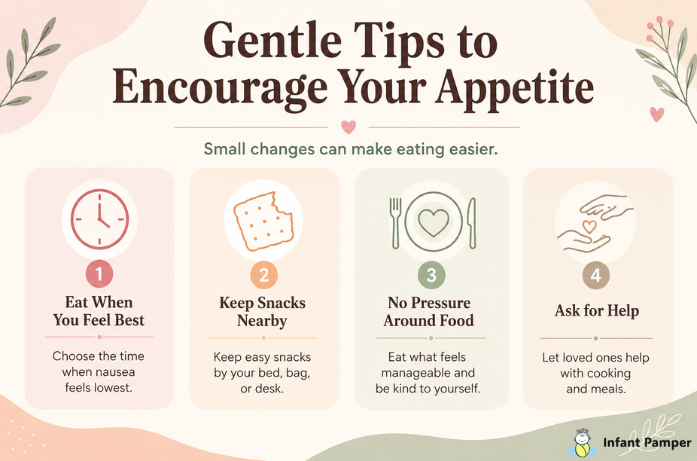
Gentle Tips to Encourage Your Appetite
You cannot always control pregnancy symptoms, but small changes can make eating easier.
1. Eat When You Feel Your Best
Notice the time of day when nausea is lowest. Use that time to eat your most nourishing meal.
Some moms feel better in the morning, while others find evenings easier.
2. Keep Snacks Nearby
Keep simple snacks beside your bed, in your bag, or at work. Having food available when hunger appears can make eating less stressful.
3. Avoid Pressure Around Food
Try not to feel guilty if your meals look different from before pregnancy. Your body is adjusting, and some days will be easier than others.
4. Ask for Help
Cooking smells can sometimes make nausea worse. Let your partner or family help with meal preparation when possible.
Accepting support is a healthy part of pregnancy care.
When Should You Contact Your Doctor?
A mild appetite change is usually not dangerous, but you should speak with your healthcare provider if you are struggling to eat or drink enough.
Contact your doctor if you experience:
- Frequent vomiting
- Difficulty keeping fluids down
- Weight loss
- Severe weakness or dizziness
- Very dark urine
- Signs of dehydration
- Severe abdominal pain
- Fever
- Feeling unable to manage daily activities
Severe nausea and vomiting may require medical treatment, especially if dehydration develops.
Do not wait until symptoms become unbearable. Your healthcare team is there to support you.
Can Loss of Appetite Affect the Baby?
Many moms worry that eating less means they are harming their baby. In most cases, a temporary decrease in appetite during early pregnancy is not a reason to panic.
Your baby is still very small, and your body has natural ways of supporting pregnancy. Focus on staying hydrated, taking prenatal vitamins as recommended, and eating what you can tolerate.
If appetite problems continue for a long time or you cannot keep food and fluids down, your doctor can provide guidance and support.
Frequently Asked Questions
Final Thoughts
Going through early pregnancy and loss of appetite can feel confusing and stressful, especially when you are trying your best to care for your baby. Please remember that appetite changes are a common part of many pregnancy journeys.
Be gentle with yourself. Eat small amounts when you can, drink enough fluids, rest when your body asks, and accept help from the people around you.
Pregnancy is a time of learning and adjusting. You do not need to have everything perfect every day. With patience, care, and support, you can move through these early changes one step at a time.
Explore more pregnancy guides on Infant Pamper for simple tips, helpful advice, and support throughout your motherhood journey.
Medical Disclaimer
This article is for informational purposes only and does not replace professional medical advice. Always consult your healthcare provider for pregnancy-related concerns or symptoms.