Written with love by a caring mom at Infant Pamper
If you’re anything like me, you’ve probably stood over your sleeping baby more times than you can count, gently checking their breathing and wondering if everything is okay. One question that quietly worries so many parents is: when can babies sleep on their stomach?
It might seem like a small thing, but it carries a lot of weight. Especially when your baby starts rolling or seems to sleep better on their tummy. Let’s walk through this together in a calm, clear, and reassuring way so you can feel confident about your baby’s sleep.
When Can Babies Sleep on Their Stomach Safely?
The safest and most trusted guideline is simple:
Babies can sleep on their stomach only after they can roll both ways independently, from back to tummy and tummy to back.
This milestone usually happens between 4 to 6 months, though some babies take a little longer. What matters most is not the exact age, but your baby’s ability to move freely and control their body.
Until then, always place your baby on their back for sleep, every nap, every night.
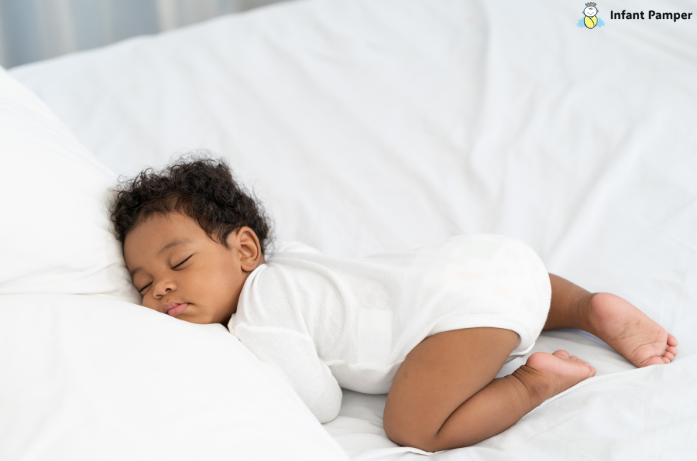
Once your baby rolls onto their stomach on their own, you don’t need to reposition them. That’s their body showing readiness.
Why Sleeping on the Back Is Recommended Early On
In the early months, your baby’s body is still learning basic control.
Their:
- Neck muscles are not strong enough
- Reflexes are still developing
- Ability to respond to discomfort is limited
When a baby sleeps on their stomach too early, it may increase the risk of breathing difficulties because they might not be able to lift or turn their head easily.
According to American Academy of Pediatrics, placing babies on their backs for sleep and giving them tummy time while awake is one of the safest ways to reduce sleep-related risks.
Back sleeping keeps the airway more open and reduces unnecessary risks. That’s why pediatric experts across the world recommend it as the safest starting position.
Can Babies Sleep on Their Stomach If They Roll Over?
This is one of the most common concerns parents have.
If your baby rolls onto their tummy during sleep, it can feel scary at first. But here’s the reassuring part:
If your baby can roll both ways on their own, it’s generally safe to let them stay in that position. Sleep experts also explain that once babies can roll independently, it’s generally safe to let them find their own sleeping position. This is supported by research shared by Sleep Foundation.
So if you’re wondering, can babies sleep on their stomach once they start rolling, the answer is yes, as long as you placed them on their back initially.
There’s no need to stay up all night flipping them back. Your baby is learning to adjust their position naturally.
When Can Babies Start Sleeping on Their Stomach Comfortably?
Most babies begin to prefer sleeping on their stomach sometime after 5 to 7 months.
At this stage:
- Their muscles are stronger
- Their breathing control is better
- Their sleep cycles are more settled
You may even notice your baby rolling onto their tummy and sleeping longer stretches. While this can feel like a big change, it’s actually a sign of growth and development.
Still, always begin sleep on the back. That habit remains important even as your baby grows.
Why Do Some Babies Prefer Sleeping on Their Tummy?
You might notice your baby sleeps deeper or longer on their stomach. This can make you question everything.
Here’s why many babies seem to love it:
- It can feel more secure, like a gentle hug
- It reduces the startle (Moro) reflex
- Some babies find it easier to settle this way
But even if it looks more comfortable, safety always comes first in the early months.
Think of it this way, tummy sleeping becomes safe when your baby can choose it themselves, not when we place them that way.
At What Age Can Babies Sleep on Their Stomach Without Worry?
Parents often look for a clear age, but the truth is, development matters more than numbers.
Still, as a general guide:
- Around 6 months, most babies are strong enough
- By 7–8 months, tummy sleeping becomes more common
- After 9 months, babies move freely in sleep
So if you’re asking at what age can babies sleep on their stomach, the answer is: when they have full control over rolling and movement.
This ensures they can adjust themselves if needed. Medical experts also emphasize that readiness depends on your baby’s development, not just age. According to guidance from Cleveland Clinic, babies can sleep on their stomach once they can roll both ways and move freely.
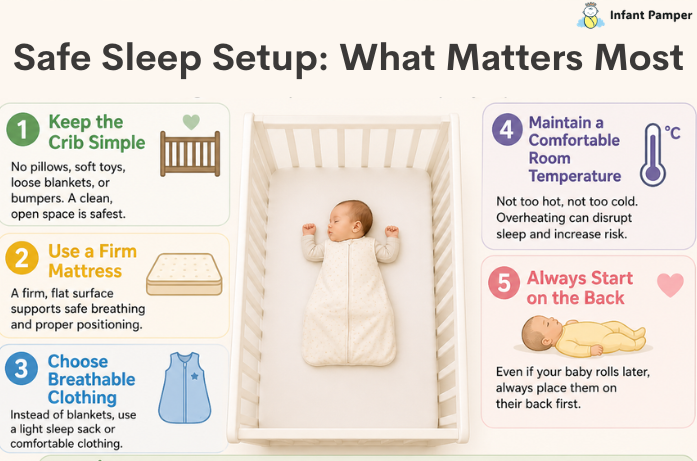
Safe Sleep Setup: What Matters Most
Sleep position is just one part of the picture. Creating a safe sleep environment is equally important.
Here’s what truly helps:
1. Keep the Crib Simple
No pillows, soft toys, loose blankets, or bumpers. A clean, open space is safest.
2. Use a Firm Mattress
A firm, flat surface supports safe breathing and proper positioning.
3. Choose Breathable Clothing
Instead of blankets, use a light sleep sack or comfortable clothing.
4. Maintain a Comfortable Room Temperature
Not too hot, not too cold. Overheating can disrupt sleep and increase risk.
5. Always Start on the Back
Even if your baby rolls later, always place them on their back first.
These small steps make a big difference.
What If My Baby Rolls Over at Night?
This is a moment every parent experiences, and it can feel overwhelming the first time.
You put your baby to sleep on their back, and later you find them on their tummy.
Take a deep breath.
If your baby:
- Rolled there on their own
- Can roll back if needed
- Is sleeping peacefully
Then it’s okay to let them be.
You don’t need to:
- Constantly monitor every movement
- Wake your baby to change positions
- Feel anxious all night
Trust your baby’s growing abilities.
When Baby Sleeping on Stomach Is Not Safe
There are still times when tummy sleeping is not recommended.
Avoid it if your baby:
- Cannot roll both ways yet
- Has limited neck control
- Was placed on their stomach by an adult
- Is sleeping on a soft or unsafe surface
In these cases, always gently return to back sleeping.
Helping Your Baby Develop Safe Sleep Skills
You can support your baby’s development in simple, natural ways:
Encourage Tummy Time (While Awake)
This strengthens neck, shoulder, and core muscles, all important for safe rolling.
Give Space to Move
Allow your baby some freedom during playtime to explore movement.
Practice Rolling During the Day
Gently guide and encourage rolling so your baby gains confidence.
These little steps help your baby become a safer sleeper over time.
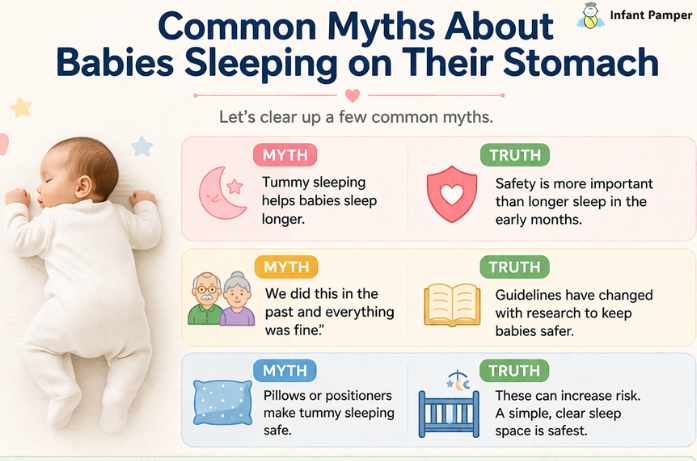
Common Myths About Babies Sleeping on Their Stomach
Let’s gently clear up a few common myths many parents hear:
“Tummy sleeping helps babies sleep longer.”
It may look like babies sleep more deeply on their stomach, but in the early months, safety is far more important than longer sleep stretches.
“We did this in the past and everything was fine.”
It’s true many older practices were different, but today’s sleep guidelines are based on updated research that focuses on reducing risks and keeping babies safer.
“Pillows or sleep positioners make tummy sleeping safe.”
These products might seem helpful, but they can actually increase risk. A simple, clear sleep space is always the safest choice for your baby.
A Gentle Checklist for Peace of Mind
Before you leave your baby to sleep, you can ask yourself:
- Did I place my baby on their back?
- Is the crib clear and firm?
- Is my baby dressed comfortably?
- Can my baby roll both ways (if sleeping on tummy)?
If the answer is yes, you’re doing just fine.
Final Thoughts: You’re Doing Better Than You Think
So, when can babies sleep on their stomach? It comes down to your baby’s development, not just age. Once your baby can roll both ways easily, has good head and neck control, and can move freely during sleep, it’s generally safe for them to stay in the position they choose. Until you reach that stage, consistently placing your baby on their back remains the safest and most recommended practice for every sleep.
It’s completely natural to feel unsure, especially during those quiet nighttime moments. But every small step you take, creating a safe sleep space, following simple guidelines, and staying aware of your baby’s growth, truly makes a difference. You are not just protecting your baby’s sleep, you’re supporting their overall safety, comfort, and healthy development with love and care.
If you found this helpful, explore more gentle parenting tips and baby care guides on Infant Pamper we are here to support you every step of the way.
FAQs
1. When can babies sleep on their stomach safely?
Babies can safely sleep on their stomach once they can roll both ways (back to tummy and tummy to back) on their own, usually around 4–6 months.
2. Can babies sleep on their stomach if they roll over at night?
Yes, if your baby rolls onto their stomach by themselves and can roll back, it’s generally safe to let them stay in that position.
3. Should I place my baby on their stomach to sleep?
No, always place your baby on their back for sleep. Let them move to their stomach naturally when they are ready.
4. Is it okay if my baby prefers sleeping on their tummy?
Many babies prefer it, but you should still place them on their back until they can roll independently.
5. What should I do if my baby keeps rolling onto their stomach?
Make sure the sleep space is safe (firm mattress, no loose items) and place your baby on their back initially. If they roll on their own, you don’t need to reposition them constantly.
Disclaimer: This article is for informational purposes only and is not a substitute for professional medical advice. Always consult your pediatrician for guidance specific to your baby’s health and sleep needs.