
By a Caring Mom at Infant Pamper
Still, he wakes up several times or cries as soon as you put him down. If your previously great sleeper suddenly refuses to sleep, this often happens without warning; one night your baby falls asleep without any trouble, and the next night everything seems to be upside down.
As a mama who has lived through these exhausting phases (surviving on tolerance and caffeine), I want you to know something important: This is normal. This is temporary. And you haven’t done anything wrong.
Sleep regression in toddlers generally happens because their brains and bodies are developing rapidly. They’re learning to talk, manage passions, understand fear, climb, communicate, and explore independence, all major milestones that can fluently intrudeonh sleep.
This guide explains why toddler sleep regressions occur, what signs to look out for, and gentle strategies that help bring calmer nights back into your home.
Understanding Toddler Sleep Regression And Why It Feels So Unforeseen)
Toddler sleep regression is a short- lived period when a child who typically sleeps well begins to struggle with bedtime or wakes up more frequently during the night. Parents frequently say it feels like a switch flipped overnight, and actually, it frequently does.
This unforeseen shift happens because toddlers are going through tremendous neurological and emotional development. Their smarts are working overtime to reuse new chops, recollections, language, and passions. That internal stimulation constantly spills into darkness, causing disrupted sleep.
Health services like Better Health Victoria explain that sleep patterns in babies and toddlers naturally change between newborn and 2 years, and night waking can be a normal part of development:
Most toddlers witness sleep regressions at several crucial periods, including
- 12–15 months: learning to walk, stronger attachment requirements, moving to one nap
- 18 months: emotional development, independence, testing boundaries
- 2 years: language vault, molars coming by, early restroom- mindfulness, big feelings
- 3 years: imagination advances, fears consolidate, nap changes begin
These toddler sleep regression periods are part of normal growth, and nearly every child experiences at least one phase.
Typical signs of a sleep regression include:
- Increased bedtime resistance
- Crying or calling out during the night
- Frequent night wakings
- unforeseen turn to nap
- Further clinginess during bedtime
- Fear of darkness, murk, or noises
Still, a sleep regression is the most likely explanation Iifyour toddler slept well before and suddenly does not.
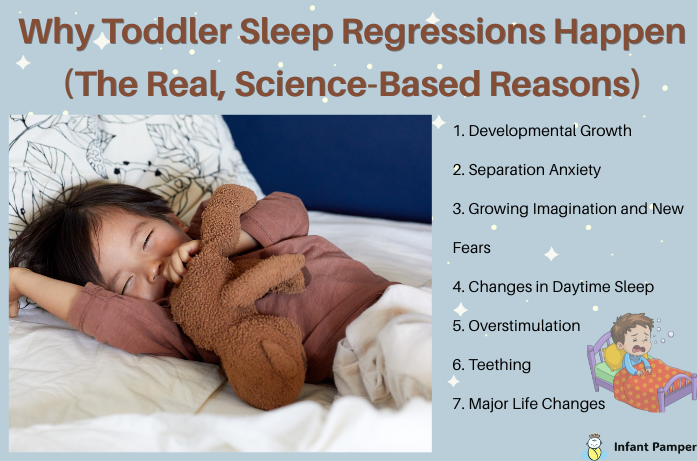
Why Toddler Sleep Regressions Happen (The Real, Science-Based Reasons)
Toddler sleep problems are not because your child is acting out or trying to give you a hard time. They’re dealing with big experimental changes and do not know how to handle them yet. Research on early childhood sleep and development shows that brain maturation, attachment needs, and environment all influence sleep quality and night waking:
1. Developmental Growth: Toddlers fleetly learn language, collaboration, problem-solving, and emotion control. During this stage, parents may also need gentle behavior tips like how to stop toddler biting. Their smarts stay busy indeed during rest, making it harder to settle and stay asleep.
2. Separation Anxiety: As toddlers grow, their mindfulness of being piecemeal from you becomes stronger. Nighttime can suddenly feel scary or lonely.
3. Growing Imagination and New Fears: murk, sounds, or objects in the room may suddenly feel shocking. Their imagination is expanding and occasionally creating fear they can’t explain.
4. Changes in Daytime Sleep: Dropping naps or switching from two naps to one can temporarily throw off their entire sleep meter.
5. Overstimulation: active play, or inconsistent routines, overstimulate toddlers, making it hard for them to wind down.
6. Teething (Especially Molars): Pain or pressure from teething frequently disrupts sleep cycles.
7. Major Life Changes: New home, daycare, trip, illness, or a new stock can all spark a sleep regression.
Knowing why regressions can be helpful can help you respond gently and confidently.
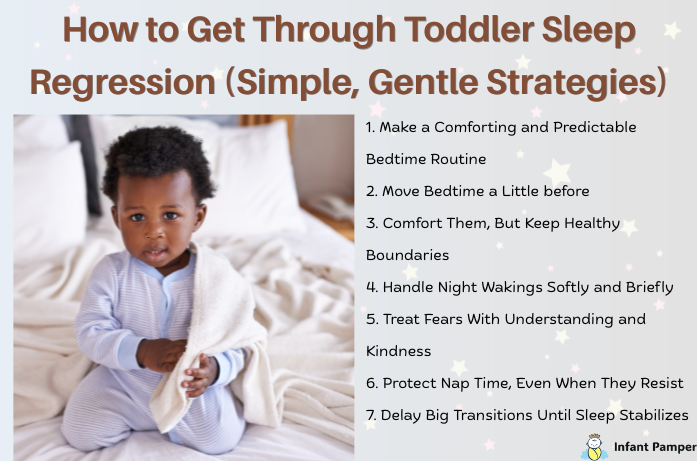
How to Get Through Toddler Sleep Regression (Simple, Gentle Strategies)
You can’t stop experimental hops; they’re part of growing up. But you can make regressions shorter and easier with harmonious routines and calm consolation. Then’s how to help your toddler through this phase
The American Academy of Pediatrics offers helpful guidance on handling bedtime battles, routines, and nighttime stalling:
1. Make a Comforting and Predictable Bedtime Routine
Toddlers sleep stylishly when bedtime feels familiar and peaceful. A simple routine, a warm bath, pajamas, a drink of milk or water, a couple of favorite books, snuggles, and lights out, helps the brain understand that the day is ending.
Repeating the same way each evening trains the body to shift toward sleep. Try avoiding defenses for one to two hours before bedtime because blue light makes it harder for children to relax and fall asleep.
2. Move Bedtime a Little before
During a sleep regression, toddlers tire more quickly. When they come overtired, sleep becomes harder, not easier. Shifting bedtime by fifteen to thirty minutes frequently reduces explosions, bedtime battles, and night wakings. The redundant rest helps their body and brain reset.
3. Comfort Them, But Keep Healthy Boundaries
When children are going through regression, it’s completely normal for them to cry, cling, or call out to you constantly. Comfort is comforting, but it’s also important not to create new habits that will be difficult to break later.
A helpful approach is the gradual retreat method.
Sit near their bed at first, and also sluggishly move further down over several nights. Ultimately, you’ll sit near the door and also outside the room. This system supports emotional security while encouraging independent sleep.
4. Handle Night Wakings Softly and Briefly
When your baby wakes up crying at night, keep them calm. Dim lights, whispers, and small, comforting words can help calm them down without overwhelming their mind. Don’t pick them up unless they really need to, and keep conversations short so they can fall asleep naturally.
5. Treat Fears With Understanding and Kindness
Silence, darkness, shadow, or night sounds, if your child is paranoid about the dark. For them, fear is real, even if nothing scary is happening.
A small nightlight, quiet white noise, or a familiar comfort point can help. Simple expressions like “I’m here, you’re safe” work much better than “There’s nothing to be afraid of,” which can make them feel ignored.
6. Protect Nap Time, Even When They Resist
Regression often affects naps as well. Your child may refuse to sleep, but skipping naps in the first place usually makes the darkness worse. Keep the nap routine consistent, give them quiet time if they really can’t sleep, and use knockout curtains to minimize distractions.
Toddlers still need daytime rest to regulate feelings and sleep better overnight. Nutritious foods like broccoli puree can also support healthy growth as part of a balanced routine. Health authorities like the CDC stress how important total sleep is for children’s mood, learning, and behavior:
7. Delay Big Transitions Until Sleep Stabilizes
This is not the right time for major changes, such as toilet training, moving to a toddler bed, or moving apartments. These changes require emotional stability, which children need during regression. Wait until your child is sleeping well again before introducing new challenges.
How Long Does Toddler Sleep Regression Last?
Most toddler sleep regressions last between two and six weeks, though the timeline varies from child to child. Factors like disposition, stress, and thickness play a big part.
Still, consider assessing if sleep dislocations continue beyond eight weeks.
- Sleep environment
- Bedtime routine
- Daytime nap habits
And talk to a pediatrician if you notice the patient snoring, breathing pauses, or enterprises about sleep apnea.
The important thing to flash back to is this: every regression ultimately ends, indeed, if it feels endless in the moment.
Final Thoughts
Toddler sleep regression can test your tolerance, your energy, and indeed your confidence as a parent. But this phase is not a reversal,l it’s a sign your child is growing, learning, and reaching new milestones.
With routine, consolation, and gentle guidance, your toddler will return to sleeping peacefully again. And when they do, you’ll feel more rested and further confident, too.
At Infant Pamper, we’re here to support you through every milestone from sleepless nights to joyful breakthroughs. You’re doing better than you suppose, indeed, ed on the tired days.
FAQs Parents Often Ask About Toddler Sleep Regressions
1. Is toddler sleep regression normal?
Yes. Almost all toddlers experience it at some point.
2. Why do regressions seem worse at night?
Nighttime is when the brain processes new thoughts, feelings, and gestures, which can lead to restless sleep.
3. Should I let my toddler cry it out during a regression?
This phase requires further emotional support, not lower. Gentle styles are more effective.
4. Is screaming at night a common symptom?
Yes. Teething, dreams, separation anxiety, or overtiredness can all cause sudden crying.
5. Do regressions ultimately go down?
Absolutely. This is a temporary developmental phase.