By a Caring Mom at Infant Pamper
If you’ve ever felt tiny gums nipping at your shoulder or witnessed your young child bite another child, you understand how upsetting this situation can be. Biting is a natural part of growing up and often leaves parents embarrassed or confused. In such cases, when a baby or toddler repeatedly bites at home or daycare, it’s common for people to ask how to stop toddler biting quickly.
Still, biting doesn’t mean your child is bad or that you’re failing. It’s usually a rapid developmental stage that begins in infancy and ends in toddlerhood. Sometimes, it can even appear as a 4-year-old biting when emotions overwhelm their limited vocabulary. With patience and loving guidance, children will eventually learn healthy ways to communicate their feelings.
This manual is specially designed for parents with loving children to help you understand why children bite, and most importantly, how to stop children from biting, using calm, gentle and practical methods that apply to real family life.
Why Babies Bite: Understanding the First Stage
Before the thought of toddlers and their biting even crosses your mind, in many homes, toddlers are the first to bite. In most cases, when a child bites, it’s not out of anger or mischief; rather, it’s almost always due to development and sensory curiosity.
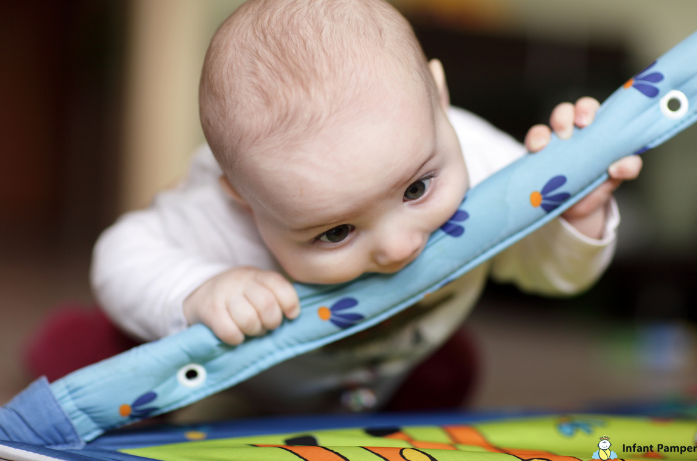
Teething is a major cause. The pressure of swollen or itchy gums causes children to chew, which provides comfort. Having a parent’s shoulder, finger, or hand nearby makes biting easier. Toddlers also explore the world with their mouths, so biting toys, blankets, and even skin is part of learning and becoming familiar with different textures.
Teenagers may bite because they are overly excited, frustrated, hungry, or unable to communicate their discomfort. As children, they lack language and therefore use their bodies to communicate. Sudden biting often signals that something is “too much.”
Breastfeeding babies may bite their mothers when they lose interest, are full, or are teething. The bite will be painful, but it usually doesn’t last long. By reacting calmly and patiently, the baby gradually learns that biting is not allowed.
Your reaction during this newborn phase determines the baby’s future emotional maturity. By being regular and predictable, the baby will learn about limits even before they can speak.
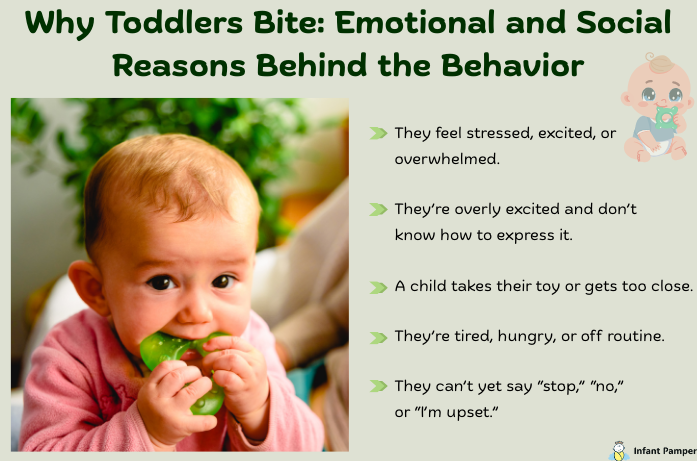
Why Toddlers Bite: Emotional and Social Reasons Behind the Behavior
As a child grows into a toddler, biting isn’t just a matter of taste; it also becomes a matter of emotion. Toddlers experience a wide range of feelings very quickly and lack the self-control to express or control them. They crave independence, have difficulty sharing, and tire quickly.
Parents often have no choice but to find ways to stop their toddler’s biting behavior, as it happens with other children, especially in places where children gather, such as daycare and playgroups. Although it can be very upsetting to see your child biting another child, it is more common than most parents realize.
Toddlers may bite when:
- They are stressed or overly excited
- Another child takes a toy or enters their space
- They are sleepy, hungry, or their schedule is off-balance
- They are overjoyed and don’t know how to release their energy
- They don’t have the words to say “stop,” “no,” or “I’m upset”
For most children, biting is something they don’t even realize. Biting and childhood often go hand in hand because young children’s self-control is still developing.
Even a calm three-year-old can suddenly become a biter, or a four-year-old may bite because their emotions are stronger than their ability to communicate. This doesn’t mean anything is wrong. It simply means they need more time and support to recognize their feelings and express them in less harmful ways.
How to Stop Toddler Biting Fast: Calm, Clear, and Consistent Strategies
It’s crucial for parents to learn how to stop a toddler from biting quickly, without shaming, yelling, or harsh punishment. The best approach is to be firm, assertive, and gentle.
1. Respond Quickly and Calmly
As soon as a toddler bites, say a short, firm statement. For example:
“Don’t bite. Biting hurts.”
Toddlers respond more to tone of voice than lengthy statements. Staying calm prevents the situation from escalating into drama or attention-seeking behavior. Reacting forcefully can inadvertently reinforce the behavior, especially for toddlers who are emotionally intense.
2. Comfort the Child Who Was Hurt
Quickly shift your attention to the child who is hurt, even if it’s you. This practice promotes kindness and lets your toddler know that biting doesn’t get attention or rewards.
A few seconds of comforting shows that there are real consequences for hurting others, without the need for a lecture.
Over time, toddlers begin to understand that kindness brings connection, while biting does not.
3. Identify the Trigger
In order to completely eliminate toddler biting, one needs to examine the circumstances that lead up to the bite.
Ask yourself:
- Were they tired or hungry?
- Did a child steal a toy?
- Was the place noisy or dirty?
- Did they have to share or wait?
Biting is usually a reaction to emotional or sensory overwhelm.
4. Teach What to Do Instead
Toddlers are not expected to automatically know what the “correct” behavior is. You have to teach them. Suggest alternative activities like:
- Telling “stop,” “mine,” or “no”
- Passing the toy to you or moving away
- Asking for help instead of being physical
Practice these skills during calm times so your child will be ready the next time frustration builds up.
You used your words! Great job!
Gradual change occurs where biting decreases as the new communication method takes over the repetition of the previous one.
Helping Your Child Understand Feelings: The Heart of Stopping Toddler Biting
Many children bite others simply because they can’t express their feelings. Teaching emotions is crucial, as it plays a key role in completely eliminating the biting habit.
Use basic emotional words throughout the day; such as angry, sad, frustrated, and excited. When a toy breaks, describe that feeling. When you accidentally drop something, describe how you feel. This way, children will gradually learn to express their feelings in appropriate words.
Similarly, demonstrate affectionate touch. Gently place your child’s hand under your arm or on a sibling’s shoulder. Explain that this is how hands are used when people are around. Consistent practice helps gradually change their behavior over time.
Children who can express their feelings are less likely to use biting as a form of communication.

Baby Bites During Feeding and Play: What Helps Most
Biting is common when babies are breastfeeding, and it can cause pain to the mother, but it’s usually not their intention. Babies bite more when they are full, unattended, or their gums need pressure.
If a baby bites while breastfeeding or bottle-feeding, the mother should calmly stop the feeding. This lets the baby know that biting will temporarily stop the activity. If they’re hungry, offer the breast or bottle again after a short break. This routine teaches children limits in a loving but clear way.
If a baby tries to bite your skin while playing, immediately redirect them to something safe, such as a teething toy or a cool cloth. The urge to chew is calmed by the removal of the urge, while the baby is taught not to bite people.
Routines are important. Babies learn through repetition, and gradually they learn what’s okay to bite.
Biting at Daycare and Playdates: Handling Public Biting Without Panic
While biting in public can be embarrassing, it’s not uncommon for young children to bite in public. Groups are noisy, offer limited personal space, and have high emotional demands, so toddlers often find these situations difficult to handle.
If your child bites at daycare, talk to the staff calmly. Ask when they bite. Is it during changing? When sharing toys? Right before bed? These cues can reveal what your little one is struggling with and help you create a plan that works for both of you, no matter what.
On playdates, keep a close eye on situations involving sharing, waiting, or conflict. Sometimes, even a small distraction can be enough to stop the biting before it happens. In moments of anger, gently separate the children, give them another toy, or move your child to a less active play area.
The combination of consistent practice and emotional development almost always reduces public outbursts.
When Biting Becomes a Habit: Warning Signs and Next Steps
For most children, biting is a temporary phase that affects their behavior. However, sometimes it can escalate or become more frequent. It’s wise to monitor your child if they:
- Bite several times a day
- Always bites in the same situations
- Bites out of excitement rather than frustration
- Bite only when very tired or upset
Occasional biting in a four-year-old may be considered normal development, but persistent or angry biting may indicate that the child needs help managing their speech, sensory processing, or emotional regulation.
If biting breaks the skin, causes serious injury, or persists despite repeated attempts by parents, it’s best to consult a pediatrician or child development specialist. Early guidance can help prevent major behavior problems later on.
Preventing Biting Before It Starts
One of the most common questions parents ask is how to stop toddler biting, not how to stop it completely. Prevention isn’t always perfect, but a routine can help. Young children often bite when they’re tired, hungry, or overstimulated.
A consistent daily schedule that includes regular rest periods, mealtimes, and quiet time can reduce thoughtless behavior. Signaling playtime, such as “It’s your turn” and “It’s their turn,” helps even young children understand the concepts of waiting and sharing.
One of your most powerful weapons is praise. If your child shares, shows kindness, or asks for help, simply let them know you’ve noticed. Reinforcement is the fastest way to strengthen good habits, and punishment is the most effective way to eliminate bad habits.
For children, prevention means providing a safe teether, closely monitoring them when they explore, and reacting calmly when they scratch your skin. If they are given the right things to bite, they are less likely to bite people.
Final Thoughts: This Phase Will Pass
Baby or toddler biting is a situation that occurs in almost every family. It can be very stressful when this happens, but it’s really just a phase. Your little one is getting to know their body, learning to control their emotions, and interacting with others.
With patience, consistent attention, and emotional management, biting will resolve itself. You haven’t lost. You’re showing your child one of the most difficult moments of childhood amidst this turmoil, and you’re doing it with love.
FAQs
1. Why does my toddler suddenly start biting?
Toddlers bite most of the time because they feel frustrated, overwhelmed, or they are still unable to express themselves verbally. It is usually a common part of the emotional development process.
2. What is the quickest way to eliminate toddler biting?
React in a calm manner, tell your toddler “No biting,” then console the child who got hurt and suggest to your toddler to either speak or move away instead of biting.
3. Is biting a sign of bad behavior or deeper issues?
Usually not. Biting is very common in children between the ages of 1 and 3. Only after the age of 4, if it occurs frequently, is very severe, or persists, may it need to be treated by a professional.
Join the Infant Pamper community and expert support, which is based on loving, patient, and understanding methods, will be available to you throughout your child’s growth and development.