
Written by a caring mom at Infant Pamper
Some days as a stay at home mom are like those where your day starts before you are even truly awake. You have breakfast to make, there is one who can’t find his toy, laundry is to be done, and your coffee has grown cold. If that seems like something you experience too, here are some stay at home mom time management productivity tips to give you peace without over-scheduling your day.
Time management is not just about being more efficient all the time. Time management is really about priorities, cutting back on stress, and forming simple routines that accommodate your kids. There will be productive days as we normally think of them, and there will be days when your biggest role will be comforting a child who is tired.
Table of Contents
- Why Time Management Can Feel So Difficult for Stay-at-Home Moms
- Stay at Home Mom Time Management Productivity Tips That Actually Help
- Create a Routine That Fits Your Child’s Age
- Try a Good, Better, Best Approach
- What Does a Productive Day Really Mean?
- FAQs About Stay-at-Home Mom Time Management
- Final Thoughts
- Disclaimer
Why Time Management Can Feel So Difficult for Stay-at-Home Moms
Motherhood comes with a series of interruptions. You begin sorting out your laundry and then your toddler wants your attention. As you go back to sorting the laundry, your baby starts crying, and in a jiffy, you are cooking lunch while planning for three other things.
Your brain load keeps adding too. Your meals, appointments, school plans, grocery list, chores, bedtime, medication, clothing, and family plans could be stored somewhere in your head all at once.
This is the reason why the most ideal routine is not the toughest one but the one which makes you understand the next step without feeling guilty.
The mental load of motherhood can be just as tiring as the physical work. According to Wikipedia, stay-at-home mothers often manage many daily household and caregiving responsibilities.
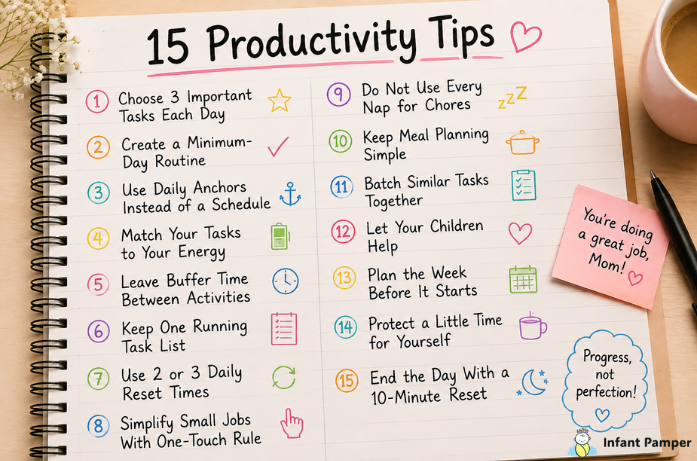
Stay at Home Mom Time Management Productivity Tips That Actually Help
These tips are designed for real family life. You do not need to follow every one of them. Start with the ideas that solve your biggest daily frustrations and adjust them as your children grow.
1. Choose Three Important Tasks Each Day
A long to-do list can make you feel behind before breakfast is even over. Instead, choose three things that would make the day feel productive if you completed them.
Maybe you need to wash one load of laundry, schedule a pediatrician appointment, and prepare dinner before the evening rush. Anything beyond those three tasks is a bonus.
One of the most useful productivity tips for busy moms is to keep your daily expectations realistic. Your priorities should fit the day you actually have, not the perfect day you imagined.
2. Create a Minimum-Day Routine
Some days simply require lower expectations. A rough night, a sick child, teething, appointments, or your own exhaustion can change the entire plan.
Decide what the minimum version of a successful day looks like. It might mean everyone eats, essential dishes get washed, basic hygiene is handled, and you make it through bedtime.
Having a minimum-day routine can stop you from feeling like the whole day is a failure just because you did less than usual.
3. Use Daily Anchors Instead of a Strict Schedule
Young children rarely follow an exact timetable. Instead of planning every hour, organize your day around predictable anchors.
Your morning anchor might include breakfast and getting dressed. Midday could include lunch, naps, or quiet time. Your evening anchor might be dinner, baths, books, and bedtime.
This approach makes time management for stay at home moms more flexible. If something happens later than planned, you can simply move toward the next anchor instead of feeling like the schedule is ruined.
4. Match Your Tasks to Your Energy
Not every part of the day feels the same. You may be focused in the morning but tired by late afternoon, or you may finally think clearly when your baby naps.
Try to save higher-energy periods for tasks that require more attention, such as planning meals, organizing paperwork, paying bills, or making appointments.
Lower-energy times are better for easier jobs like folding towels, tidying toys, or laying out clothes. Managing your energy can be just as important as managing your time.
5. Leave Buffer Time Between Activities
Children have a special ability to create delays right when you are ready to leave the house. Shoes disappear, diapers need changing, and someone suddenly needs a snack.
Give yourself an extra ten or fifteen minutes when possible. If you need to leave at 10:00, aim to be ready a little earlier rather than starting the final rush at 9:55.
Small pockets of buffer time can make outings and appointments feel much less stressful.
6. Keep One Running Task List
Ideas and reminders often appear while you are doing something completely unrelated. You might be washing dishes and suddenly remember you need to order diapers or reply to an email.
Instead of stopping what you are doing, write the task on one simple running list. You can keep it in your phone, planner, or on a note in the kitchen.
This is one of those stay at home mom productivity tips that sounds small but can reduce mental clutter and unnecessary task switching.
7. Use Two or Three Daily Reset Times
Trying to keep your house tidy all day is exhausting, especially with young children playing in it.
Choose a few reset moments instead. You might tidy the kitchen after breakfast, reset toys before dinner, and spend ten minutes putting obvious things away after bedtime.
Between those resets, let your family use the house normally. A well-loved home does not need to look perfectly organized every hour.
8. Simplify Small Jobs With the One-Touch Rule
Some little tasks become bigger because we keep moving them around. Mail sits on the counter, jackets land on chairs, and dirty cups wait beside the sink.
Whenever it is easy, deal with the item once. Put junk mail straight in recycling, hang the jacket, and place the cup into the dishwasher.
You do not have to do this perfectly. The goal is simply to reduce the number of tiny jobs that keep following you around.
9. Do Not Use Every Nap for Chores
Nap time can easily become your second work shift. You may feel pressure to clean, prep dinner, answer messages, and finish everything you could not do while your child was awake.
Use some naps for focused tasks, but allow yourself to rest sometimes too. Eat lunch, take a shower, sit outside, or simply enjoy the quiet.
Rest is not the opposite of productivity. Sometimes it is what gives you enough patience and energy to handle the rest of the day.
10. Keep Meal Planning Simple
Meal planning should reduce stress, not create another complicated project. You do not need seven completely different dinners every week.
Choose a small group of meals your family already likes and rotate them. You can also use simple themes such as pasta night, taco night, slow-cooker night, leftovers, or breakfast-for-dinner.
Keeping two easy backup meals in the pantry or freezer can also save you on chaotic evenings. A simple dinner still counts as a good dinner.
Simple family meals can still support healthy habits. The CDC recommends helping children build healthy eating and daily routines without making things overly complicated.
11. Batch Similar Tasks Together
Constantly switching between different kinds of work can make you feel more tired than the tasks themselves.
Try grouping similar jobs. Make several calls in one quiet period, reply to messages together, run errands in the same trip, or prep tomorrow’s lunch while you already have the kitchen set up.
Batching helps your brain stay focused and can make small pockets of time much more useful.
12. Let Your Children Help
Young children often want to participate, even if their version of helping is not especially fast.
Toddlers can put toys in baskets, carry clothes to the hamper, place napkins on the table, or wipe a safe surface. Preschoolers can gradually take on more.
One of the most practical productivity tips for moms is to let children learn household routines early. It may slow you down today, but it can build independence and responsibility over time.
13. Plan the Week Before It Starts
Spend ten or fifteen minutes once a week checking what is ahead. Look at appointments, errands, school events, groceries, meals, and important household tasks.
This little planning habit can prevent stressful surprises. If Tuesday looks packed, you can choose an easy dinner. If Thursday is quieter, that may be a better day for errands or laundry.
Do not forget to include something enjoyable for yourself too. Your week should not contain only responsibilities.
14. Protect a Little Time for Yourself
Being a productive stay at home mom does not mean being busy from morning until bedtime.
Try to protect a small amount of time for something that helps you feel like yourself. It might be a walk, reading, a quiet coffee, a phone call with a friend, or letting someone else handle bedtime occasionally.
A routine is only helpful if it supports the person running it. Your energy matters too. Your well-being matters too. Research available through PubMed Central discusses how parenting demands, family circumstances, and available support can affect a parent’s overall well-being.
15. End the Day With a 10-Minute Reset
You do not need to clean the entire house before bed. Set a timer for ten minutes and focus on whatever will make tomorrow morning easier.
Load the dishwasher, clear one kitchen counter, put toys into baskets, check tomorrow’s calendar, and place anything important near the door.
When the timer ends, stop. Tomorrow will have its own jobs.
Create a Routine That Fits Your Child’s Age
A routine that works with a newborn will not look like one that works with a preschooler.
With a newborn, feeding, sleep, recovery, diaper changes, and bonding are already enough. Keep household expectations very low.
With a baby, use feeds and naps as loose guides instead of rigid deadlines. Babies change their patterns often, so flexibility helps.
With toddlers, include movement, snacks, outside time, and simple household helping. Preschoolers can gradually handle more independence, such as putting away toys or getting dressed with less help.
Your routine should grow with your family instead of staying fixed.
Try a Good, Better, Best Approach
Not every task needs the same standard every day.
For dinner, “good” might mean everyone eats something simple. “Better” might mean you make the meal you planned. “Best” might include cooking, cleaning, and preparing tomorrow’s lunch.
Most days will land somewhere in the middle, and that is perfectly fine.
You can use the same idea for cleaning, exercise, errands, and other routines. It helps you avoid the feeling that anything less than perfect is not enough.
What Does a Productive Day Really Mean?
Productivity in motherhood cannot be measured only by finished chores.
A productive day may include laundry, meal prep, and appointments. It may also include holding a sick baby, helping your toddler through a meltdown, reading books together, or simply slowing down because your child needs you.
The best stay at home mom time management productivity tips should help you focus on what matters instead of making you feel pressured to do more.
FAQs About Stay-at-Home Mom Time Management
Final Thoughts
Good time management as a stay-at-home mom is not about squeezing productivity out of every minute. It is about creating simple systems that reduce stress and leave more room for your family.
Choose a few priorities, build your day around flexible anchors, simplify meals, use small reset times, and lower expectations when the day is difficult. Your routine does not have to look like anyone else’s.
And remember, some of the most important things you do will never appear on a to-do list. Comforting your child, listening to their stories, sharing meals, and making your home feel safe all count too.
A full laundry basket does not mean you had an unproductive day. Sometimes being there for your family is the most meaningful thing you accomplished.
Found these tips helpful? Explore more simple, caring parenting guides on Infant Pamper to make everyday motherhood a little easier.
Disclaimer
This article is for informational purposes only and does not replace professional medical or parenting advice. Always consult a qualified professional if you have concerns about your health or your child’s well-being.
About the Author
Geeta Yogi is a parenting writer who shares practical, realistic ideas for making everyday motherhood feel more manageable. Her writing focuses on simple routines, time management, family organization, self-care, and productivity strategies that work with the unpredictable rhythm of life with children.