Written by a caring mom at infant Pamper
Winter days can feel extra long when kids are stuck indoors. One minute they’re happily playing, and the next, you hear, “Mom, what can we do now?” When it’s too cold to play outside, finding ways to keep little ones busy, active, and entertained can be a challenge for parents.
The good news is that indoor winter activities for kids don’t need expensive toys or a lot of planning. Simple games, crafts, and hands-on activities can keep children entertained while helping them develop creativity, problem-solving skills, and coordination. Plus, playing together is a wonderful way to spend quality time as a family.
At Infant Pamper, we’ve put together 20 fun, easy, and budget-friendly winter activities you can try at home. Whether you have a toddler, preschooler, or older child, these ideas will help make those chilly days more enjoyable.
Why Indoor Winter Activities Are Important for Kids
When children spend more time indoors, they still need opportunities to move, explore, and use their imagination. For more ideas to keep little ones active during colder weather, check out these indoor activities for kids from Nationwide Children’s Hospital.
Simple activities can support their development in different ways:
- Physical development: Dancing, jumping, and movement games help children practice balance and coordination.
- Creativity: Crafts and pretend play encourage imagination.
- Problem-solving: Puzzles and building activities help children think and try new ideas.
- Emotional development: Playing together gives children opportunities to express feelings and connect with family.
You don’t need to plan every minute. A healthy mix of active play, quiet activities, and independent exploration is enough.
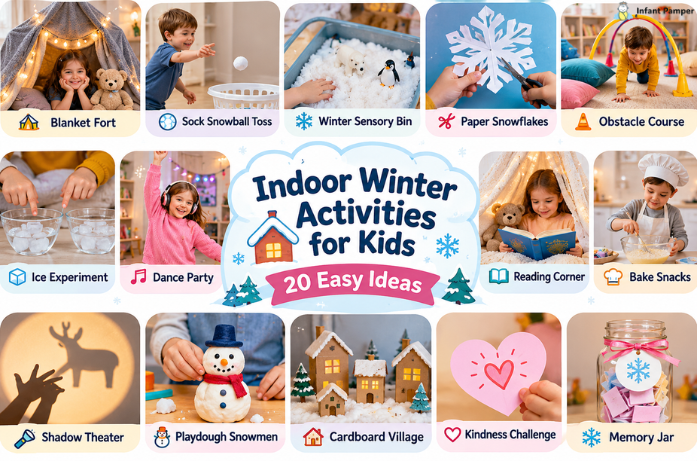
20 Easy Indoor Winter Activities for Kids
Looking for fun ways to keep your little ones busy on cold days? These simple activities use things you probably already have at home. Choose a few based on your child’s age and interests, and enjoy some playful time together.
1. Build a Cozy Blanket Fort
You’ll need: Blankets, cushions, and lightweight furniture.
Turn your living room into a little hideaway using blankets and cushions. Add your child’s favorite stuffed animals, books, or a battery-operated lantern to make it feel cozy.
Let your child pretend they’re camping in a snowy forest or hiding in a bear’s cave. It’s a fun way to encourage imagination and independent play. Just keep the fort stable and away from heaters.
2. Play Indoor Snowball Toss
You’ll need: Clean socks and a laundry basket.
Who says you need real snow for a snowball fight? Roll up a few clean white socks to make soft snowballs and place a laundry basket a short distance away.
Let your child toss the snowballs into the basket. Older kids can try throwing from farther away or counting their successful shots. It’s one of the easiest indoor winter games for kids that gets children moving without making a mess.
3. Make a Winter Sensory Bin
You’ll need: A shallow tray, large white fabric pieces, and toy animals.
Create a little winter wonderland using soft white fabric to represent snow. Add a few toy animals and let your child explore their snowy world.
They can make animal homes, pretend to walk through snow, or create their own winter stories. This activity encourages imagination and sensory exploration. Avoid small loose objects for toddlers who still put things in their mouths.
4. Create Paper Snowflakes
You’ll need: Paper, crayons, and child-safe scissors.
Bring a little winter magic indoors by making paper snowflakes. Fold paper, cut simple shapes along the edges, and unfold it to see the pattern.
Younger children can decorate pre-cut snowflakes with crayons, while older kids can try different designs. Hang their creations near a window to make a lovely winter decoration.
5. Set Up an Indoor Obstacle Course
You’ll need: Cushions, painter’s tape, and a clear floor space.
If your child has lots of energy, turn the living room into a mini obstacle course. Arrange cushions to step over, make a tape line to balance on, and create a safe crawling path.
Let your child complete the course at their own pace. This playful activity helps develop balance, coordination, and confidence. Keep everything low and away from sharp furniture.
6. Try an Ice-Melting Experiment
You’ll need: Ice cubes, two bowls, cool water, and lukewarm water.
Kids love watching things change, and this little experiment is perfect for curious minds. Place ice cubes in two bowls, adding cool water to one and lukewarm water to the other.
Ask your child which ice cubes they think will melt first. Watch together and explain how warmth makes ice turn into water. It’s a simple way to introduce early science concepts through play.
7. Play the Mitten Delivery Game
You’ll need: Clean mittens or socks and two baskets.
Turn an ordinary household task into a fun winter game. Fill one basket with mittens or socks and place an empty basket across the room.
Ask your child to deliver the warm clothes from one basket to the other. Older children can match pairs before delivering them. This easy activity encourages movement, sorting, and matching skills.
8. Create a Winter Weather Chart
You’ll need: Paper and crayons.
Make a simple weather chart with pictures of sunshine, clouds, rain, wind, and snow. Each morning, ask your child to look outside and choose the picture that matches the weather.
You can also talk about what clothes they should wear that day. At the end of the week, count the sunny and cloudy days together. It’s a fun way to introduce weather and early counting skills.
9. Have a Family Dance Party
You’ll need: Music and a little space.
When everyone starts feeling restless, put on your child’s favorite songs and have a dance party. Let them jump, wiggle, clap, and show off their funniest moves.
Try playing freeze dance by stopping the music and asking everyone to stand still. Even a short dance session can help children release energy and bring a little laughter into the day.
10. Make a Cozy Reading Corner
You’ll need: Books, cushions, and a soft blanket.
Create a comfortable reading spot with cushions and your child’s favorite books. Let them choose a story about winter, animals, or anything they enjoy.
Read together and ask simple questions like, “What do you think happens next?” It’s a lovely way to encourage language development while enjoying some quiet bonding time.
11. Open a Pretend Animal Rescue Center
You’ll need: Stuffed animals, blankets, and a cardboard box.
Tell your child that some little animals need a warm place to stay during winter. Help them turn a cardboard box into a cozy animal shelter.
Let them pretend to feed, comfort, and care for their stuffed animals. This imaginative game encourages kindness, creativity, and caring behavior.
12. Bake Simple Winter Snacks
You’ll need: Ingredients for an easy family recipe.
Cold afternoons are perfect for making something warm and delicious together. Try baking banana muffins, oatmeal cookies, or homemade bread.
Let younger children stir ingredients or arrange toppings, while older kids help measure. Cooking together introduces counting and everyday skills. Just keep little hands away from hot ovens and sharp utensils.
13. Make a Winter Shadow Theater
You’ll need: A flashlight and a plain wall.
Dim the room lights and shine a flashlight toward a wall. Show your child how to make different shadows using their hands or favorite toys.
Encourage them to create a little story about a bear, penguin, or snowy adventure. It’s an easy activity that encourages imagination and storytelling without needing special supplies.
14. Go on a Winter Color Hunt
You’ll need: Nothing special.
Turn your home into a winter treasure hunt by asking your child to find objects that remind them of winter. They might choose a white pillow, blue toy, warm sweater, or soft blanket.
For older children, give clues like, “Find something that keeps your hands warm.” This simple game helps children practice observation, color recognition, and vocabulary.
15. Make Playdough Snowmen
You’ll need: Age-appropriate playdough and simple shaping tools.
Give your child some playdough and let them roll little balls to build pretend snowmen. They can make hats, scarves, or tiny winter houses too.
Ask them to create a big snowman and a small one. Rolling and shaping playdough helps strengthen hand muscles and encourages creativity. Supervise younger children and avoid small decorations.
16. Play a Winter Listening Game
You’ll need: A few safe household objects.
Make different sounds using everyday objects, such as crinkling paper, tapping a plastic bowl, or shaking a securely closed container.
Ask your child to close their eyes and guess which object made the sound. Then switch roles and let them test you. This playful game encourages listening, attention, and language skills.
17. Build a Cardboard Winter Village
You’ll need: Empty cardboard boxes, paper, crayons, and tape.
Save a few empty tissue or cereal boxes and turn them into little winter houses. Let your child draw windows, doors, snowy rooftops, and roads.
Add toy animals or figures to bring the village to life. Older children can plan the layout, while younger kids enjoy decorating. It’s a creative project you can continue over several days.
18. Try a Cozy Kindness Challenge
You’ll need: Paper and crayons.
Write a few simple acts of kindness on paper hearts. Ideas include helping put away toys, sharing a favorite book, or drawing a picture for someone special.
Let your child pick one kindness challenge to try each day. It’s a gentle way to help children understand caring, sharing, and making others feel happy.
19. Have an Indoor Camping Adventure
You’ll need: A play tent or blanket fort, cushions, and a battery-operated lantern.
Bring the fun of camping into your living room by setting up a small pretend campsite. Add cushions, stuffed animals, and a few favorite books.
Let your child pretend they’re camping in a snowy forest. You can tell stories, sing songs, or enjoy a little indoor picnic together. It’s a fun way to encourage imagination and family bonding.
20. Start a Winter Memory Jar
You’ll need: A jar or small box, paper, and crayons.
This is one of the sweetest winter activities at home because it helps your family remember the little happy moments.
Whenever something special happens, write it on a small piece of paper or let your child draw a picture. At the end of winter, open the jar and look through the memories together. It’s a lovely way to celebrate the simple joys of childhood.
How to Keep Kids Busy Indoors Without Screens
Keeping kids entertained without screens can be tricky during winter, especially when you’re busy with household chores. But a few simple activities can help keep them busy and happy.
Try keeping a small basket filled with coloring books, puzzles, building blocks, and toys. Change the items every few days to keep things interesting. You can also let your child help with simple tasks like matching socks or watering plants.
These screen free winter activities encourage creativity, independence, and learning through play.
Mom tip: Start with short periods of independent play and slowly build up as your child gets comfortable. Always supervise younger children.
Simple Winter Activity Routine for Busy Parents
You don’t need a strict schedule to keep your child engaged.
Try balancing active and quiet activities throughout the day.
| Time | Activity |
| Morning | Dance party or obstacle course |
| Late morning | Craft or sensory play |
| After lunch | Reading or puzzles |
| Afternoon | Pretend play or science activity |
| Evening | Family storytime |
Follow your child’s mood and energy level. If they’re happily playing independently, there’s no need to interrupt.
Safety Tips for Indoor Winter Play
A few simple precautions can help make playtime safer.
- Keep small craft materials away from toddlers.
- Supervise activities involving water, ice, or scissors.
- Keep play areas away from heaters and fireplaces.
- Avoid unstable furniture and high climbing obstacles.
- Choose toys and materials suitable for your child’s age.
Most importantly, adapt activities to your child’s abilities rather than expecting every child to play the same way.
Frequently Asked Questions
1. What are the best indoor activities for toddlers during winter?
Stacking blocks, dancing, picture books, simple sensory play, and pretend games are good choices. Keep activities short, safe, and age-appropriate.
2. How can I entertain kids indoors without spending money?
Try blanket forts, sock snowball toss, paper crafts, treasure hunts, and homemade obstacle courses. Most use things already available at home.
3. What can kids do indoors when they’re bored?
Offer a few choices such as puzzles, drawing, pretend play, building blocks, or movement games. Allowing children to choose can encourage independent play.
4. How can I keep energetic kids active during winter?
Dance parties, obstacle courses, movement challenges, and soft-ball tossing games help children stay active indoors.
5. How long should indoor activities last for toddlers?
There’s no fixed time. Some toddlers enjoy an activity for just a few minutes, while others stay interested longer. Follow your child’s attention and energy level.
Final Thoughts
Keeping kids happy and active during winter doesn’t have to be difficult or expensive. Simple indoor winter activities for kids, like building blanket forts, playing games, or making crafts, can keep little ones entertained while helping them develop creativity, problem-solving skills, and coordination.
Remember, you don’t need to plan activities for every hour of the day. Let your child explore, make a little mess, and enjoy playing at their own pace. Even 15–20 minutes of playing together can be a lovely way to connect and make your child feel special.
At Infant Pamper, we believe the best childhood memories often come from simple moments at home. So pick a few activities your child enjoys, join in whenever you can, and make those chilly winter days a little more fun for the whole family.
Disclaimer
The activities shared in this article are for general information and entertainment purposes. Always choose age-appropriate activities and supervise young children, especially when using small objects, scissors, or water.