Written by a Caring Mom at Infant Pamper
The first few weeks after birth are filled with cuddles, feeding, broken sleep, and physical recovery. During this time, many moms also notice postpartum back pain, especially while feeding, lifting the baby, getting out of bed, or bending over the crib.
Pregnancy changes your posture, stretches your core muscles, and puts extra pressure on your back and pelvis. After delivery, repeated lifting, carrying, and awkward feeding positions can make your back feel sore or stiff.
Simple changes in posture, lifting habits, rest, and gentle movement may help. If the pain is severe, worsening, or comes with unusual symptoms, speak with a healthcare professional.
Table of Contents
- Is Postpartum Back Pain Normal?
- What Causes Postpartum Back Pain?
- Where Does Postpartum Back Pain Usually Hurt?
- Can an Epidural Cause Back Pain After Birth?
- Simple Ways to Ease Postpartum Back Pain
- Do Not Ignore Your Core and Pelvic Floor
- When Should You Call Your Doctor?
- Frequently Asked Questions
- Final Thoughts
- Disclaimer
Is Postpartum Back Pain Normal?
Some back discomfort is common after pregnancy and childbirth.
During pregnancy, your growing belly changes your center of gravity. Your abdominal muscles stretch, your posture changes, and the joints around your pelvis become more flexible.
After delivery, your body begins another adjustment.
You may now spend hours feeding, holding, rocking, and carrying your baby. You also bend over cribs, bassinets, changing tables, and car seats many times each day.
Mild soreness that slowly improves can be part of recovery. But pain that is severe, continues to worsen, or stops you from doing normal activities should not simply be ignored.
Research also shows that back pain can continue beyond the early postpartum weeks for some women. A recent study published in PubMed Central (PMC) explored postpartum low back pain and its impact on mothers during recovery.
What Causes Postpartum Back Pain?
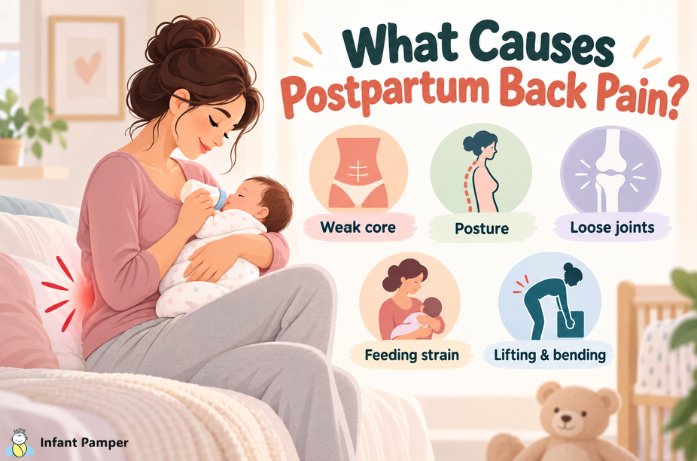
There usually is not just one reason your back hurts after having a baby. Your body is still recovering from pregnancy, while at the same time you are feeding, lifting, carrying, and caring for your little one all day.
1. Your Core Muscles Are Still Healing
During pregnancy, your abdominal muscles stretch a lot to make room for your growing baby.
After birth, they need time to become strong again. Until then, your back may end up doing more of the work when you stand, lift, or carry your baby.
This can lead to back pain postpartum, even if back pain was never a problem for you before.
2. Your Posture Has Changed
As your belly grows during pregnancy, the way you stand and walk naturally changes too. You may lean back a little more or put extra pressure on your lower spine without even noticing it.
These posture habits can stay with you for a while after delivery. Add long feeding sessions and hours of carrying your baby, and your back can start to feel the strain.
3. Your Joints Are Still Adjusting
Pregnancy hormones make the ligaments around your pelvis and joints more flexible. Those changes do not disappear right after your baby is born.
For a while, your hips, pelvis, and lower back may feel less supported than usual. This is why good posture and careful lifting can be especially helpful during recovery.
4. Feeding Positions Can Strain Your Back
Newborn feeding sessions can be long, and it is very easy to slowly hunch forward without realizing it. Your shoulders may round, your neck may bend, and your back can stay in the same position for quite a while.
Doing this several times a day may contribute to upper back pain postpartum.
Try bringing your baby closer to you with pillows instead of leaning your whole body forward.
5. You Are Bending and Lifting All Day
Newborn care involves much more bending than most moms expect. You are lifting your baby from the crib, changing diapers, carrying the car seat, picking things up, and moving baby gear throughout the day.
One bend may not seem like much, but doing it again and again can tire already sore muscles.
Whenever you can, move close to your baby before lifting, bend your knees, and keep your baby close to your body as you stand.
Where Does Postpartum Back Pain Usually Hurt?
The location of the pain may give you some clues, although it cannot tell you the exact cause.
Lower Back
Postpartum lower back pain may feel like stiffness, aching, pressure, or tiredness around the waist and lower spine.
It may become worse after standing for a long time, carrying your baby, or getting up after sitting through a feeding.
Core weakness, posture changes, pelvic strain, and repeated lifting may all contribute.
Upper and Middle Back
Pain between the shoulders or around the upper back is often connected with feeding posture, pumping, rocking, or carrying your baby.
Looking down at your newborn for long periods can also strain the neck and shoulder muscles.
Hips, Buttocks, or Pelvis
Sometimes discomfort that feels like back pain may actually come from the pelvic area.
You may notice pain while climbing stairs, getting out of bed, rolling over, or standing on one leg.
If these movements continue to hurt, ask your healthcare provider whether a pelvic health physical therapist could help.
Pain Going Down the Leg
Pain that travels from your back or buttock into your leg may involve irritation of the sciatic nerve.
However, significant numbness, weakness, difficulty walking, or loss of bladder or bowel control should be checked urgently.
Can an Epidural Cause Back Pain After Birth?
Many moms wonder whether an epidural is responsible for their back discomfort.
Temporary soreness around the injection area can happen after an epidural or spinal anesthetic.
However, ongoing back discomfort after childbirth can also be caused by pregnancy-related muscle and posture changes, weakened core muscles, physical strain, and repetitive newborn care.
If you have severe pain near the injection area, fever, weakness, numbness, or difficulty walking, contact a healthcare professional.
Simple Ways to Ease Postpartum Back Pain
You do not need an hour-long exercise routine or complicated recovery plan.
Small changes throughout the day can make a difference.
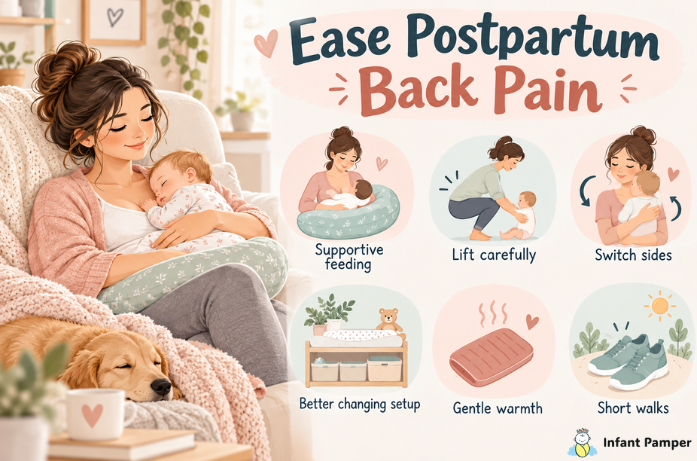
1. Create a Supportive Feeding Position
Choose a comfortable chair or bed position where your back is supported.
Place a pillow behind your lower back if needed. Use nursing or regular pillows to bring your baby higher so you do not have to lean forward.
Keep your shoulders relaxed.
Every now and then, check your body during a feed. If you notice yourself curling forward, adjust your position.
2. Lift Your Baby Carefully
Move close to your baby before lifting.
Try not to bend forward from your waist while reaching with outstretched arms.
If possible, bend your knees and use your legs to help you stand.
Keep your baby close to your body when lifting instead of holding them far away from you.
3. Switch Carrying Sides
Many moms naturally carry their baby on the same hip every time.
Over time, this can make one side of your body work harder than the other.
Try changing sides throughout the day or holding your baby centered against your chest when possible.
4. Adjust Your Changing Area
If your changing table is too low, you may spend every diaper change hunched over.
Use a comfortable surface and keep diapers, wipes, creams, and clean clothes nearby.
You may only save yourself a few bends each time, but those bends add up over the day.
5. Try Gentle Warmth
A warm shower or heating pad may help relax tight muscles.
Keep the temperature comfortable and protect your skin.
If you had a C-section, ask your healthcare provider before placing heat around your incision or nearby healing areas.
6. Take Short Walks
When medically safe, gentle walking can help reduce stiffness and rebuild strength.
The American College of Obstetricians and Gynecologists (ACOG) also recommends gradually returning to physical activity after childbirth based on your individual recovery and medical situation.
You do not need to walk far. Even a few comfortable minutes around the house or outside may help you feel less stiff.
Increase movement gradually and stop if an activity makes your pain significantly worse.
A Simple Daily Back Check for Busy Moms
With a newborn, finding time for a full self-care routine can feel impossible. A quick posture check during the day can be much more realistic.
Notice whether your shoulders are tight, you are leaning on one hip, or you are bending too far forward while feeding or carrying your baby.
Before lifting, move closer to your baby. Before feeding, support your back and arms with pillows. Keep diapering essentials within easy reach to avoid repeated bending.
These small habits may seem simple, but because you repeat them many times a day, they can help reduce extra strain on your back.
Do Not Ignore Your Core and Pelvic Floor
Your back does not work alone.
Your abdominal muscles, pelvic floor, hips, glutes, and back all work together to support your movements.
After pregnancy and childbirth, these muscles may need time and gentle rehabilitation.
Some moms may also notice abdominal separation, pelvic pressure, urine leakage, weakness, or discomfort during movement.
If you are experiencing these symptoms along with back pain, ask your healthcare provider whether pelvic floor physical therapy would be suitable.
A physical therapist can assess your posture, core, pelvic floor, and movement patterns and recommend exercises based on your individual recovery.
When Should You Call Your Doctor?
Mild muscle soreness may gradually improve, but some symptoms deserve medical attention.
Contact your healthcare provider if your pain in lower back postpartum is becoming worse, is very painful, lasts longer than expected, regularly wakes you from sleep, or makes it difficult to walk, lift your baby, or complete ordinary daily activities.
You should also seek medical advice if back pain happens along with:
- Fever or chills
- Burning or pain when urinating
- New numbness or weakness
- Difficulty walking
- Loss of bladder or bowel control
- Severe abdominal or pelvic pain
- Heavy vaginal bleeding
- Redness, swelling, or drainage around an incision
- One-sided leg pain or swelling
- Chest pain
- Trouble breathing
- Severe headache with vision changes
The CDC Hear Her campaign also highlights important maternal warning signs that should not be ignored after childbirth, including symptoms that may require urgent medical attention. These symptoms may have causes that need more than home care.
If you feel that something is unusual or significantly different from ordinary muscle soreness, it is reasonable to speak with a healthcare professional.
Give Your Body Time to Recover
In the early weeks of motherhood, it is easy to give all your attention to your baby and forget that your body is still healing too.
Try to notice when you are feeling tired, sore, or uncomfortable instead of pushing through everything. Even a short rest while someone else holds the baby can help.
Let others help with lifting, laundry, or small household tasks when possible. Keep frequently used baby items nearby so you do not have to bend and reach all day.
Your body has been through pregnancy and birth, so give it time, support, and a little extra care while you recover.
Frequently Asked Questions
Final Thoughts
Your body goes through a lot during pregnancy, birth, and the weeks that follow. On top of healing, you are suddenly spending hours feeding, lifting, carrying, rocking, and bending over your baby, so some back soreness can be understandable.
For many moms, postpartum back pain improves gradually with better posture, careful lifting, supportive feeding positions, gentle movement, and time for the core and pelvic muscles to recover.
Still, pain should not be ignored if it becomes severe, keeps getting worse, or starts affecting your ability to walk, sleep, or care for your baby. Symptoms such as fever, numbness, weakness, heavy bleeding, urinary problems, or trouble breathing also need medical attention.
Recovery looks different for every mom. Give your body time, accept help when you can, and speak with your healthcare provider if something does not feel right.
If you are dealing with postpartum back pain, be kind to your body and give yourself time to recover. Explore more practical postpartum and baby-care tips on Infant Pamper to make this stage a little easier.
Disclaimer
This article is for general informational purposes only and is not a substitute for professional medical advice, diagnosis, or treatment. Always speak with your healthcare provider if you have concerns about postpartum pain or recovery.
About the Author
Geeta Yogi is a parenting writer who shares practical guidance about postpartum recovery, newborn care, maternal wellness, and everyday motherhood. Her writing focuses on helping new moms understand common recovery concerns and find realistic ways to care for their bodies while adjusting to life with a baby.