
Written by a caring mom at Infant Pamper
Pregnancy generates a mix of feelings and emotions at the same time. It is a joyous occasion, where the thoughts of the baby bring excitement, but there are always some trivial queries that keep coming up like when to visit the doctor, what things to buy, and if anything essential is being missed at any time.
The solution is to have a simple pregnancy do list that helps. In my experience, focusing on everything simultaneously makes the whole process too overwhelming. It does make sense to deal with things on a monthly basis since one can sort out important issues and take time to rest whenever needed.
In this guide, you will be able to learn about the various important factors to consider while going through the different stages of pregnancy without causing any feeling of stress.
Table of Contents
- Why a Pregnancy To-Do List Can Be Helpful
- Pregnancy To-Do List: Month-by-Month Guide
- Month 1: Confirm Your Pregnancy and Start Simple
- Month 4: Start Planning Without Rushing
- Month 6: Handle the Practical Stuff
- Month 8: Pack and Prepare for Coming Home
- Month 9: Stop Adding More Tasks
- Prepare Your Home for You Too
- Frequently Asked Questions
- Final Thoughts
Why a Pregnancy To-Do List Can Be Helpful
Pregnancy brings a lot of small responsibilities. There are appointments, questions, baby items, work plans, family decisions, and practical things that can easily pile up in your mind.
Writing things down can help you feel more organized and less mentally crowded. Instead of worrying about everything that still needs to happen, you can focus on what matters right now.
Your timeline may also look different from another mom’s. The American College of Obstetricians and Gynecologists (ACOG) explains that prenatal care can be adjusted depending on your health, pregnancy, and individual needs. That is why this checklist is best used as a planning guide, while medical decisions should always follow your doctor or midwife’s advice.
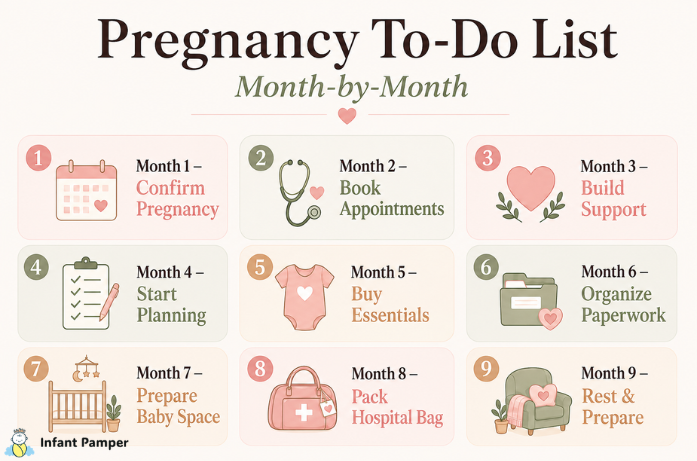
Pregnancy To-Do List: Month-by-Month Guide
Pregnancy does not always fit perfectly into calendar months, so think of this as a flexible guide rather than a strict schedule. Some appointments or tests may happen earlier or later depending on your pregnancy.
Month 1: Confirm Your Pregnancy and Start Simple
The first month can feel very emotional. You may be excited, surprised, nervous, or all three at once.
Start with the basics. Schedule prenatal care, note the first day of your last period if you remember it, and make a list of any medicines, vitamins, or supplements you currently take.
ACOG recommends beginning prenatal care during the first trimester when possible. It also advises discussing medications with a healthcare professional instead of stopping prescribed medicines on your own.
This is also a good time to ask about a prenatal vitamin. Most moms are advised to take folic acid during pregnancy, but your provider can tell you what amount is right for you.
Most importantly, do not feel pressure to start shopping immediately. You have time.
Month 2: Prepare for Your First Appointments
By the second month, pregnancy symptoms may become more noticeable. You may feel tired, nauseous, emotional, or simply not quite like yourself.
Keep a note on your phone with any questions you want to ask at your appointment. It is very easy to forget them once you are sitting in the doctor’s office.
Gather basic health information, including previous pregnancy history, medications, allergies, and any family health details your provider may ask about.
At home, make life easier where you can. Keep simple snacks nearby, drink enough fluids, and lower your expectations for housework if your energy is low.
Your healthcare provider may also discuss different screening tests during pregnancy, and the timing can vary depending on the test and your individual care plan.
Month 3: Think About Support
Around month three, you may begin thinking more seriously about who you want around you during pregnancy and after the baby arrives.
Talk with your partner, family members, or trusted friends about the kind of support you may need later.
It can also be a useful time to look into insurance coverage, maternity benefits, workplace policies, and parental leave.
These practical tasks may not feel exciting, but handling them early can remove stress later.
You can also begin thinking about when and how you want to share your pregnancy news. There is no perfect time. Choose what feels comfortable for you.
Month 4: Start Planning Without Rushing
For many moms, the second trimester brings a little more energy.
If you are feeling better, this can be a good time to research bigger decisions such as baby gear, maternity clothes, childbirth classes, childcare, and sleeping arrangements.
You may also want to create a simple baby budget.
Try dividing purchases into three groups: things you definitely need, things you may borrow or buy second-hand, and things that can wait until after the baby arrives.
This can help prevent overspending and reduce the pressure to buy everything at once. If you are feeling well and your healthcare provider is comfortable with it, gentle activities such as pregnancy yoga may also help you stay active and relaxed as your body changes.
Month 5: Focus on Baby Basics
Month five is often when baby preparation starts to feel more real.
You may be feeling more movement, and your attention may naturally shift toward what the baby will need.
Start with essentials such as basic clothing, diapers, feeding supplies, a safe sleep space, and transportation items like a car seat.
Try not to buy every product just because someone online says you need it. Babies often need less than we think.
This is also around the time many parents have a mid-pregnancy ultrasound. The NHS includes a detailed anatomy scan during this stage of pregnancy, although your exact timing should follow your healthcare provider’s advice.
Month 6: Handle the Practical Stuff
Month six is a good time for the less exciting but very useful tasks.
Review your insurance details, ask about maternity leave, organize important paperwork, and research childcare if you will need it.
You may also want to discuss birth preferences with your healthcare provider.
I prefer the word “preferences” instead of “plan” because birth can be unpredictable. It is helpful to know what matters to you, but it is also okay if things change.
If you have older children or pets, think about who will care for them when labor begins.
This is where a pregnancy to do list by month can really help because it stops all these jobs from piling up at the end.
Month 7: Prepare the Baby Areas
By month seven, you are entering the third trimester.
Now is a good time to prepare the areas of your home you will actually use every day.
Wash a small amount of baby clothing, organize diapers, set up a changing area, and decide where feeding supplies will be kept.
You do not need a perfectly decorated nursery. A practical, comfortable setup matters much more.
If you are interested in childbirth, breastfeeding, infant care, or CPR classes, this can also be a good time to take them.
Keep attending prenatal appointments and ask questions whenever something is unclear.
Month 8: Pack and Prepare for Coming Home
Month eight is when many moms start feeling ready to have things in place.
Pack your hospital or birth-center bag with comfortable clothes, toiletries, chargers, important documents, and baby clothes for going home.
Make sure the car seat is ready and that you know how you will get to your hospital or birth center.
But do not only prepare for the birth. Think about the first few days after you come home too.
Stock easy meals, snacks, water, and basic household supplies.
You may also want to create a small postpartum station with the items you expect to use most.
Most importantly, decide who can help you after delivery. Specific help is often easier to accept than a general “call me if you need anything.”
Month 9: Stop Adding More Tasks
The final month can make you feel like everything suddenly needs to be finished.
It does not.
Check that your hospital bag is easy to grab, your important contacts are saved, and your transportation plan is clear.
Know how your healthcare provider wants you to contact them if you think labor has started or if something worries you.
The NHS advises pregnant women to contact their maternity team when they have concerns rather than simply waiting for the next appointment.
After that, give yourself permission to slow down.
Your baby will not care if every drawer is labeled or if the nursery is completely finished.
Prepare Your Home for You Too
One thing many pregnancy checklists forget is that a tired mom will be coming home too.
Think about your comfort after birth.
Where will you sit to feed the baby? Where will you keep water? Can you reach diapers without walking across the house every time?
Keep easy snacks and simple meals available.
This type of preparation may not look as cute as a decorated nursery, but it can be far more useful during the early days.
Make a “Can Wait” List
Pregnancy can make ordinary household tasks suddenly feel urgent.
You may start thinking you need to organize closets, repaint a room, clear the garage, or buy months of baby clothes.
You probably do not.
Create a small list of things you are giving yourself permission to leave unfinished.
It can be surprisingly calming.
Not everything needs to happen before the baby arrives.
Keep One Pregnancy Folder
A simple folder can save you a lot of confusion.
You can use a notebook, phone folder, or physical file for appointment notes, insurance details, hospital information, test paperwork, and questions.
After each appointment, write down only three things: what you learned, what happens next, and what you need to remember.
That makes pregnancy information much easier to manage.
Frequently Asked Questions
Final Thoughts
Pregnancy can make even small decisions feel important when you are preparing for your baby and caring for yourself at the same time. A pregnancy to do list should help you feel more organized and calm, not add extra pressure.
Some months you may get a lot done, while other months rest and appointments may be enough. Take things one step at a time, ask for help when you need it, and remember that thoughtful preparation matters more than doing everything perfectly.
Getting ready for baby? Take your pregnancy to do list one step at a time, and explore more gentle pregnancy tips on Infant Pamper.
Disclaimer
This article is for general informational purposes only and is not a substitute for medical advice. Always follow guidance from your doctor, midwife, or qualified healthcare provider.
About the Author
Geeta Yogi is a parenting writer who shares practical, caring guidance for expecting moms on pregnancy planning, baby preparation, everyday organization, and preparing for life after birth. Her writing focuses on helping mothers take pregnancy one manageable step at a time without feeling pressured to do everything perfectly.