Written by a caring mom at Infant Pamper
When you are six weeks pregnant, your stomach hasn’t changed in appearance yet, although there’s a lot going on underneath the surface. At six weeks pregnant, you might be noticing 6 week pregnancy symptoms starting to develop. Exhaustion, mood swings, nausea, bloating, and an inability to handle smells that you previously tolerated just fine could all be coming up for you now.
Or you might feel almost totally fine.
Either way is perfectly healthy. Every woman reacts differently to pregnancy hormones. Don’t make the mistake of comparing your experience to another pregnant woman’s at this stage. Whatever symptoms you’re having or not having, this guide will give you some insight into what you might expect to see at six weeks pregnant.
What Is Happening at Six Weeks Pregnant?
Six weeks into your pregnancy is the early stage of your first trimester, where even though your baby is tiny, his early growth is proceeding rapidly. During this stage, your baby’s early structures are beginning to form, and your body is making important changes to support the pregnancy. You can learn more about your baby’s development at this stage from Kids Health’s guide to week 6 of pregnancy. The hormones in your body are also working hard to help in the development of your pregnancy.
The hormonal change that occurs is responsible for many of the symptoms that are experienced in pregnancy week 6. These symptoms include tenderness in breasts, feeling tired, nausea, changes in mood, aversion to food, going to the toilet frequently, and an increase in sensitivity of smell. Symptoms such as nausea occur during weeks four to six. However, the timing will vary from woman to woman.
You will also find yourself having conflicting emotions because sometimes you feel happy and protective, and then suddenly, you feel nervous and tearful. Early pregnancy means many emotions all at once especially when you are eagerly awaiting your first check-up or ultrasound.
Allow yourself to go through one day at a time
Common 6 Week Pregnancy Symptoms
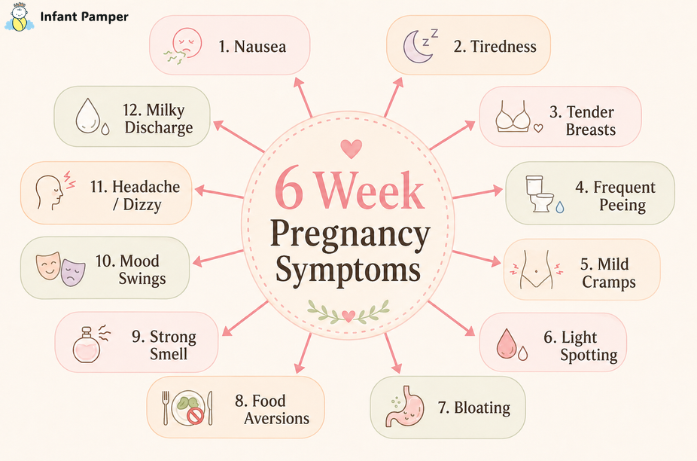
The most common pregnancy symptoms at 6 weeks can feel mild for some moms and more intense for others. Symptoms may also come and go, so one day can feel very different from the next.
Here are some common changes you may notice during week six.
1. Nausea or Morning Sickness
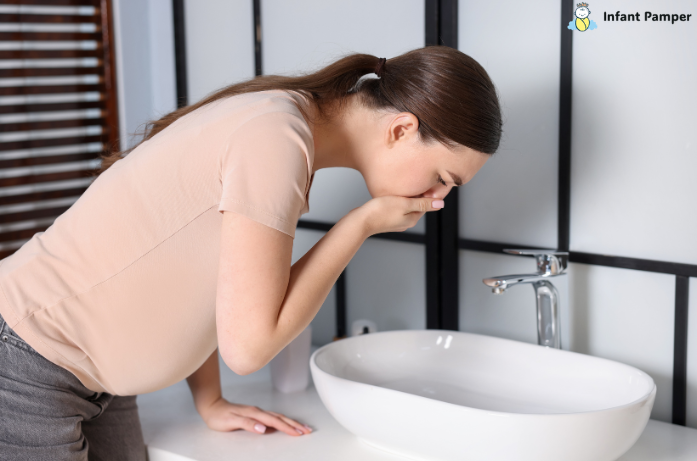
Morning sickness can happen at any time of day, not just in the morning. You may feel queasy, avoid certain foods, or experience occasional vomiting.
Try eating a plain cracker before getting out of bed and choose small meals throughout the day. Cold foods and slow sips of water may also feel easier on your stomach.
2. Extreme Tiredness
Feeling unusually tired is one of the most common 6 week pregnancy symptoms. Even after a full night’s sleep, your body may still crave extra rest.
Take short naps, go to bed earlier, and slow down when you need to. Resting is not laziness your body is working hard to support your pregnancy.
3. Sore or Tender Breasts
Your breasts may feel swollen, heavy, sensitive, or tingly. Your nipples may also become more tender than usual.
A soft, supportive bra can help reduce discomfort. Some moms also find a light sleep bra helpful at night.
4. Frequent Urination
You may need to visit the bathroom more often, even during the night. Hormonal changes and increased blood flow can make your kidneys work harder.
Continue drinking enough water. Contact your doctor if urination causes burning, pain, fever, or discomfort.
5. Mild Cramping
Gentle, period-like cramps can happen as your uterus begins adjusting to pregnancy. Mild cramps that come and go are often normal.
Rest, change positions, and stay hydrated. Seek medical advice for severe pain, one-sided pain, faintness, or cramps with heavy bleeding.
6. Light Spotting
Light pink, red, or brown spotting can sometimes occur in early pregnancy. Although it may not always mean something is wrong, bleeding should still be discussed with your healthcare provider.
Get urgent medical help if bleeding becomes heavy or is accompanied by severe pain, dizziness, shoulder pain, weakness, or fainting.
7. Bloating and Gas
Your clothes may feel tighter even though your baby bump is not visible yet. Pregnancy hormones can slow digestion and cause bloating, gas, or constipation.
Smaller meals, gentle walking, fiber-rich foods, and plenty of water may help ease discomfort.
8. Food Cravings and Aversions
Foods you once loved may suddenly seem unappealing, while you may begin craving new flavors. These changes are common during early pregnancy.
On difficult nausea days, choose simple foods you can keep down, such as toast, rice, bananas, soup, yogurt, potatoes, or cold fruit.
9. A Stronger Sense of Smell
Perfume, coffee, cooking food, or cleaning products may suddenly smell much stronger. This heightened sense of smell can also trigger nausea.
Open windows, choose fragrance-free products, and ask someone else to cook when strong food smells bother you.
10. Mood Swings
You may feel happy one moment and emotional or irritated the next. Hormones, tiredness, and early pregnancy worries can all affect your mood.
Be gentle with yourself and talk to someone you trust. Contact your healthcare provider if sadness or anxiety feels intense or difficult to manage.
11. Headaches or Dizziness
Hormonal changes, dehydration, tiredness, or low blood sugar can cause mild headaches or dizziness.
Eat regular meals, drink water, and stand up slowly. Check with your doctor before taking any medicine during pregnancy.
12. Increased Vaginal Discharge
You may notice more thin, white, or milky discharge than usual. Normal pregnancy discharge should not have a strong smell or cause itching and pain.
Speak with your healthcare provider if the discharge becomes green, yellow, bloody, strongly scented, or uncomfortable.
The NHS explains that many early pregnancy changes, including nausea, tiredness, increased urination, and breast tenderness, are common around the sixth week of pregnancy.
Is It Normal to Have No Pregnancy Symptoms at 6 Weeks?
Yes, it is possible to be six weeks pregnant and have few or no noticeable symptoms.
Many worried moms search for “no pregnancy symptoms 6 weeks” because they are afraid that feeling normal means something is wrong. However, symptoms vary greatly. Some women experience strong nausea and exhaustion, while others only notice a missed period or mild breast tenderness.
Symptoms may also come and go. You might feel nauseated one day and much better the next. Breast soreness can decrease temporarily, and your energy level may change depending on how well you slept or ate.
A lack of symptoms alone cannot tell you how a pregnancy is progressing. Pregnancy tests, medical assessments, and ultrasounds provide more useful information than comparing symptoms.
Still, contact your healthcare provider if symptoms suddenly disappear and you also have heavy bleeding, strong cramps, severe pain, dizziness, or another worrying change.
Pregnancy Symptoms of Twins at Week 6
Some women carrying twins experience stronger early pregnancy symptoms because hormone levels may be higher. Possible pregnancy symptoms of twins at week 6 can include more noticeable nausea, vomiting, breast tenderness, exhaustion, or appetite changes.
However, these symptoms are not proof that you are carrying twins. A woman carrying one baby can have intense symptoms, while a woman carrying twins may feel relatively well. Ultrasound is the reliable way to find out whether there is more than one baby. ing for symptoms of pregnancy at 6 weeks with twins may also wonder whether early bloating or a larger-looking belly is a sign. At this stage, bloating is common in both singleton and twin pregnancies, so belly size cannot provide a clear answer.
Try to enjoy the possibility without placing too much meaning on individual symptoms. Your healthcare provider will guide you on the appropriate timing for an ultrasound.
Practical Ways to Feel Better at Six Weeks
Early pregnancy may feel easier when you stop expecting yourself to function exactly as you did before.
Eat small meals every few hours instead of waiting until you feel extremely hungry. Keep simple snacks beside your bed or in your bag, especially if nausea appears suddenly.
Sip water regularly. Lemon water, ice chips, diluted juice, or a pregnancy-safe oral rehydration drink may be easier to tolerate when plain water feels unpleasant.
Rest before you become completely exhausted. A ten-minute break can sometimes prevent the heavy, shaky tiredness that arrives after doing too much.
Wear comfortable clothing that does not press against your bloated stomach or tender breasts. Fresh air, gentle movement, and a calm bedtime routine may also help.
Most importantly, ask for support. Let someone else prepare dinner, carry heavy shopping bags, or handle a household task. Needing help does not make you weak it means you are listening to your body.
When Should You Contact a Doctor?
Call your healthcare provider if you are worried about any symptom, even if it is not listed here. You know your body, and it is always reasonable to ask for guidance.
Seek prompt medical attention for:
- Heavy bleeding or bleeding that soaks through a pad
- Severe or worsening abdominal or pelvic pain
- Strong pain mainly on one side
- Shoulder pain with abdominal pain or bleeding
- Fainting, severe dizziness, or unusual weakness
- Fever or chills
- Persistent vomiting or an inability to keep fluids down
- Signs of dehydration, such as very dark urine or barely urinating
- Pain or burning while urinating
Severe and persistent vomiting can lead to dehydration and may be a sign of hyperemesis gravidarum, a condition that requires medical care. about “bothering” your healthcare team. Supporting and reassuring you is part of their job.
Preparing for Your First Pregnancy Appointment
Your first prenatal appointment may still be a few weeks away, depending on your healthcare provider and personal medical history.
Before the visit, write down the first day of your last menstrual period if you remember it. Keeping track of your symptoms, questions, and important dates can help you feel more prepared for your first appointment. The American Pregnancy Association’s guide to being 6 weeks pregnant also shares helpful information about early pregnancy changes and what to expect during this time. Make a list of any medicines, vitamins, herbal products, or supplements you use.
You can also note questions as they come to you. Pregnancy appointments can feel emotional, and it is easy to forget what you wanted to ask once you are in the room.
Ask your provider about prenatal vitamins, safe exercise, foods to avoid, medications, vaccinations, and any medical conditions that may affect your pregnancy.
Until then, avoid starting or stopping prescription medicine without medical advice.
A Gentle Reminder About Early Pregnancy Anxiety
Six weeks can be an emotionally tender stage. You know you are pregnant, but you may not have had an ultrasound yet. Your body feels different, but there may be little visible evidence of the changes happening inside you.
This waiting period can make every cramp, symptom, or symptom-free morning feel important.
Try not to check your body constantly for reassurance. Symptoms are naturally inconsistent, and repeated searching can sometimes increase anxiety rather than calm it.
Choose one or two trusted sources of information and reach out to your healthcare provider when you have a genuine concern. Then allow yourself to step away from pregnancy searches and do something comforting.
You deserve moments of peace during this journey too.
Final Thoughts
The first weeks of pregnancy can feel like a mixture of happiness, uncertainty, tiredness, and hope. Your 6 week pregnancy symptoms may be strong, mild, inconsistent, or almost completely absent and each of those experiences can be normal.
Listen to your body, rest without guilt, eat what you can manage, and ask for help when you need it. Contact your healthcare provider whenever something feels worrying or unusual.
You do not need to have every answer today. For now, take this pregnancy one gentle day at a time. Your body is working quietly and beautifully, even when you cannot yet see all the changes taking place.
Frequently Asked Questions
Every pregnancy journey is different. Explore more helpful pregnancy guides on Infant Pamper to feel informed, supported, and confident.
Medical Disclaimer
This article provides general educational information and is not a substitute for medical advice, diagnosis, or treatment. Contact your doctor, midwife, or another qualified healthcare professional with questions about your pregnancy or symptoms.