As a caring mom at Infant Pamper
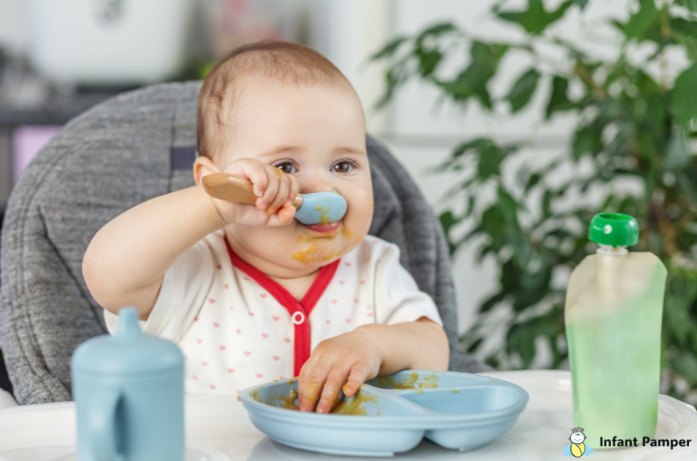
I know how exciting it feels when your baby starts showing interest in family meals. One day they are happily eating mashed banana, and the next they are reaching for the curry, seasoned rice, or spicy soup on your plate. That little curious hand can make any parent wonder, when can babies eat spicy food?
The simple answer is: most babies can begin trying mildly spiced foods around 8 to 12 months old, once they are already comfortable with solids. But this does not mean giving your baby hot sauce, chili flakes, or very spicy dishes. It means gently introducing warm, flavorful spices in a safe and baby-friendly way.
Every baby is different. Some little ones enjoy new flavors quickly, while others need more time. And that is completely okay.
When Can Babies Eat Spicy Food Safely?
Most babies can try mild spices between 8 and 12 months, especially if they are already eating fruits, vegetables, grains, and protein foods well.
At this age, babies are usually more comfortable with different textures and tastes. Their digestion is also becoming stronger compared to the early days of starting solids.
But there is a big difference between flavorful food and hot spicy food. Mild spices like cinnamon, cumin, turmeric, garlic, ginger, and sweet paprika can be introduced slowly. Strong chili, hot sauce, cayenne pepper, and spicy packaged foods should be avoided.
A good rule is this: if the food burns your mouth or makes you reach for water, it is too spicy for your baby.
Can Babies Eat Spicy Food?
Yes, babies can eat spicy food when it is mild, simple, and introduced carefully. In many cultures, babies grow up eating gently seasoned family foods from an early age.
The problem is usually not the spice itself. The real issue is often too much heat, salt, oil, or processed seasoning. Adult spicy foods can be too strong for a baby’s delicate mouth and stomach.
If your baby eats something too spicy, they may become fussy, refuse food, drool more, or have mild tummy discomfort. Usually, this is temporary and not dangerous.
Why Mild Spices Can Be Good for Babies
Many parents think baby food must always be plain, but babies can enjoy flavor too. Introducing gentle spices may help your baby become more open to different foods later.
Mild flavors can help your baby:
- Enjoy family meals
- Build curiosity around food
- Accept different tastes
- Become less picky over time
- Connect with family food traditions
Food is not only about nutrition. It is also about comfort, culture, smell, and family connection.
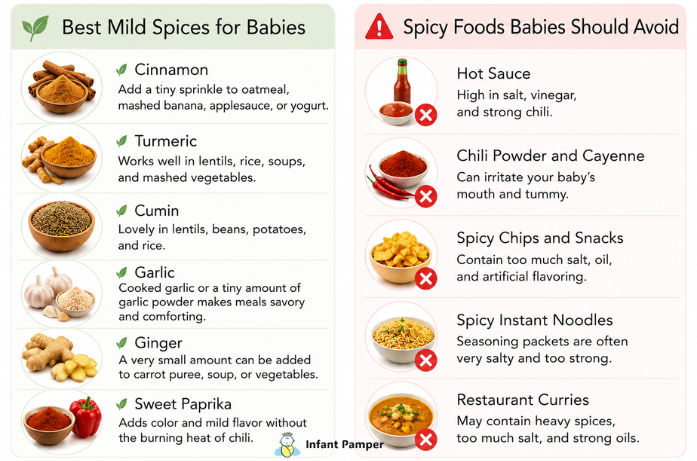
Best Mild Spices for Babies
Cinnamon: Cinnamon is a lovely first spice for babies. Add a tiny sprinkle to oatmeal, mashed banana, applesauce, or yogurt.
Turmeric: Turmeric has a soft earthy flavor. It works well in lentils, rice, soups, and mashed vegetables.
Cumin: Cumin adds gentle warmth without heat. It is lovely in lentils, beans, potatoes, and rice.
Garlic: Cooked garlic or a tiny amount of garlic powder can make baby meals taste savory and comforting.
Ginger: A very small amount of fresh ginger can be added to carrot puree, soup, or soft vegetables.
Sweet Paprika: Sweet paprika adds color and mild flavor without the burning heat of chili.
Spicy Foods Babies Should Avoid
Some spicy foods are too harsh for babies and should be saved for later.
Hot Sauce: Hot sauces are usually high in salt, vinegar, and strong chili.
Chili Powder and Cayenne: These can irritate your baby’s mouth and tummy.
Spicy Chips and Snacks: These are not suitable for babies because they contain too much salt, oil, and artificial flavoring.
Spicy Instant Noodles: The seasoning packets are often very salty and too strong for babies.
Restaurant Curries: Restaurant foods may contain heavy spices, too much salt, and strong oils.
Signs Your Baby Is Ready for Mild Spices
Your baby may be ready if they:
- Eat solids comfortably
- Handle soft textures well
- Show interest in family meals
- Enjoy trying new foods
- Do not have frequent tummy troubles
If your baby has reflux, food allergies, eczema, or a sensitive stomach, it is better to ask your pediatrician before introducing stronger flavors.
How to Start Introducing Spicy Food to Babies
When introducing new flavors, follow simple baby feeding tips and start with one spice at a time to observe your baby’s reaction.
Start With Familiar Foods
Add one tiny pinch of spice to a food your baby already likes. For example, add cinnamon to oatmeal or cumin to lentils.
Use One Spice at a Time
This makes it easier to notice if your baby reacts badly.
Keep the Amount Very Small
Babies do not need strong flavor. A tiny amount is enough.
Watch Your Baby Closely
Look for rash, vomiting, diarrhea, bloating, or unusual fussiness.
Do Not Force It
If your baby makes a face or refuses the food, try again another day. Babies often need many tries before accepting a new flavor.
As your baby begins exploring solid foods, introducing gentle vegetable options can support healthy digestion and taste development. Simple homemade recipes like broccoli puree and other soft puree puree can make mealtime both nutritious and enjoyable while helping your little one adjust to new flavors.
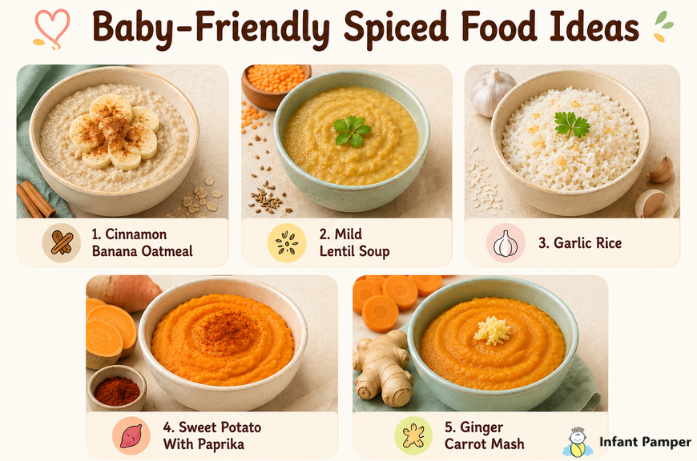
Baby-Friendly Spiced Food Ideas
Cinnamon Banana Oatmeal
Soft oats, mashed banana, and a tiny sprinkle of cinnamon make a gentle breakfast.
Mild Lentil Soup
Cook lentils until soft, then add a little cumin and turmeric.
Garlic Rice
Soft rice with a little cooked garlic can be simple and comforting.
Sweet Potato With Paprika
Mashed sweet potato with a tiny pinch of sweet paprika adds warmth without heat.
Ginger Carrot Mash
Cooked carrots with a very small amount of ginger can be smooth, mild, and flavorful.
What If Baby Accidentally Eats Spicy Food?
First, do not panic. Many babies accidentally taste spicy food at some point.
Your baby may cry, make a funny face, rub their tongue, or become fussy. Offer breast milk, formula, yogurt, banana, rice, or another plain food to soothe the mouth.
Call your pediatrician if your baby has trouble breathing, swelling, severe vomiting, persistent diarrhea, or signs of an allergic reaction.
Common Myths About Spicy Food for Babies
“Babies Must Only Eat Bland Food”
Not true. Babies can enjoy herbs and mild spices when introduced safely.
“Spices Damage a Baby’s Stomach”
Mild spices usually do not harm healthy babies. Very hot foods may cause irritation.
“Spices Always Cause Allergies”
Most spices are not common allergens, but every baby is different.
“If Baby Refuses Once, They Hate It”
Not always. Babies may need several gentle tries before accepting a new taste.
Tips for Nervous Parents
Introducing spicy food to babies can feel scary at first. As moms, we always want to protect our little ones. But you do not need to be perfect.
Go slowly, use mild spices, and stay patient. A gentle parenting approach helps babies feel safe and makes food introduction stress-free.
Your baby may love a flavor one day and reject it the next. That is normal. Feeding is a journey, not a race.
Final Thoughts
So, when can babies eat spicy food? Most babies can begin trying mild spices around 8 to 12 months old, once they are already comfortable with solid foods.
Start gently. Avoid hot chili and strong sauces. Choose mild spices like cinnamon, cumin, turmeric, garlic, ginger, and sweet paprika.
As a caring mom at Infant Pamper, I want you to remember this: your baby does not need perfect meals. They need safe food, patience, love, and a calm parent beside them.
Trust yourself, mama. One tiny taste at a time, your baby is learning the beautiful world of food.
Want more gentle baby feeding tips and real mom advice? Visit Infant Pamper for trusted parenting guides, baby food ideas, and everyday support for your parenting journey.
FAQs
1. When can babies eat spicy food safely?
Most babies can try mild spicy food around 8 to 12 months old after adjusting well to solid foods. Start with gentle spices like cinnamon, cumin, or turmeric.
2. Can babies eat spicy food without stomach problems?
Yes, babies can eat mildly spiced foods in small amounts. Avoid hot chili, strong sauces, and heavily spicy meals that may upset their tummy.
3. What are the best mild spices for babies?
The best mild spices for babies include cinnamon, turmeric, cumin, garlic, ginger, and sweet paprika. These add flavor without too much heat.
4. What happens if my baby accidentally eats spicy food?
Baby eating spicy food accidentally may cause temporary fussiness, drooling, or mild stomach discomfort. Offer milk, yogurt, banana, or plain foods to help soothe them.
5. How do I start introducing spicy food to babies?
When introducing spicy food to babies, start with tiny amounts mixed into familiar foods. Use one spice at a time :and watch for any reactions.
Disclaimer: This article is for informational purposes only and should not replace medical advice. Always consult your pediatrician before introducing new foods or spices to your baby, especially if your child has allergies or digestive concerns.