By a caring mom at Infant Pamper
I know how upsetting it feels when your toddler is uncomfortable and you don’t know why. One day your little one seems perfectly fine, and the next they’re crying during diaper changes, scratching constantly, or dealing with a stubborn rash that just won’t go away. A toddler yeast infection is more common than many parents realize, and thankfully, it’s usually easy to treat once you know what to look for.
The most important thing to remember is this: you are not a bad parent if your child develops a yeast infection. Toddlers have delicate skin, active little bodies, and growing immune systems. These infections happen even in very loving and clean homes.
What Is a Toddler Yeast Infection?
A yeast infection happens when a natural fungus called Candida grows too much in warm or moist areas of the body. Small amounts of yeast normally live on the skin without causing problems. But when the balance changes, the yeast can multiply quickly and lead to irritation.
A yeast infection toddler issue can appear in different places, including: According to Kids Health, yeast infections are common in children and can appear in areas where moisture gets trapped easily.
- The diaper area
- Around the genitals
- Skin folds
- Inside the mouth
Toddlers are especially sensitive because their skin is thinner and more delicate than adult skin.
Signs and Symptoms Parents Should Notice
Sometimes a yeast infection looks similar to a regular rash at first. But there are a few signs that make it easier to spot.
1. Red, Irritated Skin
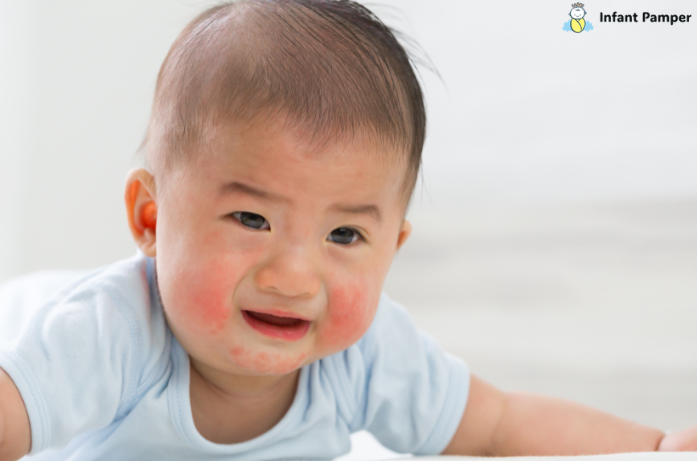
One of the clearest signs of a yeast infection in toddler years is bright red skin that looks sore or inflamed.
The rash may:
- Look shiny
- Feel warm
- Spread into skin folds
- Cause discomfort during diaper changes
Many moms notice their toddler suddenly becoming fussy whenever the area is cleaned.
2. Tiny Red Dots Around the Rash
A yeast infection often causes little red bumps or dots around the main rash area. These are sometimes called “satellite spots.”
This is one reason yeast rashes look different from normal diaper rash.
3. Itching or Burning
Toddlers may not always explain what they feel, but they often show it through behavior.
You might notice:
- Scratching
- Pulling at diapers
- Trouble sleeping
- Increased irritability
Some children also cry while urinating if the skin feels raw.
4. White Patches in the Mouth
If the yeast infection appears in the mouth, it’s called oral thrush.
Signs include:
- White patches on the tongue
- White coating inside cheeks
- Fussiness while eating
- Refusing food or milk
The patches usually don’t wipe away easily.
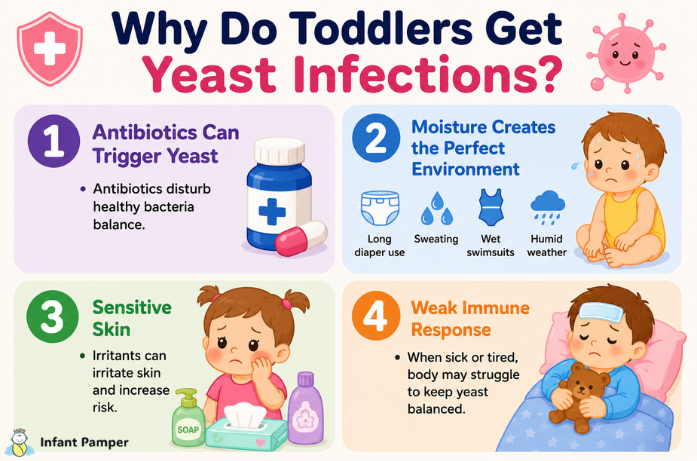
Why Do Toddlers Get Yeast Infections?
Many parents wonder how this happens in the first place. The truth is, there are several very normal reasons.
1. Antibiotics Can Trigger Yeast Growth
One of the most common causes of a toddler yeast infection is antibiotic use.
Antibiotics kill harmful bacteria, but they can also remove healthy bacteria that normally keep yeast under control. Once that balance changes, yeast can grow much faster.
Some toddlers develop a rash only a few days after finishing antibiotics.
2. Moisture Creates the Perfect Environment
Yeast grows best in warm, damp places.
That’s why infections are common after:
- Long diaper use
- Sweating
- Wet swimsuits
- Humid weather
Even active toddlers who run around all day can develop extra moisture in skin folds.
3. Sensitive Skin
Some toddlers naturally have more sensitive skin than others.
Strong soaps, scented wipes, bubble baths, or tight clothing may irritate the skin and make yeast infections more likely.
4. Weak Immune Response
When toddlers are sick or tired, their bodies may have a harder time keeping yeast balanced. Frequent infections should always be discussed with a doctor, especially if they happen often.
Difference Between Diaper Rash and Yeast Infection
This confuses many parents because the two can look similar at first.
A regular diaper rash usually:
- Looks light pink
- Improves with diaper cream
- Appears on flat surfaces
A yeast rash often:
- Looks deep red
- Spreads into folds
- Has small red bumps nearby
- Doesn’t improve with regular cream
If the rash keeps returning or becomes worse after a few days, yeast may be the cause.
The experts at Cleveland Clinic explain that yeast diaper rashes often appear deep red and spread into skin folds, which makes them different from regular diaper rash.
Best Treatment Options for Toddler Yeast Infection
The good news is that treatment is usually simple and works quickly when started early.
1. Antifungal Creams
Doctors often recommend antifungal creams like Clotrimazole, Nystatin, or Miconazole to treat a yeast infection toddler problem. These creams help stop yeast growth and soothe irritated skin quickly.
Always use the cream exactly as directed by your pediatrician. Most toddlers start feeling better within a few days when treatment is started early.
2. Keep the Area Dry
Keeping the skin dry is very important because yeast grows in warm and moist areas. Change diapers often, gently pat the skin dry after baths, and allow some diaper-free time during the day.
Soft cotton clothing can also help improve airflow and reduce irritation. Even small steps like these can help the skin heal faster.
3. Avoid Harsh Products
Harsh products can make sensitive toddler skin even more irritated. Try avoiding scented wipes, bubble baths, perfumed lotions, and strong detergents while the skin heals.
Using mild and fragrance-free products is usually the safest option. Gentle care can help reduce discomfort and prevent the rash from getting worse.
4. Oral Thrush Medicine
If the yeast infection appears in the mouth, doctors may prescribe a liquid antifungal medicine to treat oral thrush. This medicine helps clear the white patches and reduce discomfort while eating.
Parents should also clean bottles and pacifiers regularly and replace old toothbrushes. These simple habits can help prevent the yeast from spreading again.
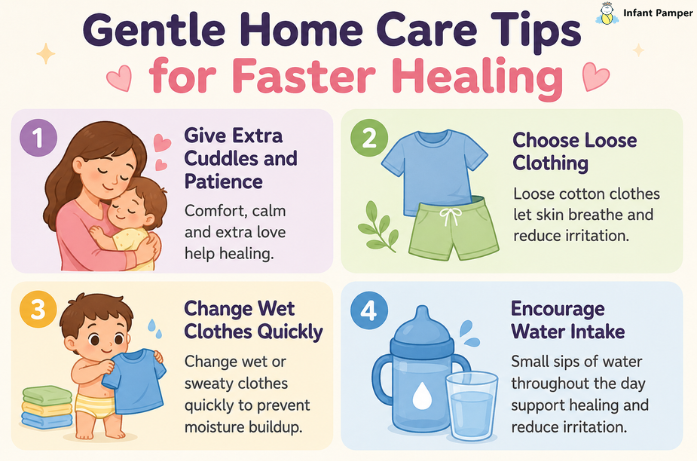
Gentle Home Care Tips for Faster Healing
Sometimes the little comfort measures matter just as much as medicine.
1. Give Extra Cuddles and Patience
Toddlers become emotional when they feel uncomfortable. A rash may make them clingier, crankier, or more sensitive than usual.
This is completely normal.
A calm routine, soft pajamas, and extra cuddles can help your child feel safe while healing.
2. Choose Loose Clothing
Tight clothes trap heat and moisture.
Loose cotton outfits help the skin breathe better and reduce irritation naturally.
3. Change Wet Clothes Quickly
If your toddler sweats a lot or spills drinks during playtime, changing into dry clothes quickly can help prevent extra moisture buildup.
4. Encourage Water Intake
Keeping your toddler hydrated supports healing and may reduce irritation during urination.
Small sips throughout the day are enough.
Can Toddler Yeast Infections Be Prevented?
Not every infection can be prevented, but there are definitely ways to reduce the risk.
Change Diapers Frequently
Leaving wet diapers on too long creates the perfect environment for yeast growth.
Busy moms can’t always change diapers immediately, and that’s okay. Just doing your best consistently helps a lot.
Let Skin Breathe Daily
A few minutes without a diaper after baths or before bedtime can help keep the skin healthier.
Fresh air is surprisingly helpful.
Use Antibiotics Only When Needed
Antibiotics are important when prescribed, but unnecessary use may increase the chance of yeast overgrowth.
Always follow your doctor’s advice carefully.
Stick With Gentle Products
Mild soaps and fragrance-free products are often safer for sensitive toddler skin.
Sometimes less really is more.
When Should Parents See a Doctor?
Most yeast infections improve within a few days of treatment. But there are times when medical advice is important.
Call your pediatrician if:
- The rash spreads quickly
- Your child develops fever
- Symptoms become severe
- The infection keeps returning
- There are open sores or bleeding
- Your toddler seems very uncomfortable
Trust your instincts as a parent. If something feels wrong, it’s always okay to ask for help.
Emotional Support for Worried Parents
I still remember feeling guilty the first time my child had a stubborn rash that turned out to be yeast-related. I questioned everything, the diapers I used, the soap I bought, even whether I changed diapers fast enough.
But here’s what I learned: these infections happen to many toddlers, even when parents are doing everything right.
Children’s skin changes quickly. Their bodies are still developing. Sometimes a little moisture, a round of antibiotics, or sensitive skin is all it takes.
So if you’re dealing with a yeast infection in toddler years right now, please give yourself grace. Your love, attention, and care matter far more than perfection.
Simple Everyday Habits That Help
Here are a few practical habits many moms find helpful:
- Keep a small towel nearby after baths
- Use soft cotton underwear after potty training
- Avoid staying too long in wet swimsuits
- Wash hands before applying creams
- Allow short diaper-free playtime daily
Small routines often make a big difference over time.
Final Thoughts on Toddler Yeast Infection
A toddler yeast infection may feel stressful at first, especially when your little one is uncomfortable and emotional. But the good news is that these infections are very common, treatable, and usually improve quickly with proper care.
The most important thing your child needs is not a perfect parent, they simply need a loving one. And if you’re reading this, searching for answers, and trying your best to help your toddler feel better, you are already doing an amazing job.
Take a deep breath, follow gentle treatment steps, and remember that this phase will pass. Your little one will be back to smiling, playing, and cuddling again very soon.
Looking for more trusted parenting tips and toddler care guides? Visit Infant Pamper for warm, helpful advice created with love for moms and little ones.
FAQs
1. What are toddler yeast infection symptoms?
Common symptoms include redness, itching, small red bumps, irritation, and a rash that does not improve with regular diaper cream.
2. What causes toddler yeast infection?
Toddler yeast infections are usually caused by moisture, antibiotics, wet diapers, or sensitive skin.
3. What is the best cream for toddler yeast infection?
Doctors often recommend antifungal creams like Clotrimazole, Nystatin, or Miconazole to treat yeast infections in toddlers.
4. How long does toddler yeast infection last?
Most yeast infections improve within a few days with proper treatment and care.
5. When should I see a doctor for toddler yeast infection?
See a doctor if the rash gets worse, spreads, causes pain, or does not improve after treatment.
Disclaimer: This article is for informational purposes only and is not a substitute for professional medical advice, diagnosis, or treatment. Always consult your pediatrician if your toddler’s symptoms worsen or do not improve.