Written by a caring mom at Infant Pamper
Pregnancy changes the way you move through the world. One day you may feel active and ready to handle your normal routine, and the next day even climbing stairs or sitting too long can feel like a lot. That is why many expecting moms quietly wonder, when should I stop working during pregnancy?
The honest answer is that there is no one date that fits every mom. Some women feel comfortable working until the last few weeks, while others need to slow down much earlier. Your health, your baby’s growth, your work environment, and your emotional peace all matter.
As a mom, I know how easy it is to keep pushing yourself because you feel responsible. But pregnancy is not the time to ignore your body. It is the time to listen closely, plan gently, and make choices that support both you and your baby.
When Should I Stop Working During Pregnancy?
The right time to stop working during pregnancy depends on your personal situation. Many women stop around 36 to 38 weeks if their pregnancy is healthy and their job is not too physically demanding. Some may stop earlier, especially if they have pain, swelling, high blood pressure, stress, or a job that requires standing, lifting, or long hours.
The best answer usually comes from three places: your body, your doctor, and your daily work demands. If all three are telling you things are getting too hard, it may be time to reduce your workload or begin maternity leave.
According to guidance from the American College of Obstetricians and Gynecologists (ACOG), many women can safely continue working during pregnancy with proper adjustments, depending on their health and job conditions.
You do not have to wait until you are completely exhausted. Stopping work is not failure. It is preparation.
Why This Decision Feels So Hard
For many moms, work is more than just a paycheck. It can be part of your routine, your confidence, and your identity. So when pregnancy starts making work harder, it can bring mixed feelings.
You may worry about money.
You may feel guilty leaving your team.
You may wonder if you are stopping too early.
You may compare yourself with another mom who worked until delivery.
But every pregnancy is different. Comparing your body to someone else’s body will only make you feel unsure. What matters is what is safe and manageable for you.
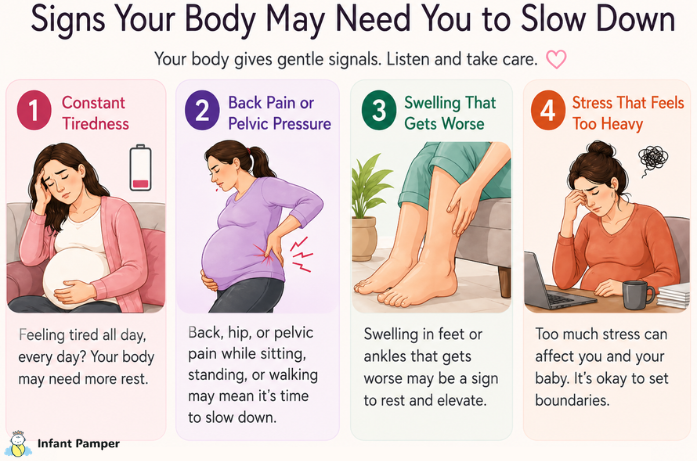
Signs Your Body May Need You to Slow Down
Pregnancy can make everyday tasks feel more tiring. According to the Mayo Clinic, fatigue, body aches, and emotional changes are common, especially in later months, so it’s important to listen to your body and rest when needed.
1. Constant Tiredness
Pregnancy fatigue can feel very different from normal tiredness. If you wake up tired, work tired, come home tired, and never truly recover, your body may need more rest.
This can become stronger in the third trimester when your baby is growing quickly and your body is using more energy.
2. Back Pain or Pelvic Pressure
Mild discomfort is common, but daily pain should not be brushed aside. If sitting, standing, walking, or commuting causes back pain, hip pain, or pelvic pressure, your work routine may need to change.
You may not need to stop immediately, but you may need shorter hours, more breaks, or lighter duties.
3. Swelling That Gets Worse
Swollen feet and ankles can happen in pregnancy, especially after standing or sitting for long periods. But if swelling becomes uncomfortable or sudden, speak with your doctor.
Your body may be asking for more rest, better circulation, and less time on your feet.
4. Stress That Feels Too Heavy
Emotional stress matters too. A stressful job, difficult workload, or unsupportive environment can leave you feeling anxious and drained.
Pregnancy already brings emotional changes. If work is adding too much pressure, it may be time to set boundaries.
Factors That Affect When to Stop Working During Pregnancy
There is no single rule because every mom’s daily life looks different. These factors can help you decide more clearly.
1. Your Type of Job
A desk job with flexible hours is very different from a job that requires lifting, bending, standing, or moving all day.
If your work is physically demanding, you may need to stop earlier or ask for safer duties. Jobs in healthcare, retail, childcare, factories, salons, hospitality, or teaching can become tiring during late pregnancy.
If you work from home or sit most of the day, you may be able to continue longer with small adjustments.
2. Your Pregnancy Health
If you have a low-risk pregnancy and feel well, your doctor may allow you to work longer. But if you have pregnancy complications, the advice may change.
You may need to stop earlier if you have:
- High blood pressure
- Gestational diabetes
- Risk of preterm labor
- Placenta problems
- Severe anemia
- Strong pelvic pain
- Repeated contractions
Always follow your healthcare provider’s guidance. Your doctor knows your health history and can help you make a safe decision.
3. Your Commute
Sometimes the job itself is manageable, but getting there is the hard part. Long drives, crowded buses, standing in trains, traffic, heat, or walking long distances can drain your energy before work even begins.
If your commute feels unsafe or exhausting, ask about remote work, flexible timing, or starting maternity leave earlier.
4. Your Support at Work
A supportive workplace can make pregnancy much easier. If your employer allows breaks, lighter duties, remote work, or flexible hours, you may feel comfortable working longer.
But if your workplace ignores your needs or expects you to work as if nothing has changed, your body may struggle more.
When to Stop Working During Pregnancy: Common Timelines
Every mom is different, but these general timelines may help you understand what many women consider.
Stopping Around 36 to 38 Weeks
Many moms stop working in the final few weeks. This gives them time to rest, prepare the hospital bag, organize baby items, and mentally settle before birth.
This timeline may work well if your pregnancy is healthy and your job is not too stressful.
Stopping Around 32 to 35 Weeks
Some moms choose to stop earlier because the third trimester becomes more uncomfortable. Sleep may be harder, walking may feel slower, and swelling or back pain may increase.
This can be a good option if your body feels tired but you are not facing serious medical issues.
Stopping Before 30 Weeks
Some moms need to stop much earlier because of health concerns, pregnancy complications, or very demanding work. If your doctor recommends rest or reduced activity, listen without guilt.
Early rest can be an important part of protecting your pregnancy.
Questions to Ask Yourself Before Deciding
Sometimes writing things down can help you see the answer more clearly.
1. How Do I Feel After a Workday?
Do you feel tired but okay, or completely drained? If you come home unable to eat well, sleep well, or care for yourself, your workload may be too much.
2. Is My Job Affecting My Health?
If work increases pain, swelling, stress, contractions, or exhaustion, it is worth discussing with your doctor.
3. Can My Work Be Adjusted?
Before stopping fully, you may be able to try smaller changes. You could reduce hours, work from home, take more breaks, avoid lifting, or shift to lighter tasks.
4. Do I Feel Emotionally Ready?
Stopping work can bring relief, but also nervousness. Give yourself time to prepare emotionally, especially if you enjoy your job.
How to Talk to Your Employer
Talking to your employer may feel uncomfortable, but it can make things easier.
Start the Conversation Early
Try not to wait until you are overwhelmed. Let your employer know your expected due date and discuss your maternity leave plan early.
Be Clear About What You Need
You might ask for:
- Shorter hours
- More sitting breaks
- Remote work
- Lighter duties
- Flexible start time
- Help with heavy tasks
You do not have to share every personal detail. A simple, honest conversation is enough.
Get Medical Advice in Writing
If your doctor recommends changes at work, ask for a written note. This can help your employer understand your needs clearly.
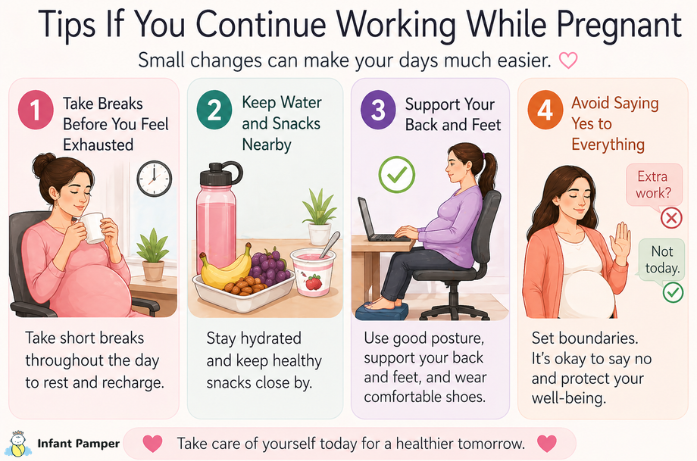
Tips If You Continue Working While Pregnant
If you decide to keep working, small changes can make your days much easier.
1. Take Breaks Before You Feel Exhausted
Do not wait until your body feels completely tired. Short breaks throughout the day can help with energy, circulation, and comfort.
2. Keep Water and Snacks Nearby
Pregnancy hunger can come suddenly. Keep simple snacks like fruit, nuts, crackers, yogurt, or a healthy sandwich nearby.
3. Support Your Back and Feet
Use a comfortable chair, keep your feet slightly raised if possible, and wear supportive shoes. If you stand often, sit whenever you can.
4. Avoid Saying Yes to Everything
Pregnancy is a season where boundaries matter. You do not need to take extra tasks, stay late, or push through discomfort to prove yourself.
Preparing for Maternity Leave
Once you decide when to stop working, preparation can bring peace.
Make a Simple Work Handover
Write down important tasks, passwords if needed, contacts, deadlines, and anything your team may need. This helps you leave without feeling stressed.
Prepare Your Home Slowly
You do not need to do everything in one day. Wash baby clothes, arrange diapers, pack your hospital bag, and prepare your recovery space little by little.
Rest Without Feeling Lazy
Rest is productive during pregnancy. Your body is growing a baby, preparing for birth, and storing strength for postpartum recovery.
You are not “doing nothing.” You are caring for yourself and your little one.
What If You Feel Guilty About Stopping Work?
Many moms feel guilty, even when they know they need rest. But please remember this: pregnancy is not a test of how much discomfort you can tolerate.
Choosing rest does not mean you are weak.
Choosing maternity leave does not mean you are less committed.
Choosing your health does not mean you are letting anyone down.
You are making a thoughtful decision for your family.
Final Thoughts
Deciding when should I stop working during pregnancy is deeply personal. Some moms work until the final days, while others need to stop weeks or months earlier. Both choices can be right.
Listen to your body. Talk to your doctor. Look honestly at your job, your stress, your energy, and your comfort. The goal is not to follow someone else’s timeline. The goal is to feel safe, supported, and ready.
Pregnancy asks a lot from you, mama. So give yourself permission to slow down when you need to. Whether you stop early or continue longer, you are already doing something beautiful and important.
Take it one day at a time. Trust yourself. Your body knows, and your baby is lucky to have you. If you found this helpful, share it with another mom-to-be and explore more gentle, real-life pregnancy tips on Infant Pamper.
FAQs
1. When should I stop working during pregnancy?
Most moms stop between 32–38 weeks, depending on health and comfort.
2. Is it safe to work till the last month?
Yes, if your pregnancy is healthy and your job is not stressful.
3. What are signs to stop working?
Constant tiredness, pain, stress, or doctor’s advice to rest.
Disclaimer: This article is for informational purposes only and is not a substitute for medical advice. Always consult your doctor or healthcare provider for guidance based on your individual pregnancy and health needs.