Written with love by a caring mom at Infant Pamper
The first time you bring your baby home creates an emotional experience which remains one of your most intense life moments. I still remember holding my newborn so gently, feeling a mix of deep love and quiet worry, wondering if I was doing everything right.Your presence at this point proves your dedication to your baby because you seek newborn safety tips information which matters more than achieving perfect results.
Newborns need special protection which can be accomplished through basic daily routines and attentive parenting practices. People can establish peaceful and protected spaces without experiencing overwhelming difficulties. We will complete the process together through our methodical approach.
Why Newborn Safety Matters So Much
In those early weeks, your baby is adjusting to a whole new world. Their tiny body is still developing, their reflexes are limited, and they rely completely on you for protection and comfort.
Safety isn’t about being anxious all the time. It’s about building simple, everyday habits that help prevent risks. Over time, these habits become second nature, and you’ll start to feel more confident and relaxed.
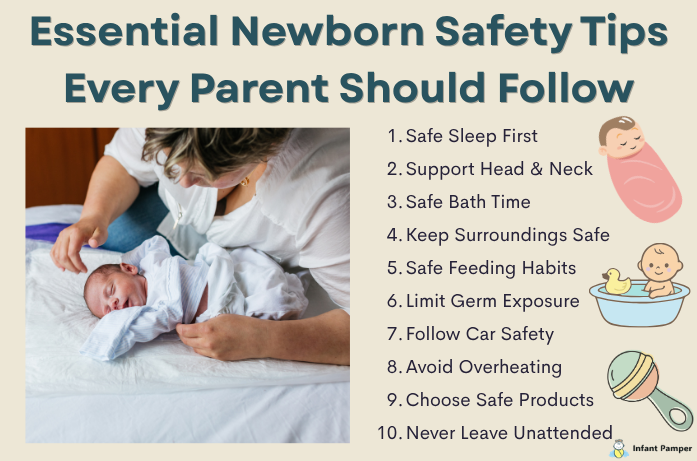
Essential Newborn Safety Tips Every Parent Should Follow
1. Safe Sleep Is the First Priority
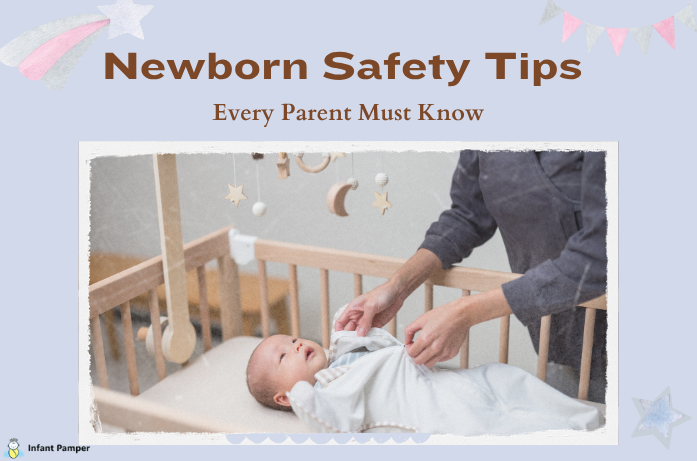
Safe sleep practices become essential because your newborn sleeps through most of the day. Always place your baby on their back to sleep. Use a firm mattress with a fitted sheet and keep the crib free from pillows, blankets, and soft toys.
Although the room appears empty, this arrangement provides maximum safety. I know it can be tempting to add a soft blanket or cushion for comfort, but your baby feels safest with simplicity.
2. Always Support Your Baby’s Head and Neck
Parents need to support their baby’s head and neck whenever they pick up their child. At first, this might feel a bit awkward, and that’s okay.
With practice, it becomes natural. Small reminder: Whether you are holding, feeding, or even burping your baby, gentle support makes a big difference.
3. Be Mindful During Bath Time
The beautiful bond between parents and their child appears during bath time, which requires additional focus to keep safe. Always check the water temperature before placing your baby in the bath. The water should feel warm, but it should not feel hot.
Your baby needs constant contact from you because their stability is not yet fully developed. I used to keep everything within reach before starting, towel, clothes, diaper, so I never had to step away, even for a second.
4. Keep Your Baby’s Surroundings Safe
Your baby needs safe surroundings so their safety will be protected. The crib needs to meet safety standards while you need to keep it away from windows and cords and curtains while all small items need to be stored in places that babies cannot access.
New parents should develop this habit because their newborns will become active later. The safety practices you establish now will create better protection for your baby as they grow older.
5. Practice Safe Feeding Habits
Safety holds importance in every feeding session whether you choose to breastfeed or bottle-feed. Parents must keep their baby in an upright position while feeding because they must stay with their baby during this time.
The process of feeding creates a bond between parents and children because it enables them to share their attention with one another. After feeding, burp your baby gently to help release trapped air and keep them comfortable.
6. Be Careful with Visitors and Germ Exposure
Everyone wants to meet your newborn, and it’s such a joyful experience. But newborns have delicate immune systems The establishment of boundaries exists as an acceptable practice between people.
Your visitors need to wash their hands before they hold the baby while you need to prevent contact with sick visitors. I know it can feel uncomfortable to say no, but protecting your baby always comes first.
7. Car Safety Is Non-Negotiable
Every car ride, no matter how short, requires proper safety measures. The installation process needs to follow proper procedures for the rear-facing car seat, which must be used with newborns. Your baby needs to feel tight yet comfortable because there must not be any loose straps.
Important: Never hold your baby in your arms while in a moving vehicle, even for a short distance.
8. Avoid Overheating Your Baby
The simple rule I followed required me to dress my baby in one extra layer than my current outfit. The correct method to determine their body temperature requires you to check their neck or back.
The best choice for clothing materials should include lightweight fabrics which allow proper air circulation.
9. Be Mindful of Baby Products
Children’s products include items such as cribs and carriers; however, the quality of all products is not uniform. Customers should select products that comply with safety regulations and use them strictly in accordance with established guidelines.
Users should avoid using products that possess unsafe features or have a flawed design. You should trust your instincts, as it is perfectly appropriate to steer clear of anything that makes you feel uncomfortable.
10. Never Leave Your Baby Unattended
You must maintain your full attention even for the briefest of moments, as there is a possibility of significant changes occurring during this time.
Whenever your child is on a bed, changing table, or sofa, you should remain in constant physical contact with them. Even though babies are very small, they can move suddenly and unexpectedly.
For more medically trusted guidance on newborn care, you can also explore resources from MedlinePlus, which explain essential infant care practices in a simple and reliable way.
Creating a Safe Home Environment
1. Baby-Proofing Starts Early
You should start making preparations, as your child will soon begin to crawl.
Implementing safety measures, such as securing furniture, using outlet covers, and keeping hazardous items out of children’s reach, collectively makes the home environment much safer.
In the process of creating a safe environment within your home, you will need to take these small steps, which will eventually evolve into significant improvements.
2. Keep Emergency Numbers Handy
Having quick access to emergency contacts brings people peace of mind.
You should save important numbers on your phone while keeping a written list of them at home. You should prepare for emergencies even if you hope to never use these contacts.
3. Emotional Safety Matters Too
People require both emotional and physical security. Your child needs physical safety as well as emotional support. When you hold your child in your arms and respond to their crying while speaking to them affectionately, they feel secure.
The small gestures you make foster emotional connections with others through trust. My child developed a sense of emotional security, which enabled them to sleep better, feed better, and self-soothe.
You can also read more about early safety practices from pediatric experts at Healthy Children, which shares trusted advice for newborn safety during the first months.
4. Trusting Yourself as a Parent
Trust yourself because it represents the most essential safety guideline. You might read many guides, ask questions, and seek advice, and that’s wonderful. However, your knowledge about your baby exceeds all common knowledge. You will experience moments of doubt which will happen to you. That’s completely normal.
All parents experience this situation. Your confidence will develop silently throughout the day as you spend time with your baby. Your skills in holding your baby and understanding their needs will develop into an instinctive ability.
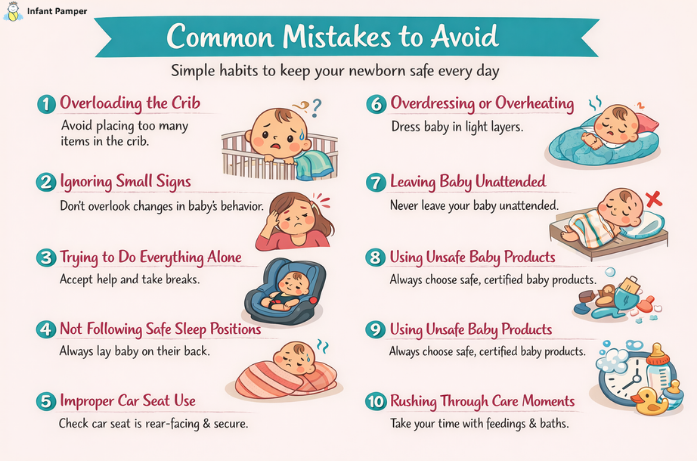
Common Mistakes to Avoid
1. Overloading the Crib
It’s natural to want your baby to feel cozy, but too many items in the crib can be unsafe. Pillows, blankets, and toys increase the risk of suffocation. A firm mattress with a fitted sheet is all your baby needs.
2. Ignoring Small Signs
Even small changes in your baby’s breathing, feeding, or behavior matter. If something feels unusual, trust your instincts. It’s always better to check with a doctor early.
3. Trying to Do Everything Alone
Caring for a newborn can feel overwhelming. You don’t have to do it all by yourself. Accept help when offered and take breaks when needed.
4. Not Following Safe Sleep Positions
Placing your baby on their stomach or side can be risky. Always put your baby to sleep on their back. This simple habit helps keep them safe.
5. Improper Car Seat Use
Using a car seat incorrectly can put your baby at risk. Make sure it is rear-facing and properly secured. Check that the straps are snug and comfortable.
6. Overdressing or Overheating
Too many layers can make your baby uncomfortable. Dress your baby in light, breathable clothing. Check their neck or back to ensure they’re not too warm.
7. Leaving Baby Unattended
Even for a moment, leaving your baby alone can be unsafe. Always stay close during diaper changes, bath time, or when they’re on a bed or sofa.
8. Using Unsafe Baby Products
Not all baby products are safe or reliable. Always choose items that meet safety standards. If something feels unsafe, it’s better not to use it.
9. Skipping Hand Hygiene
Newborns are sensitive to germs. Always wash your hands before handling your baby. Ask visitors to do the same.
10. Rushing Through Care Moments
Daily routines like feeding and bathing need your full attention. Take your time and stay calm. These moments are important for both safety and bonding.
Gentle Daily Safety Routine
Creating a simple routine can make safety feel effortless:
- Check sleep space before naps and bedtime
- Wash hands before handling the baby
- Keep feeding time calm and attentive
- Stay nearby during all activities
- Dress your baby comfortably for the weather
These small habits quickly become part of your day without feeling overwhelming.
For more detailed guidance on safe sleep and newborn care, trusted resources like Kids Health, explain these practices in an easy and parent-friendly way.
Final Thoughts
Caring for a newborn can feel overwhelming at times, but with these newborn safety tips, you are already creating a safe and loving space for your baby. Take each day as it comes, trust your instincts, and allow yourself to learn along the way.
Your baby doesn’t need you to be perfect. They need your love, your gentle care, and your presence. And in all the small moments you show up for them, you are already doing more than enough.
If you found this helpful, share it with another parent who might need it. And don’t forget to explore more gentle, practical parenting tips on Infant Pamper to support you on this beautiful journey.
FAQs
1. What are the most important newborn safety tips?
Always follow safe sleep practices, support your baby’s head, and never leave them unattended.
2. How should a newborn sleep safely?
Place your baby on their back on a firm mattress with no pillows, blankets, or toys.
3. How can I protect my newborn from germs?
Wash hands before handling your baby and limit contact with sick visitors.
4. When should I start baby-proofing my home?
It’s best to start early so your home is ready as your baby begins to grow and move.
5. How do I know if my baby is comfortable?
Check their neck or back to see if they are too warm or cold, and adjust clothing as needed.
Disclaimer: This article is for informational purposes only and is not a substitute for professional medical advice. Always consult your pediatrician or healthcare provider for any concerns about your baby’s health or safety.