Written with love by a caring mom at Infant Pamper
I still find myself standing in the kitchen, holding a simple ingredient like carrots, and wondering if I’m making the right choices for my baby. If you’ve ever asked yourself are baby carrots healthy, you’re not alone. I’ve had the same thoughts, especially during those early days of introducing solids.
Baby carrots feel so easy, don’t they? They are convenient, quick to cook, and even look perfect for tiny hands. But as moms, we don’t just look for easy. We look for safe, nourishing, and truly good for our child’s growth.
Let’s gently walk through everything together, from the benefits of a baby carrot to how to safely prepare a baby carrot puree, so you can feel calm and confident with every bite you offer.
Are Baby Carrots Healthy for Babies and Toddlers?
The simple answer is yes, baby carrots are healthy. But as parents, we know the real answer always comes with a little more care and understanding.
Baby carrots are packed with nutrients that support your baby’s development. They contain important vitamins and minerals that help your child grow stronger and healthier. One of the biggest benefits is vitamin A, which supports your baby’s eyesight and immune system.
But the most important thing is how you serve them. Raw baby carrots can be hard and pose a choking risk, so they should always be cooked until soft for babies and young toddlers.
Once prepared safely, baby carrots can become a gentle, nourishing addition to your baby’s meals.
What Is in Baby Carrots? (Nutrition Facts)
When I started reading more about simple vegetables, I found reassurance from trusted sources like Cleveland Clinic, which explains how carrots of all colors are rich in nutrients like beta-carotene, fiber, and antioxidants.
Key nutrients in a baby carrot:
- Vitamin A (Beta-Carotene): Supports healthy vision and boosts immunity
- Fiber: Helps with digestion and keeps your baby’s tummy comfortable
- Vitamin K: Supports bone development
- Potassium: Helps with muscle function and overall growth
- Antioxidants: Protect your baby’s cells and support overall health
What I love most is how naturally these nutrients come together. There’s nothing complicated, just simple, wholesome nutrition your baby can benefit from.
Benefits of Baby Carrots for Your Baby
As a mom, I’m always looking for foods that do more than just fill my baby’s tummy. I want foods that help them grow, explore, and feel good.
Baby carrots quietly do all of that.
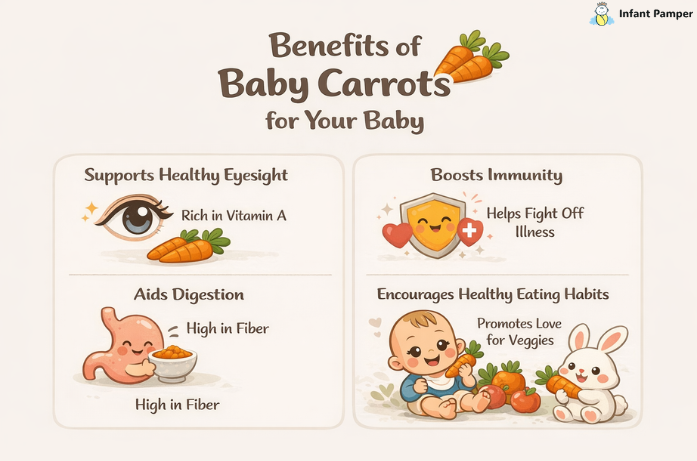
1. Supports Healthy Eyesight
The vitamin A in baby carrots plays a big role in your baby’s vision development. It’s one of the reasons carrots are often recommended for growing children.
2. Boosts Immunity
Babies get sick easily, and it can be so hard to watch. The antioxidants and vitamins in baby carrots help strengthen their immune system.
3. Aids Digestion
Fiber in baby carrots supports gentle digestion. When served as a soft baby carrot puree, it becomes easy on your baby’s tummy.
4. Encourages Healthy Eating Habits
Baby carrots have a naturally mild sweetness. This can help your baby develop a liking for vegetables early in life, which is such a beautiful habit to build.
Are There Any Risks of Baby Carrots?
Even the healthiest foods come with small precautions. Knowing them doesn’t mean worrying, it simply helps us stay mindful.
Choking Hazard
This is the most important thing to remember. Raw baby carrots are hard and can be difficult for babies to chew.
What you can do:
- Always cook baby carrots until they are soft
- Mash or puree them for younger babies
- Cut into small pieces for toddlers
Processing Concerns
Some baby carrots are shaped from larger carrots and washed for safety. This process is completely safe, but if you feel more comfortable, you can wash them again at home or choose organic options.
Too Much of a Good Thing
If babies eat too many carrots regularly, their skin may develop a slight yellow-orange tint. It’s harmless but a sign to balance their diet with other foods.
When Can Babies Eat Baby Carrots?
I remember being extra careful when introducing new foods. It felt like such an important step.
You can introduce baby carrots as a first food choice around 6 months of age, once your baby starts solids.
Make sure:
- They are cooked until very soft
- They are mashed or made into a baby carrot puree
- You start with small portions
Take it slow and watch your baby’s response. Every child is different, and that’s completely okay.
How to Make Baby Carrot Puree at Home
Making food for your baby is such a loving act. And honestly, it’s simpler than it seems.
Simple Baby Carrot Puree Recipe
Ingredients:
- 4–5 baby carrots
- Water (as needed)
Steps:
- Wash the baby carrots thoroughly
- Steam or boil until soft
- Blend into a smooth puree
- Add water to adjust the texture
This baby carrot puree is naturally sweet and gentle, perfect for little beginners.
You can also mix it with:
- Apple puree for a sweeter taste
- Potato for a creamy texture
- Lentils for added nutrition
Tips for Serving Baby Carrots Safely
Over time, I’ve learned that small precautions make a big difference when feeding our little ones. It’s not just about what we serve, but how we serve it.
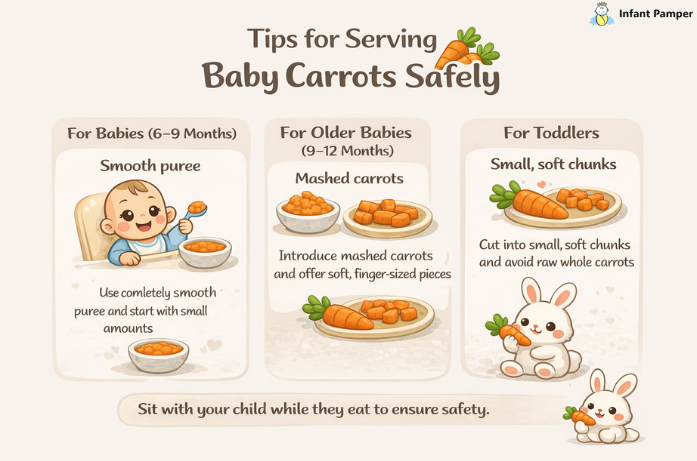
For Babies (6–9 Months)
At this stage, I always serve baby carrots as a smooth puree. Their swallowing skills are still developing, so the texture needs to be completely lump-free. I also start with small amounts and slowly increase as my baby gets comfortable.
For Older Babies (9–12 Months)
As babies grow, I introduce slightly thicker textures. Mashed baby carrots work really well here. You can also offer soft, finger-sized pieces that your baby can hold and explore.
For Toddlers
For toddlers, I cut baby carrots into small, soft chunks that are easy to chew. I always avoid giving raw whole carrots, as they can still be a choking risk.
And no matter the age, I always sit with my child while they eat. That presence brings both safety and connection.
Baby Carrots vs Regular Carrots: Which Is Better?
The truth is, both baby carrots and regular carrots are healthy.
Baby Carrots are incredibly convenient, which honestly makes a big difference on busy days. They come pre-washed, ready to use, and save so much time in the kitchen. I find them especially helpful when I need to prepare something quickly without compromising on nutrition.
Regular Carrots feel a bit more natural since they are less processed, and they are often more budget-friendly too. Sometimes I choose them when I have a little extra time to peel and chop, knowing I’m still giving my baby something wholesome.
In the end, there’s very little nutritional difference between the two, so you can simply choose what works best for your routine and comfort.
Can Babies Eat Baby Carrots Every Day?
Yes, babies and toddlers can enjoy baby carrots regularly, but I’ve learned that balance is always the key. It’s comforting to know they are healthy, but no single food should be the only thing on their plate.
Instead of relying on just one food, I try to offer a mix of fruits, vegetables, grains, and proteins. This helps make sure my baby gets a variety of nutrients for healthy growth and development.
You can include baby carrots a few times a week, mix them into different meals, or serve them alongside other vegetables. Keeping meals varied not only supports nutrition but also helps your baby enjoy different tastes and textures.
Signs Your Baby Likes Baby Carrots
There’s something so special about watching your baby enjoy food.
You might notice:
- They open their mouth for more
- They try to grab the spoon
- They stay calm and engaged while eating
These little signs bring so much reassurance. They remind you that your efforts are working.
When Should You Be Careful?
Even though baby carrots are generally safe, it’s always important to trust your instincts.
Be cautious if:
- Your baby shows signs of an allergy
- They struggle with certain textures
- They consistently refuse the food
Sometimes babies just need time. You can always pause and try again later.
Final Thoughts
Feeding your baby is about more than just nutrition. It’s about love, care, and the quiet effort you put into every small meal. Whether you’re making a soft baby carrot puree or offering tiny pieces to your toddler, you’re giving your child something wholesome and comforting.
Take a deep breath and trust yourself. You’re learning along the way, just like your baby is. And these simple, everyday moments are what make this journey so meaningful and special.
If this helped you, share it with another parent and explore more simple, mom-approved tips on Infant Pamper.
FAQs About Baby Carrots
1. Are baby carrots healthy for babies?
Yes, baby carrots are healthy for babies when cooked properly. They provide vitamin A, fiber, and antioxidants that support growth and development.
2. When can I give baby carrots to my baby?
You can introduce baby carrots at around 6 months of age, once your baby starts solids.
3. Can babies eat raw baby carrots?
No, raw baby carrots are not safe for babies because they can cause choking. Always cook them until soft.
4. How do I make baby carrot puree?
Steam or boil baby carrots until soft, then blend into a smooth puree. Add water if needed for consistency.
5. Can toddlers eat baby carrots daily?
Yes, but it’s best to offer a variety of foods along with baby carrots for balanced nutrition.
Disclaimer: This article is based on personal parenting experience and is for informational purposes only. Every child is different, so always consult your pediatrician before introducing new foods.