Written with love and care by a caring mom at infant Pamper
Traveling with a baby for the first time can feel both exciting and a little overwhelming. Many parents worry about packing the right things, keeping their baby comfortable, and managing the journey smoothly. Having a simple traveling with baby checklist on airplane can make the trip much easier and help parents feel more prepared.
With the right planning and a few important baby travel essentials airplane, flying with your little one doesn’t have to be stressful. A well-packed diaper bag, a few comfort items, and thoughtful preparation can turn airplane travel with baby into a calm and memorable experience for the whole family.
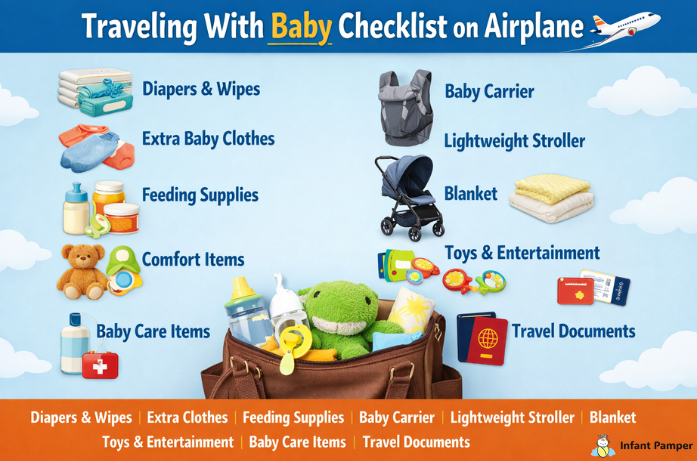
Traveling With Baby Checklist on Airplane: Everything Parents Should Pack
Packing wisely is the secret to stress-free flying with a baby. When everything you need is easily accessible, you can focus more on comforting your baby rather than searching through your bag.
Here is a complete list of baby airplane travel essentials every parent should consider bringing on board.
1. Diapers and Changing Supplies
Diapers are one of the most important items when flying with a baby. Flights can sometimes be delayed, and babies may need more diaper changes than usual during travel.
A helpful rule many parents follow is packing one diaper for every hour of travel plus two or three extras. It may sound like a lot, but it’s always better to be prepared.
Essential diaper-changing items include:
- Diapers
- Baby wipes
- Disposable changing pads
- Diaper rash cream
- Plastic bags for dirty diapers or clothing
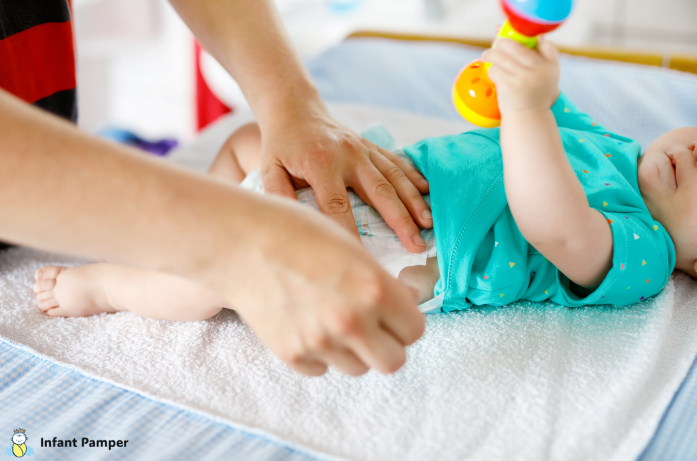
Most airplanes have small fold-down changing tables in the restroom. Keeping these items together in a small pouch makes diaper changes quicker and easier in tight spaces.
2. Extra Baby Clothes
Babies are known for unexpected messes. Spit-up, drool, and diaper leaks can happen anytime, especially during travel when routines change.
Packing extra clothes ensures your baby stays comfortable throughout the flight.
Your carry-on bag should include:
- Two to three baby outfits
- Extra socks
- A light sweater or jacket
- A spare shirt for parents
Many parents quickly learn that sometimes the parent ends up needing clean clothes too.
Soft, breathable fabrics work best because airplane cabins can vary in temperature.
3. Feeding Supplies
Feeding your baby during the flight can help keep them calm and relaxed. Whether you breastfeed, bottle-feed, or use formula, having feeding supplies ready makes a big difference.
Important feeding items include:
- Baby bottles
- Formula or pumped breast milk
- Baby food pouches or jars for older babies are convenient for travel. You can also pack homemade prune puree if your baby enjoys it and has already started eating solid foods.
- Bibs
- Burp cloths
- Small thermos with warm water
Many parents find that feeding during takeoff and landing helps babies handle ear pressure changes more comfortably. The sucking and swallowing motion can naturally relieve pressure.
For toddlers, small snacks like fruit pouches, crackers, or soft finger foods can also help keep them happy. If your baby has started solids, broccoli puree is another healthy option to prepare before your trip.
4. Comfort Items From Home
Traveling can feel unfamiliar for babies. A few comforting items from home can make a big difference in helping them feel safe.
Comfort items might include:
- Favorite blanket
- Pacifier
- Small stuffed toy
- Teething toy
These familiar objects can help soothe babies when they feel tired or overwhelmed by new surroundings.
Even a favorite toy can sometimes prevent fussiness during longer flights.
5. Baby Carrier or Wrap
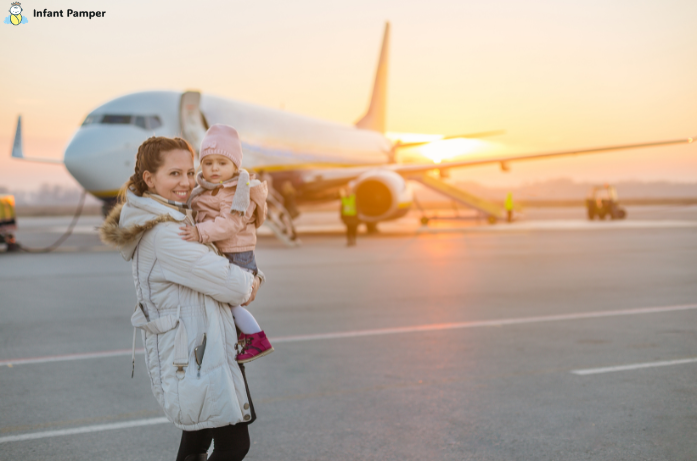
A baby carrier can be incredibly helpful during airplane travel with baby. Airports often involve long walks, crowded spaces, and busy boarding areas.
Using a baby carrier keeps your hands free while keeping your baby close and secure.
Benefits of bringing a baby carrier include:
- Easier airport navigation
- Comfort for babies who like being held
- Hands-free travel through security
- Helping babies nap peacefully
Many parents rely on a carrier during travel because babies often feel calmer when held close to their parent.
6. Lightweight Stroller
Although not always necessary, a lightweight stroller can be extremely helpful when traveling with a baby.
Many airlines allow parents to use a stroller throughout the airport and then check it at the gate before boarding.
A stroller can help with:
- Long airport walks
- Allowing babies to rest
- Carrying diaper bags and other travel items
Compact travel strollers are especially convenient because they fold easily and take up minimal space.
7. Baby Blanket
Airplane cabins can sometimes feel chilly, particularly on longer flights.
A soft baby blanket serves multiple purposes:
- Keeping your baby warm
- Creating a cozy nap space
- Providing privacy during feeding
- Adding comfort in unfamiliar environments
A lightweight blanket is easy to pack and surprisingly useful during travel.
8. Entertainment and Toys
Keeping babies entertained during the flight can prevent boredom and fussiness.
Choose toys that are lightweight and easy to clean.
Helpful travel toys include:
- Soft baby books
- Rattles
- Teething toys
- Clip-on toys that attach to seats or strollers
Rotating toys throughout the flight keeps babies interested longer.
Sometimes even simple objects like plastic cups or snack containers can entertain babies more than expensive toys.
9. Baby Care Items
Small baby care essentials can make travel more comfortable.
Consider packing:
- Baby lotion
- Hand sanitizer
- Small baby first-aid kit
- Infant pain reliever if recommended by your pediatrician
Dry airplane air can sometimes irritate sensitive skin, so lotion can be helpful during longer flights. According to travel health guidance from the CDC.
10. Important Travel Documents
Depending on your destination, your baby may need travel documents.
For international travel, babies typically need:
- Passport
- Boarding pass
- Visa (if required)
For domestic flights, airlines sometimes ask for proof of the baby’s age, such as a birth certificate.
Keeping these documents organized in a travel folder makes airport check-in much easier.
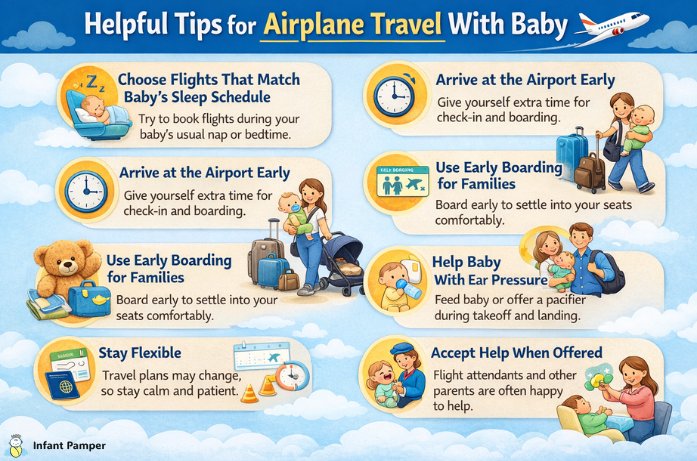
Helpful Tips for Airplane Travel With Baby
Packing the right baby airplane travel essentials is important, but a few thoughtful travel strategies can make the experience even smoother.
Here are some helpful tips many experienced parents recommend.
1. Choose Flights That Match Baby’s Sleep Schedule
If possible, try to book flights during your baby’s usual nap or bedtime.
Babies often sleep better when travel aligns with their natural routine. A sleeping baby makes the entire flight easier for parents.
Early morning or evening flights tend to work well for many families.
2. Arrive at the Airport Early
Traveling with a baby often takes a little extra time. Arriving early gives you space to move calmly through check-in, security, and boarding.
Rushing can make babies feel unsettled, so allowing extra time keeps the experience relaxed.
3. Use Early Boarding for Families
Many airlines allow families with young children to board earlier than other passengers.
Early boarding provides time to settle into your seat, organize your baby supplies, and get comfortable before the plane becomes crowded.
This small advantage can make a big difference during travel. The American Academy of Pediatrics explains more about flying safely with infants.
4. Help Baby With Ear Pressure
Air pressure changes during takeoff and landing can feel uncomfortable for babies.
Feeding your baby or offering a pacifier during these moments helps relieve ear pressure.
The sucking motion naturally helps equalize pressure in the ears.
5. Stay Flexible
Travel rarely goes perfectly according to plan, especially with babies.
Flights may be delayed, babies may cry, or routines may shift.
The best approach is staying flexible and patient. Babies respond to their parents’ calm energy, so your relaxed attitude can help soothe them.
6. Accept Help When Offered
Many parents are surprised by how supportive people can be when traveling with a baby.
Flight attendants and fellow passengers often offer help with bags, toys, or small tasks.
Accepting help can make the journey easier and less tiring.
How to Organize Your Baby Travel Bag
A well-organized diaper bag makes airplane travel with baby much simpler.
Instead of packing everything loosely, try using small pouches or compartments.
For example:
- One pouch for diapers and wipes
- One pouch for feeding supplies
- One pouch for clothing
- One pouch for toys and comfort items
This organization system allows you to quickly grab what you need without searching through your entire bag.
Many parents also keep the most frequently used items, like wipes and pacifiers, in outer pockets for quick access.
A Gentle Reminder for Parents
Traveling with a baby might seem intimidating at first, but babies are often more adaptable than we expect.
They are comforted by your voice, your touch, and your presence. Even in unfamiliar places like airplanes and airports, your baby feels safe when they are close to you.
Every trip also helps parents become more confident travelers. With each journey, you learn what works best for your baby and your family.
Conclusion
Flying with a baby may feel challenging in the beginning, but the right preparation can make all the difference. Having a thoughtful traveling with baby checklist on airplane ensures that you are ready for feeding, diaper changes, comfort, and entertainment throughout the journey.
By packing the right baby travel essentials airplane, staying flexible, and focusing on your baby’s comfort, you can turn air travel into a positive and memorable experience.
Remember that every family travels differently, and it’s perfectly okay if things don’t go exactly as planned. What matters most is that your baby feels loved, safe, and cared for during the journey.
With preparation, patience, and a little confidence, airplane travel with baby can become a wonderful part of your family’s adventures.
FAQs
1. What should I pack for airplane travel with baby?
Pack diapers, wipes, extra clothes, feeding supplies, baby food or formula, toys, a blanket, and important documents. These baby airplane travel essentials help keep your baby comfortable during the flight.
2. How many diapers should I bring on a flight?
It’s best to pack one diaper for every hour of travel plus a few extra in case of delays.
3. How do I help my baby with ear pressure on a plane?
Feeding your baby or offering a pacifier during takeoff and landing can help reduce ear pressure.
4. Can I bring baby food and formula on an airplane?
Yes, airlines allow baby food, breast milk, and formula in reasonable quantities for airplane travel with baby.
5. Do babies need their own seat on a plane?
Babies under two years old can usually travel on a parent’s lap, but some parents choose to buy a seat for extra comfort and safety.
If you found this traveling with baby checklist on airplane helpful, share it with other parents who may be planning their first trip with a little one. For more supportive parenting tips and real-life mom advice, explore more helpful guides here at Infant Pamper.