
As parents, finding healthy and easy-to-prepare foods for your little one can sometimes be a challenge. Especially when you start introducing solid foods, it’s crucial to choose nutritious options that are gentle on their tummy while also supporting their growth and development. One food that ticks all the boxes is eggs. They are not only delicious but packed with essential nutrients, making them a great choice for your baby’s first foods.
Among the many ways to prepare eggs for babies, egg bites for baby stand out as a versatile and simple option. They are easy to make, nutrient-dense, and can be customized with various ingredients to suit your baby’s taste preferences and developmental needs. In this article, we will explore the many benefits of egg bites, how to prepare them, and share some creative ways to make eggs a fun and healthy meal for your little one.
Why Eggs Are a Great Choice for Your Baby
Eggs are an excellent source of high-quality protein, which is essential for your baby’s growth and development. As your baby starts to transition from breast milk or formula to solid foods, it’s important to include foods that help them develop muscles, tissues, and organs. Eggs are a perfect addition to their diet because they contain all the essential amino acids that the body needs to build proteins.
Beyond protein, eggs are rich in choline, which is vital for brain development. Choline helps support the development of the baby’s nervous system and plays an important role in memory and cognitive function. Research published in nutritional studies has shown that early egg consumption may positively support growth and development in infants, highlighting the importance of nutrient-dense foods like eggs during the first year of life.
Eggs are also a good source of vitamins such as Vitamin A, Vitamin D, Vitamin B12, and folate, which are all necessary for the development of healthy bones, skin, and overall body function.
Eggs are easy to digest, making them an ideal choice for babies who are just starting to explore solid foods. They also offer a variety of textures and can be prepared in different ways to keep your baby’s meals interesting. From scrambled eggs to egg bites, there are endless possibilities when it comes to preparing eggs for your baby.
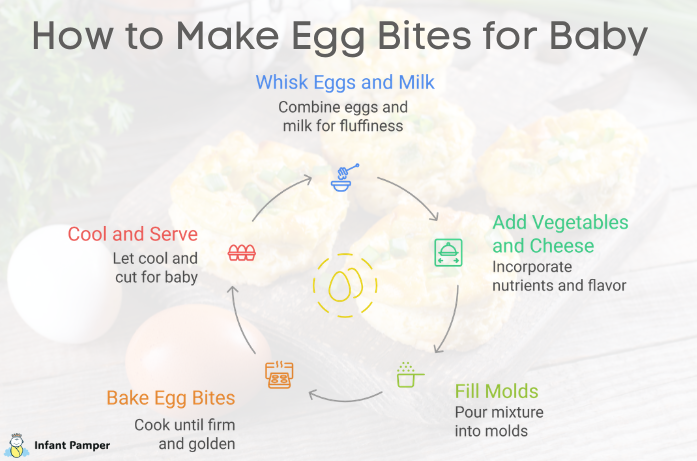
How to Make Egg Bites for Baby
Making egg bites for babies is incredibly simple, and you don’t need any fancy ingredients. The best part is that you can prepare them in batches, making meal prep easier for busy parents. Below is a basic recipe for making egg bites that are both healthy and delicious for your little one.
Ingredients:
- 2 large eggs
- 1/4 cup of whole milk (or breast milk/formula for younger babies)
- 1/4 cup of finely chopped vegetables (spinach, zucchini, bell peppers, or carrots)
- A pinch of salt (optional, and not recommended for babies under 1 year)
- 1 tablespoon of grated cheese (optional)
- Olive oil or butter for greasing
1. Preheat the Oven: Begin by preheating your oven to 350°F (175°C). Grease a muffin tin or silicone egg bite tray with olive oil or butter to prevent the egg bites from sticking.
2. Whisk the Eggs: Crack the eggs into a bowl and whisk them together with the milk. The milk helps to make the egg bites fluffier and softer for your baby. You can also add a pinch of salt, though it’s not recommended to add salt to your baby’s food until they are over 1 year old.
3. Add the Vegetables and Cheese: Mix in the finely chopped vegetables of your choice. Vegetables like spinach, carrots, or zucchini are great because they are soft and rich in vitamins and minerals. You can also try broccoli puree and prune puree as another nutritious first food for your baby. If your baby is old enough, you can also add a little grated cheese for added calcium and flavor.
4. Fill the Molds: Pour the egg mixture into the muffin tin or egg bite molds, filling each mold about three-quarters full.
5. Bake: Bake in the oven for 12-15 minutes, or until the egg bites are firm and lightly golden on top. To check if they are done, insert a toothpick into the center if it comes out clean, the egg bites are ready.
6. Cool and Serve: Let the egg bites cool down for a few minutes before serving. Once they are cool enough for your baby to handle, cut them into small pieces, depending on your baby’s ability to chew.
Creative Variations of Egg Bites
Egg bites are incredibly versatile, and you can easily modify the basic recipe to suit your baby’s preferences or nutritional needs. Here are a few fun variations you can try:
1. Scrambled Eggs for Baby: Scrambled eggs are another simple and classic way to prepare eggs for your baby. To make scrambled eggs, whisk eggs with a small amount of milk and cook them gently over low heat. Make sure the eggs are thoroughly cooked and soft enough for your baby to chew. You can serve scrambled eggs with a side of soft vegetables or mashed avocado for added nutrition.
2. Egg Muffins for Baby: If you prefer individual servings, egg muffins are an excellent alternative. You can prepare them using the same ingredients as egg bites, but bake them in a muffin tin. These mini egg muffins are great for portion control and make an excellent snack for your toddler. For additional inspiration on healthy vegetable-packed egg bites, you can explore community nutrition education like veggie egg bites shared by nutrition experts
3. Egg Puree for Baby: For babies who are just beginning to eat solids, you can puree eggs to create a smooth texture that’s easy for them to swallow. To make egg puree, cook the eggs until firm and then blend them with a little breast milk, formula, or water until you achieve the desired consistency. This is a great option for younger babies who are still mastering solid foods.
4. Banana and Egg Pancakes for Baby: If you’re looking to introduce a sweet twist to your baby’s meals, try making banana and egg pancakes. Simply mash a ripe banana and mix it with eggs to form a batter. Cook the batter into small pancakes, making sure they are soft and easy for your baby to handle. These pancakes are naturally sweet, and the bananas provide additional fiber and vitamins.
Health Benefits of Eggs for Babies
As your baby’s first year progresses, it’s essential to introduce a variety of foods that contribute to their overall development. Eggs should be a regular part of their diet because they offer a broad range of benefits. First and foremost, eggs are an excellent source of protein, which is vital for muscle and tissue development. Protein is necessary for your baby’s growth, and it’s especially important during the first few years when their body is growing rapidly.
Eggs also play a crucial role in brain development. They are rich in choline, a nutrient that supports the growth of brain cells and helps improve memory and cognitive function. As your baby’s brain is developing at a fast pace, including eggs in their diet can give them the nutrients they need to thrive.
In addition to choline, eggs are packed with vitamins and minerals like Vitamin D, which helps in the absorption of calcium and supports strong bone development, and Vitamin A, which is essential for good vision and immune function. These vitamins are especially important as your baby continues to grow and their body and immune system mature.
Storage and Freezing Tips
Egg bites are incredibly freezer-friendly, making them an excellent option for meal prep. If you make a large batch, store the leftover egg bites in an airtight container or freezer-safe bag and freeze them for up to 3 months. When you’re ready to serve them, simply reheat them in the microwave or oven.
Freezing individual portions also makes it easy to serve your baby fresh meals on the go. Just make sure the egg bites are completely cooled before freezing to avoid condensation buildup. Reheating frozen egg bites is simple and quick, making them a great option for busy parents.
Common FAQs About Egg Bites for Babies
1. How do I introduce eggs to my baby for the first time?
Cook eggs thoroughly to reduce the risk of foodborne illness. Start with scrambled eggs or an egg puree. Begin with a small portion and watch for any allergic reactions.
2. Can I make scrambled eggs for my baby?
Yes! Scrambled eggs are soft, easy to chew, and full of protein. Cook on low heat and avoid salt or spices. Serve with soft veggies or mashed avocado.
3. Can I make egg muffins or egg bites for my baby?
Absolutely! Egg muffins and bites are great for babies and toddlers. They’re easy for little hands to pick up and can include vegetables, cheese, or mashed fruits for added flavor.
Conclusion
Egg bites for babies are a delicious, nutritious, and easy-to-make meal that can be prepared in a variety of ways. Whether you’re introducing eggs for the first time or looking for a creative way to incorporate them into your baby’s diet, egg bites offer a great option that is both versatile and nutritious. With the many health benefits of eggs, including protein, choline, and essential vitamins, they are an important food to include in your baby’s diet.
As your baby grows, continue to experiment with different ingredients and textures to keep meals exciting and support their nutritional needs. Egg bites can be made in advance, stored in the fridge or freezer, and reheated for quick meals, making them the perfect option for busy parents. Remember, always consult with your pediatrician before introducing new foods, and enjoy the process of exploring new flavors with your little one!
For more helpful tips and recipes, visit Infant Pamper.