Pregnancy changes everything, your body, your emotions, even the way you think about food. One day you’re craving citrus fruits, the next day nothing sounds good at all. In the middle of all this, nutrition becomes more than just eating to feel full; it becomes about supporting life. A High Iron Diet for Pregnancy is one of the most important yet commonly misunderstood parts of prenatal nutrition. Iron quietly supports your growing baby, helps your body make extra blood, and keeps you energized during a time when fatigue can already feel overwhelming.
Many expecting mothers are surprised when their doctor mentions low iron levels during routine blood tests. It can sound scary, but the truth is that iron needs naturally increase in pregnancy, and many women simply need a little extra support through diet.
This guide is written to help you understand iron in a calm, reassuring way, without pressure, guilt, or unrealistic expectations. Just real food, real life, and gentle guidance for moms and caregivers.
Why Iron Matters So Much During Pregnancy
Iron is essential for producing hemoglobin, the part of red blood cells that carries oxygen from your lungs to the rest of your body, and to your baby. During pregnancy, your blood volume increases significantly to support fetal growth and placental development. Without enough iron, your body struggles to keep up.
Low iron levels can leave you feeling constantly tired, lightheaded, or short of breath. Some moms may also experience pregnancy headaches when fatigue and nutritional changes affect daily comfort. In more serious cases, it may increase the risk of complications such as preterm delivery or low birth weight. According to research published through the National Institutes of Health, iron deficiency is one of the most common nutritional concerns worldwide during pregnancy, making awareness and prevention especially important:
The good news is that food can be a powerful tool. With the right knowledge, you can support your iron needs naturally and confidently.
How Much Iron Do Pregnant Women Actually Need?
Before pregnancy, most women need about 18 mg of iron per day. During pregnancy, that number increases to around 27 mg daily. This jump happens because your body is supplying oxygen not just for you, but for your baby as well.
It may sound like a lot, but when iron-rich foods are chosen wisely and paired correctly, meeting these needs through pregnancy diet becomes much more manageable.
Understanding a High Iron Diet for Pregnancy
A High Iron Diet for Pregnancy focuses on including foods that naturally contain iron and combining them in ways that help the body absorb iron more effectively. This does not mean eating large amounts of one food or forcing yourself to eat things you dislike. Instead, it’s about balance, variety, and consistency over time.
Iron comes in two forms:
- Heme iron, found in animal-based foods, which is easier for the body to absorb
- Non-heme iron, found in plant-based foods, which is still valuable but absorbed more efficiently when paired with vitamin C
Most healthy pregnancy diets include a mix of both.
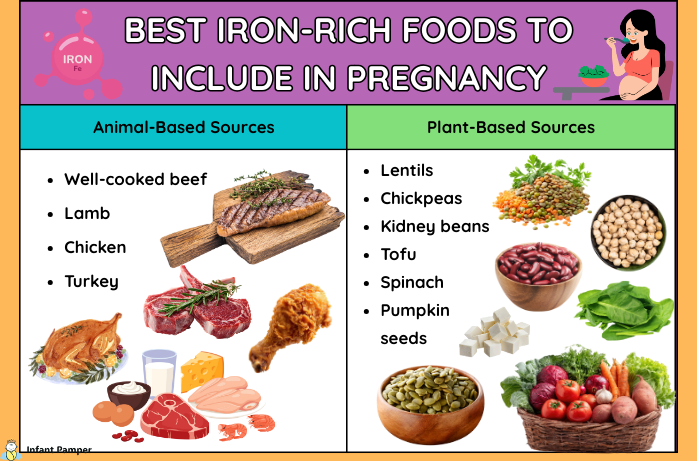
Best Iron-Rich Foods to Include in Pregnancy
Choosing the right foods can make a real difference in how you feel day to day. Below are some of the most helpful options for supporting iron needs while pregnant.
Animal-Based Sources
Lean meats are one of the most efficient ways to increase iron intake. Well-cooked beef, lamb, chicken, and turkey provide iron that your body can use quickly. Eggs also contribute small but meaningful amounts and are easy to include in daily meals.
These foods often fit naturally into a balanced family diet and provide additional nutrients like protein and vitamin B12, which also support energy and blood health.
Plant-Based Sources
For mothers who prefer vegetarian meals or simply enjoy plant-forward eating, there are many excellent options. Lentils, chickpeas, kidney beans, tofu, spinach, and pumpkin seeds all contribute iron. Whole grains and fortified cereals can also help fill nutritional gaps, especially in early pregnancy when appetite may be unpredictable. These appetite changes often happen alongside early pregnancy symptoms.
This style of eating is often referred to as an iron rich diet pregnancy, and it works best when meals are thoughtfully combined. Cleveland Clinic nutrition experts note that plant-based iron sources are highly effective when meals are planned thoughtfully and paired with vitamin C-rich foods:
Boosting Absorption: Small Changes That Matter
One of the most overlooked aspects of iron nutrition is absorption. Even the best foods won’t help much if your body can’t absorb the iron properly.
Vitamin C plays a major role here. Adding citrus fruits, tomatoes, bell peppers, or strawberries to meals can significantly improve iron absorption from plant foods. For example, squeezing lemon juice over lentils or pairing spinach with tomatoes can make a noticeable difference.
At the same time, it helps to be mindful of what can block iron absorption. Tea, coffee, and large amounts of calcium can interfere when consumed alongside iron-rich meals. You don’t have to eliminate them, just try spacing them out by an hour or two.
Iron-Rich Foods That Fit Everyday Meals
One of the biggest challenges in pregnancy is making nutrition practical. You don’t need elaborate recipes or expensive ingredients. Simple meals work just fine.
Soups made with lentils and vegetables, rice paired with beans, well-cooked meat with leafy greens, or even fortified cereal with fruit can all support iron intake. These are examples of iron rich foods for pregnancy that fit into real-life routines, even on low-energy days.
The goal is not perfection, but regular inclusion over weeks and months.
Iron and Protein: A Strong Combination
Iron rarely works alone. Protein is another key nutrient during pregnancy, supporting tissue growth, muscle development, and your baby’s overall development. Many iron-rich foods are also excellent protein sources, making them doubly beneficial.
A balanced pregnancy protein diet that includes legumes, eggs, dairy, lean meats, and whole grains often naturally supports iron needs as well. This combination helps keep blood sugar stable, supports energy levels, and promotes healthy weight gain during pregnancy.
Managing Iron Deficiency Through Diet
Some women enter pregnancy already low in iron, while others develop low levels as pregnancy progresses. In these cases, food becomes especially important. An iron deficiency in pregnancy diet focuses on consistent intake of iron-rich foods, careful pairing for absorption, and avoiding common blockers during meals.
If symptoms like extreme fatigue, dizziness, or breathlessness persist, it’s important to talk to a healthcare provider. Diet is powerful, but it works best alongside professional monitoring.
Foods High in Iron During Pregnancy You May Overlook
While meats and leafy greens often get the spotlight, some smaller foods deserve attention too. Dried fruits like dates and raisins, seeds such as sesame and pumpkin, and even certain whole grains quietly contribute iron.
Including these as snacks or meal additions can help boost daily intake without making meals feel heavy or repetitive. These are practical examples of foods high in iron during pregnancy that many women find easy to enjoy.
When Diet Alone May Not Be Enough
It’s important to be honest and gentle with yourself. Sometimes, even with a well-planned diet, iron levels remain low. This can happen due to increased blood volume, absorption issues, or frequent nausea and vomiting.
In such cases, healthcare providers may recommend iron supplements. These should only be taken under medical guidance, as too much iron can cause side effects and complications. Food should always be the foundation, with supplements used when truly needed.
Final Thought
Pregnancy nutrition can feel confusing and even overwhelming at times, especially when advice seems to come from every direction. Please remember this one meal does not define your health, and one imperfect day does not undo the care you give your body over weeks and months. Your body is adjusting, learning, and doing something truly remarkable as it nurtures new life.
At Infant Pamper, we believe that when parents are informed, they feel calmer, more confident, and more at peace with their choices. Focusing on iron through real, nourishing foods without pressure or fear, allows you to support your own well-being while giving your baby a strong, healthy start.
Supporting your iron levels is not about strict rules or perfection. It’s about listening to your body, making thoughtful food choices when you can, and trusting yourself along the way. One balanced meal, one mindful choice, one day at a time is more than enough.
Frequently Asked Questions
1. Can I meet all my iron needs through food alone?
Many women can, especially with careful planning and regular intake of iron-rich foods. However, some may still need supplements based on blood test results.
2. Is it normal to feel tired even with a good diet?
Yes. Pregnancy itself is demanding. While nutrition helps, rest, hydration, and emotional support matter too.
3. What if I don’t like meat?
A plant-based approach can still work. Focus on legumes, leafy greens, seeds, fortified foods, and vitamin C pairings.
6. Can too much iron be harmful?
Yes. Excess iron can cause digestive issues and other problems, which is why supplements should only be taken when prescribed.
Medical Disclaimer: This article is intended for informational and educational purposes only. It should not replace personalized medical advice, diagnosis, or treatment. Always consult your doctor, midwife, or qualified healthcare provider before making dietary changes or taking supplements during pregnancy.