Becoming a parent means learning to notice the smallest changes. A skipped feed, a diaper that feels lighter than usual, or lips that look a little dry can quickly turn into worry. One of the most important concerns every caregiver should understand is when to go to the hospital, because baby dehydration can progress quietly and become serious faster than many parents expect.
Babies can not tell us when they feel thirsty, weak, or unwell, which makes dehydration especially tricky for parents to catch early. Their bodies are small, their fluid balance is sensitive, and Even a mild illness like a common cold in baby, fever, or stomach bug can affect them faster than we expect.That’s why paying attention to small changes really matters.
This guide is designed to help parents clearly understand what dehydration looks like, spot both early and serious warning signs, and feel confident knowing when simple care at home is enough and when it’s time to seek medical help without hesitation.
What Dehydration Really Means in Babies
Dehydration occurs when your baby’s body loses more fluids than it takes in. Fluids are essential for circulation, digestion, temperature regulation, and organ function. In babies, water makes up a much larger portion of body weight compared to adults, which is why fluid loss affects them faster.
A baby’s kidneys are still developing and are not yet efficient at conserving water. This makes infants more sensitive to fluid changes. Even mild dehydration can impact energy levels, feeding patterns, and overall well-being, which is why healthcare professionals treat dehydration in babies very seriously. A point also highlighted by the Cleveland Clinic.
Why Babies Are More Vulnerable to Dehydration
Babies depend completely on caregivers for fluids. They also lose fluids faster than older children and adults.
The most common cause is illness. Vomiting and diarrhea cause rapid fluid loss, while fever increases fluid needs at the same time. Many babies also feed less when they are unwell, which worsens the risk.
Environmental factors matter too. Hot weather, poor ventilation, or overdressing can lead to fluid loss through sweating. Feeding challenges, such as latch issues, temporary feeding refusal, or reduced appetite, can also decrease fluid intake enough to cause dehydration in babies.
How to Identify Dehydration in Babies Early
Many parents actively search for how to identify dehydration in babies because early signs are not always obvious. Dehydration usually develops gradually, not suddenly.
In the early stages, you may notice fewer wet diapers than usual or urine that looks darker yellow. Your baby might seem less interested in feeding, less alert, or slightly more tired than normal. If feeding changes are paired with mouth symptoms, learning about newborn white tongue may also help parents understand what to watch for. These signs do not always mean dehydration, but they are signals that close observation is important.
Catching dehydration early often allows parents to manage it before it becomes serious.
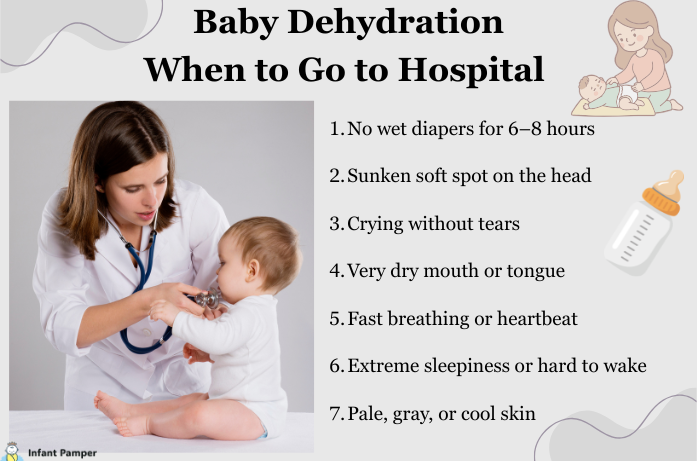
Baby Dehydration: When to Go to the Hospital (Critical Warning Signs)
Understanding when to go to the hospital is essential for protecting your baby’s health. When dehydration becomes moderate or severe, medical care should not be delayed.
Seek urgent medical help if you notice:
- No wet diapers for 6–8 hours in infants
- A sunken soft spot (fontanelle) on the head
- No tears while crying
- Very dry mouth or tongue
- Rapid breathing or a fast heartbeat
- Extreme sleepiness or difficulty waking
- Pale, gray, or cool skin
Babies under three months should be evaluated by a doctor at the first sign of dehydration, even if symptoms appear mild. Young infants can worsen very quickly.
Normal Baby Dry Lips Dehydration: Understanding the Difference
Many parents worry about normal baby dry lips dehydration, but dry lips alone are not always a cause for concern. Babies commonly have dry lips due to drooling, weather changes, or breathing through the mouth while sleeping.
Dry lips become more concerning when they appear along with other symptoms, such as fewer wet diapers, reduced feeding, or unusual tiredness. It’s important to look at overall behavior and hydration patterns rather than focusing on one symptom alone.
Baby Dry Lips: Dehydration Signs That Need Attention
True baby dry lips dehydration signs usually do not appear in isolation. Lips may look cracked, peeling, or unusually pale. The inside of the mouth may appear dry instead of moist.
When dry lips are paired with decreased urine output, poor feeding, or lethargy, dehydration should be suspected and monitored closely. These combinations matter more than appearance alone.
Signs of Dehydration in Baby Poop
Bowel movements can provide helpful clues. Signs of dehydration in baby poop may include fewer bowel movements than usual or stools that appear thicker, harder, or darker.
In babies experiencing diarrhea, the risk of dehydration increases rapidly because fluids are lost faster than they can be replaced. Even if diapers are frequent, ongoing watery stools require close hydration monitoring and sometimes medical evaluation.
How Doctors Treat Dehydration in Babies
Treatment depends on the severity of dehydration and the baby’s age.
Mild dehydration is often managed by increasing fluid intake through breastfeeding or formula feeding, sometimes with medical guidance. Babies are monitored to ensure urine output improves and energy levels return.
Moderate to severe dehydration usually requires hospital care. Doctors may provide oral rehydration solutions under supervision or administer fluids through an IV. Electrolyte levels are monitored closely to ensure the baby recovers safely and steadily.

Feeding and Fluids During Dehydration
Breast milk or formula remains the safest and most effective source of hydration for babies under six months unless a doctor advises otherwise. Feeding should usually continue during illness, even if feeds are smaller or more frequent.
Some parents ask about options like dehydrated yogurt drops for babies, but these do not provide hydration and should never replace fluids during illness or dehydration recovery. During dehydration, fluids, not snacks, are the priority.
Preventing Dehydration in Babies
Prevention relies on awareness and routine observation.
Helpful prevention habits include:
- Offering feeds frequently, especially during illness
- Watching daily diaper output rather than focusing only on feeding amounts
- Avoiding overdressing, particularly in warm environments
- Continue feeds during fever or mild illness unless advised otherwise
Responding early to small changes often prevents dehydration from becoming serious.
Emotional Reassurance for Parents
Worrying about dehydration does not mean you are overreacting; it means you are attentive. Even experienced parents can miss early signs, and dehydration can happen despite loving, careful care.
Trust your instincts. If something feels off, seeking medical advice is always appropriate. Healthcare professionals prefer early evaluation over delayed treatment.
Frequently Asked Questions
1. How fast can dehydration develop in babies?
In some cases, dehydration can develop within 24 hours, especially if a baby has vomiting, diarrhea, or fever. Younger babies can become dehydrated even faster.
2. Is mild dehydration dangerous for babies?
Mild dehydration is usually manageable when caught early, but it can worsen quickly if fluid intake does not improve. Close monitoring is very important.
3. How many wet diapers should a hydrated baby have?
Most babies should have at least 4–6 wet diapers in 24 hours. Fewer wet diapers may signal dehydration and should be watched closely.
4. Can I treat dehydration at home?
Mild dehydration can often be managed at home with frequent breastfeeding or formula feeding, but only if your baby is alert and feeding well. If symptoms worsen, seek medical care.
5. Does fever always cause dehydration in babies?
Not always, but fever increases fluid needs. Babies with fever should be offered feeds more often and monitored carefully for dehydration signs.
6. When should I take my baby to the hospital for dehydration?
You should seek medical care if your baby has very few wet diapers, extreme sleepiness, a sunken soft spot, no tears when crying, or cannot keep fluids down.
7. Are newborns at higher risk of dehydration?
Yes, newborns and young infants are at higher risk because their bodies lose fluids faster and they cannot compensate as well as older babies.
Final Thoughts
Understanding dehydration doesn’t mean you need to worry constantly; it means you’re prepared. When parents know what’s normal, what changes deserve attention, and when it’s time to seek medical care, stressful moments become easier to handle. Dehydration can happen quickly in babies, but early awareness and timely action make a real difference.
At Infant Pamper, we believe parenting shouldn’t feel overwhelming or confusing. Our goal is to offer calm, clear, and trustworthy guidance that helps you feel confident in your decisions. You know your baby better than anyone. Trust your instincts, ask for help when needed, and remember that being informed is one of the best ways to protect your baby’s health and well-being.
If this guide helped you feel more confident about your baby’s health, stay connected with Infant Pamper for simple, trustworthy baby-care tips. Follow us for calm guidance, early warning signs, and gentle support through every stage of parenthood.
Medical Disclaimer: This article is for informational purposes only and does not substitute professional medical advice, diagnosis, or treatment. Always consult a qualified healthcare provider with any concerns about your baby’s health or hydration.