Written with love by a caring mom at Infant Pamper.
There’s something incredibly special about the moment your baby shows interest in your food. I remember sitting with my little one during dinner, noticing those curious eyes watching every bite I took. That’s when the question gently crept into my mind, is it time?
If you’re wondering when to start baby led weaning, you are in the exact place I once was, curious, cautious, and wanting to do everything just right. The good news is, this journey doesn’t have to feel confusing or stressful. With a little understanding and a lot of trust in your baby, it can actually become one of the most joyful stages of early motherhood.
Let’s walk through this together in a simple, honest, and practical way.
What Makes Baby-Led Weaning Different?
Baby-led weaning isn’t just a feeding method, it’s a shift in how we see our baby’s abilities.
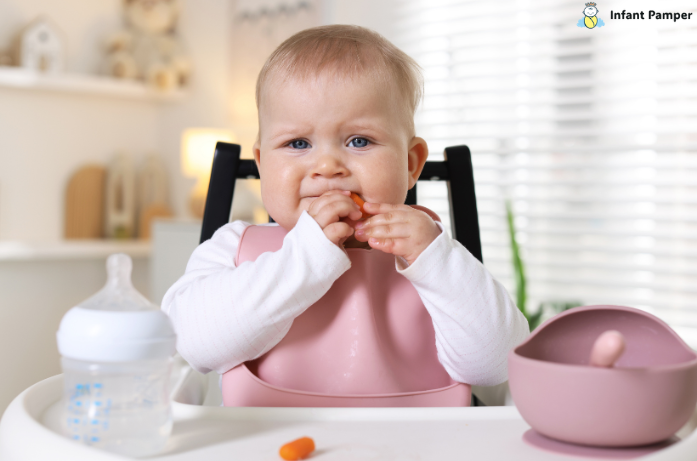
Instead of spoon-feeding purees, your baby is given soft, safe pieces of real food to hold, explore, and eat on their own. It allows them to be in control from the very beginning.
But what makes it truly special isn’t just independence, it’s connection.
Your baby joins you at the table, watches how you eat, learns by observing, and slowly becomes part of family mealtime. It feels less like “feeding a baby” and more like sharing a moment together.
When to Start Baby Led Weaning
Most babies are ready to start baby-led weaning around 6 months of age, but the exact timing depends on their developmental readiness.
Let’s gently clear one common misconception this journey is not about hitting a specific date. Understanding when to start baby led weaning is more about your baby’s development than their exact age. While most babies are ready around 6 months, the real answer lies in their readiness cues.
Some babies show signs a little earlier, some a little later. What matters most is not rushing ahead of your baby’s abilities. Think of it this way your baby will show you when they’re ready. You just need to know what to look for.
The Real Signs Your Baby Is Ready
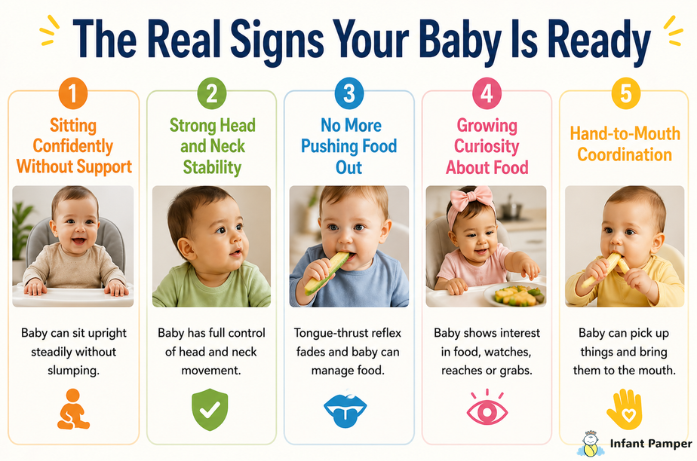
Instead of focusing on just one signal, look for a combination of these signs. When they come together, it’s your baby’s quiet way of saying, “I’m ready to try.”
1. Sitting Confidently Without Support
This is one of the most important safety signs.
Your baby should be able to sit upright steadily, without slumping forward or sideways. Good posture helps them swallow safely and handle food better.
2. Strong Head and Neck Stability
Your baby should have full control over their head and neck, moving it easily from side to side.
This may seem small, but it plays a big role in safe eating.
3. No More Pushing Food Out
Earlier, babies automatically push anything out of their mouth with their tongue. This reflex protects them when they’re not ready.
When this reflex fades, your baby can begin to manage food inside their mouth.
4. Growing Curiosity About Food
This is often the sweetest sign.
Your baby watches you eat, reaches for your plate, or even tries to grab your spoon. It’s their way of showing interest and readiness.
5. Hand-to-Mouth Coordination
If your baby can pick up toys and bring them to their mouth, they’re developing the skills needed for self-feeding.
At first, they’ll grab food with their whole hand, and that’s perfectly fine. According to experts at American Academy of Pediatrics, understanding the difference between gagging and choking is an important part of starting solids safely.
Baby-Led Weaning When to Start: Why Waiting Matters
Many parents search for baby-led weaning when to start because they’re afraid of starting too late. But honestly, starting too early is more of a concern.
If your baby isn’t physically ready, it can lead to frustration, for both of you.
Waiting until your baby shows readiness signs means:
- Safer swallowing
- Better coordination
- A more enjoyable experience
It also helps your baby feel confident instead of overwhelmed.
Best First Foods That Actually Work
Instead of overcomplicating things, start simple.
Choose foods that are:
- Soft enough to mash easily
- Easy to hold
- Naturally safe
Simple and Practical First Foods:
- Ripe avocado slices
- Soft banana strips
- Steamed carrot sticks
- Sweet potato wedges
- Soft apple slices (steamed)
- Scrambled egg pieces
Cut them into finger-length shapes so your baby can grip them easily.
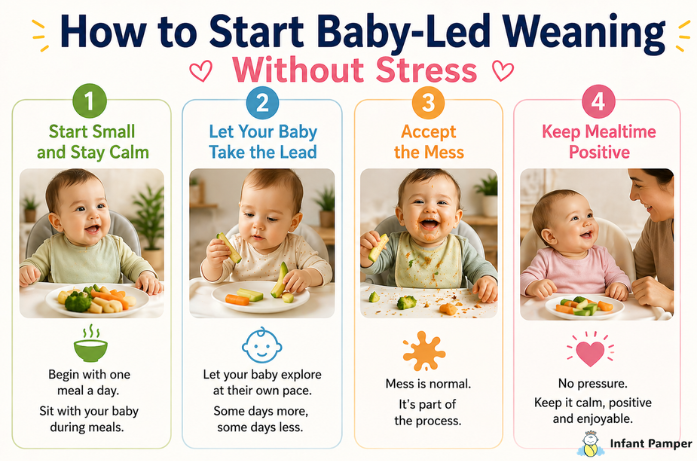
How to Start Baby-Led Weaning Without Stress
According to guidance from Cleveland Clinic, parents should focus on:
1. Start Small and Stay Calm
Begin with one meal a day. You don’t need a full feeding schedule right away.
Sit your baby with you during meals, it helps them learn by watching.
2. Let Your Baby Take the Lead
Resist the urge to guide every bite. Trust your baby to explore at their own pace.
Some days they’ll eat more, some days less.
3. Accept the Mess
Food will be on the floor, on their clothes, and sometimes even in their hair.
It’s not a failure, it’s part of the process.
4. Keep Mealtime Positive
Avoid pressure, distractions, or forcing bites.
A calm, relaxed environment helps your baby feel safe and confident.
Safety Comes First (Always)
Know the Difference Between Gagging and Choking
Gagging is common and actually helpful, it teaches your baby how to manage food.
Choking is rare but serious. Learning basic first aid for babies can give you peace of mind.
Avoid These Foods in the Beginning
- Whole nuts
- Hard raw vegetables
- Grapes (unless cut lengthwise)
- Popcorn
- Sticky or chunky nut butter
Always prepare food in a baby-safe way. Recent research published in National Institutes of Health suggests that baby-led weaning can be safe.
Common Worries Every Mom Has
“My baby isn’t eating much.”
That’s completely okay.
In the beginning, your baby is learning, not filling up. Milk remains their main source of nutrition.
“What if my baby chokes?”
This fear is natural.
Focus on readiness signs, proper food preparation, and supervision. Confidence will come with time.
“Am I doing it right?”
If you’re showing up, learning, and trying, you are doing it right.
There’s no perfect method. Only what works for you and your baby.
Can You Mix Baby-Led Weaning with Spoon Feeding?
Absolutely.
Many moms find comfort in combining both methods, offering finger foods while also giving soft spoon-fed meals.
This flexible approach can ease anxiety and help your baby transition smoothly.
There are no strict rules here, just choices that suit your family.
A Gentle Emotional Reminder
This phase can bring a mix of emotions.
You may feel:
- Excited to see your baby grow
- Nervous about doing things correctly
- Overwhelmed by different advice
Take a deep breath.
You don’t need to know everything right away. You’ll learn as you go.
And your baby? They are learning right alongside you.
Small Moments That Matter More Than You Think
- The first time your baby holds food
- That confused little face after tasting something new
- The tiny bites that don’t quite make it to their mouth
These moments may feel small, but they are the foundation of your baby’s relationship with food.
Slow down and enjoy them.
When It’s Okay to Wait
If your baby:
- Isn’t sitting properly yet
- Shows no interest in food
- Gets frustrated easily
It’s okay to pause.
Waiting a little longer often makes the experience smoother and more enjoyable.
Conclusion: You are Not Behind, You’re Right on Time
Understanding when to start baby led weaning becomes easier when you focus less on timelines and more on your baby’s readiness. Trust their signals, follow your instincts, and allow the process to unfold naturally. There is no perfect day to begin only the right moment for your baby.
Take it one meal at a time, without pressure or comparison. In the middle of the mess and small attempts, your baby is learning something truly important. And you are right there, guiding them with patience, love, and care and that’s exactly what they need.
For more gentle parenting tips and baby care guides, follow Infant Pamper and stay connected with us.
FAQs
1. When to start baby led weaning?
Most babies are ready around 6 months, but only when they show key readiness signs like sitting upright and showing interest in food.
2. What are the signs baby is ready for baby-led weaning?
Look for sitting without support, good head control, interest in food, and the ability to bring objects to the mouth.
3. Can I start baby-led weaning before 6 months?
It’s not recommended, as your baby’s digestive system and motor skills may not be fully developed yet.
4. What are the best first foods for baby-led weaning?
Soft foods like avocado, banana, steamed vegetables, and sweet potato are great beginner options.
5. Is baby-led weaning safe for babies?
Yes, it is safe when your baby is developmentally ready and you follow proper food safety and supervision guidelines.
Description: Wondering when to start baby led weaning? This simple and practical guide helps you understand the right time, key readiness signs, and safe ways to begin your baby’s self-feeding journey with confidence.